Castello di Valenzano
Arezzo - Loc. Valenzano 97
Featuring a garden, bar and views of mountain, Castello di Valenzano is located in Arezzo, 23 km from Piazza Grande.
Book now
Subbiano makes for a pleasant stop just a few kilometres from Arezzo, offering quick excursions combining culture and nature, reliable services for a comfortable stay, warm hospitality from its residents and an excellent food and wine experience.
The history of Subbiano takes us back to Roman times, when the settlement was placed under the protection of Janus, as its name Sub Jano suggests. In its early days it belonged to the nobleman Grifone di Grifone, who in 1119 sold it for a hundred soldi to Albertino, progenitor of the Conti Albertini of Chitignano. At that time it was known as the farmstead and court of Subbiano, though the Albertini may not have purchased it entirely, as the privilege granted in 1191 by Emperor Henry IV to the Conti Guidi included half of this court and castle. The Conti Guidi received confirmation of their possession of this half from Emperor Frederick II in 1220.
Later, Subbiano came under the rule of the Tarlati of Pietramala, until Pier Saccone, brother of Bishop Guido Tarlati, brought it under the authority of the Republic of Florence. After the expulsion of the Duke of Atene in 1343, the people of Subbiano broke away from the Florentine Republic, but in 1384 they, along with those of Arezzo, fell under the dominion of the Signoria of Florence.
The town of Subbiano clusters along the left bank of the Arno, where houses line the riverbanks interspersed with ancient buildings and old mills. The landscape is noticeably gentler than in the Upper Casentino, partly because the plain opens out towards Arezzo and is more expansive. The countryside around Subbiano is beautiful and cultivated, with olive groves and vineyards beyond the hills. Once renowned was the specialty of moscatello di Subbiano wine, which slopes down towards the river revealing patches of vegetation and rows of cypress trees that frame restored old farmhouses and trace white country roads.
The town still preserves its old Castle overlooking the river, accessed through a tower gate along a narrow cobbled street that runs around the tower before opening onto a fine pointed-arch doorway. Among the ancient stones you can still see the slots for the sliding bolts and gates that once raised a heavy portcullis, and a glimpse of Subbiano through the distinctive wolf-mouth arrow slit that once completed the defensive structure. The tower gate leads to a small courtyard opening onto the river.
Opposite the Castle, separated by the Valbena stream, stands the Church of Santa Maria della Visitazione, built in the early thirteenth century beside the ancient Castle Church dedicated to Santa Maria, now replaced by the Madonna di Lourdes chapel. Over the centuries it underwent modifications, and between the late seventeenth and eighteenth centuries the Church was extended and raised. The bell tower dates from 1857. Inside the Church you’ll find a fresco depicting the Coronation of Mary by painter Giovanni Bassan, and the Deposition above the Church door. The apse contains a seventeenth-century wooden Crucifix venerated by the people of Subbiano as miraculous and still revered today. The monument beneath the Church loggia is dedicated to Don Lorenzo Boschi, founder of Subbiano‘s Hospital, created by Arnaldo Zocchi, a student of Alessandro Duprè.
Along Via dell’Arcipretura stands Palazzo Ducci, a historic property and stately residence restored in the late eighteenth century. Inside are halls with painted wooden coffered ceilings bearing the Ducci coat of arms repeatedly—azure with chains of silver placed in the cross of Saint Andrew, a symbol tracing this noble Casentino family back to the Conti Alberti of Catenaia.
Continuing along Via Arcipretura to Piazza del Castello and then to Via Roma is just a short walk, and in the old quarter stands Palazzo Subiani-Ducci, whose façade reveals the family’s inheritance history. Centred is a fine pointed portal, above which is an imposing coat of arms showing an oak tree flanked by a lion and a bull, topped with a bishop’s hat. The arms belong to the ancient Subiano or da Subbiano family, originally from the town and registered among Florentine citizens since 1555.
Certainly the Palazzo del Podestà, the neighbouring building whose façade bears traces of greater antiquity shown by the remains of closed pointed arches. Many coats of arms with inscriptions are now too worn to read clearly. The palazzo has its own private chapel covered by a vault with characteristic fifteenth-century stone ribs linking it to the side lunettes. An elegant eighteenth-century creation is the large marble altar positioned at the far end, as is the altarpiece depicting the Madonna with Child and Saint Anthony of Padua.
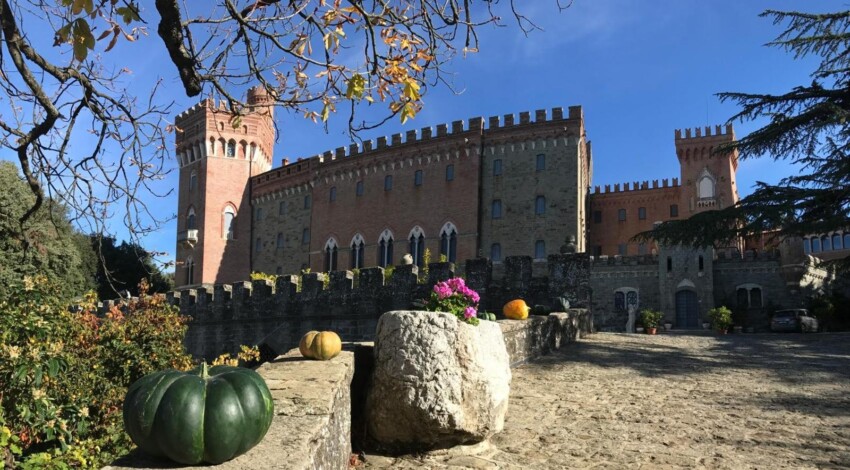
Valenzano Castle belonged to the Ubertini, a powerful family whose possessions extended across this part of the Casentino and one branch of which took the name Ubertini da Valenzano. In the thirteenth century it was divided between the monks of Camaldoli and the Ubertini of Valenzano, and from 1218 Camaldoli leased it to its faithful followers. In 1386 Valenzano too submitted to the Florentine Republic, and it was on the occasion of this submission that records reveal forty men lived at the Castle. Access to the Castle is through an imposing portal in style that invites you along an avenue leading to the piazza in front of the Castle. It’s from this avenue that you can admire the lovely park with century-old trees surrounding the fortress, which with corner turrets, pinnacles, pointed arches and crenellations of various shapes reproduces the nineteenth-century romantic ideal of medieval castles.
Valenzano Castle develops around an internal cloister, with the small church of Santa Maria a Valenzano on one side and a fine portico on the other. The castle’s interior preserves some medieval structures, and it’s interesting to see how materials are used differently—brick and stone distinguish various parts of the construction and highlight details such as windows and balconies.
Today it’s possible to enjoy the Castle’s beauty thanks to owner Marino Franceschi’s hospitality and tourist services including the Restaurant la Principessa set up in what were once the old stables. The old cellars have been completely restored and now serve as an ideal venue for exhibitions, and the historic oil mill with its ancient stone mills remains active.
The Castle today is sought after for prestigious conferences and banquets held in the great hall with its painted coffered ceiling, ancient fireplace and arched windows offering splendid views.
During the summer months, Valenzano Castle hosts major musical events such as Pievi e Castelli in Musica and Valenzano Symphony, through which the Municipality of Subbiano, the Province of Arezzo and the Casentino Mountain Community have beautifully blended musical art with artistic and historical heritage.
Skirting the Castle’s boundary wall, you can decide whether to continue along the country road heading to Alpe di Catenaia passing the Agriturismo della Casina della Burraia farmstay alongside its horse breeding enclosures, or descend towards Poggio D’Acona, an Etruscan settlement where coins from the first century AD have also been found, situated above a small channel dividing the Rio Talla from the Brele.
Here stands the small thirteenth-century Church of Santa Lucia, where you can see a fresco by painter Ademollo depicting the Martyrdom of Saint Lucy. The Church also preserves among its sacred furnishings some interesting gilt card-gloria pieces from the seventeenth and eighteenth centuries. From the village you can enjoy a fine view: on one side the red and fairytale towers of Valenzano Castle soar between austere century-old cypress trees towards the sky; on the other, the Chitignano valley and the entire Arno valley spread out, stretching your gaze all the way to Faltona.
On the road to Poggio D’Acona comes the chance for rural tourism at the splendid Agriturismo Le Gret, near the Calbi farm which produces excellent pecorino cheese and offers educational visits exploring the agricultural landscape with cattle, sheep, farmyard animals and fodder crops—most interesting.
Capolona spreads across mountain slopes that define the bend where the Arno “turns its nose” to the Aretines, as Dante Alighieri wrote in the Divine Comedy (Purgatorio, XIV, 48). Of medieval origin, linked between two banks by a bridge of Roman origins, Capolona is today the gateway to the Casentino. In the green countryside around it stands the Pieve of Santa Maria Maddalena a Sietina, documented since the eleventh century—a Romanesque three-nave church rich with fifteenth-century Aretine school frescoes. Of considerable interest is the Water Museum and Educational Laboratory Centrale Elettrica La Nussa.
Situated on a plain near the Arno river on its right bank.
The only Pieve in the Casentino where frescoes are still visible today.
Upon entering, the perspective creates an evocative effect: the floor, lower than the surrounding ground level, and the frescoes decorating the walls, provoke a powerful emotion.
Already mentioned in July 1022 as Santa Maria Maddalena di Setrina, it fell in 1373 under the rule of the illustrious Aretine family the Bacci.
The pieve presents an unusual architectural structure compared to other pievi found in the Casentino. It has three apses with three naves, separated by four arches resting on rectangular-section pillars.
The frescoes were executed in two different periods. One group from the Gothic period, another from the Renaissance era.
Beneath the “Annunciation” fresco is an inscription with the date 1490 and the name of the patron.
Water, together with the forest cover, represents the primary component of the Casentino landscape; water as a resource for quenching the thirst of people and animals, as a means of transport, as motive power. Wars were fought over water usage and control, towns and cities were founded and destroyed, mighty structures were built to harness its force and harness its power.
The “signs” of the changing relationship between people and water are found first in the structures of bridges, more or less bold and broad, built near the narrows where the beds of streams and rivers were subject to less variability, designed to connect the valley slopes and ensure the passage of people and goods throughout the year.
But alongside these structures linked to overland routes are the structures connected to the use of water courses as waterways suitable for transporting timber from mountain forests and woodlands that flowed into the ports of Badia di Pratovecchio and Ponte a Poppi.
Others used water as motive power and formed a network of workshops and productive structures in buildings “driven by water”—mills, ironworks, fulling mills, saws—spread throughout the Casentino.
The museum route illustrates the multiple uses of water, from an essential resource for food to the production of energy to power machines like mills, fulling mills, ironworks, and so on.
The illustration of the waters of the Valley begins knowledge of the hydraulic network centred on the course of the Arno river and its tributaries.
The bridges built to connect towns and settlements along the river together with port structures are the most obvious evidence of the changing relationship between people and the river; but it is the presence of mills, ironworks and fulling mills that reveals how essential water power was to the growth of manufacturing and industrial activities throughout the Casentino valley.
The very possibility of using hydraulic motive power and the variety of machines driven by water is illustrated in the section on Ingenious Machines.
Finally, the physical-chemical qualities of water and hydrodynamic principles are explored experimentally in the Laboratory section that accompanies the museum route.
What's the weather at Subbiano? Below are the temperatures and the weather forecast at Subbiano for the next few days.
To see all the facilities and book accommodation in Subbiano use the form below, entering the dates of your stay.
 Hotel
Hotel 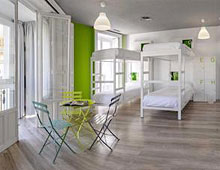 Budget accommodations
  Apartments
  Family Hotel
 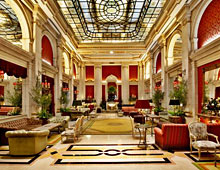 Luxury Hotel
 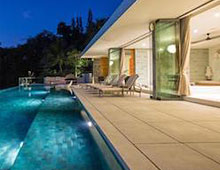 Resorts