The Most Beautiful Beaches in Tuscany
From the fashionable beaches of Versilia to the wild shores of Maremma, we've found the 15 beaches you can't miss in Tuscany and its islands.
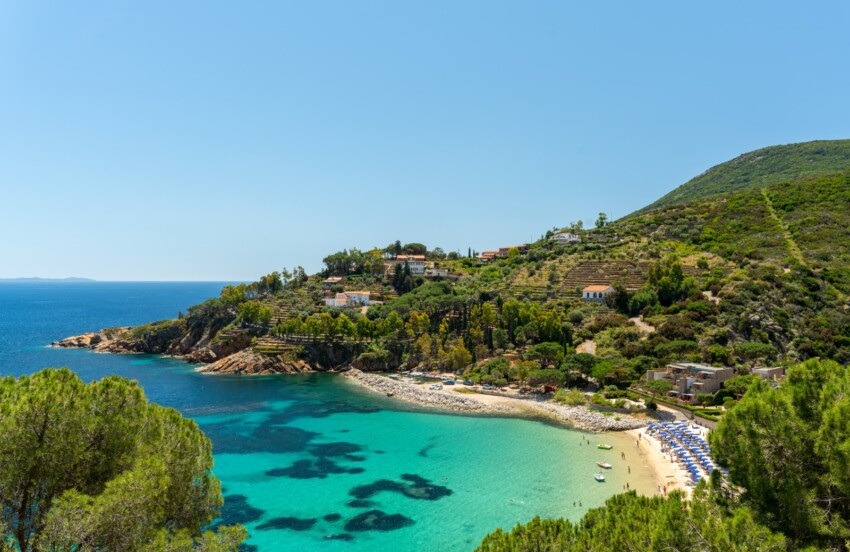
The seaside in Tuscany is a guarantee of the perfect holiday. Choosing a beach break in Tuscany means you can rely on dreamlike landscapes, top-notch tourist facilities, an extensive choice of hotels, apartments and B&Bs, plus excellent road and rail connections.
Tuscany’s beaches are incredibly varied, so there’s something for everyone, whether you fancy long sandy stretches or prefer to lay your towel on the rocks. Some beaches are hugely popular and fashionable, while others offer complete immersion in nature.
With so much choice, how do you decide where to stay? To help you navigate your options, let’s start by exploring the different stretches of Tuscan coastline.
Tuscany’s roughly 400 km of coastline is divided into the following zones (north to south): Riviera Apuana, Versilia, Litorale Pisano, Costa degli Etruschi and Maremma; to these you can add a further 200 km of coastline from the Tuscan Archipelago.
We present them all below, recommending for each zone the seaside destinations you shouldn’t miss.
The coast of northern Tuscany falls within the provinces of Massa Carrara, Lucca and Pisa: the first is in the north and borders Liguria. The most northern part is washed by the Ligurian Sea; heading south, you enter the Tyrrhenian Sea.
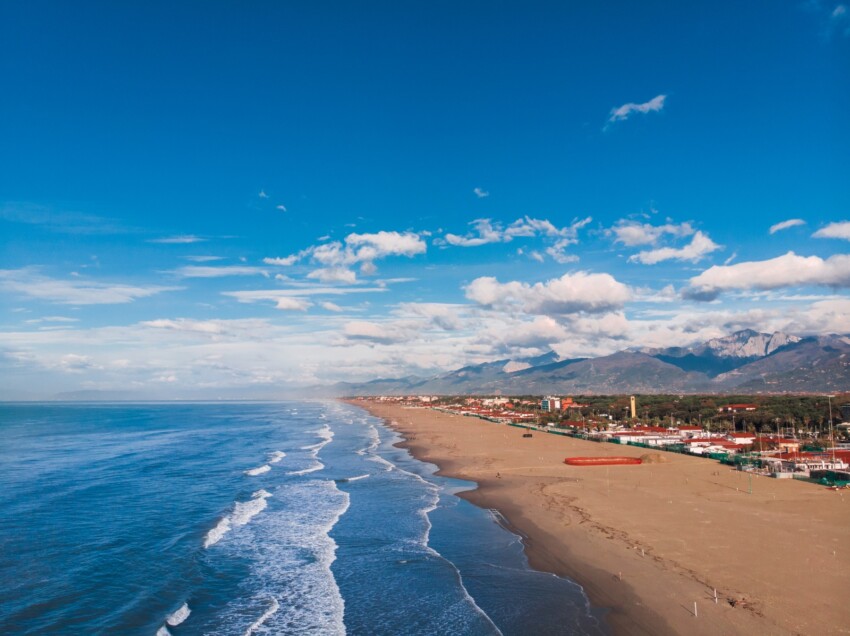
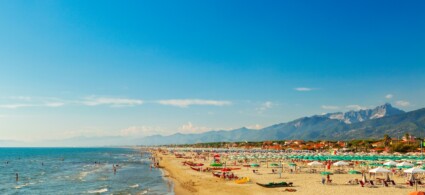
The name Versilia has become synonymous with seaside holidays since the 1960s, and its most famous resorts are symbols of the Italian economic boom. Able to keep up with the times, Versilia’s seaside towns have stood the test of time and remain hugely popular today.
Beaches stretching for kilometres, bathing establishments with top-class facilities and vibrant nightlife made the fortune of Forte dei Marmi, an exclusive resort famous for its legendary nightclub La Capannina.
Perhaps slightly less exclusive, but certainly no less vibrant, is Lido di Camaiore, the lively beach resort of a charming village at the foot of the Apuan Alps. If you’re after a quieter location, suitable for families, head for Marina di Pietrasanta.
Viareggio is the only Versilia seaside town that attracts throngs of tourists even in winter, thanks to its historic Carnival. An elegant resort full of Art Nouveau buildings, it also appeals to young visitors with its many nightlife venues.
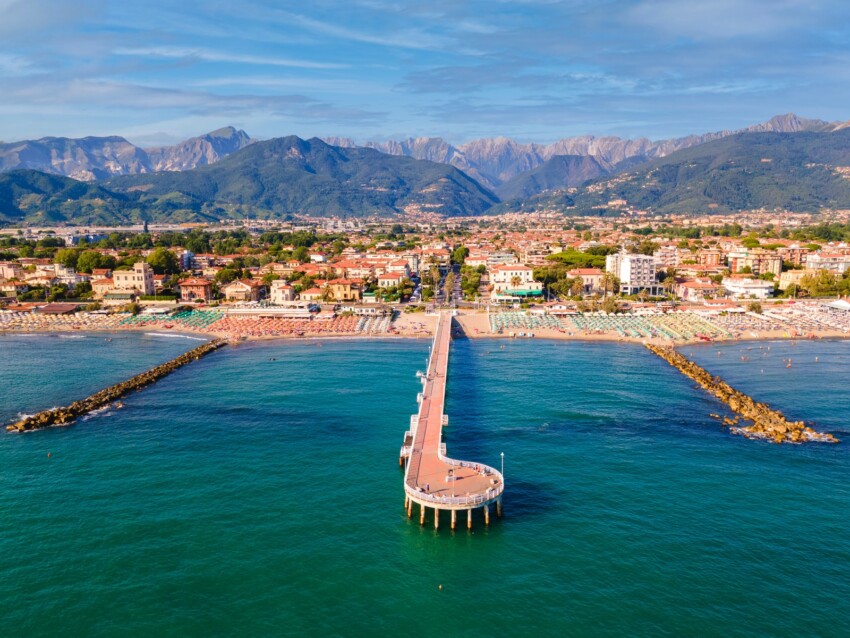
Many people believe that Versilia corresponds to the most northern part of Tuscany. In fact, the northernmost tip of the Tuscan coast is called the Riviera Apuana. Stretching about 20 km, it includes part of Liguria and part of Tuscany: the latter falls within the province of Massa and Carrara.
To the east, the Riviera is bordered by the Apuan Alps, from which it takes its name, making it an ideal zone for those wanting to combine afternoons by the sea with mountain excursions.
The two most renowned beach resorts are Marina di Massa and Marina di Carrara, both awarded the Blue Flag for the quality of their tourist services.
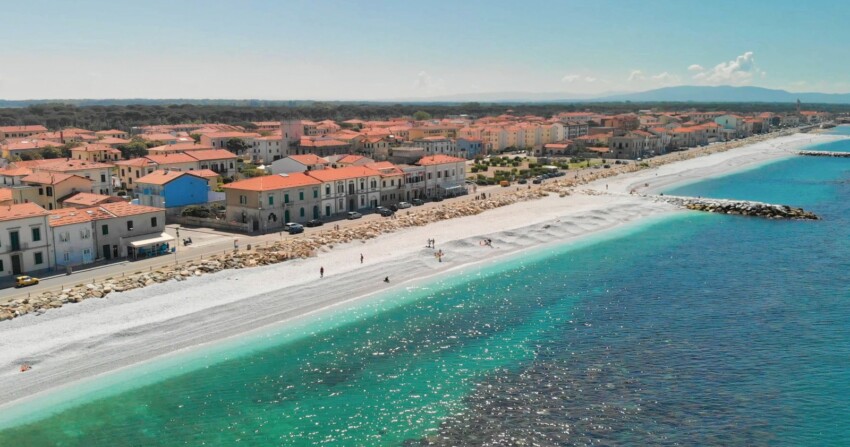
The Litorale Pisano is the coastal outlet of the city of Pisa, stretching from Marina di Vecchiano in the north to the border with Livorno province in the south.
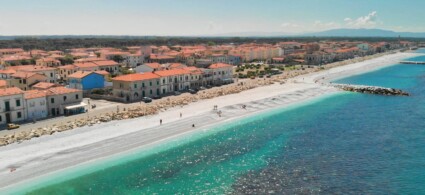
The beaches along this stretch are less famous than those of Versilia but are becoming increasingly popular. They’re an excellent alternative: generally more affordable, they’re every bit as beautiful and well-serviced as their more famous neighbours.
Marina di Pisa is the beach resort of one of Tuscany’s three most visited art cities: an ideal base for a beach and culture holiday. Other popular spots along the Pisan coast are Tirrenia and Marina di Vecchiano-Migliarino.
The coastline of central and southern Tuscany falls within the provinces of Livorno and Grosseto, the former in the central part, the latter in the south. In some places, the coast is high and rocky; in others, low and sandy.
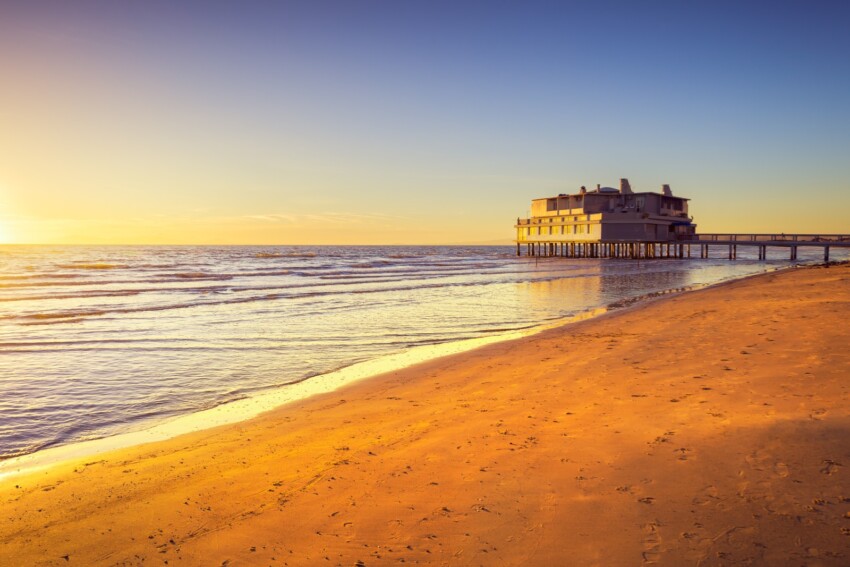
The Maremma is a vast geographical area encompassing much of the central and southern Tuscan coast and the western part of Viterbo province in Lazio. It’s divided into several zones, one of which has become so well-known it’s often confused with the entire Maremma: we’re talking about Maremma Grossetana.
It’s difficult to identify a common characteristic in the Maremma beaches because this vast area includes both well-known, busy seaside resorts and tranquil, nature-filled stretches. We recommend the five best beach destinations in the Maremma.
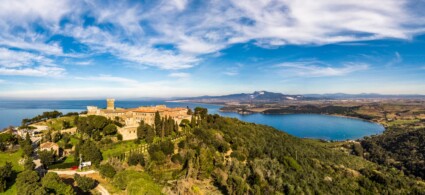
If you don’t want to forgo the charm of typical Tuscan villages during your beach holiday, choose Castiglione della Pescaia or Capalbio.
Follonica is a former industrial town transformed into a seaside resort: its long sandy beaches cater to both those seeking bathing establishments with full facilities and those looking for wild, untamed stretches.
Marina di Grosseto is a quieter beach destination, perfect for those wanting a relaxing seaside break.
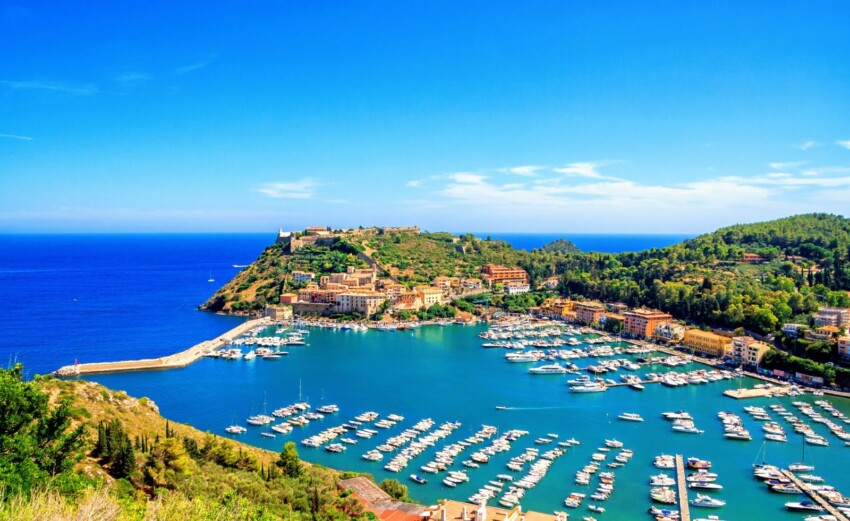
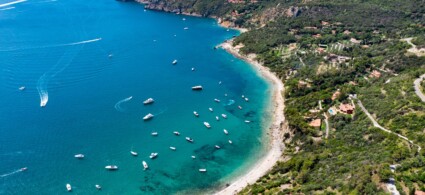
A stretch of Maremma Grossetana with a high concentration of dream beaches is the Costa d’Argento, corresponding to the southernmost tip of Tuscany. It’s a high and jagged coastline: the beaches are mostly rocky, almost always tucked into coves or inlets.
The top attraction is Monte Argentario, a promontory rising sheer from the sea to about 600 metres, entirely covered in lush vegetation. Beloved by sailors for its marinas and stunningly coloured waters, it’s also accessible by car as it’s connected to the mainland.
The two main centres are Porto Santo Stefano and Porto Ercole.

The number of names used for Alta Maremma (the northern part of the Maremma) can be somewhat confusing. From an administrative standpoint, it falls entirely within Livorno province, hence the name Maremma Livornese; historically, however, this territory was known as Maremma Pisana.
The coastal stretch is known as the Costa Livornese or Costa degli Etruschi. The three top beach destinations are Marina di Bibbona, Marina di Cecina and Rosignano Marittimo.
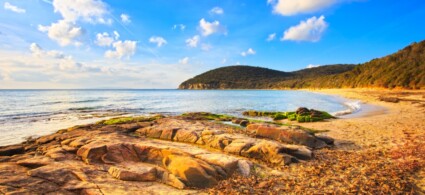
The first two are typical holiday resorts with long sandy beaches, both free and equipped, particularly suited to a seaside break. Both are surrounded by lush pine forests.
Caribbean-like atmospheres await you at Rosignano Marittimo, a location famous for its Spiagge Bianche (White Beaches): these are stretches of brilliantly white sand lapped by azure waters and backed by dense vegetation.
Tuscany also includes the Tuscan Archipelago: seven inhabited islands located in the stretch of sea between mainland Tuscany and Corsica.
On a map, they appear almost in a line: some lie off central-northern Tuscany, others off southern Tuscany, so the departure port varies depending on which island you choose. The sea crossing takes roughly an hour for all islands.
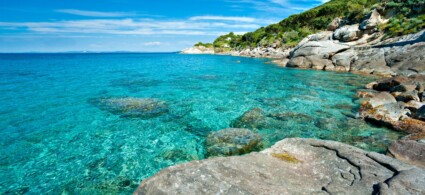
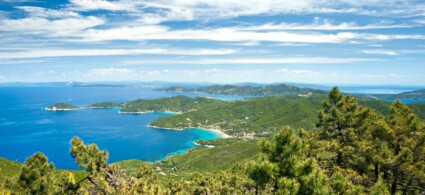
Another feature common to all the islands is their breathtaking landscapes: the sea is azure and crystalline and vegetation grows abundantly. Most of the islands’ territory and surrounding waters fall within the protected area of the Tuscan Archipelago National Park.
Which island to choose among Elba, Giglio, Capraia, Montecristo, Pianosa, Gorgona and Giannutri? We recommend the first three.
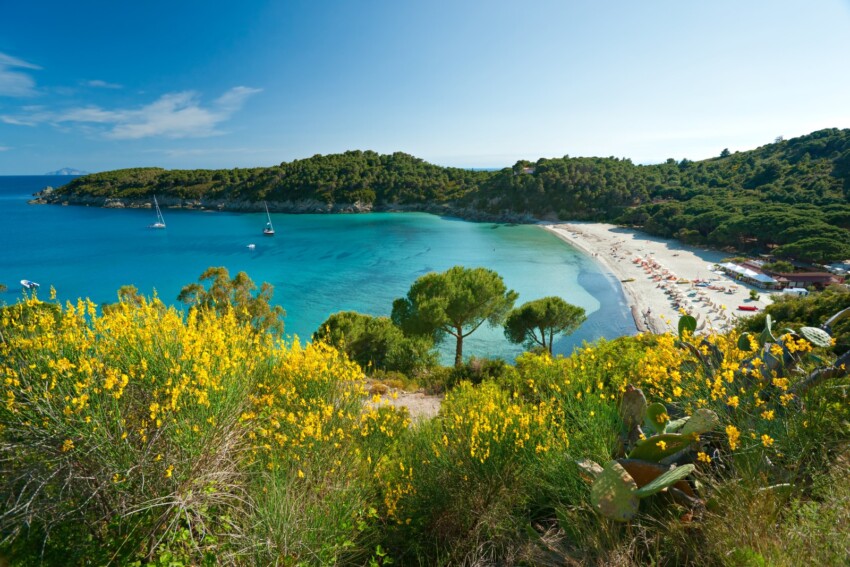
Elba is the main island of the Tuscan Archipelago: it’s the largest (Italy’s third-largest island after Sardinia and Sicily), the most developed and, consequently, the most visited.
Choosing Elba for your beach holiday means you can rely on an extensive choice of accommodation and services. The two main towns on the island, Porto Ferraio and Portoazzurro, are historic towns brimming with shops, bars and restaurants.
Elba is also the recommended choice for young people seeking nightlife and entertainment, those wanting a beach holiday out of season, and trekking and mountain biking enthusiasts.
Giglio Island is the second-largest island by size and visitor numbers. It’s a much quieter island: there are only three inhabited centres and the tourism offer is mainly aimed at couples and those seeking relaxation.
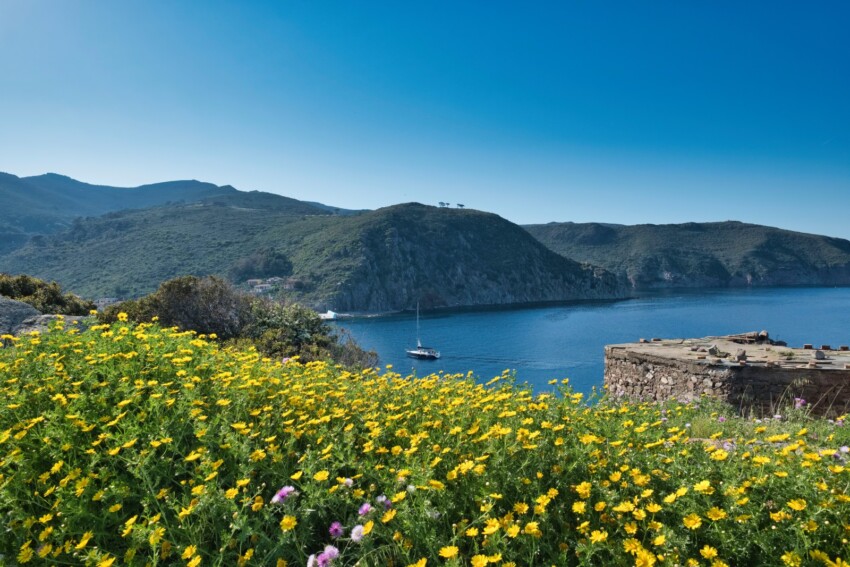
Capraia Island stands out from Elba and Giglio for its volcanic landscapes: the island’s iconic image is that of Cala Rossa, an enormous rock face of intense red colour rising sheer from brilliant blue waters.
Much of the coast is high and jagged, with breathtaking but hard-to-reach beaches; there are, however, some sandy stretches along the eastern side of the island.
 Hotel
Hotel  Budget accommodations
  Apartments
  Family Hotel
  Luxury Hotel
  Resorts