Florence: Uffizi Timed Ticket & Masterpieces Audio App
7.148 reviews
Buy now
From 27,20€ per person
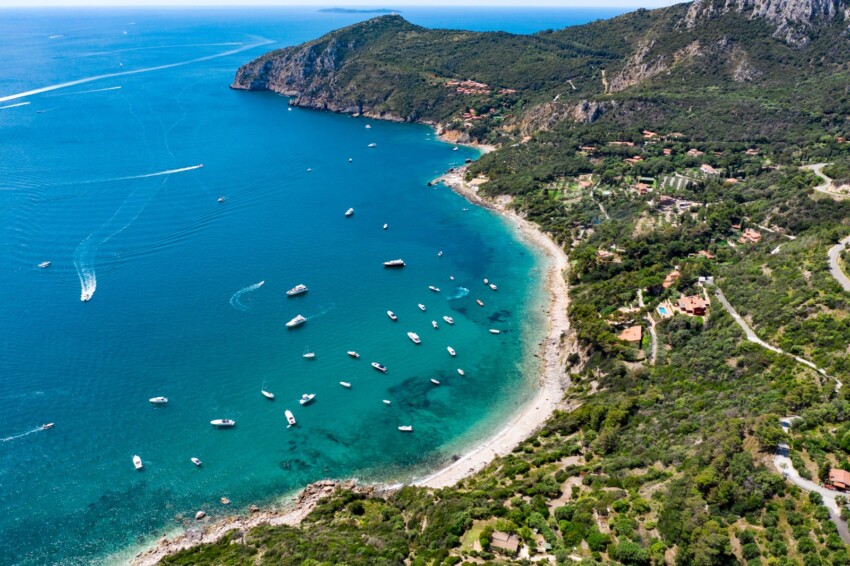
With over 500 km of coastline spanning both mainland and islands, Tuscany is arguably the region in central Italy offering the greatest variety of beaches. It’s also the only region in central Italy to be washed by two seas: the Ligurian Sea bathes the region’s northern tip, whilst further south the Tyrrhenian Sea takes centre stage.
When people think of seaside holidays in Tuscany, the first images that come to mind are often the exclusive beaches of Versilia, renowned for their legendary nightclubs, or the rocky shores of the islands, lapped by waters in such glorious hues that many readily compare them to Sardinia.
Yet the incredible variety of Tuscan beaches encompasses everything: sandy stretches framed by shady pine groves, expansive shores where you’ll find plenty of elbow room, gleaming white-sand beaches, black-sand beaches, enchanting coves accessible only by boat…
How to find your dream beach amongst so many? Don’t look far afield – it’s probably in our list of the 15 most beautiful beaches in Tuscany below.
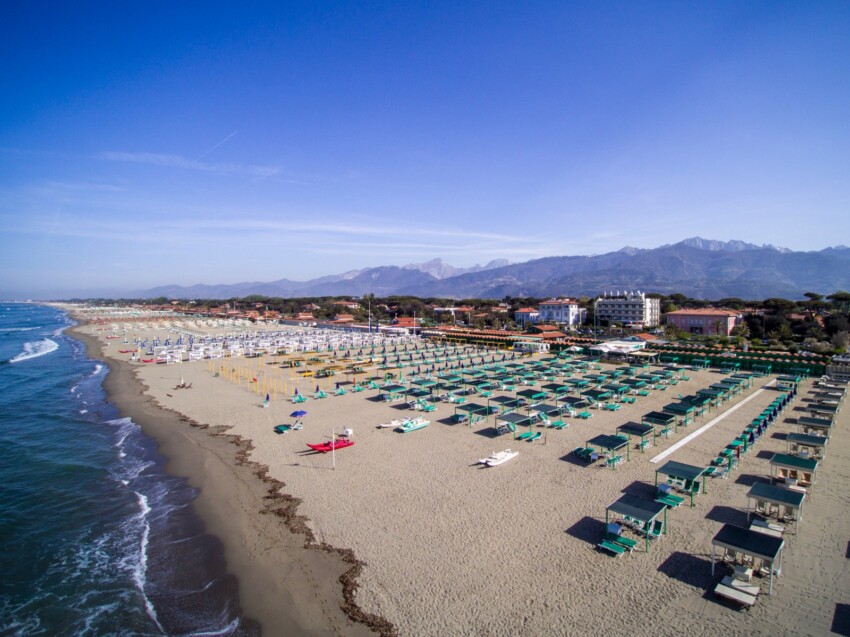
Roma Imperiale at Forte dei Marmi is the most exclusive beach in Tuscany’s trendiest seaside resort: in short, it’s the pinnacle of elite beach tourism, ideal if you fancy treating yourself to a VIP holiday experience.
Elsewhere, this long sandy stretch would be a typical family-friendly beach with bathing establishments. Here it’s a luxury icon. Service is impeccable, the sand is so meticulously maintained it looks combed, and sun loungers and parasols are generously spaced to guarantee maximum privacy for those who desire it – though those seeking the social scene will find plenty of it in the legendary clubs overlooking the beach.
Prices, naturally, are pitched at the wealthy clientele who typically frequent Roma Imperiale. There’s no getting around it: if you want VIP treatment, you’ll need to be ready for eye-watering bills.
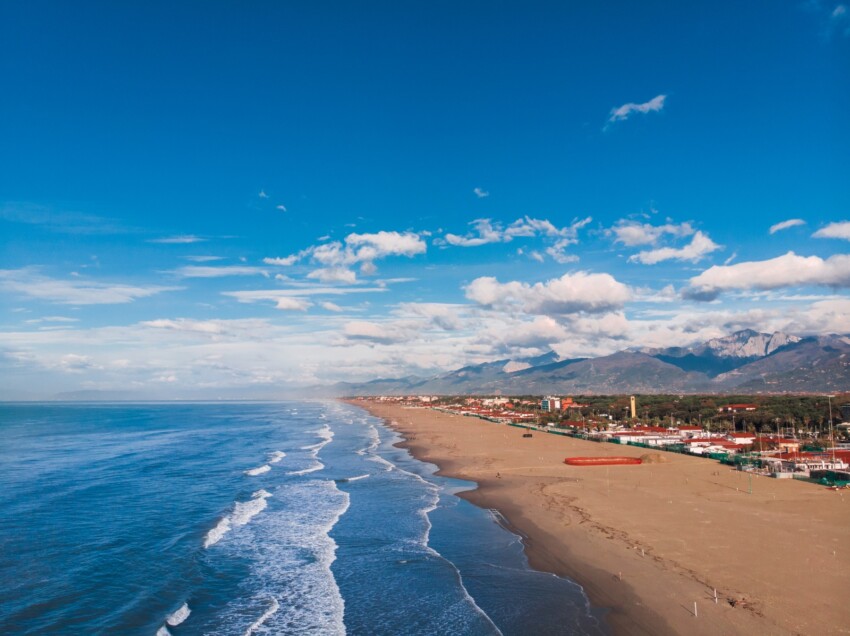
Versilia’s other leading destination is Viareggio, a city famous for one of Italy’s most important carnivals. Like Forte dei Marmi, Viareggio is a symbol of the beach tourism that flourished during Italy’s economic boom, and all its beaches are well-equipped… except for one, a beautiful stretch that represents the outer edge of a vast nature reserve within the Migliarino, San Rossore and Massaciuccoli Park.
We’re talking about La Lecciona, Viareggio’s only free beach: a 5 km long sandy shore that remains wonderfully untamed, with evocative dunes covered in vegetation. Behind the beach stretch wetlands and pine forests.
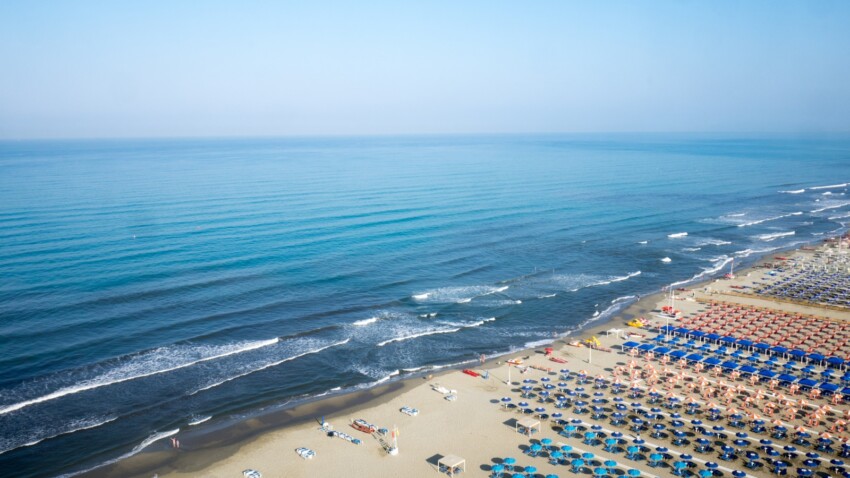
For those seeking fine sand, facilities and entertainment without the eye-watering expense of Forte dei Marmi, Lido di Camaiore is a brilliant alternative – a popular seaside spot between Marina di Pietrasanta and Viareggio. The atmosphere is quintessentially Versilia: vibrant and dynamic, with plenty of opportunities to socialise and have fun, yet without the excess and pretension of Forte dei Marmi.
The iconic image of Lido di Camaiore is a futuristic-looking steel pier that lets you stroll amongst the waves for almost 300 metres.
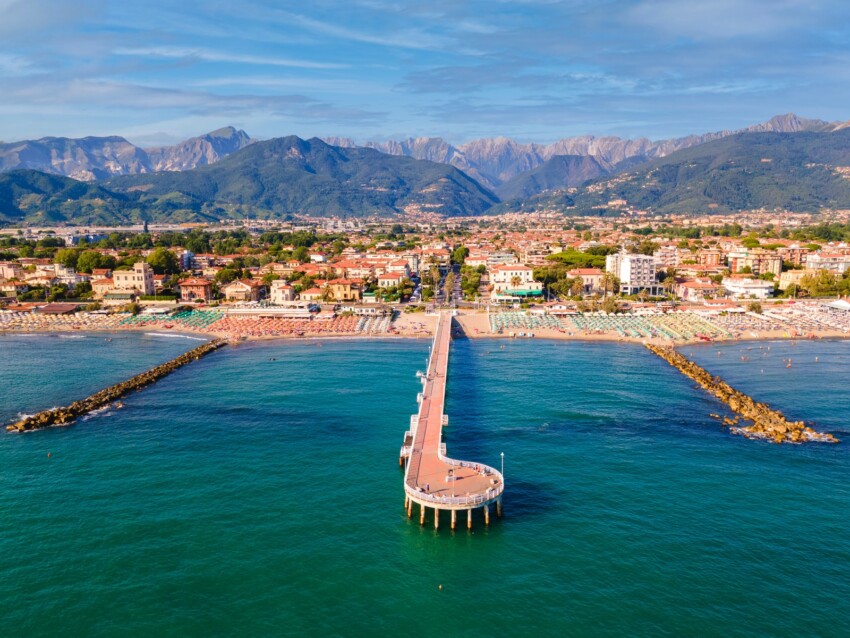
For those forever torn between mountains and sea, Marina di Massa is the perfect destination: its long sandy beach lies just a short distance from the peaks of the Apuan Alps. You can thus combine beach lounging with outdoor mountain pursuits in a single trip.
If it’s purely the sea that appeals, you’ll appreciate its extensive sandy shore, complete with all facilities – perfect for families and those after comfort and safe bathing, as well as young visitors keen on fun and entertainment.
Marina di Massa also makes an excellent base for day trips to Versilia or Liguria.
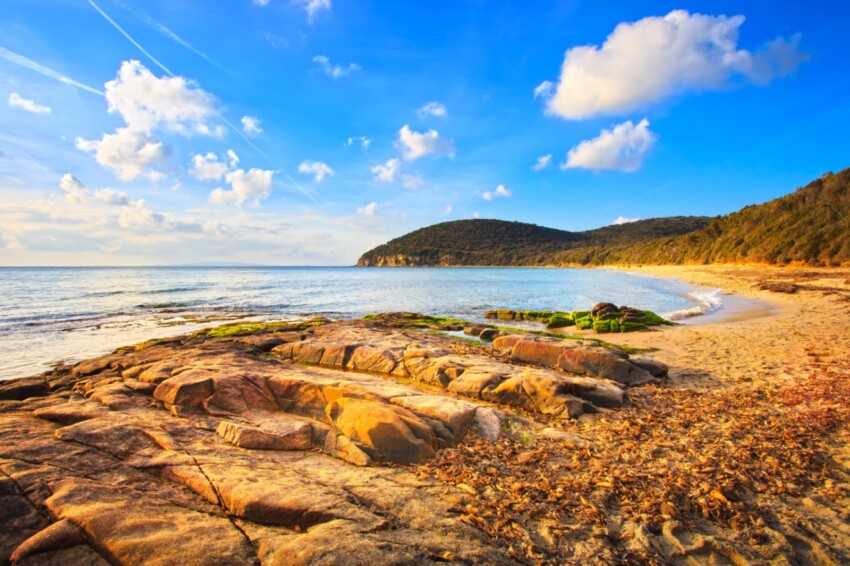
If you have time for just one beach in Grosseto province, choose Cala Violina: it’s unique, an absolute must-see… or rather, must-hear!
What makes this stunning pale-sand beach, nestled between two lush headlands, truly special is a particular quartz present in the sand that emits a sound when you walk on it. The sound is so sweet it’s compared to that of a violin.
To preserve Cala Violina’s natural environment, daily access is capped at 700 people and advance online booking is required. Moreover, the beach is only reachable on foot or by bicycle; there are various routes of varying lengths, from 1.8 to 6 kilometres.
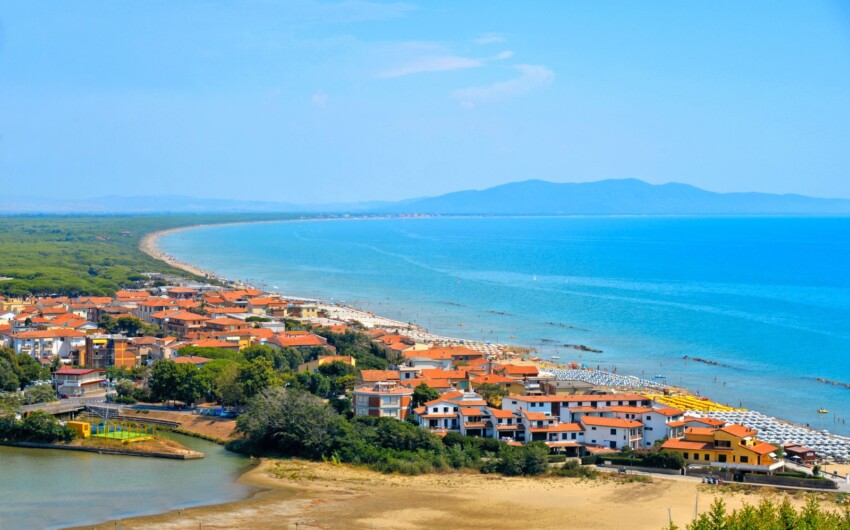
Castiglione della Pescaia is a charming fishing village perched on the slopes of a sea-facing headland, dominated by an evocative castle. The finest beach in this delightful location is Spiaggia delle Rocchette.
Situated just a few kilometres from the historic centre, it’s an enchanting beach set within a picturesque bay bounded by towering rock walls.
It divides into two zones: the larger and busier one is a spacious stretch of golden sand; the smaller one is a pebble and rock cove with a reddish hue; both are bathed in calm, pristine waters.
Monte Argentario is famous for its breathtaking beaches; amongst these, the finest is Cala del Gesso, a crescent of gleaming white pebbles at the foot of rock faces cloaked in dense vegetation. It’s highly recommended for snorkelling enthusiasts: the beach is sheltered from the winds and the sea displays marvellous hues, with countless shades of green and blue.
The simplest way to reach Cala del Gesso is by water taxi from Porto Ercole; by car, you’ll need to drive along a scenic road, continue on foot along a 700-metre pedestrian path and tackle a steep staircase.
La Feniglia, a beach near Orbetello, has a distinctive form that appeals to both comfort-seekers and those who love untamed shores.
It’s a tombolo – a sandbar connecting two locations: at one end lies Monte Argentario, at the other the Ansedonia hill; in total it stretches 6 km. Much of it is free, though bathing establishments exist in zones closer to inhabited centres.
The beach is framed by low dunes and backed by extensive pine forest; the area has been protected through the establishment of a nature reserve.
Torre Mozza beach, between Follonica and Piombino (not to be confused with Torre Mozza in Salento), takes its name from an ancient coastal tower with a truncated summit. The imposing structure that gives the beach its name, comprising three sections from different eras, juts from the shore into the sea, much like an enormous vessel departing: truly a striking sight.
Another excellent reason to choose this beach is its waters, made particularly calm by a rocky outcrop close to the shore. The beach comprises both free areas and bathing establishments.
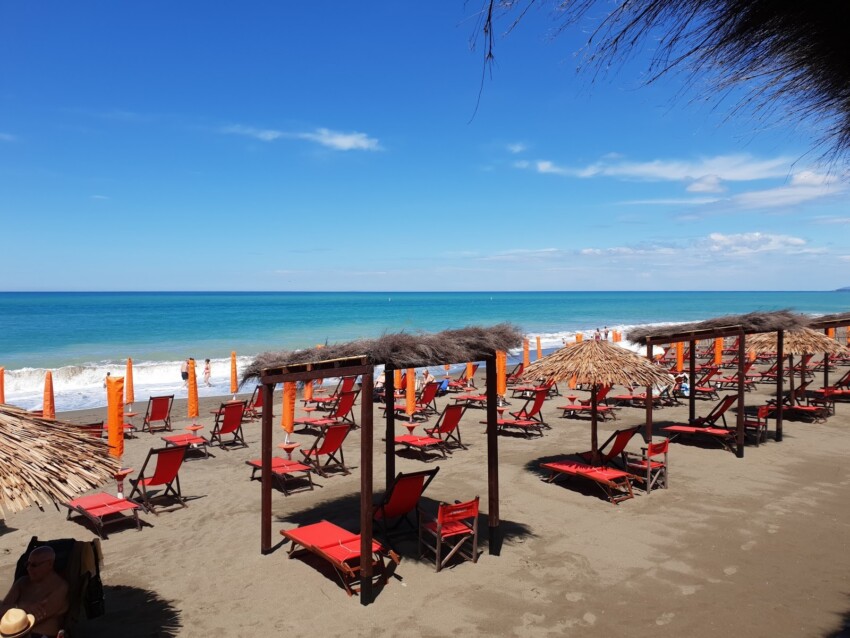
One of Tuscany’s finest family beaches is Marina di Bibbona, one of the most popular seaside resorts in Livorno’s Maremma region. It’s also known as Marina del Forte due to a defensive tower built in the eighteenth century and now used for exhibitions and events.
Safe beaches, facilities awarded Blue Flag status, and reasonably priced accommodation are excellent reasons to visit; add to this the cool breeze and greenery: Marina di Bibbona sits between two pine forests stretching from Marina di Cecina to Marina di Castagneto Carducci.

Do you love Caribbean-style beaches with dazzling white sand, sparkling turquoise water and lush greenery all around? Then head to Rosignano Marittimo, celebrated for its enchanting Spiagge Bianche.
This consists of an expansive sandy strip roughly 4 km long extending from Rosignano to Vada; it’s famous for its distinctive white colour reminiscent of Caribbean shores.
What appears to all eyes as a natural paradise owes its origin – incredibly – to a local industrial plant producing sodium carbonate and bicarbonate. The residues of these chalky materials, washed down to the beach, are what have given the sand its white colouration.
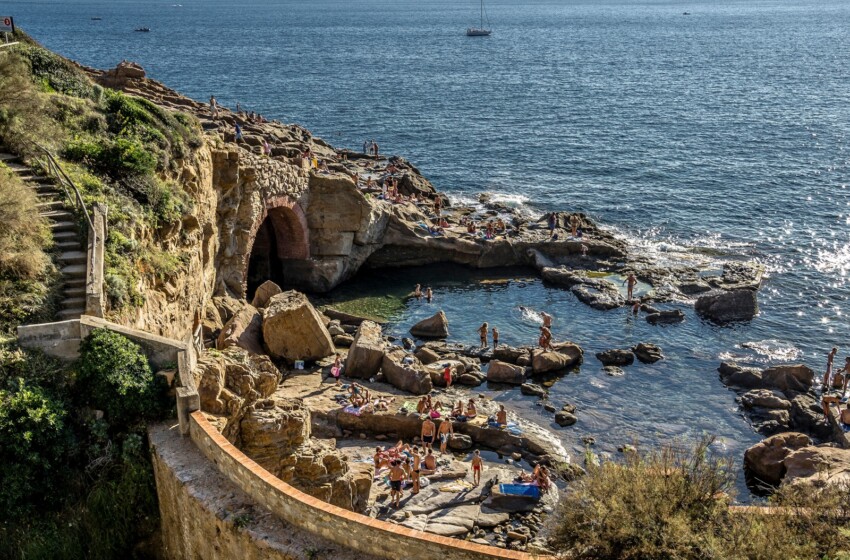
Tired of sandy beaches? For lovers of rocky coves, one of the best areas in south-central Tuscany is the Romito coast and in particular the Calafuria cliffs, a towering sandstone cliff squeezed between the sea and the green Livorno hills.
It takes its name from a corresponding tower… and the same name applies to a magnificent rocky beach at the cliff’s base, directly opposite the tower. Both beach and seabed are entirely rocky and the water is immediately deep; however, there are small natural pools formed by the rocks where less confident swimmers can cool off.
Despite being somewhat tricky to reach, Calafuria beach is always busy; it’s also well-known and beloved by diving enthusiasts.
Choosing Elba’s most beautiful beach is difficult, but if we must pick one, we’d say – like many others – Sansone beach.
It’s a crescent-shaped pebble beach of brilliant white at the foot of towering rock walls, equally white; the beach’s ends are marked by a sea stack and a tall sea arch. The extraordinary palette of colours composing this natural masterpiece also includes the green of shrubs growing on the rocks and the turquoise sea.
The crystalline waters lapping Sansone beach are considered the clearest on the entire island of Elba. On Scirocco days the sea is particularly calm and you can admire the white seabed. Needless to say, with water like this, the beach is ideal for snorkelling.
If you want a stunning natural setting without sacrificing the comforts of a beach establishment – perhaps even a seaside aperitivo – then Paolina beach in Marciana on Elba is for you. It’s a narrow strip of mixed pebbles and gravel caressed by crystalline waters of splendid hues.
It takes its name from a small island just metres offshore, named after Napoleon Bonaparte’s sister: you can swim or wade out to it as the seabed is shallow there.
Located along the enchanting Giglio island’s coastline, Cannelle beach overlooks Monte Argentario, another marvel of the Tuscan shore: a unique combination not to be missed.
It’s the island’s second-largest beach: the central section is fine sand whilst the extremities are rocky. The sea is shallow and very clear: perfect both for children and snorkelling enthusiasts.
Cannelle beach is always busy, but you can find quieter spots: walking along the rocks you’ll discover secluded coves, perfect for sunbathing away from the crowds.
 Hotel
Hotel  Budget accommodations
  Apartments
  Family Hotel
  Luxury Hotel
  Resorts