Hotel Tarabella
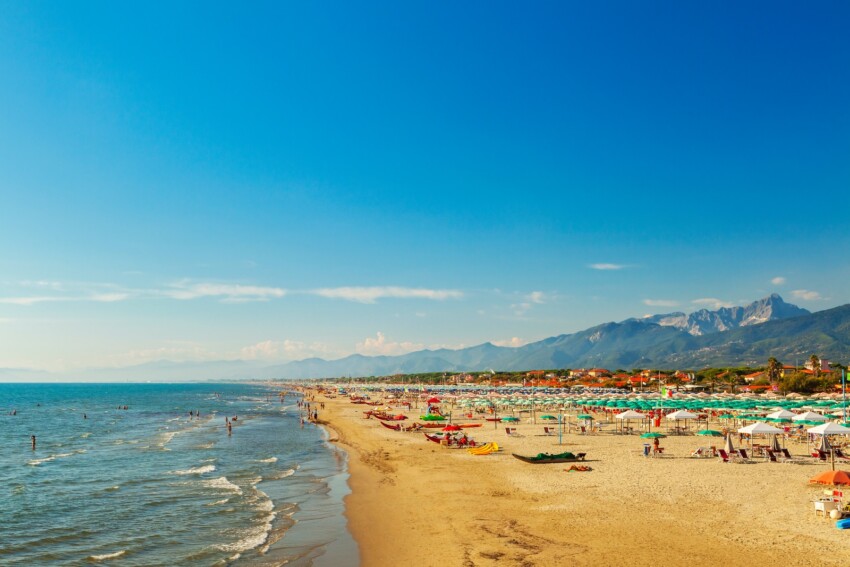
Since the 1950s, Versilia has been the crown jewel of the Italian summer: it remains etched in the collective memory as a symbol of youthful energy, vitality and music.
Located in the province of Lucca, with its blue-flag certified beaches and sea, rolling hills, the San Rossore park, and the Apuan Alps as a dramatic backdrop, Versilia is one of the ideal destinations for a relaxing holiday immersed in nature. You can spend your days on the beach, hiking in the Apuan Alps or exploring the parks, strolling along the magnificent avenues of Viareggio and Forte dei Marmi, savouring fresh fish dishes at one of the typical restaurants, then plunging into the vibrant nightlife, where the lights of evening merge seamlessly with those of morning.
Versilia has indeed been one of Italy’s most celebrated nightlife destinations for decades, with legendary clubs and venues such as La Capannina, Seven Apples and Twiga. Today the area is at the forefront of elite tourism and sophisticated nightlife, preserving its original splendour. Its excellent cuisine and pristine sea have always made it a benchmark for those seeking an exclusive holiday.
Fashions, songs and celebrities (some rather fleeting) pass through its beaches and towns, shaping the history of Italian culture and music. Along its seafront, venues have emerged where little-known singers perform—many destined for great success.
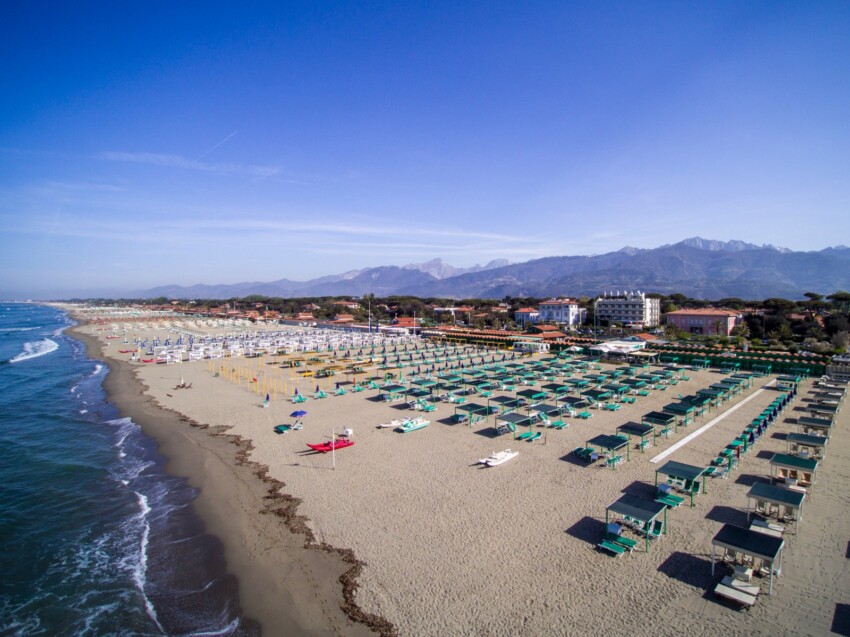
Forte dei Marmi is a piece of Italian summer tourism history: its name is instantly synonymous with beach clubs, parasols and nightclubs. If you’re a devotee of seaside holidays, this is somewhere you simply must visit at least once.
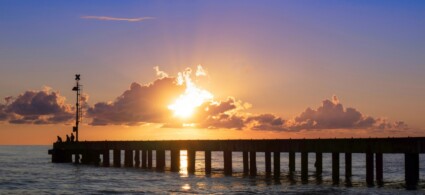
It’s the jewel in Versilia’s crown, nestled on a narrow strip of land between the sea and the Apuan Alps, famous for its long stretches of fine sand and its uninhibited nightlife. A leisurely stroll along the long pier, built in the 16th century and originally used for loading marble, is both pleasant and rewarding.
Many know Forte dei Marmi as an exclusive, expensive and rather snobbish destination, perfect for those seeking top-tier services, fashionable venues and designer boutiques. This is certainly one of its defining characteristics, but the town also boasts a historic centre rich in museums and monuments; moreover, it makes an excellent base for exploring the other Versilia beaches.
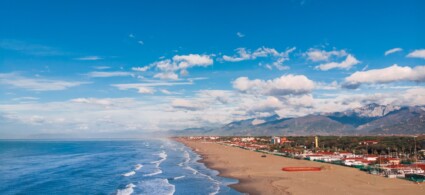
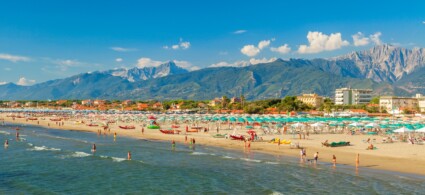
Behind the sandy shore, countless colourful beach cabins, perfectly aligned, seem to frame the Apuan Alps. The marble quarries and rubble heaps, white patches at the mountain peaks, make these mountains appear snow-capped even in summer. They are the only mountains in the world capable of creating such an illusion.
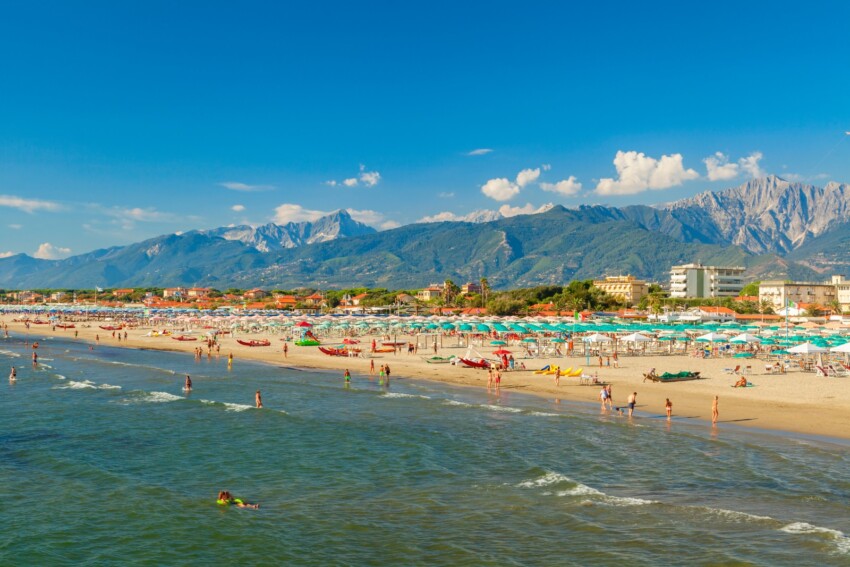
Marina di Pietrasanta is geographically the continuation of a single sandy shore that begins at the Liguria border and ends with the Livorno headland, with no significant differences other than administrative ones. The beach maintains its impressive width, the cabins remain neatly arranged, but the layout changes, as each beach establishment has its own character, evident even in the smallest details.
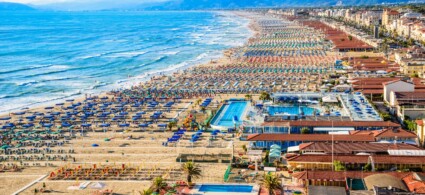
The convenience of amenities on offer (over 100 beach clubs along nearly 5 km of coastline), the gently shelving sea and the expansive beach ideal for outdoor games, make this stretch of coast a perfect environment for families with children.
Marina di Pietrasanta, like the nearby hamlet of Tonfano, has the character of a seaside town, with public parks and gardens. The localities of Fiumetto, Motrone and Focette, on the other hand, largely consist of small villas interspersed with pine groves.
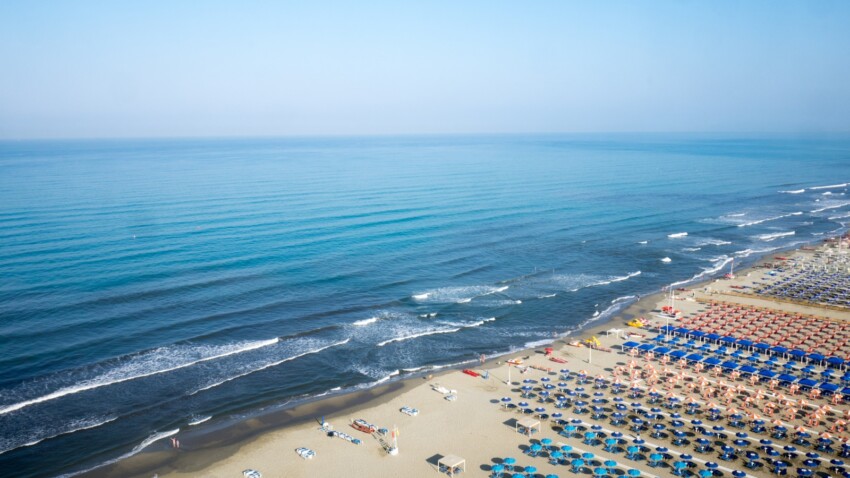
At Lido di Camaiore, the beach remains spacious but the beach clubs take on a different character. Gone are the neat rows of colourful cabins; instead, they’re often positioned behind the establishments, whilst sun loungers frequently replace the traditional parasols on the sand. As mentioned, each resort has its own distinctive features.
The town is most charming, stretching along the Lungomare Pistelli and well-equipped for tourism at every level. There are numerous hotels, mostly just a stone’s throw from the sea dating back to the 1960s, plenty of shops, and a lovely modern pier, where an evening stroll is practically obligatory.
Pine trees, gardens and equipped areas are everywhere. The children’s playground at Lido di Camaiore is completely nestled within a pine grove, becoming an integral part of the landscape in harmonious unity. Finally, don’t miss a ride on the observation wheel that’s erected annually, offering splendid views across the entire Versilia coastline.
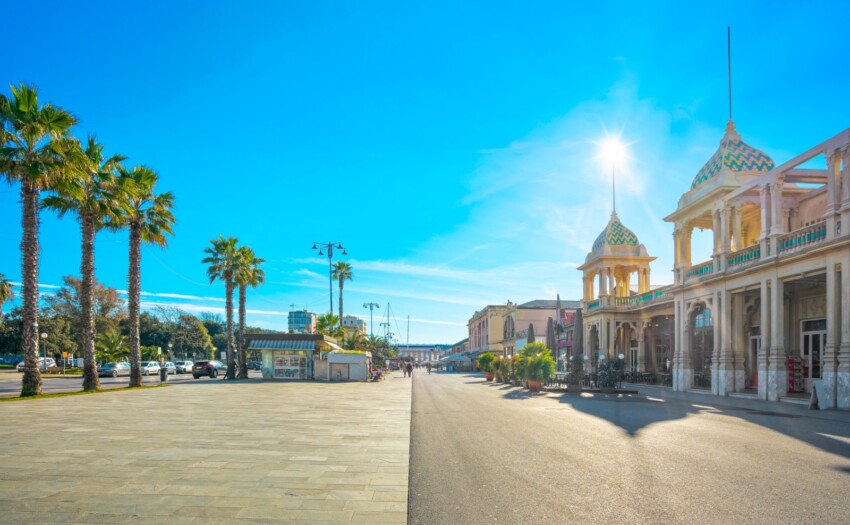
The name of Viareggio comes from the maritime dock built by the Lucchese, positioned along the “Via Regia”, which once crossed the extensive coastal forest. Today, only the pine groves of Levante and Ponente remain from that forest, but the town is famous above all for its seafront promenade, one of Italy’s finest examples of Art Nouveau style, with its ornately decorated palaces, arches and colourful ceramics.
The Viareggio beach is now entirely occupied by beach clubs and is characterised by being lively and bustling in every season, also thanks to its mild climate, with temperatures that never drop too low. Viareggio is ideal for a leisurely, refined seaside holiday: services come directly to the beach and you can enjoy a coffee, grab an ice cream or have lunch without venturing far from your parasol.
The port is highly developed, with large sailing vessels moored and a constant flow of small fishing boats, many of which sell their catch directly from the dock. Finally, don’t miss Viareggio during the February weekends, when you’ll witness enormous parades of allegorical floats and experience Italy’s second most important carnival after Venice’s.
Torre del Lago Puccini, simply known as Torre del Lago to everyone, is a locality within the municipality of Viareggio, and also marks the southern boundary of Versilia, as at its southernmost point lies the mouth of the River Serchio, beyond which begins the Migliarino-San Rossore park, marking the start of the Pisa coastline.
With its substantial tourist facilities, Torre del Lago is a famous seaside resort, with equipped beach clubs alternating with public beaches, both extremely popular during high season, also thanks to the presence of bars and restaurants. Thanks to its lush pine grove, in few other places along the Versilia coast can you pass, in just a few metres, from a comfortable, well-equipped environment to one that’s completely unspoilt and natural.
The locality of Cinquale marks the point where the River Versilia flows into the sea, and therefore marks the northern boundary of the region. Located in the municipality of Montignoso, in the province of Massa-Carrara, it boasts a fine sandy beach and good-quality facilities. Heading inland, you’ll reach a small airfield, perfect for scenic flights over the coastline or the nearby Apuan Alps. It’s also possible to attend a skydiving school.
Right on the border between Cinquale and Forte dei Marmi, there’s still a small holm oak forest, composed of substantially sized trees.
In the following map you can see the location of the main places of interest mentioned in this article.
 Hotel
Hotel 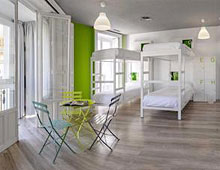 Budget accommodations
  Apartments
  Family Hotel
 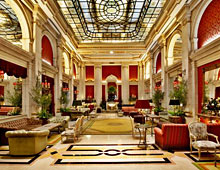 Luxury Hotel
  Resorts