LHP Certaldo Resort
Certaldo - Via Del Molino 74
Book now
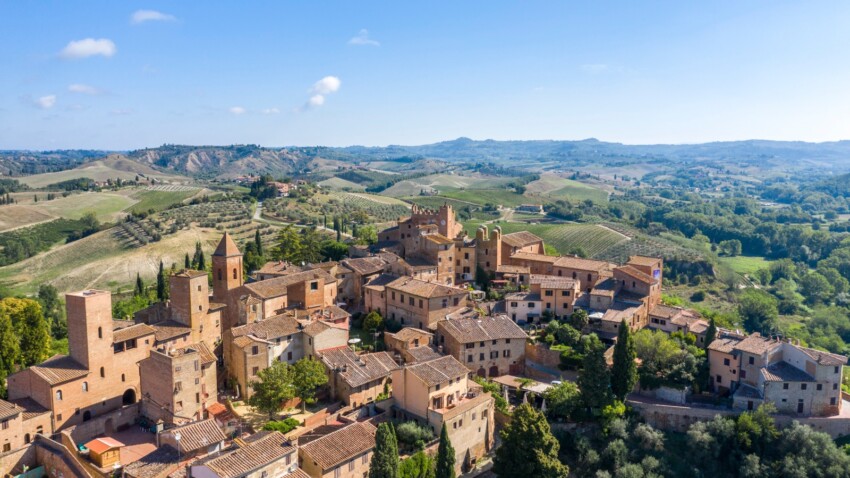
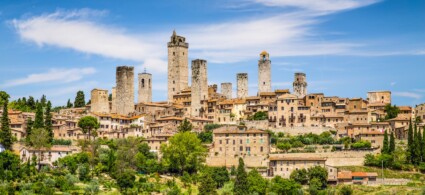
Situated midway between Florence and Siena, perched atop a hilltop, stands the charming Certaldo, birthplace of Boccaccio. Here, where the renowned writer and poet was born some 700 years ago, visitors can enjoy a small yet perfectly preserved medieval village, complete with numerous buildings of historical and cultural significance and magnificent surroundings.
We are indeed in the heart of the Val d’Elsa, a renowned tourist destination that within a few square kilometres offers visitors unique gems such as Monteriggioni, San Gimignano and San Miniato, each worthy of the journey alone. Combine these with a visit to Certaldo, and your Tuscan holiday will be truly perfect.
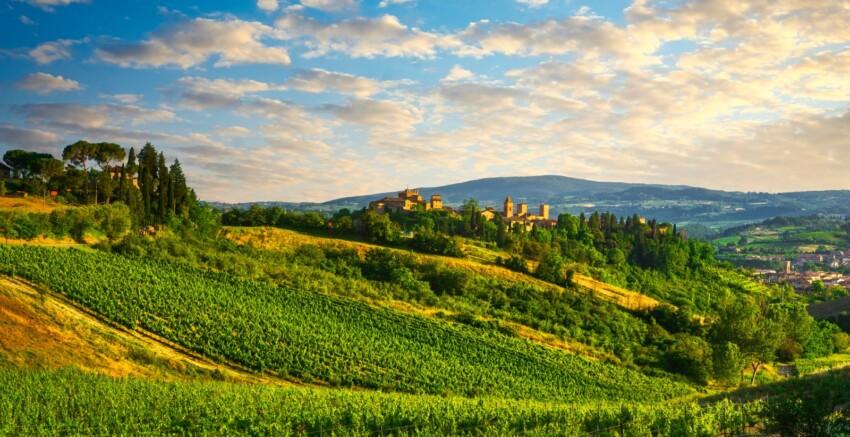
Certaldo’s historic village, commonly known simply as Certaldo Alto, is small yet absolutely worth a visit. After exploring it thoroughly, don’t forget to venture out and discover the magnificent surroundings. And while you’re at it, don’t overlook Certaldo Basso, the newer part of the town: there may be no medieval monuments or architecture, but you’ll find various shops, bars and restaurants.
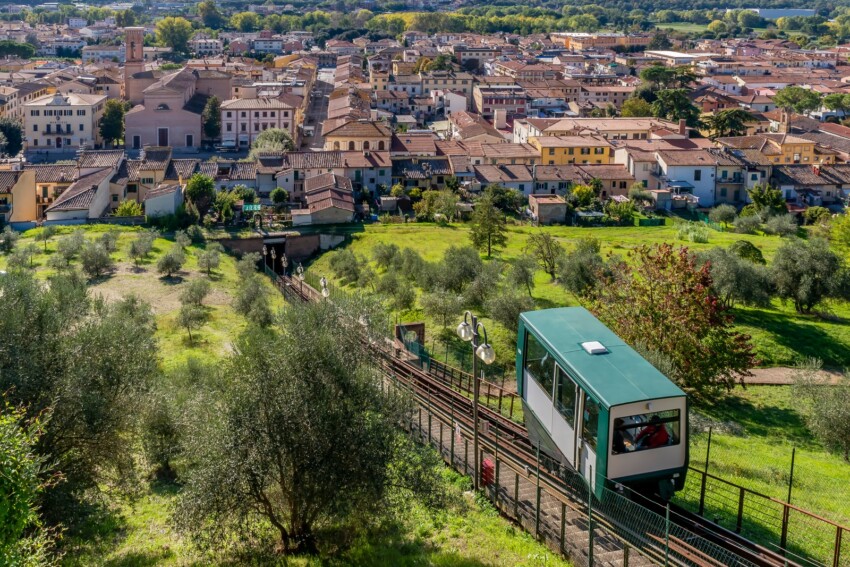
The two parts of the town are connected by a funicular railway, open daily. The Certaldo Basso station is located in Piazza Boccaccio, whilst the Certaldo Alto station is at Porta Alberti. The funicular departs every 15 minutes, from 7.30am to 7.30pm from mid-October to mid-April, and from 7.30am to 1.00am from mid-April to mid-October. A single ticket costs €1 (€1.20 for a return journey), with season tickets and carnets also available. The funicular offers reductions for residents, children and disabled passengers.
The Castello di Certaldo is what is commonly referred to as Certaldo Alto, to distinguish it from the lower part located in the valley below.
Castello di Certaldo sits at the top of the hill and is surrounded by defensive walls that remain largely well preserved, with ancient gates opening onto them: Porta Alberti, Porta al Sole and Porta al Rivellino. The “Rivellino” with its imposing walls represented an external defence to the castle, allowing control of the valley below and the important Via Francigena pilgrim route.
You can access Castello di Certaldo via ancient and charming streets such as Costa Alberti and Costa Vecchia, or through the modern Via del Castello, or simply by taking the funicular railway from Piazza Boccaccio.
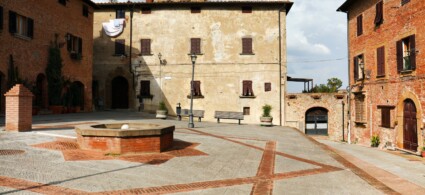
The Castello di Certaldo presents itself as a fortified village clinging to the hilltop, built entirely of pink brick that lends it a particular atmosphere. It remains a rare example in Tuscany of medieval architecture with Renaissance touches. Walking through Castello di Certaldo, whose main street is Via Boccaccio, it’s worth pausing to admire the stunning and picturesque views of Via del Rivellino with its sixteenth-century gate, Vicolo Bandinelli and Via Valdracca, Porta del Sole with the Medici coat of arms, and finally Porta Alberti.
The Palazzo Pretorio, or Palazzo dei Vicari, is undoubtedly the symbol of Certaldo’s historic centre and its most important building. It was built on the highest part of the hill during the thirteenth century to house the Vicari, the Florentine magistrates who administered criminal justice in the area.
The palace is striking even when viewed from outside, with its iconic red-brick facade adorned with numerous coats of arms belonging to the vicari who succeeded one another throughout Certaldo’s history, rendered in terracotta, marble or pietra serena. At the top of the palace sits an elegant crenellated parapet added in the nineteenth century, whilst to the right stands the clock tower, dating back to the fifteenth century.
Palazzo Pretorio is part of a single large museum complex in Certaldo, which besides itself includes Boccaccio’s house and the sacred art museum. The visit, which begins in the large vaulted atrium, passes through a series of fascinating rooms on the ground floor, including the Knight’s Chamber, the Audience Hall, the civil prison and the chapel, as well as the criminal prisons and women’s prisons. Ascending to the first floor, you enter the former residence of the Vicar, where you can still observe rooms reserved for him, as well as those for servants, the alcove and the guest chamber, dedicated to welcoming visitors.
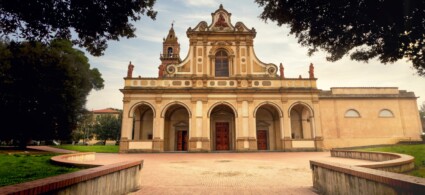
Adjacent to Palazzo Pretorio stands this small church, the oldest in Certaldo Alto, also constructed in red brick, built in Romanesque-Gothic style. It is no longer used for Mass, but is open to visitors.
The Church of Saints Thomas and Prosper consists of a single nave, closed by an apse, and displays various works including magnificent frescoes detached from the Tabernacle of the Executed, a work by Benozzo Gozzoli. All decorations were restored after the Second World War and have returned to their original fifteenth-century splendour. The church is also used for private events, conferences and exhibitions.
Very similar to the Church of Saints Thomas and Prosper in terms of aesthetics and architectural style, the Church of Saints James and Philip is another religious building located in Certaldo Alto. It is famous for housing the remains of Giovanni Boccaccio, and those of Certaldo’s patroness, the blessed Giulia Della Rena.
The interior is rather sparse, as much of the church’s artwork and treasures are on display at the adjacent sacred art museum, housed within the cloister of the Augustinian convent. However, it’s worth entering to see the beautiful Petrognano crucifix, dating from 1240, a large 2-metre-high altarpiece from the workshop of Giovanni Della Robbia, and the bust of Boccaccio, from the sixteenth century, by Giovan Francesco Rustici.
Certaldo and Giovanni Boccaccio are bound by an unbreakable thread, and the Boccaccio house museum bears witness to this: located in Certaldo Alto, it forms a single museum circuit together with Palazzo Pretorio and the sacred art museum.
Inside this house, now reconstructed after the Second World War and situated at Via Boccaccio 18, the great Florentine poet died in 1375. The building was purchased in the nineteenth century by Carlotta Lenzoni dè Medici, who completely refurnished it, equipping it with a splendid fresco, which fortunately remained untouched by the wartime bombing that reduced the house to ruins.
The visit to Boccaccio’s house museum unfolds over three floors: on the ground floor the poet’s life and works are presented via film, on the first floor you can visit the library and fresco, whilst on the second floor you reach the tower from which you can enjoy a splendid panorama of the Val d’Elsa.
Opened in June 2001, the Certaldo sacred art museum is housed within the former Augustinian convent, beside the Church of Saints James and Philip. Inside are sacred art works from churches in Certaldo and its immediate surroundings; the exhibition is divided into 7 rooms, featuring picture galleries, displays of goldwork and exhibitions of priestly vestments.
The museum’s final room was originally dedicated entirely to the Petrognano crucifix, but since it was moved into the church, an art collection from Villa Bardi, located in the Linari hamlet of Barberino Val d’Elsa municipality, has been installed here. Inside you’ll admire seventeenth and eighteenth-century canvases, along with a wooden crucifix and two large bound volumes.
Don’t leave Certaldo Alto without first passing through its gates, the ancient entrances to the village, still present today though in varying states of preservation.
Start with the castle’s main gate, the Porta al Sole, through which you enter Via Valdracca. It takes its name from its position facing south, and the Medici family coat of arms adorns its arch. Continue then in a north-westerly direction, where along Costa degli Alberti you’ll find the Porta Alberti, dating from the fourteenth century. Today it’s blocked by a wall but the outlines are still visible. Finally, proceed along Via del Rivellino, at the end of which you’ll find the Porta del Rivellino, which overlooks the Via Francigena situated beneath it.
Mercantia (pronounced Mercanzìa) is an international festival held every year in Certaldo Alto, dedicated to street theatre. It takes place in July, around the middle of the month: each evening, the historic village fills with open-air performances, and thanks to artists from around the world, performances of all kinds are staged: from comedies to acrobatics, from children’s shows to magic displays.
The Mercantia programme is rich and packed with events, taking place simultaneously in various locations throughout the village: Augustinian convent, Belvedere Calindri, Costa Vecchia, Palazzo Pretorio gardens, Via del Castello, Via Valdracca and Via Boccaccio. Each year the programme is redesigned from scratch, so we recommend keeping an eye on the official website for further information.
The festival, which in 2021 celebrated its 33rd edition, attracts tens of thousands of curious visitors and enthusiasts from across Italy. During the festival evenings, access to Certaldo Alto is only by purchasing a Mercantia entrance ticket.
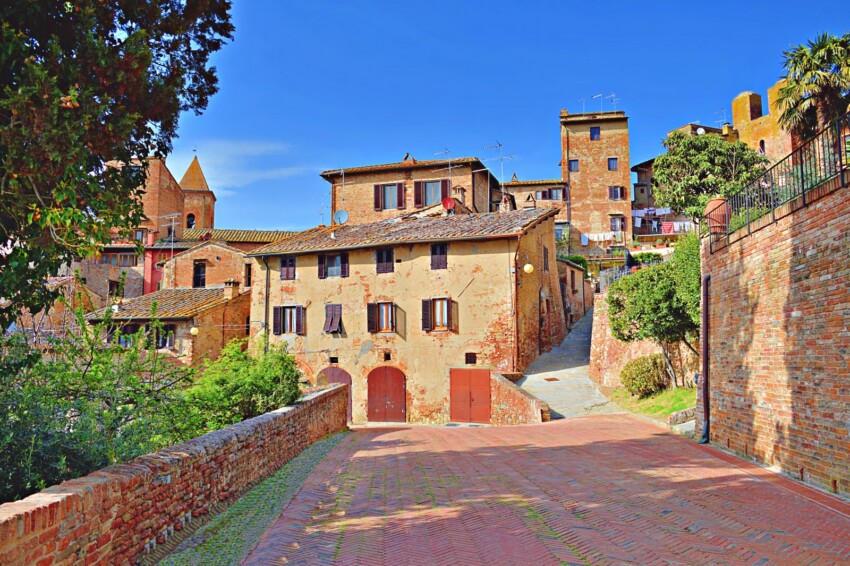
You’ll find no shortage of accommodation options in Certaldo: by choosing to stay in the historic village, you’ll have a range of establishments from hotels to B&Bs to apartments, all finely restored and renovated, allowing you to immerse yourself completely in the medieval atmosphere of the centre, especially in the evening when day-trippers have returned home or to their hotels.
If you’d like to stay close to the centre but prefer convenience, easy parking and various services, choose to stay in Certaldo Basso: accommodation options abound here too, with several guesthouses, apartments, holiday lets, B&Bs and even a few hotels.
Conversely, if you want to enjoy the Tuscan countryside at its finest, forget the historic centre and head a few kilometres further afield: whichever direction you choose, you’ll find numerous farm stays, country houses, country resorts and farms, very often fully equipped with swimming pools and in-house restaurants. It will be a holiday centred on peace and relaxation, but the disadvantage in this case is that you’ll need to have your car with you.
Remember that accommodation is fully booked during Mercantia festival days in Certaldo. If you want to stay here and attend the festival as a spectator, be sure to book several months in advance.
Geographically, Certaldo sits roughly midway between the provinces of Florence and Siena, though in terms of transport infrastructure it’s somewhat off the main regional routes. Whatever your starting point, you’re looking at a reasonable journey.
From central Florence, for instance, it takes just under an hour via the SGC FI-PI-LI trunk road to the Ginestre Fiorentina junction, then heading south along provincial roads SP80 and SP22 through Baccaiano, San Donato and Petriccio. From Siena city centre, the journey takes around 40 minutes along the Florence-Siena motorway link towards Florence, exiting at Poggibonsi Nord, where the regional SR429 road takes you the rest of the way.
Arezzo is rather further afield: take the A1 motorway to Florence Impruneta, then join the Florence-Siena motorway link to Poggibonsi Nord, continuing along the SR429. This journey takes approximately an hour and a half. To reach Certaldo from the main coastal provinces of Tuscany, take the SGC FI-PI-LI towards Florence as far as Empoli, then continue south along the SR429 to your destination. From Pisa it’s about an hour; from Livorno about an hour and 15 minutes.
Good news for public transport users: Certaldo has a railway station on the Empoli-Siena line, making it reasonably straightforward to reach. From Florence Santa Maria Novella station it takes 50 minutes on the direct train, which departs hourly, or just over an hour with a change at Empoli – the latter option runs more frequently.
From Siena Centrale the journey takes 35 minutes, with trains departing twice hourly. Once you’ve stepped off the train, you can comfortably walk up to Certaldo Alto – it’s about 800 metres, taking 15-20 minutes (mind the steep uphill section at the end!). If you prefer not to walk, you can reach the funicular station in just 5 minutes on foot via via II Giugno.
What's the weather at Certaldo? Below are the temperatures and the weather forecast at Certaldo for the next few days.
Its origins are undoubtedly Etruscan, though its real development began in the early Middle Ages. The upper town grew during the period of Germanic rule (1164), when Certaldo, along with Pogni and Semifonte, was granted to the Conti Alberti by Frederick Barbarossa.
The Alberti family dominated Certaldo for many years, residing in what is now Palazzo Pretorio, and throughout their rule remained fierce opponents of Florence’s Guelph faction, until submitting in 1196.
In 1292 Certaldo fell under direct Florentine rule, becoming the seat of the Vicariato della Valdelsa and della Valdipesa in 1415. As the seat of the Vicariato, Certaldo enjoyed its greatest period of growth and prosperity, becoming the most important centre in the Valdelsa. Between 1600 and 1700, the first constructions appeared in the valley, along the banks of the Elsa and Agliena rivers, and early industrial activities developed, closely tied to agricultural production.
Certaldo sits between the provinces of Florence and Siena, nestled in stunning countryside. It borders the municipality of Castelfiorentino, in Florence province, and Poggibonsi, in Siena province.
 Hotel
Hotel  Budget accommodations
  Apartments
  Family Hotel
 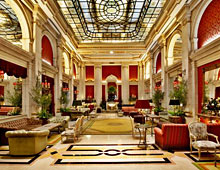 Luxury Hotel
 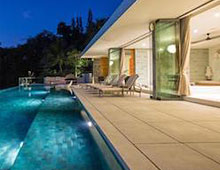 Resorts