Hotel St James
Florence - Via XXVII Aprile 18
Book now
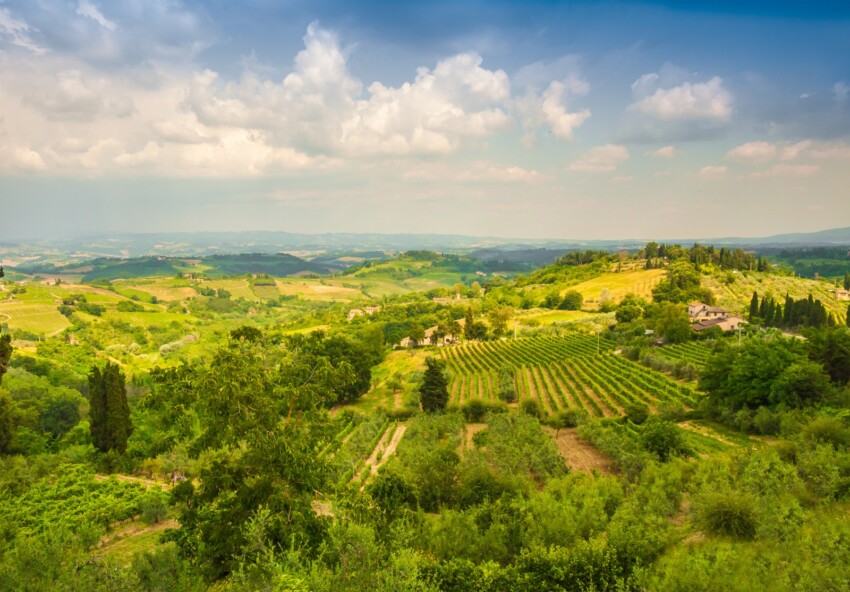
The Montalbano area, which extends across 16,000 hectares in the region between the provinces of Florence, Pistoia and Prato, is the ideal base from which to explore all of Tuscany, being centrally located and close to the major art cities: Florence, Pisa, Lucca and Siena, whilst also near both the sea and mountains.
The dominant landscape is hilly, with vineyards cultivated on flat land or on some terraces, olive trees scattered across the higher slopes and chestnut forests at the summits.
Between the 16th and 17th centuries, the Medici family designated approximately 4,000 hectares for the creation of the Barco Reale Mediceo, a vast hunting reserve of which only short stretches of the perimeter wall remain today.
The Montalbano area is particularly well suited for walking and hiking, which can be undertaken on an extensive network of footpaths and cycle trails that reach charming hilltop villages surrounded by greenery, archaeological sites and ancient woodlands such as the holm oak forest of Pietramarina.
You can also follow gastronomic and wine routes, such as the wine and oil roads.
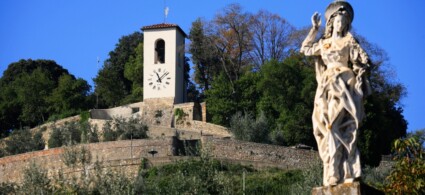
Human settlement is characterised by stately manor villas, elegant farmhouses and numerous farmhouses scattered across the various estates.
For this area, given the significant human impact on the environment, the appropriate term garden-like countryside has been used, underlining the great importance that human activity—particularly farming—has played in Montalbano, with farmers making this area even more beautiful and productive through terracing, vineyards and olive groves arranged across the hilly terrain.
Today Montalbano is an area of ecological tourism: agritourism management has developed successfully here, in an original and synergistic blend of agricultural activities, both traditional and unconventional (from oil and wine production to honey, cheese, preserves and medicinal herbs) with initiatives that enhance the area’s natural beauty through the creation of trekking trails, rest areas and farm lodges.
Archaeological finds from the late 8th century BC to the 1st century AD discovered in the Etruscan city of Artimino and its necropolises of Comeana and Prato Rosello.
In the cellars of the municipal palace, in what were once part of the Niccolini cellars with their impressive barrel-vaulted ceilings, the small “Museum of Vine and Wine” has been located since September 1999.
Housed in two locations—the Uzielli Building and the Castle of the Counts Guidi—the Leonardo Museum of Vinci is one of the most extensive and original collections of Leonardo’s machines and models as inventor, technologist and engineer.
The machines on display span various fields of study: military machines, construction machines, scientific instruments and machines for moving through the air, water and on land.
In the Building, where the visit begins, you will find two newly designed sections dedicated to construction machines and textile manufacturing machines. Each machine is accompanied by an animated virtual model demonstrating how it works. Furthermore, the Uzielli Building hosts exhibition spaces for temporary displays and a teaching room for cultural programmes.
The tour then continues inside the Castle of the Counts Guidi, where approximately 60 models of Leonardesque machines are displayed, each presented with precise references to the artist’s drawings and handwritten notes. Among these is the large wooden model of the lantern crane in the Hall of the Podestà. The teaching room titled “Leonardo’s Optics between Alhazen and Kepler” is dedicated to some of the main aspects of Leonardo’s lengthy study of optics.
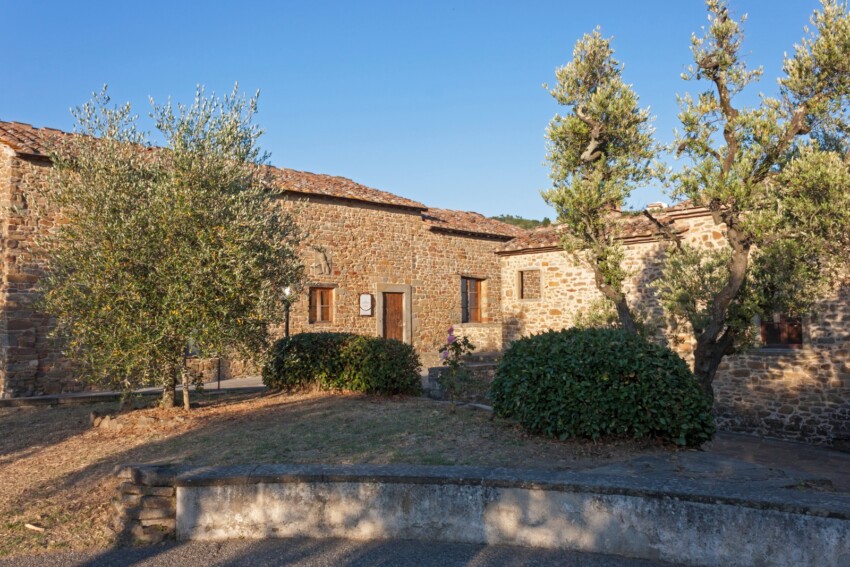
About 3 km from Vinci, in the village of Anchiano, Leonardo’s Birthplace is open free of charge during museum hours and represents a natural complement to your museum visit. Leonardo’s birth on 15 April 1452 in this farmhouse situated in open countryside is attested by ancient tradition, also accepted by historian Emanuele Repetti. The building is set within a landscape that still resembles the one Leonardo would have contemplated during his childhood. Inside is also housed a permanent educational exhibition with reproductions of drawings depicting views of the Tuscan countryside and a map of the Valdarno drawn by Leonardo himself.
The Civic Il Renatico Collection, temporary contemporary art exhibitions accompanied by art-historical studies, catalogues and multimedia resources, and educational workshops on contemporary art and 20th-century artistic languages.
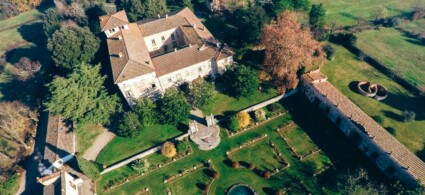
Perhaps the best-known image of Tuscany is that of the Medicean and Renaissance villas and country residences. During the rule of the Medici, which encompassed the city of Florence and much of Tuscany between the 15th and the first half of the 18th century, the family commissioned the construction of several villas surrounded by splendid parks and gardens.
These are monumental complexes built in the countryside around Florence, forming a veritable territorial system; often built on the sites of ancient castles, the villas represent the pinnacle of Renaissance and Baroque architecture achieved in Tuscany, decorated with frescoes and surrounded by Italian gardens and lush parks. The Montalbano area boasts five of these magnificent architectural masterpieces within its territory.
In 1626, the Medici created the Barco Reale, a hunting reserve surrounded by a wall of approximately 50 km, in the Montalbano area, to protect wild boar, hares, partridges, pheasants and other game, and to have game available for the Grand Duke’s hunts. Strict protection of the woodlands (oak, Turkey oak, chestnut, mulberry, pine, holm oak, fir, elm, walnut, cypress, etc.) and shrubs (broom, juniper, myrtle, etc.) was foreseen. In the early decades of the 17th century, hunting declined and the Barco gradually fell into abandonment and decay; when ownership passed to the House of Lorraine (1736), the management of the farms was entrusted to tenants who represented the owners’ interests to the peasants. After the mid-18th century, the decline in timber trade and the extent of work needed to repair the fences and internal lands of the reserve led to stagnation, which was only resolved after Pietro Leopoldo ascended the throne (1765), when decisive measures were taken regarding the Barco’s future. Due to high management costs, the “disbanding” process began, leading to alternative uses for these areas.
The holm oak forest covers the summit entirely at an altitude of 570-580 m and covers approximately 5 hectares. Inside it, you can immediately appreciate the special charm of this woodland. Some of the trees are centuries-old holm oaks (Quercus ilex), genuine living monuments, with broad, compact dark green canopies that allow only faint light to filter through, preventing undergrowth from developing. What is striking is the majesty of the trunks of some specimens: the largest has a diameter at breast height of approximately 1.5 metres.
The younger holm oaks have straight trunks that stretch upwards in search of light, whilst the older specimens tend to fork from the base. What is most striking is the majesty of some of these trunks: the largest has a diameter at breast height of approximately 1.5 metres.
Along the old trunks you sometimes encounter cavities bearing witness to old wounds that the tree has healed with callous tissue; within these small crevices, countless representatives of wildlife find refuge.
The specific composition of the forest is characterised not only by holm oak but also by other species such as holly, Turkey oak, downy oak and cedar, whilst the undergrowth, in the clearings where sunlight filters through, is composed of butcher’s broom, ivy, brambles, knotted cranesbill and fern, though it is sparse especially in areas where dense tree coverage prevents light from passing through.
Visitors to this natural area immediately notice the landscape diversity compared to the rest of the surrounding plain. Indeed, this area has not undergone the transformation that characterised the entire Pistoia plain from the 1970s onwards. Preserved thus from significant human intervention, it represents today an important natural heritage site. The water surfaces and mainly the lakes of Zela and Bigiana are an excellent habitat for numerous bird species; some breed here, others come to hunt, and many flocks make stopovers on their journeys. White storks, herons, purple herons, little egrets, collared pratincoles and marsh harriers populate the Querciola. Access to the area must be arranged with the Environment Department of Quarrata Municipality. Dress appropriately for the season (always wear long trousers) and wear comfortable, closed country footwear. Don’t forget binoculars and a camera, remembering that flash photography is absolutely forbidden so as not to disturb the animals.
For nature lovers, a walk on the slopes of Monsummano Alto Hill is an opportunity not to be missed, as the morphological and orogenic characteristics of the hill and the rare vegetation covering it make it one of the most evocative places along the Montalbano ridge.
You can satisfy your interest in natural history by following one of the many possible routes along ancient country roads or by taking the Monsummano Hill geological trail, created by the Municipal Administration in 1988, which starts in front of the Grotta Giusti spa facility.
The character of the thermal caves, natural hot caves among the most famous of their kind in Europe, is linked to the particular morphology of Monsummano Hill, where you can read the geological history of the region. Associated with the hill’s formation are also distinctive vegetation and floristic characteristics, such as the presence of numerous wild orchids, of which up to 24 different species have been recorded.
To see all the facilities and book accommodation in Montalbano use the form below, entering the dates of your stay.
City Card allow you to save on public transport and / or on the entrances to the main tourist attractions.
 Hotel
Hotel  Budget accommodations
  Apartments
  Family Hotel
  Luxury Hotel
  Resorts