Agriturismo Bellosguardo
Reggello - LOCALITA PUGLIOLA 54
Book now
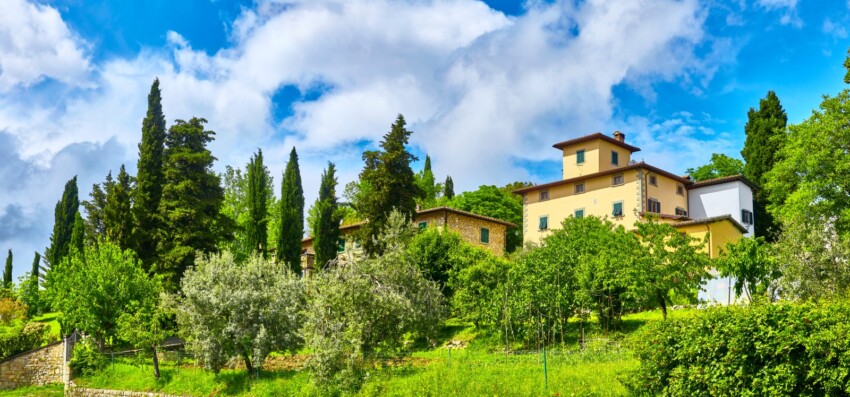
Located at the far east of Florence Province, Reggello stretches across an area of roughly 122 km², rising from the floor of the Arno valley up the slopes of the Pratomagno mountain ridge (maximum height 1,537 m), which divides it from Casentino. Beyond the valley, crossed by the Arno river, the Chianti hills separate upper Valdarno from Siena’s territory.
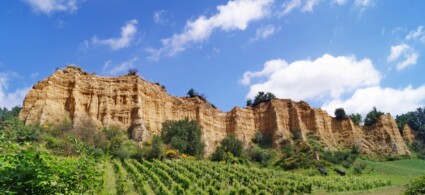
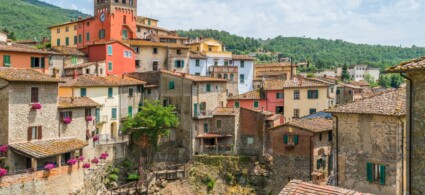
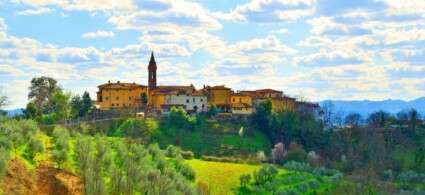
The landscape is varied, with sometimes dramatic changes at different altitudes. In the lower areas, Pliocene cliffs border cultivated surfaces, residential centres and industrial and commercial developments. The hilly belt, farmed in terraces, is crossed by the Strada dei Setteponti which reaches Arezzo, passing through evocative and small historic villages rich in artistic points of interest, including the Romanesque parish churches of Cascia, near Reggello, and those of Pian di Scò and Gropina (Loro Ciuffenna). Along the route you can admire magnificent views of meticulously tended vineyards and olive groves, with characteristic farmhouses, many of which operate as working farms or agriturismos. Higher up come broadleaf woods and, at greater elevations, beech and coniferous forests.
The Local Protected Natural Area Foresta di Sant’Antonio, situated on the western slopes of the Pratomagno range, is well worth noting. Equally important is Vallombrosa Forest, a biogenetic nature reserve rich in coniferous woods, its history linked to the monks of the nearby Abbey. Within it lies the experimental arboretum, containing 3,200 specimens of 1,200 different species from around the world. The area is rich in streams and springs, with numerous marked trekking routes and nature trails suitable for mountain biking, walking and horse riding.
The Pieve di S. Pietro a Cascia was built at the behest of Countess Matilde di Canossa between the 10th and 11th centuries. Perfectly preserved thanks to expert restoration work, it represents a typical example of Romanesque architecture.
In front of the church stands a spacious portico, the only one among all the Romanesque churches in the area to have retained its original form. To the right rises the sturdy bell tower, square in plan, constructed and faced in pietra serena stone which, according to experts, may once have been a tower belonging to the “Castelvecchio” of the Guidi Counts (7th century) or a Lombard watchtower (6th century). Inside, the three-nave layout features a single semicircular apse in the central nave with no transept. The communicating bays between the naves are marked by columns topped with Corinthian-style capitals; two square-section pillars define the presbytery area. The capitals of the first, third and fifth columns on the right bear sculpted heads of animals and men, figures with allegorical significance and decorative elements typical of Romanesque art.
In the left nave you can admire Masaccio’s “Triptych of San Giovenale”, rediscovered in 1961 in poor condition in the small church of San Giovenale, for which it had been commissioned by the Castellani family. The panel, depicting the Madonna and child with four saints, bears on its lower edge the date of execution (23 April 1422), making it Masaccio’s earliest known work and one of the most representative pieces of the very early Renaissance. This work shows the great Masaccio “at his glorious dawning moment, at the turning point between old and new expressive language. It can rightly be said that, in a sense, the great modern painting of the West has its genetic code in this difficult and almost cantankerous work painted by a brilliant beginner for a rural parish” (Paolucci).
The Pieve di Pitiana appears nestled in the tranquillity of the countryside, dotted with olive and vine groves. Like the parish churches of Gropina, Gaville, Cascia, S. Agata and Pian di Scò, it is one of the Matildine churches, built at the behest of Countess Matilde di Canossa.
The church stands along the route of the ancient Cassia Way and based on certain documents, its foundation is thought to predate the year 1000 (consider also what Repetti wrote about the square tower, which already existed in 1028). By 1028, as confirmed by a contract in the Florence Diplomatic Archive, the church was dedicated to S. Peter.
Inside the Pieve are two panels attributed to the school of Ghirlandaio: one depicts the Annunciation of the Virgin Mary; the other shows the Madonna and Child with S. Benedict and S. Augustine. Of considerable interest is the tabernacle crafted in pietra serena stone dating to around 1300.
The entire complex of properties belonging to the Pieve, including the fine Guicciardini villa and tower, is notable both for its historical and artistic value.
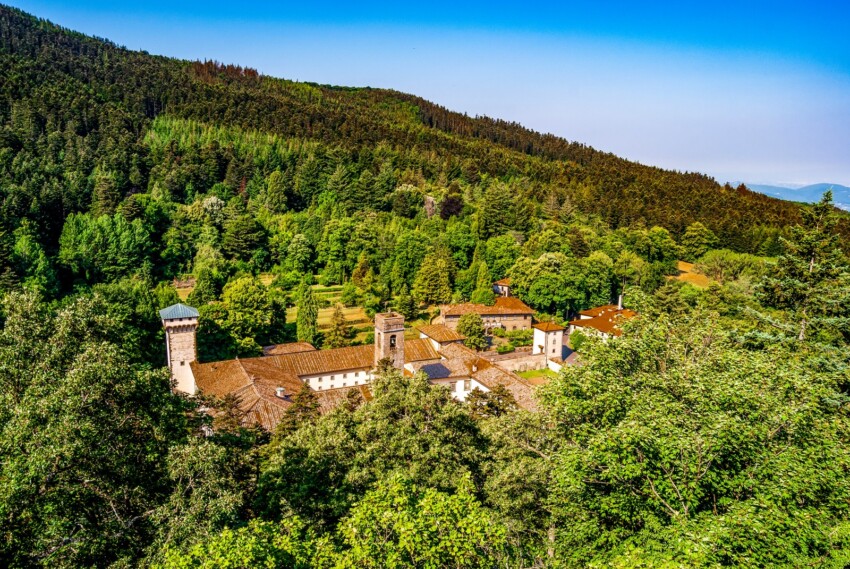
Abbazia di Vallombrosa is located within the splendid forest, created and maintained over the centuries by monks until it was declared a ‘Biogenetic Nature Reserve’ in 1973.
In 1008, Giovanni Gualberto, a noble Florentine recently turned monk, left the monastery of San Miniato in Florence with a companion, seeking a more isolated place for spiritual retreat.
After an encounter with San Romualdo, founder of the Camaldoli hermitage, Gualberto travelled to a place called “Acquabona” where a small hermitage already existed (today replaced by the Vallombrosa monastery) and where wooden cells were built for Gualberto’s new followers.
In 1015, the monks elected Gualberto as their superior and the new congregation of Vallombrosan monks was born, faithful to the Rule of Saint Benedict based on the precept “ora et labora” (pray and work).
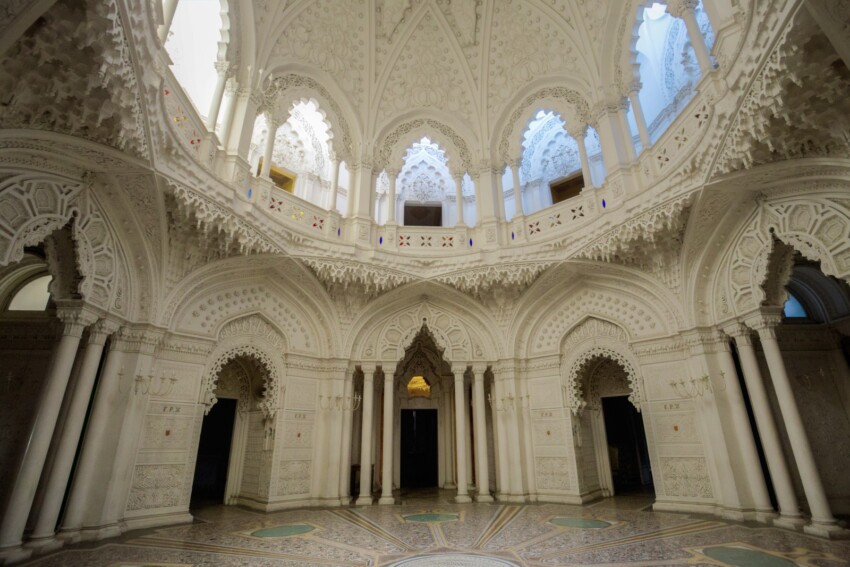
Purchased in 1605 by Knight Ferdinando Odoardo Ximenes d’Aragona, the Castello di Sammezzano complex owes its present appearance to the work carried out in the 1800s by Niccolò Panciatichi, heir to the Ximenes. He was a great admirer of Arab culture and architecture: the villa’s exterior design is indeed reminiscent of the Taj Mahal; inside, the rooms, decorated with stucco, are inspired by the Alhambra in Granada.
The castle is surrounded by a park among Tuscany’s most extensive. Panciatichi planted exotic and rare species there and embellished it with structures in Arab style. Today many of the original plants no longer exist, though some species have been reintroduced. Particularly noteworthy is the group of giant sequoias, among Italy’s most numerous: 57 mature sequoias (all over 35 metres tall), one of which has a trunk approximately ten metres in diameter. Also remarkable are the Lawson cypress specimens, recognisable by the silvery colour of the underside of the leaves.
Currently only the park is open to visitors.
The Municipality of Reggello hosts within its territory some natural treasures which, from the valley floor to the mountain ridge, constitute important ecosystems for the conservation of biodiversity. The Protected Natural Areas of Sant’Antonio Forest and the Balze, together with the historic Vallombrosa Biogenetic Reserve, represent Reggello’s green lungs and a jewel of the territory.
The forest is crossed by 18 km of marked trails, which connect to even more extensive routes, both towards Vallombrosa and towards the Pratomagno summit or the Casentino valley. The Mountain Community has equipped numerous rest areas and is recovering various buildings as shelters. The most interesting complex is Case S. Antonio, at 930 metres elevation.
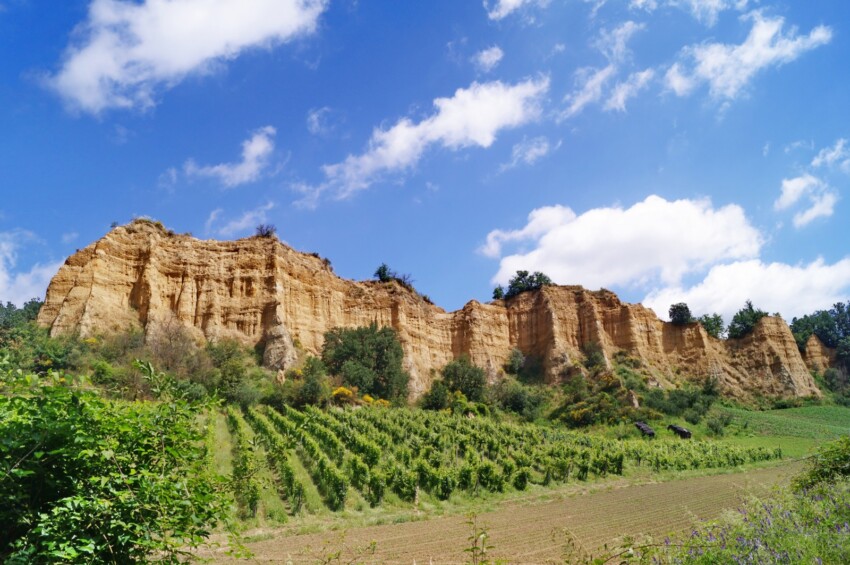
Driving along the road from Donnini to meet the Setteponti provincial road at Reggello, passing through S. Donato in Fronzano and Pietrapiana, or also via Cancelli, you can find several strategic points ideal for admiring the magnificent landscape from above. Other panoramic viewpoints are accessible from regional road 69 by turning at Ruota la Mandò towards Rota, or from the municipal road connecting Ciliegi to Matassino by turning towards Montanino or towards Rona.
If instead you wish to immerse yourself completely in nature and observe the balze formations more closely, you can walk, mountain bike or ride along some itineraries that are generally little-known but of considerable scenic, historical and geological interest. The Marnia valley is particularly interesting: just after the S. Clemente hamlet, take a white road always hugging the stream, until you start climbing what was once an ancient transit route, returning to the Pieve a Pitiana. Similar itineraries exist along the Tornia road, which offers an exceptional panorama of great interest as it passes through a wildlife area of particular value.
Another fine route leads from Prulli towards Rio Luco: you hug the small watercourse on one side while enjoying fine views of the balze on the other. But the route that certainly attracts most people is the one starting from Ostina which allows you to reach the most evocative area of the balze, enabling the hiker to come into direct contact with them. After heading towards Vaggio, you follow the Borrilati stream; after crossing a small pass you reach the Rio di Luco valley; from here through another evocative passage you cross a mountain pass between the balze and arrive at Gretaio (visiting the Buca di Gabriello is essential, where you can also stop for refreshment); the itinerary can then continue uphill to Case Merenzi; from here you cross the Cascia Plains from where you can observe the balze from above; then passing the Church of S. Siro and the crossroads of four roads, you head back towards Ostina.
The numerous trails vary in length and gradient but all share the splendid panorama of the Balze, a protected natural area and treasure of Valdarno and Tuscany.
To see all the facilities and book accommodation in Reggello use the form below, entering the dates of your stay.
 Hotel
Hotel  Budget accommodations
  Apartments
  Family Hotel
  Luxury Hotel
  Resorts