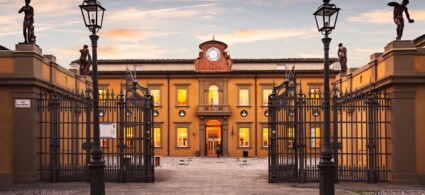
Hotel Perlage Florence
Scandicci - Via Baccio Da Montelupo 16
Book now
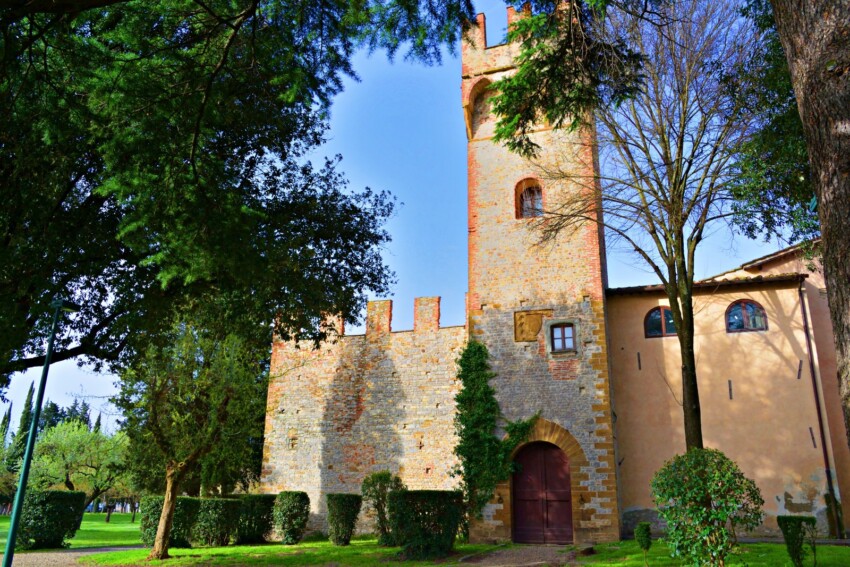
Scandicci, one of the most densely populated municipalities in the Florence area, covers an area of 59.59 square kilometres and has a population of 50,136 inhabitants. Its ancient origins are evidenced by its Latin name, though scholars have proposed various etymologies: either from scandix, the name of an umbel-shaped plant once common on the surrounding hills, or more probably from scandere, meaning to climb. This latter etymology would allude to the presence of a hilltop identified with Scandicci hill, where a castle stood in the medieval period, first recorded in 978 in a donation made by Countess Willa to the Florence Abbey. The history of Scandicci from the 12th century is closely tied to the Abbey of Settimo, an imposing religious institution that oversaw the land reclamation of the area and was invested with public functions by the Florentine state. From an administrative standpoint, the municipality has a recent history that began to take shape in 1774 with the establishment of the communities of Casellina and Torri. From 1868, Scandicci housed the municipal seat, but it was only in 1929, with the abolition of the communities of Casellina and Torri, that the present-day municipality was created.
The urbanisation process, a consequence of the dramatic demographic increase in the 1960s, led Scandicci to expand to the outskirts of Florence, boosting the development of commerce and industry, with the emergence of mechanical engineering facilities; in particular, leather manufacturing became established, thanks to the presence of major leading companies in the sector on the territory. Scandicci is today a modern residential hub, surrounded by parks, woodlands and gently rolling, lush hills, dotted with remarkable historical and artistic landmarks that enrich its complex and varied territory.
At the heart of the town, the most significant architectural presence is the Castello dell’Acciaiolo, a crenellated fortress surrounded by extensive grounds. It was built in the early decades of the 14th century by the Rucellai family and took its name from the prominent Florentine Acciaioli family, who later became its owners. In this evocative meeting place of past and present, where summer events and concerts have been held for several years, a new multifunctional leather centre will be created. The most important churches in the town: Santa Maria a Greve and San Bartolo in Tuto, despite the restoration and transformations they have undergone over the centuries, have passed down precious artistic testimonies, such as the 14th-century panel depicting the Madonna with Child by Giovanni da Milano, previously in the old San Bartolo in Tuto, now housed in the modern church of San Bartolomeo in Tuto, near the municipal headquarters.
On the high hill of Scandicci, where the castle stood in medieval times, stands the church of San Martino, documented from 978, and the Villa Passerini complex with the adjoining former Agricultural Institute. Descending the hill, near the Bagnese, you encounter the church of San Giusto a Signano dating from the 13th century. It now features 17th-century characteristics in its facade with a double lowered arch, whilst inside it houses a 14th-century painting of the Madonna with Child and Angels, attributed to Bernardo Daddi. Climbing back up via Volterrana, on the ridge separating the Greve from the Vingone, stands the pieve of Sant’Alessandro a Giogoli, documented from the 11th century and characterised by a simple facade of regular ashlar in alberese stone. On the facing hillside, nestled amid greenery, stands the 16th-century Villa I Collazzi, probably designed by painter and architect Santi di Tito.
Perched on high ground, along the road leading to Roveta, lies the delightful village of Mosciano, with the church of Sant’Andrea founded before the year 1000 on the ruins of a Carolingian castle. The church preserves precious artistic works, including frescoes attributed to Corso di Buono dating from the 13th century and a 13th-century panel with the Madonna and Child, attributed to the Pistoia painter Manfredino d’Alberto. The verdant hills of Mosciano were a source of inspiration for English writer David Herbert Lawrence, who stayed there in 1928 at Villa l’Arcipresso or Mirenda, where he wrote his most celebrated novel, Lady Chatterley’s Lover.
The slopes of Monte la Poggiona are home to the village of Casignano, with its namesake late 16th-century villa and the church founded in 824 and dedicated to San Zanobi, patron saint of Scandicci, who established an oratory in this place in 397. In the recently restored church, the ancient apse and stone altar have been brought to light.
San Martino alla Palma is one of the most charming hamlets in the Scandicci area, with the 16th-century Villa Torrigiani and its namesake parish church featuring a panoramic loggia from the 16th century. The single-nave church preserves fine works of art inside, including a beautiful 14th-century painting of the Giotto school, depicting the Madonna with Child, angels and the faithful. In the nearby village of Rinaldi stands the Villa Antinori in a prominent position, completely transformed in the early 20th century.
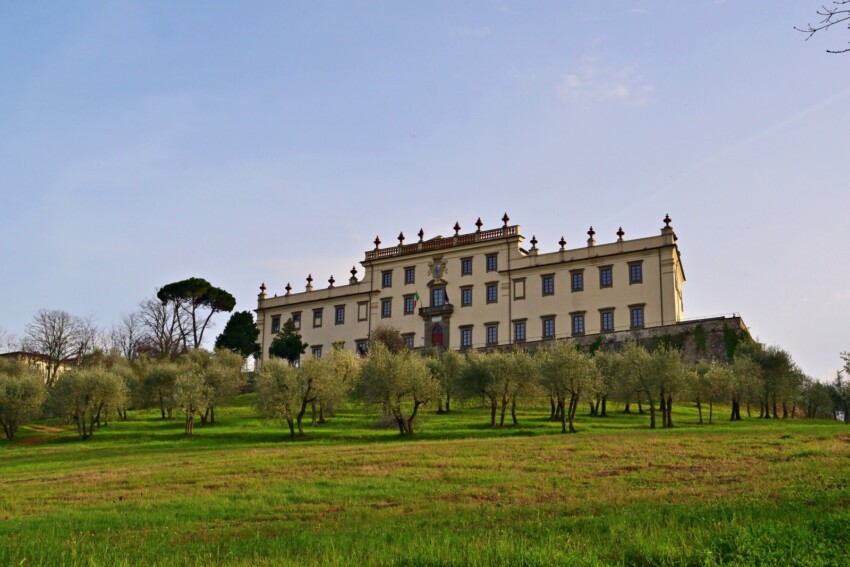
Returning towards the plain, in the locality of Viottolone, preceded by a long tree-lined avenue, the Villa di Castelpulci rises on the hillside, a magnificent country residence of the Riccardi family, which still retains its 18th-century scenic appearance. In 1932, when the complex was used as a provincial psychiatric hospital, poet Dino Campana ended his tragic life there. Restoration works underway will lead to the creation of the Florence University Fashion Centre. In the plain of Settimo there are notable religious settlements, such as the pieve of San Giuliano of Romanesque origin. Remodelled in the 17th century, it houses the venerated Madonna dei Fiori, a painted terracotta work from Donatello’s workshop. From the locality of San Colombano, which takes its name from the church of the same name, remembered since the 13th century, came Benozzo Gozzoli, the famous Florentine painter of the 15th century. Another Renaissance artist, Lorenzo Ghiberti, owned from 1441 to 1457 a manor house, known as the Palazzaccio, located in via degli Stagnacci, in the Granatieri district. The building, which preserves traces of its antiquity, will soon be restored.
The most significant historical and artistic presence in the municipal territory is the Abbey of San Salvatore and San Lorenzo a Settimo, founded in the 10th century. The Romanesque church initially belonged to the Benedictine Cluniacs, then to the Vallombrosans and from 1236 onwards to the Cistercians, who fortified the monastic complex with powerful bastions. Over the centuries, the Abbey was enlarged and enriched with important works of art, such as the chapel of San Jacopo, frescoed in 1315 by painter Buffalmacco. Frescoes by Domenico Ghirlandaio date from the second half of the 15th century, along with panels from his workshop and the Descent from the Cross by Francesco Botticini. In 1629, the chapel of San Quintino was frescoed by Giovanni da San Giovanni, a martyr whose relics were brought to the Abbey in 1157.
Gently rolling hills characterise the territory around San Vincenzo a Torri. The pieve situated along the via Empolese dates from the 11th century and underwent various modifications between the 15th and 18th centuries. The high altar is adorned with a fine polychrome wooden Crucifix from the 13th century. Near the pieve of Torri, taking the Via del Lago you come across the Villa di Vico and then through the woodland you reach Il Mulinaccio, a semi-ruined preindustrial complex of great evocative appeal, consisting of a dam, a bridge and a mill, built starting from 1634 by the Galli Tassi family, owners of the nearby Villa I Lami.
This 16th-century country residence features simple and austere architectural lines, in perfect harmony with the surrounding landscape. Completing the panorama of territorial landmarks is the Parco di Poggio Valicaia, recently transformed into an environmental art museum. Within its 68.5 hectares of meadows and woodland, works by some of the most interesting contemporary artists have found permanent display, in symbiosis with the lush natural setting.
To see all the facilities and book accommodation in Scandicci use the form below, entering the dates of your stay.
 Hotel
Hotel  Budget accommodations
  Apartments
  Family Hotel
  Luxury Hotel
  Resorts