Hotel Da Vinci
Vinci - Viale Togliatti 157
Book now
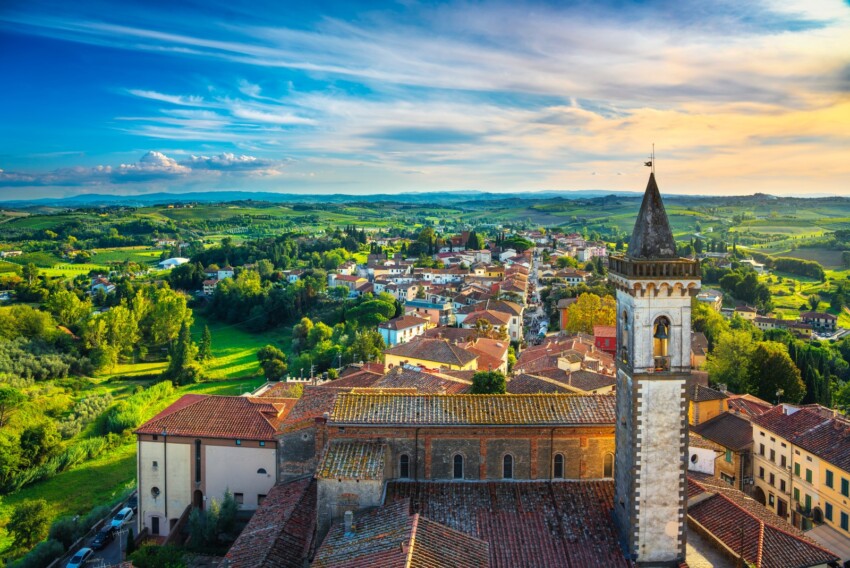
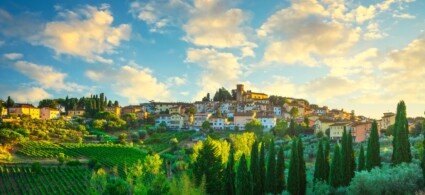
In the Florentine countryside, roughly 45 minutes’ drive from the city centre, there’s a place that virtually everyone will have heard of at some point. It’s Vinci, a town of around 15,000 inhabitants, famous as the birthplace and childhood home of Leonardo di ser Piero da Vinci—or simply Leonardo da Vinci, as he’s known to all.
It was here that the great Renaissance genius, a multifaceted artist and inventor, was born and spent his formative years before moving first to Florence and then to Milan. Five hundred years on, the name Vinci remains inextricably linked with that of Leonardo. Everything in town speaks of him, from hotel names to street signs, and virtually all the attractions and sights are connected to Leonardo in some way.
Conveniently positioned for exploring the surrounding area, Vinci isn’t far from Empoli; you could stay here and explore the Lower Valdelsa, making stops at Castelfiorentino, Certaldo and San Miniato, all easily accessible.
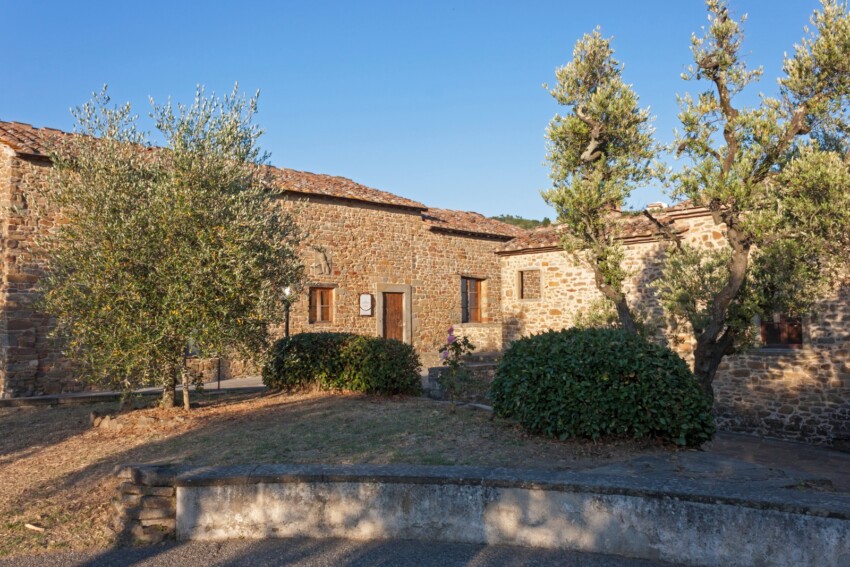
The things to see in Vinci are practically all tied to the genius of Leonardo. Here’s what they are—make sure you visit them all during your stop here before moving on with your Tuscany tour.
Leonardo was born on 15 April 1452 in the hamlet of Anchiano. His birthplace is located here, and inside there’s an exhibition route that takes visitors back to Renaissance times, running through both the main house and the adjoining farmhouse.
Inside you’ll find an audiovisual presentation using 3D technology to bring Leonardo’s era and his relationship with the Vinci area to life. There’s also an interactive multimedia application called Leonardo Touch, which showcases the master’s works and lets you interact with his drawings and paintings.
Leonardo da Vinci’s birthplace is reached by car by setting your GPS to Via di Anchiano, or you can use the Vinci-Anchiano shuttle service which departs from Vinci’s tourist office at via Montalbano 1. Alternatively, you can walk from the town centre along the Strada Verde path. For information, call the tourist office on 0571-933285 or email info@museoleonardiano.it.
Not to be confused with the Leonardo da Vinci Museum in Florence, the Vinci Leonardo Museum is the town’s main attraction. It’s spread across 3 exhibition venues, all close to each other, with the entire complex including Leonardo’s birthplace. They are:
The museum ticket office is at Piazza Leonardo da Vinci 26, near the historic centre. The museum is open daily from 10am to 7pm, with final admission 45 minutes before closing.
The Biblioteca Leonardiana of Vinci at first glance appears to be just the town’s public library; however, it has the unique distinction of housing over 16,000 works related to Leonardo da Vinci, written by him or by scholars studying him. These include reproductions of all his manuscripts and drawings, plus all published works.
The library was founded in the early twentieth century thanks to an initiative by Gustavo Uzielli, one of Leonardo’s greatest scholars. Through the combined efforts of Uzielli and the town administration, the library opened in 1928.
You can consult the library’s volumes and Leonardo’s manuscripts through the e.Leo portal, made available free to users. The library is open to the public daily and can be visited by appointment for school groups and organised tours.
The Biblioteca Leonardiana of Vinci is located at via La Pira 1. For more information, call 0571-933250.
The Strada Verde of Vinci is a walking and cycling route around 2 kilometres long, running from Vinci itself to Leonardo’s birthplace in the hamlet of Anchiano. It’s an easy trail with moderate gradients, with an earth surface but some stretches of paved road.
Many believe that the countryside around Vinci and Anchiano was a major source of inspiration for Leonardo, as many of the landscapes in his paintings feature woodlands, olive groves and vineyards in the background. The Strada Verde allows you to immerse yourself in Leonardo’s youth, walking through this beautiful stretch of Tuscan countryside. It’s a marked route identified by number 14, where you’ll see terraced slopes, rows of vines and olive fields.
Even the hotels in Vinci evoke Leonardo, both in their names and atmosphere. If you prefer to stay in the town centre to take advantage of shops, restaurants and services, you can choose between two hotels and various apartments. If you’d rather immerse yourself in the Tuscan countryside, head a few kilometres out and you’ll find yourself surrounded by nature. Here the accommodation options include numerous farm stays, villas, country houses, restored farmhouses and estates, all beautifully renovated and restored to their former glory, often with excellent facilities such as swimming pools and in-house restaurants.
Vinci is around 45 kilometres from Florence’s centre, reachable in roughly 50 minutes via the SGC FI-PI-LI major road, which you pick up in the city heading towards Pisa, exiting at the Empoli junction. From there, simply follow the signs and you’ll arrive in just over 15 minutes.
If you’re coming from Pisa or Livorno, follow the same route, naturally taking the FI-PI-LI towards Florence. Again, it takes about 50 minutes. If you’re arriving from Siena, we recommend taking the Florence-Siena motorway link towards Florence as far as Poggibonsi, then continuing along the SR429 regional road through the Val d’Elsa, which reaches Empoli.
Getting to Vinci by public transport is also straightforward. The quickest route involves taking the train to Empoli, conveniently located on the Florence-Pisa line, then continuing on bus number 49. The journey, whether from Florence or Pisa, takes about an hour, split roughly equally between 30 minutes of regional train and 30 minutes of bus, though you should factor in connection waiting times.
What's the weather at Vinci? Below are the temperatures and the weather forecast at Vinci for the next few days.
The original castle construction, still the dominant feature of Vinci, dates back to the Early Middle Ages and is known in local tradition as the “ship castle” because of its elongated shape and tower that resemble a sailing ship’s profile. Around the year 1000, the settlement became the property of the Counts Guidi, who dominated its fate until 12 August 1254, when Vinci was subjugated to Florence and transformed into a municipality.
Located on the western border of the state, Vinci was contested by Florence’s enemies and directly experienced the turbulent events that troubled the capital’s political life. Beneath the castle walls, armies led by Uguccione della Faggiuola (1315), Castruccio Castracani (1320-26), John Hawkwood, known as l’Acuto (1364), commander of English mercenary companies in Pisa’s employ, took turns.
After numerous vicissitudes and modifications to the original structure, the Castle returned to the ownership of Vinci municipality in 1919. In Anchiano, on 15 April 1452, Leonardo was born and spent his childhood years in Vinci.
 Hotel
Hotel  Budget accommodations
  Apartments
  Family Hotel
  Luxury Hotel
  Resorts