Il Pelagone Hotel & Golf Resort Toscana
Gavorrano - Località Il Pelagone 28
Book now
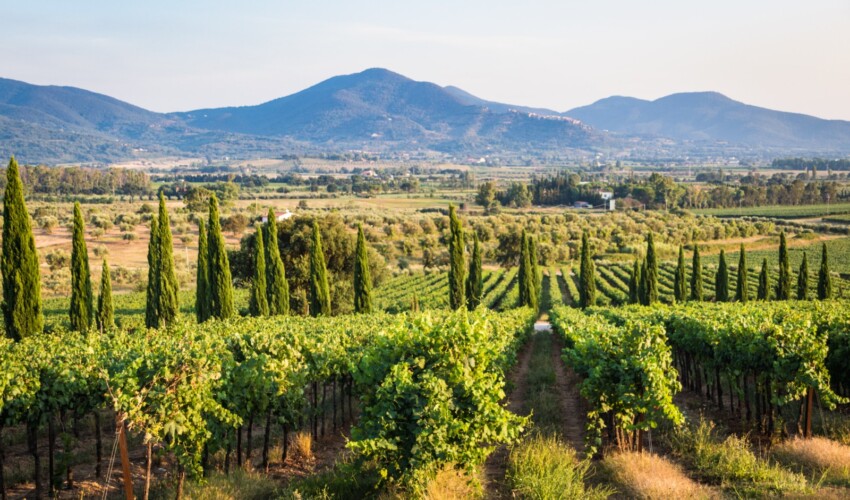
The vast territory of Gavorrano Municipality stretches across 19,000 hectares of land within an area of outstanding environmental quality, where natural, cultural and historical resources stand out. Within Gavorrano Municipality’s territory, in close proximity, you’ll find charming medieval villages such as Caldana, Ravi and Giuncarico alongside the main town, thousands of hectares of Mediterranean scrubland, oak and chestnut forests, Etruscan tombs and medieval castles like the Rocca di Castel di Pietra; old mines including the Gavorrano mine, now defunct, and together with the Ravi mine, part of the Gavorrano Naturalistic Mining Park.
The Municipality of Gavorrano sits not far from the Tyrrhenian coast, yet stands apart from coastal bustle, offering complete immersion in an area with very little urban development (8,000 inhabitants across the entire Municipality) despite its ancient origins, among the most significant in the province of Grosseto.
The location, climate, distinctive geological makeup, lush evergreen woodlands adorning the hillsides, oak and chestnut forests in the cooler, wetter areas, create ideal habitat for abundant wildlife: wild boar, roe deer, porcupines, raptors and many other small creatures are common in the woods and countryside, including species now extinct elsewhere, such as pine marten and wildcat.
In the countryside, you can still glimpse traditional Tuscan rural landscapes, with olive groves, fields interspersed with hedgerows and cypress-lined avenues, and vineyards. The latter sector is now one of the area’s most important agricultural activities, with over 300 hectares of cultivated vineyard in continuous expansion, making Gavorrano one of the region’s leading producers. Also noteworthy, both for their capacity and architectural design harmonising with the Maremma landscape, are the grand wineries under construction, one of which, currently being built, was designed by architect Renzo Piano, one of the greatest contemporary architects whose talents are universally recognised.
The parish church of Gavorrano was probably built on the walls of the ancient fortress, as evidenced by the bell tower whose lower section features older stonework than the rest of the building. Dedicated to Saint Giuliano, its present appearance comes from renovation and extension work carried out between the 17th and 18th centuries to replace the ancient plebiscite church dedicated to San Gusmè and later to San Giuliano, as a 1529 document proves. The current church features an external façade dating from 1927, with a barn-like form divided by pilasters with a central oculus and small decorative hanging arches. Inside the church, in a niche to the right of the portal, a fine marble sculpture depicting the Madonna and Child (1336) is preserved, attributed by scholars to Giovanni d’Agostino, a Sienese sculptor and architect who served as master of works at the Cathedral of Siena from 1340 to 1345. Other notable artworks preserved in the church include two 18th-century canvases depicting the Annunciation and the Baptism of Christ, both donated to the church by private individuals. The first painting, of superior quality, is based on a Roman prototype, whilst the second, according to some critics, recalls the formal vocabulary of Pietro da Cortona.
The Church of San Biagio, today a national monument, commissioned by the illustrious Sienese family the Austini, is a rare example of Renaissance religious architecture in lower Maremma. The architectural elements of the façade recall the school of Antonio da Sangallo the Elder (1455–1534) for the clear stylistic analogies with San Biagio in Montepulciano and for its approach to harmonious, classical treatment of forms. Recent studies undertaken by Dr Guidelli instead attribute the Church of San Biagio to Michelangelo. This news, supported by extensive documentation, was immediately and spontaneously highlighted in public opinion, regional and national press and television. Inside the church you can admire a fresco on the wall behind the altar depicting the crucifix and Saints Biagio and Guglielmo, attributed to Nicola Nasini (1657–1736). Also visible is the 17th-century baptismal font in local “Portasanta” marble, the only work in this celebrated marble that still survives in Caldana.
The territory also features a significant archaeological site from the medieval period, Castel di Pietra, where the University of Siena’s Archaeology and Territorial History faculty has been conducting excavations and publishing findings for years.
Castel di Pietra is located near the road connecting the Aurelia state road to Ribolla. It’s an important archaeological site containing evidence from the Etruscan period through the 14th century. The site’s topographical location, at the south-eastern edge of the Massa mining district and along the course of the Bruna river which led directly to the coast, appears to justify the settlement of Castel di Pietra in the late Orientalising period, as one of the control centres for metal extraction and processing in the Vetulonian territory. From the 11th to 13th centuries, Castel di Pietra was under the control of the Aldobrandeschi family, who began construction of the upper section. Towards the end of the 13th century and early 14th century, the handover between the Aldobrandeschi and Pannocchieschi families had repercussions on the urban plan. In the 14th century, once the Pannocchieschi family’s territorial rule ended, the castle first underwent transformation, then progressive decline.
In Gavorrano town centre, the Castel di Pietra Documentation Centre houses finds from various excavation campaigns carried out by Siena University’s Archaeology faculty at the namesake archaeological site.
The towns in this territory form a sort of necklace, a chain linking the hills and looking inland with stern eyes. Giuncarico overlooks the plains towards Roccastrada, whilst Caldana and Ravi, protected at their backs by forest, command the valley that opens onto Gavorrano and the gulf of Follonica. Once, the castle of Scarlino was also part of this system and represented an outpost towards the sea, so much so that certain scholars believe these castles mark the final point of the ancient transhumance routes that brought Maremma flocks from the Apennines to winter pasture.
In these areas, oblivion and abandonment, depopulation and vast spaces have produced a curious phenomenon: things still conceal mysteries that more civilised Tuscany has lost. Not only legends and tales of unknown fugitives, but masterpieces protected by obscurity, such as the Church of Caldana, which discerning scholars hypothesise originated from designs by Michelangelo.
Gavorrano rises on the slopes of a granite hill, Mount Calvo. Its name derives from the Latin Caput Boreanum, later becoming Capo Borano, then Cavorano until reaching its current name. The earliest records of the settlement date back to the 9th century. Of Gavorrano’s fortress, the circuit of walls in filarotto stone is still recognisable, interspersed with several towers; notable are the two on the southern side where two round-arched gates also open.
In the Church of San Giuliano, a small marble statue of the Madonna and Child is preserved, a work by 14th-century Sienese sculptor Giovanni d’Agostino. Worth visiting near the Municipal Palace is the Documentation Centre, which houses interesting finds from the archaeological excavations at Castel di Pietra.
Bagno di Gavorrano, an ancient thermal spa village, is now the most densely populated centre in the entire municipality. It is home to numerous sports facilities.
The village maintains its ancient structure, characterised by narrow alleyways.
Its castle, documented from 785, was possessed in the 11th and 12th centuries by the monks of the Abbey of San Bartolomeo di Sestinga, then passed to Ildebrando Aldobrandeschi and subsequently came under the rule of the city of Siena in 1262. Along the hillside on which the village stands, there is the Artofago grotto, where finds dating back approximately 5,000 years were discovered, now preserved in the Archaeological Museum of Grosseto.
Giuncarico, whose name is first mentioned in a document from the Abbey of San Salvatore on Monte Amiata from 772, still retains the appearance of a medieval village built within and around the walls. Of the two gates, the one to the east is original and features a round arch in stone, whilst the tower above it is more recent.
The Church of San Egidio houses an 18th-century canvas depicting the Madonna amongst the Saints.
Not far from Giuncarico village, in the plain below, you’ll find the Etruscan tomb of Poggio Pelliccia and the Etruscan necropolis of San Germano. On Poggio Zenone the remains of the medieval castle called “la Castellaccia” are preserved.
An ancient medieval village, it still retains the characteristics of a castle.
The Church of San Biagio is located here, a rare example of Renaissance sacred architecture in the Grosseto Maremma.
The design of the façade and interiors of the Church of San Biagio is attributed by some scholars to Michelangelo Buonarroti.
On the pediment of this building you can see the coat of arms of the Austini, the family who rebuilt the castle in the 16th century and had the church built. Inside is a fresco with the crucifix and Saints Biagio and Guglielmo, a work by Giovanni Nasini.
To see all the facilities and book accommodation in Gavorrano use the form below, entering the dates of your stay.
 Hotel
Hotel  Budget accommodations
  Apartments
  Family Hotel
  Luxury Hotel
  Resorts