Florence: Uffizi Timed Ticket & Masterpieces Audio App
7.148 reviews
Buy now
From 27,20€ per person
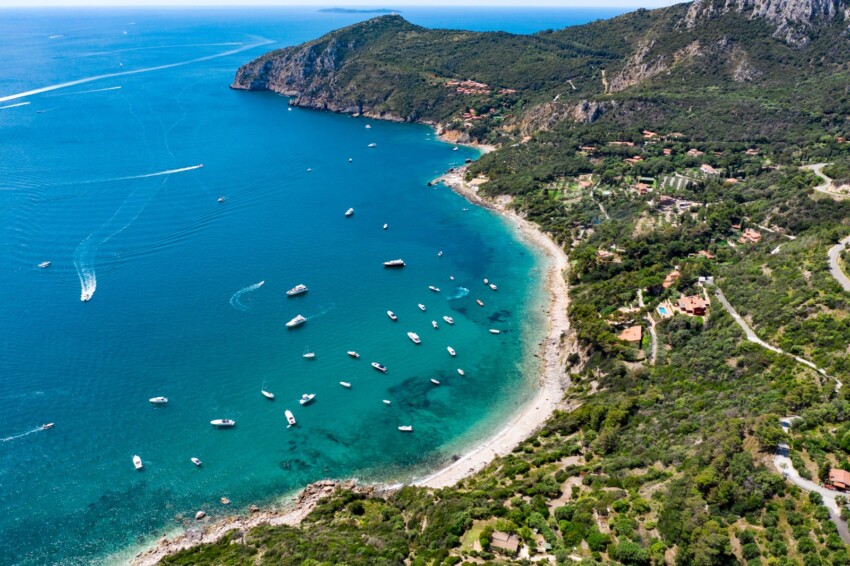
Monte Argentario is a rocky promontory jutting into the Tyrrhenian Sea, connected to the mainland by two long sandy spits — Giannella to the north and Feniglia to the south — which enclose the lagoon of Orbetello. Its jagged coastline, dominated by sheer sea cliffs and fragrant Mediterranean scrub, conceals some of Tuscany’s most beautiful beaches: pebble coves with turquoise waters, sheltered inlets accessible only on foot or by sea, and two long sandy stretches perfect for families.
Variety is the defining characteristic of the Argentario coastline: within just a few kilometres, you’ll find everything from well-equipped beaches easily reached by car to wild coves requiring a 40-minute trek across the promontory, from the shallow emerald-coloured waters of the sandbars to the rocky seabeds ideal for snorkelling and diving. A practical tip: before choosing your beach, check which way the wind is blowing. With northerly winds, the southern coast beaches are more sheltered; with southerly winds, those on the northern coast — towards Porto Santo Stefano — offer better conditions.
For those wanting to explore the most hidden and inaccessible coves, hiring a rubber dinghy or small boat from Porto Santo Stefano or Porto Ercole is the ideal solution. Below is our selection of Argentario’s finest beaches, from the most accessible to the most remote.
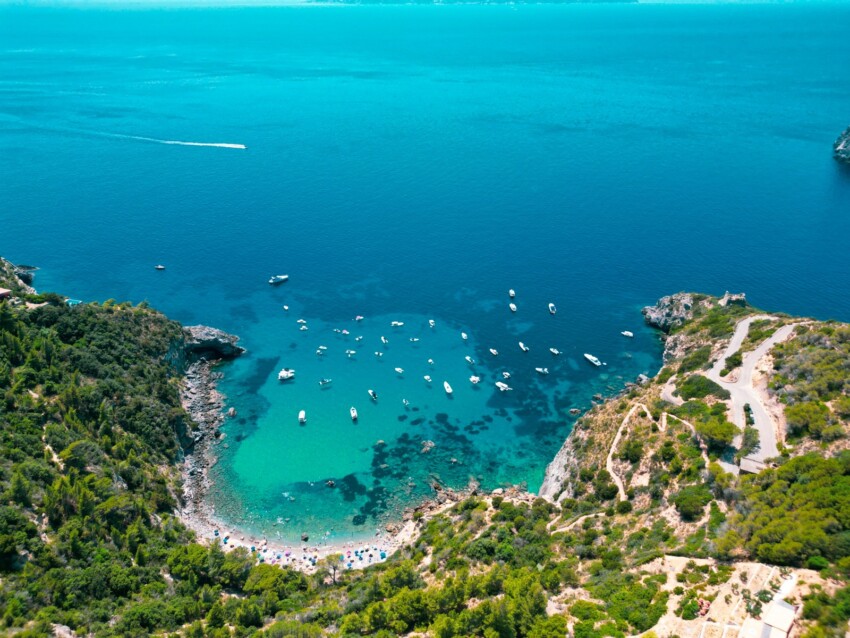
Considered by many to be Argentario’s most beautiful beach, Cala del Gesso is a cove of smooth pebbles bathed in such intensely turquoise water it seems almost artificial. The scene is framed by the ruins of a 16th-century Spanish watchtower, built to defend the coast from Barbary pirate raids, and the small island of Argentarola, visible in the distance offshore. The beach is free to access — in summer, there’s a small sunbed rental service — and this lack of permanent structures helps preserve its unspoilt character.
To reach it, you’ll need to walk approximately 700 metres along a path from Porto Santo Stefano’s panoramic road, turning onto Via dei Pionieri at the 5.9 km mark and continuing to a gate with a pedestrian passage. The descent is demanding and is best tackled in closed shoes. The uphill return in August’s heat is the only drawback to this cove: bring plenty of water, food and everything you’ll need, as there are no facilities.
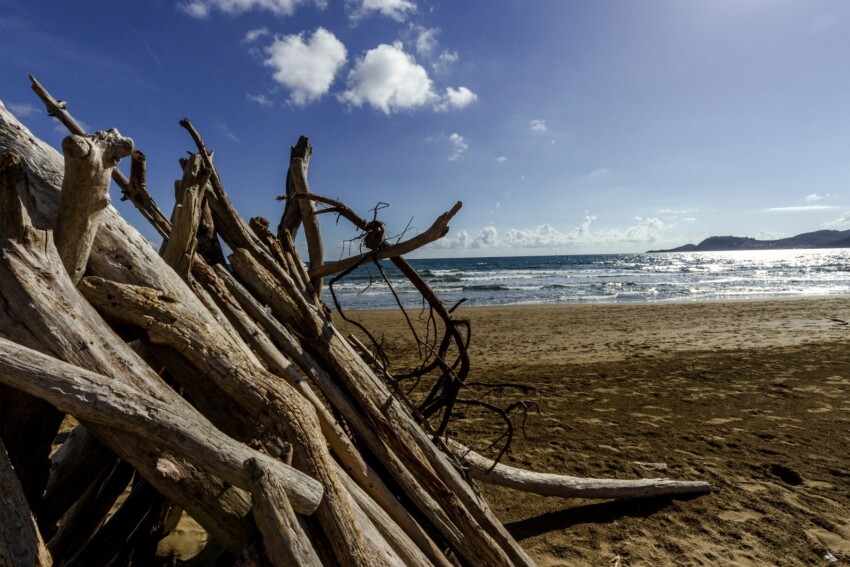
Feniglia is Argentario’s southern sandbar: a strip of fine, pale sand almost 7 kilometres long separating open sea from the Orbetello lagoon, accessible from both Ansedonia and Porto Ercole. The beach has shallow, sandy seabeds, perfect for children, alternating between equipped beach clubs at either end and long stretches of virtually unspoilt free beach in the centre. Behind the beach runs the Feniglia Dune Nature Reserve, a pine forest that can be explored on foot or by bike where you might spot fallow deer, foxes and birds of prey.
Feniglia is exposed to southerly winds and is an ideal choice on days with northerly winds, when the rest of Argentario may be rougher. Compared to Giannella, it offers a slightly wilder atmosphere with fewer concentrated facilities: those seeking a peaceful spot need only walk a few hundred metres along the shoreline to leave the beach clubs behind.
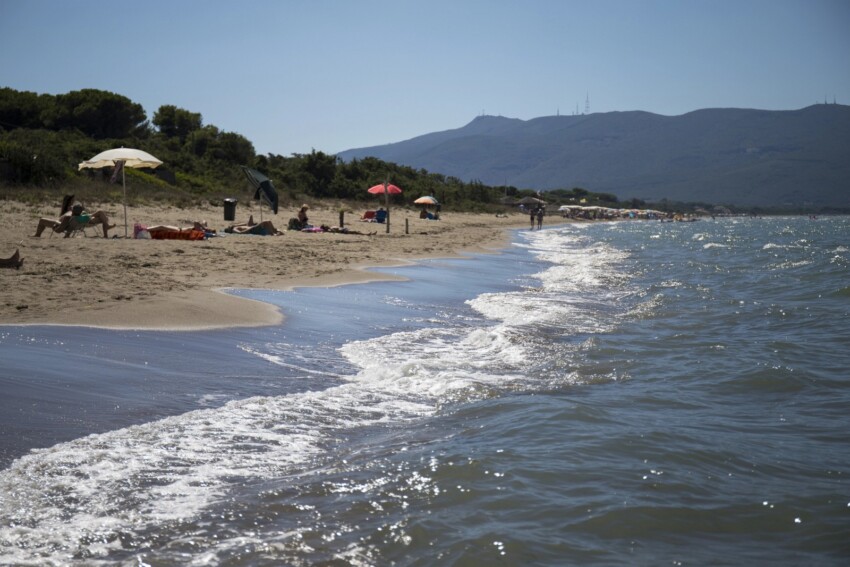
Argentario’s northern sandbar, Giannella, is a tongue of fine sand almost 8 kilometres long stretching between Mediterranean scrub and the Ponente lagoon. The water is shallow, clear and almost always calm — Giannella is sheltered from southerly winds — making it the most suitable beach for families with small children on the entire promontory. Numerous beach clubs alternate with long stretches of free beach, with convenient access directly from the road of the same name. Behind the beach runs a cycle path that starts from Orbetello and runs the entire length of the lagoon to the beach.
Giannella is also the beach most favoured by windsurfing and kitesurfing enthusiasts: its position exposed to the north-westerly maestral winds makes it one of the windiest spots on the entire Grosseto coast, and in summer the coloured sails regularly dot the water. Compared to Feniglia, it’s more developed and busier, but the length of the sandbar still guarantees plenty of space even during peak weeks.
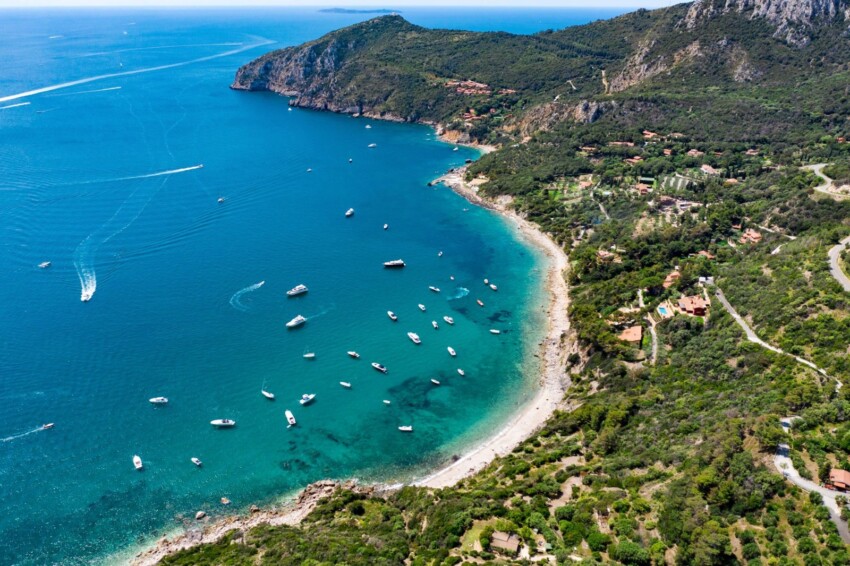
Cala Grande is actually a collection of three small pebble beaches nestled in the rock face, visible from Porto Santo Stefano’s panoramic road but only accessible by descending a fairly steep path. The name is somewhat misleading: rather than one large beach, it comprises three intimate corners, each with its own character, separated by rocky outcrops. The water is transparent and deep blue, the rocky seabeds are excellent for snorkelling, and the Mediterranean scrub descends right to the water’s edge, creating an atmosphere far removed from mass tourism.
Land access requires care and sturdy shoes: the path is short but steep, and the uphill return in August’s sun can be challenging. By sea, Cala Grande is easily reached by dinghy from Porto Santo Stefano. It’s a free beach with no facilities: bring everything you need and be prepared to share the space with just a few other fortunate visitors.
Cala Piccola is one of Argentario’s most exclusive beaches, accessible mainly through the beach club affiliated with the Boutique Hotel Torre di Cala Piccola. Its waters are an intense azure, the rocky seabeds are among the most marine-life-rich on the promontory — which is why it’s beloved by divers and snorkelling enthusiasts — and its sheltered position means it’s almost always calm and crystal-clear. From the small rocky spur overlooking the cove, you’ll enjoy one of the coast’s most spectacular views: south towards Porto Ercole, west towards Giglio Island.
Its relative difficulty of access — it can’t be reached directly by car without passing through the beach club or hiking a trail — protects it from summer crowds. For divers, Cala Piccola’s seabeds offer interesting dives just metres deep, with sea fans, lobsters and groupers among the rocks. It’s considered one of the best bases for those taking up diving for the first time.
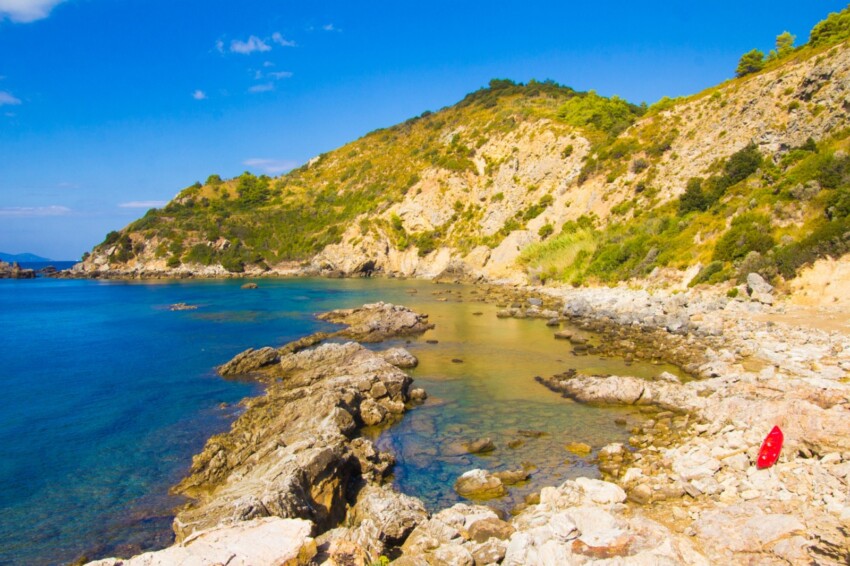
The name evokes something sinister, but Cala Mar Morto is actually one of Argentario’s most spectacular locations: a natural rocky barrier separates open sea from the shore, creating a sort of natural swimming pool with always-calm, crystal-clear water teeming with marine life. Waves, blocked by the reef, arrive reduced and filtered, leaving flat, transparent water that makes snorkelling exceptional even for the less experienced. The seabeds abound with sea urchins, octopi, moray eels and fish of every kind that find refuge in rocky cavities.
Reaching Cala Mar Morto requires descending a fairly steep path of about 500 metres — an excellent reason why it remains uncrowded even in peak summer. Access is from the panoramic road, and it’s advisable to arrive early morning or late afternoon. The beach is predominantly pebbled with extensive rock formations, not suitable for small children but perfect for those seeking an authentic sea experience far from beach clubs.
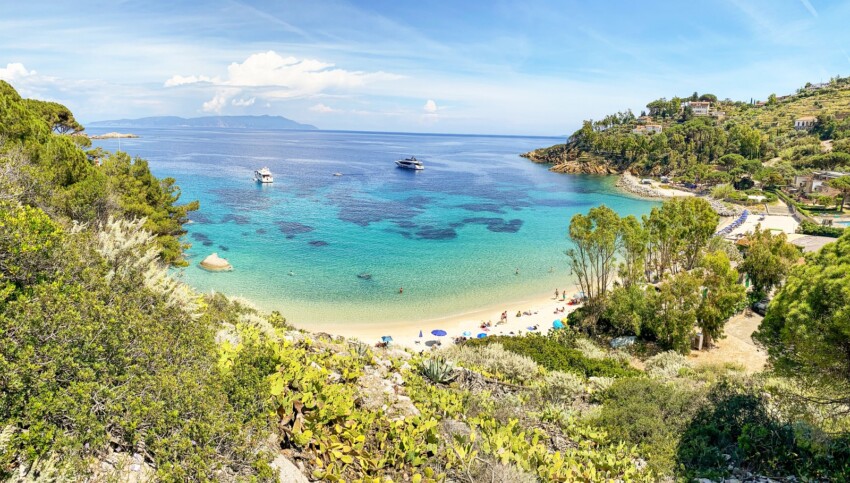
Le Cannelle is located on the south-western side of the promontory, just beyond Cala Mar Morto along the panoramic road heading towards Porto Ercole. The beach is predominantly pebbled with some sandy areas, washed by water that shifts from emerald green to intense blue with exceptional clarity. A medieval watchtower, now a private residence, dominates the scene and gives the cove its distinctive appearance. The sandy seabeds with abundant submerged rocks make it one of the preferred destinations for snorkelling enthusiasts on Argentario’s southern side. It’s among the few beaches on the promontory also accessible to people with mobility difficulties.
Access is from the panoramic road: an automated gate with a pedestrian passage marks the start of a comfortable walk of approximately 150 metres, well-marked, leading directly to the beach. There’s a small beach club with sunbed rental and a bar where you can refresh yourself — the difficulty of land access makes this service particularly appreciated. For those arriving by sea, Le Cannelle is easily reached by dinghy from Porto Ercole: the beach is visible from the coastal route and has a small mooring dock.
The Pozzarello is Porto Santo Stefano’s most convenient and accessible beach: it faces directly onto the provincial road, has a small mooring dock, a beach club with restaurant and extensive areas of free sandy beach with mixed pebble and rock seabeds. The water is almost always calm and clear because the bay is well-sheltered from winds, making it a practical choice for those staying in town who want a seaside day without logistical complications. The fact that it’s also accessible to people with mobility difficulties is a further advantage over the promontory’s coves.
From Pozzarello you can also access on foot La Bionda and La Cantoniera, walking through the tunnels of the old Argentario railway: an unusual and scenic stretch that leads to two more secluded pebble beaches, perfect for those wanting to get away from the main beach without too much effort. The sunset viewed from Pozzarello, with light colouring the promontory’s rocks, is one of the day’s most beautiful moments.
Cala Cacciarella is a small sandy inlet nestled between two tall cliffs near Porto Santo Stefano, reached by a path of about 500 metres from the panoramic road. The atmosphere is wild and solitary: the difficulty of access discourages less determined visitors and the beach remains relatively uncrowded even during peak months. The seabeds are magnificent for snorkelling, with rocky walls rich in marine life. Along the cliff you’ll find the Grotta del Turco, which according to legend was a refuge for fishermen hiding from Barbary pirates, explorable with mask and fins.
About 15 metres deep, offshore from the point, a submerged statue of Christ the Redeemer has been placed, attracting local divers and constituting one of the entire promontory’s most distinctive points of interest. The beach is free with no facilities: you reach it by leaving your car near Villa Miragiglio and descending the path, which isn’t particularly demanding but steep enough to discourage flip-flops.
The Bagni di Domiziano — also called Spiaggia Gerini — is a small sandy bay on the right side of the road leading to Porto Santo Stefano, with a gently sloping seabed and almost always calm waters. The name recalls history: here once stood the private villa of the Domitii Ahenobarbi, the family of the Roman emperor Nero, and during low tide the remains of the fish-farming tanks — the pools where fish to supply the imperial table were raised — still emerge, making this small beach a place of extraordinary overlap between seaside leisure and archaeology.
The waters of Bagni di Domiziano are particularly rich in Posidonia oceanica, a seagrass found in only a very few parts of the Mediterranean, indicating an exceptionally healthy ecosystem. A beach club and free area alternate along the small bay, which is accessible directly from the provincial road and easily reached even by those preferring not to venture onto the promontory’s paths.
La Cantoniera is a small beach of sand and pebbles accessible via the tunnels of the former Argentario railway line from Pozzarello. The walk takes you through three short galleries hewn into the rock for roughly 200 metres, emerging into a sheltered cove protected by a ridge of rocks that keeps the sea calm and crystal-clear almost year-round. It’s one of the least-visited beaches on the promontory, popular mainly with locals and those who know the area well. The tunnel approach is open to pedestrians throughout the year, but vehicles are permitted only in winter.
The sheltered position and lack of facilities make it ideal for those seeking peace and a swim in an unspoilt setting away from the crowds. Alternatively, La Cantoniera can be reached from the other direction by following the path that traces the old railway line from Porto Santo Stefano after the first tunnel. The scenic walk above the water, with sheer rock faces plunging down to the sea, is itself one of the most beautiful experiences the Argentario can offer to those who enjoy walking.
In the following map you can see the location of the main places of interest mentioned in this article.
 Hotel
Hotel  Budget accommodations
  Apartments
  Family Hotel
  Luxury Hotel
  Resorts