Locanda dell'Aioncino
Bibbona - Via Bolgherese 81
Book now
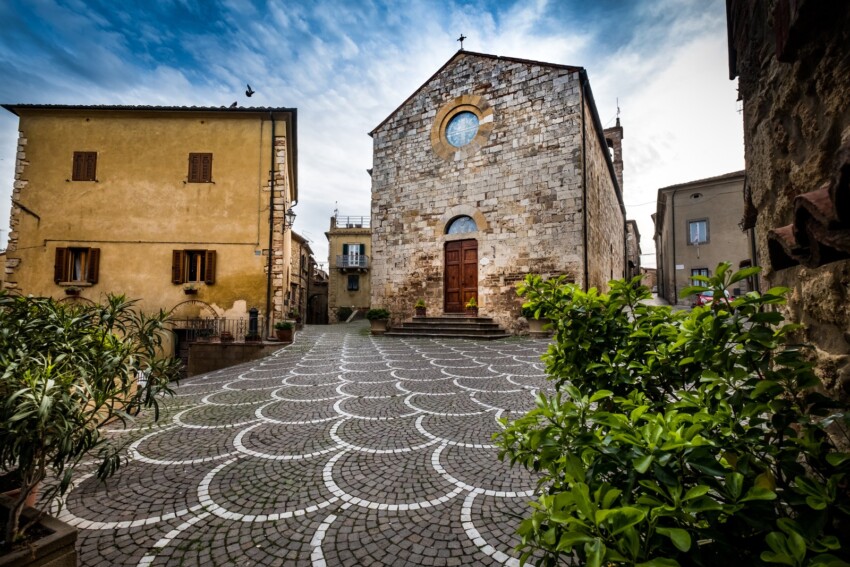
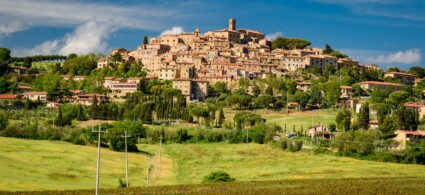
Set in the heart of vast countryside, punctuated by stunning panoramic views towards the coast, Bibbona offers the perfect destination for a holiday spent in close contact with nature.
The characteristic Medieval Village of Bibbona, defined by its narrow winding streets, staircases and archways that transport you back in time, sits just a few kilometres from the sea, surrounded by the typical hilltop hamlets of Bolgheri, Castagneto Carducci, Campiglia…
The town boasts ancient Etruscan origins, from which comes an unusual bronze statuette of a goat that has become the symbol of the village and is now preserved in Florence’s Archaeological Museum.
At its heart lies Castello di Bibbona, enclosed by imposing walls, and the Church of Sant’Ilario, recorded from 1175 and subsequently enlarged, which represents one of the few well-preserved Romanesque churches in the area—the only one to survive the wars and raids of Saracen pirates. Built with local sandstone, it houses a marble holy water stoup and several paintings from the 16th century, including a canvas depicting Sant’Ilario and San Bartolomeo.
The Church of Santa Maria della Pietà, dating from 1482 and situated at the foot of Castello di Bibbona, was built to house a venerated image of the Madonna, credited with miraculous powers, painted on a tufa stone beneath the castle. Girolamo Savonarola dedicated a poem to this image. The distinctive Latin inscription “This is a terrible place” that appears on its façade (a quotation from a biblical verse) and its Greek cross layout, which echoes that of the Church of the Holy Sepulchre in Jerusalem, remain the subject of ongoing study and research. Equally intriguing is the presence of a Tau Knight’s tomb at the centre of the nave. It is believed that the designers were Ranieri Tripalle and Vittorio Ghiberti, though Leonardo da Vinci is also said to have contributed to the church’s design.
Why Leonardo? This becomes clearer when we consider the church of Rennes-Le-Chateaux in France and Leonardo’s role as Master of the Priory of Sion, the order that established the Knights Templar. Notably, the same inscription Terribils est locus iste appears on the church’s access architrave.
Near the new Town Hall stands the Fountain of Bacchus, which features the ancient arch, where mysterious symbols remain visible to this day. From here, water flowed down to feed the spout of Bacchina and Bacchus, depicted with vine clusters in his hair and a flask in hand, eventually reaching the laundry trough and watering trough below.
Bibbona‘s origins are ancient, with the earliest inhabitants dating back to the Stone Age, followed by the Etruscan people, who left interesting remains including a 6th-century BC tholos tomb. In the Medieval period, Bibbona became one of Maremma’s most important castles and was consequently fiercely contested between Pisa, Volterra and Florence.
Around the year 1000, many of its lands were granted to the counts Della Gherardesca, who already owned much of Tuscany’s territory. Shortly after, Bibbona was established as a free commune under the Pisan Republic until 1406, when it came under Florentine rule. Its original statutes, which governed the lives of its citizens and remained in force until the end of the 18th century, date from 1490.
Bibbona enjoyed a flourishing period until 1549, when its lands, previously belonging to the community, were ceded to the wife of Cosimo I de’Medici and the townspeople were forced to pay a rental fee then called “terratico”. Living conditions deteriorated drastically, marking the beginning of Bibbona‘s decline, which was further marked by epidemics and pirate raids that led to the town’s swift depopulation.
Significant improvements came at the end of the 18th century, when much of the marshy terrain was reclaimed thanks to Pietro Leopoldo II. Only in 1789 were the lands returned to the Municipality of Bibbona, though they were sold to wealthier landowners who improved crop yields but not living standards. Today, Bibbona, which also includes the small hamlet of La California and the seaside resort of Marina di Bibbona, is considered one of the major hilltop villages, basing its economy on tourism, agriculture and various craft activities.
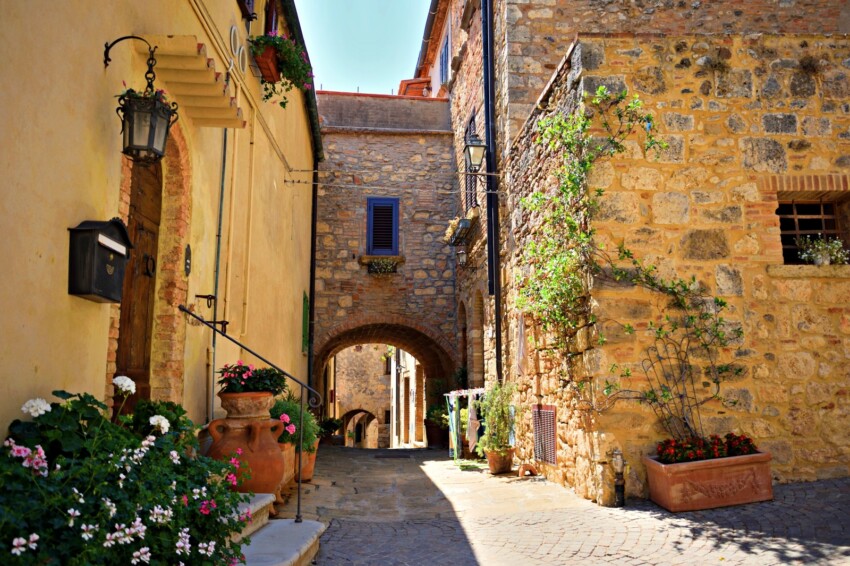
Bibbona enjoys an excellent geographical location, serving as an ideal base for various excursions throughout Tuscany, which offers a unique variety of landscapes: the sea, rivers, hills, cities, villages…a journey through history, monuments and excellent cuisine.
In the immediate hinterland of Livorno Province, lesser-known small villages offer countless treasures to discover and are increasingly appreciated by those who venture beyond the obvious—those seeking discovery and drawn to simplicity, such as Castagneto, where the celebrated poet Giosuè Carducci lived (his house is still open to visitors) and Bolgheri’s avenue, which inspired his poetry. You could travel the Etruscan Coast many times from north to south, taking a different route each time and discovering new places.
An intriguing itinerary running along the coast is devoted to Archaeology. You’ll find important relics including tombs and Etruscan buildings in Populonia with its Archaeological Park spanning approximately 80 hectares overlooking the sea in the stunning Gulf of Baratti. Heading south, you reach Piombino, home to the Populonia Territory Archaeological Museum. Moving back north, you’ll encounter the small town of Campiglia Marittima, where you can visit the San Silvestro Archaeomining Park, from whose fortress at the foot of Mount Calvi there are beautiful natural views. At Campiglia, your visit can also extend to the Palazzo Pretorio Museum, a splendid medieval building housing the historical archive and Campiglia museum.
Close to Bibbona, the town of Cecina offers the chance to visit the Museum and Archaeological Park. The Museum traces the territory’s history from the Palaeolithic period through the Roman age, passing through Etruscan culture. Within the park stands a Roman building and underground cistern, plus an exhibition of finds uncovered during excavations. Moving from Cecina northwards, you encounter Vada with the San Gaetano archaeological area, Rosignano Marittimo with Palazzo Bombardieri and Castiglioncello, which features an archaeological site with Etruscan and Roman tombs. The route culminates in Livorno with the Mediterranean Natural History Museum, which traces the theme of human evolution.
You can also enjoy days of relaxation and entertainment at the Water Park and Gallorose Wildlife Park located in Cecina, the thermal pool at Calidario in Venturina, and for younger visitors, the Cavallino Matto amusement park at Donoratico.
Thanks to its mild climate, peaceful setting and beautiful landscape, Marina di Bibbona has become a renowned seaside resort for a relaxing, entertaining holiday immersed in nature. Also known as Marina del Forte, it takes its name from Forte di Bibbona, erected in 1785 as a lookout point and coastal defence against pirate invasions. Today, part of it serves as exhibition space for shows and cultural events during the summer season.
The true jewel of Marina di Bibbona is its shoreline, comprising expansive stretches of fine sand, characteristic Mediterranean pine-covered dunes and distinctive sand ridges. The dunes, formed over the last century, serve to protect the cultivated inland areas from sea breezes and consist of low-growing vegetation separating the beach from the interior.
Marina di Bibbona is situated precisely between two splendid pine forests embracing the shoreline northwards to Marina di Cecina, an important tourist and commercial hub, and southwards to Marina di Castagneto Carducci. The pine forest is the ideal place to spend days in the cool shade of dense vegetation, organise fun picnics or stroll along the paths by bike, on foot or on horseback, accompanied by the pleasant scent of pine trees. The long beaches are washed by pristine waters, partly equipped with beach facilities and partly free, with six daily lifeguard stations. Part of the free beaches is also reserved for four-legged friends. The important Blue Flag award attests to the water’s cleanliness. An ideal spot for swimming and water sports enthusiasts.
To see all the facilities and book accommodation in Bibbona use the form below, entering the dates of your stay.
 Hotel
Hotel  Budget accommodations
  Apartments
  Family Hotel
  Luxury Hotel
  Resorts