Agriturismo Villa Toscana
Campiglia Marittima - Via dei Granai, 16 - Venturina Terme
Book now
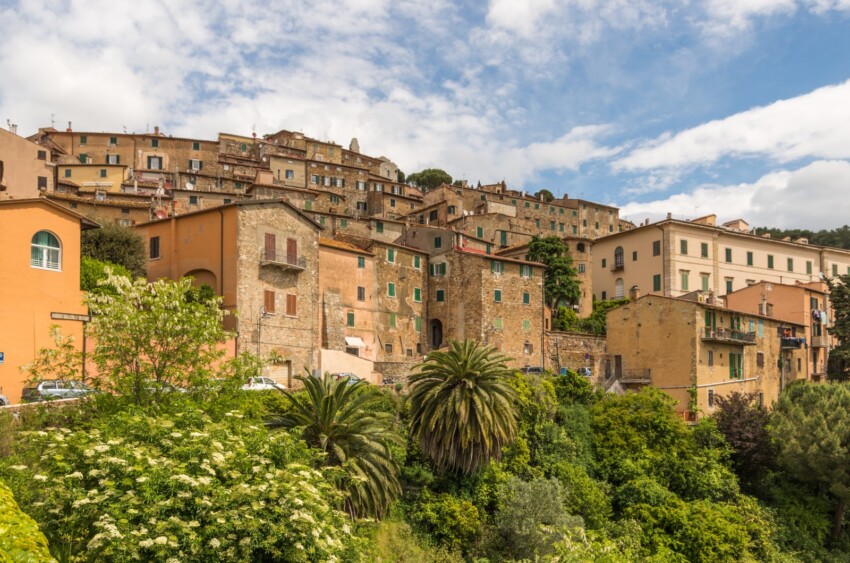
Located in the province of Livorno, in the heart of the Val di Cornia, Campiglia Marittima is a town of over 12,000 inhabitants evenly divided between the main town centre, nestled on a hillside, and Venturina Terme, on the plains, which is its principal resort area.
Whatever you choose, you’ll be able to enjoy a holiday in Tuscany in an area that hasn’t been overrun by tourists and is therefore much more authentic, yet close enough to the main attractions of the Etruscan Coast: the towns of Baratti, Populonia or the beaches of the Piombino promontory are less than 15 minutes’ drive away, whilst San Vincenzo is just 10 minutes away.
You can use Campiglia Marittima as your base and plan your holiday with a series of day trips: you’ll have the chance to see as much as possible, minimise travelling time and stay in a peaceful and quiet area. At the same time, the historic centre of Campiglia Marittima certainly deserves a visit, thanks to its medieval architecture and the stunning views of the surrounding countryside.
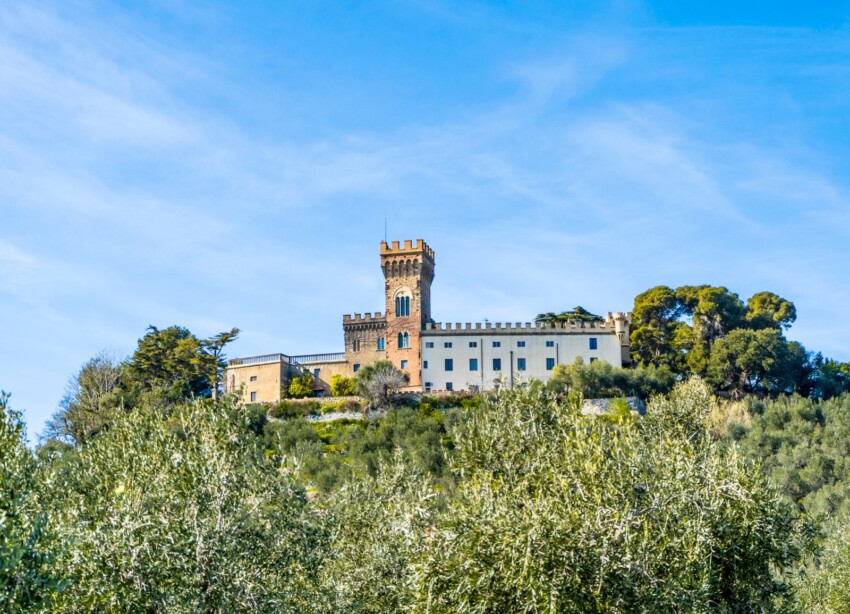
Within the centre of Campiglia Marittima and its immediate surroundings there are some interesting things to see. Here are the main ones.
Along one of the main streets in the oldest part of the medieval village of Campiglia Marittima stands the impressive Palazzo Pretorio, a symbol of political and military power as it was built to house the residence of the Rectors and Captains, sent first by the Republic of Pisa and later by Florence to administer the territory.
Today, following careful and respectful restoration, the building houses the Historical Archives, the Children’s Library “Il palazzo dei Racconti”, the Carlo Guarnieri Museum and the Tourist Office.
For several years now, the palazzo has been home to the Wedding Hall, an integral part of the Guarnieri Museum, which displays some large canvases by painter-woodcut artist Carlo Guarnieri.
Permanent museum exhibition “Carlo Guarnieri”: the exhibition, housed in the Palazzo Pretorio, is arranged across five rooms and includes 61 works comprising 36 woodcuts and their original blocks, 7 studies and drawings and 18 paintings. This is an important collection spanning the artist’s entire creative output, as he worked with unwavering passion and commitment from boyhood until his final days.
The fortified village of Rocca San Silvestro, known throughout the medieval period as Rocca a Palmento, was one of the principal settlements of the Tuscan diocese first of Populonia and later of Massa Marittima, thanks to its position on a rocky spur overlooking the plains, then marshland, on the coast between the Gulf of Baratti and the metal-rich hills. Its importance was linked more to the extensive mining activities carried out there rather than military defence, as much of the village area was dedicated to the processing of copper and argentiferous lead since Etruscan times.
Thanks to the Department of Archaeology and History of Fine Arts at the University of Siena, important excavations have been conducted on the site and continue to this day, resulting in the creation of a mining and archaeological museum park open to visitors with routes through the old mines and open-air paths among the streets of the ancient village.
Rocca is the heart of the current San Silvestro Archaeomining Park, a visit to which represents a true journey into and out of the earth. The mining history is traced through a tour of the mines: a fascinating underground route that winds along two galleries. Wearing coloured hard hats, you can walk through the Temperino Mine and then board the mining train in the Lanzi-Temperino Gallery, discovering metal minerals, excavation techniques and the tools used by miners throughout history.
To complete your visit to the Park, a system of museum areas displays the minerals of the Campigliese region, archaeological finds from the medieval Rocca and the final decades of mining work, as well as a network of trekking routes, including the new panoramic trail that reaches the Fornelli di Monte Rombolo, impressive limestone quarries excavated in the last century.
The Rocca complex includes a tower with a trapezoidal plan, originally structured on several levels, a palazzo serving as a noble residence featuring a fine marble bifora window, a high tower and a cistern. The first written mention dates to 1004, whilst the visible structures date from the 12th-13th centuries.
The Municipal Theatre of Campiglia Marittima, built during the 1860s, was financed by the Accademia dei Concordi, composed of the town’s wealthier citizens. Mariano Caporoni was commissioned for the construction and the decorative paintings were entrusted to Michele Albioni from Livorno. Declared unsafe in 1974, after restoration work, it was reopened in 1990.
The hospital facility, of medieval origin, housed in the building that is now the seat of the Town Hall, underwent a series of structural changes over the centuries.
Three of the newly discovered structures from the 1930s during some agricultural works are visible under a roof structure. The Etruscan-period furnaces, with circular plans and truncated conical forms, and the slag heaps represent the most important trace of metallurgical work in the area.
The historic centre of Campiglia Marittima is full of small accommodation options, mainly apartments managed by private owners and bed and breakfast establishments, often housed within beautifully restored historic or medieval buildings.
Outside the centre, in any direction you venture, you won’t have trouble finding farm stays, smallholdings and country resorts where you can fully enjoy the relaxation that Tuscany has to offer.
Finally, for your stay don’t overlook the possibility of basing yourself at Venturina Terme, where you’ll find various apartments and some hotels too. Choose Venturina to be closer to the sea and amenities, and of course if you’re interested in a spa holiday.
Campiglia Marittima is located along the provincial road SP20, which runs inland through Livorno province. The nearest main road is the state road SS1 Aurelia, which is about 5 kilometres from the town centre. In particular, if you’re arriving from the north, that is from Pisa or Livorno, your exit should be San Vincenzo South; alternatively, coming from the south, take the Venturina junction.
As for routes and distances, from Pisa and Livorno you simply need to take the Aurelia and exit at San Vincenzo South, for a journey of around an hour. From Florence you travel along the FI-PI-LI road until Vicarello, where you join the A12 as far as the Rosignano Marittimo barrier, then continue south on the Aurelia. The journey takes about 2 hours in total, covering 160 kilometres.
From Siena it takes about an hour and a half, first arriving in Grosseto and then continuing along the SS1 Aurelia, this time heading north.
As for public transport, Campiglia Marittima has a railway station, although it’s located well out of the way in the Venturina Terme area and quite far from the town centre. The trains are fairly frequent, though, as the station is on the Pisa-Rome line, the Tirrenica Railway. Once you’ve left the train, you’ll find bus number 2 which will take you to the centre of Campiglia Marittima in less than 20 minutes.
What's the weather at Campiglia Marittima? Below are the temperatures and the weather forecast at Campiglia Marittima for the next few days.
Campiglia Marittima is located in the province of Livorno, south of the provincial capital. Set slightly inland, it's conveniently accessible from the coastal resort of San Vincenzo.
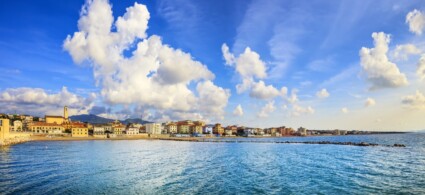
 Hotel
Hotel  Budget accommodations
  Apartments
  Family Hotel
  Luxury Hotel
  Resorts