Guerrini Hotel
Castiglioncello - Via Federico Fellini 13
Boasting a shared lounge, a terrace and a bar, Guerrini Hotel is situated in Castiglioncello and is 400 metres from Caletta Beach.
Book now
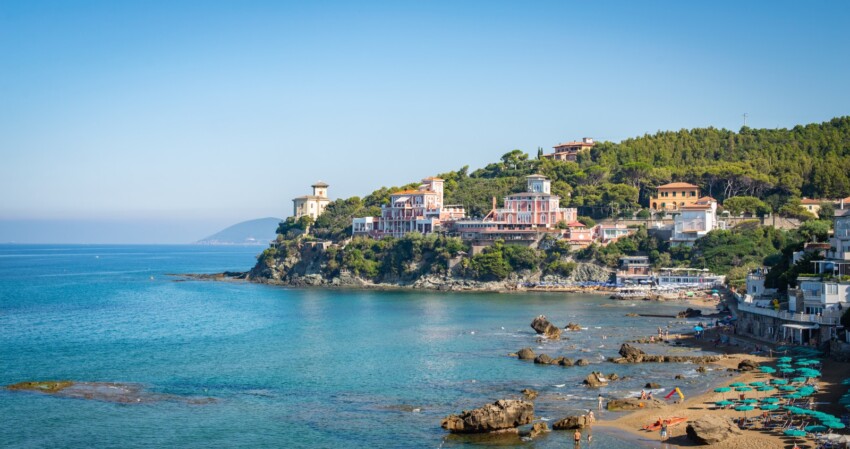
With its beaches and vibrant nightlife, Castiglioncello is the most visited, famous and trendy hamlet within the municipality of Rosignano Marittimo. Located in the province of Livorno, in the heart of the Etruscan Coast, the village is nestled in a landscape of rolling hills that sweep down to the sea, dotted with pine groves hugging the shoreline and Mediterranean scrubland.
Castiglioncello rose to national fame from the 1960s onwards, when it served as the filming location for Dino Risi’s film Il Sorpasso; from that point on, its growth was unstoppable, attracting various film stars who chose it as their holiday destination. Times have changed since then, but Castiglioncello remains an important tourist hub on the Livorno coast, drawing visitors from across Tuscany and beyond.
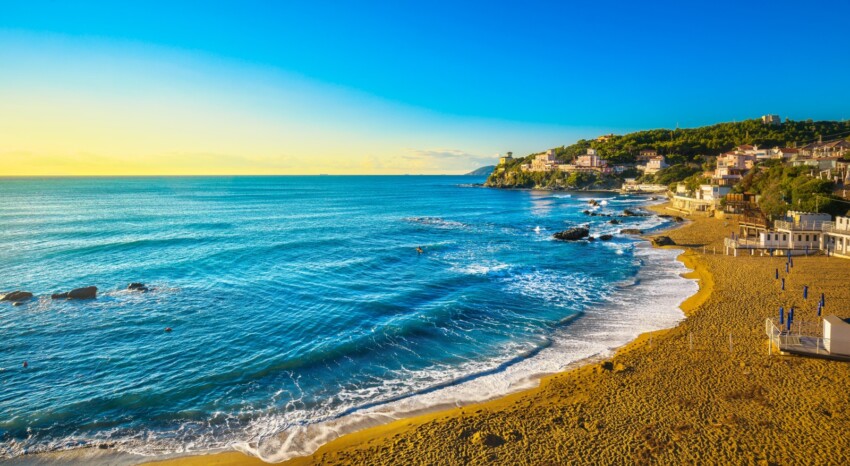
Castiglioncello boasts several beaches, from the famous Baia del Quercetano to smaller coves. Visit them all and enjoy discovering their unique merits and quirks, to make the most of your seaside holiday.
Located near Chioma, Spiaggia Fortullino is made up of pebbles and boulders, making it less than ideal for children or families. It does, however, feature a beach establishment with amenities such as hot showers (payable), free facilities and complimentary parking.
A man-made concrete beach has been built adjacent to the rocks, while behind it stretches a lovely pine grove. Access to the sea is somewhat awkward, scrambling across rocks that lead straight into deeper waters. Owing to these characteristics, Spiaggia Fortullino rarely gets crowded.
Along the SS1 Aurelia, just south of Spiaggia Fortullino, lies the lovely Baia dell’Arancio, complete with an attractive, clean beach and beautifully clear waters. There’s a free beach area and a section where you can hire sun loungers and parasols. Hammocks and picnic tables are available, whilst behind the beach stretches a charming pine grove – perfect for escaping the intense summer heat.
The small Spiaggia Le Forbici is located north of Castiglioncello, practically along the Via Aurelia, and is reached via a fairly rough footpath.
It’s a pebble beach with large stones, so unless you wear reef shoes, it won’t be particularly comfortable; for this reason it’s not ideally suited to children, yet it remains a lovely spot for a seaside day out, thanks to its beautiful waters and the bay’s shelter on three sides, protecting it from the wind. Be warned, however: this sheltered position can become a drawback during the hottest days of the year, as temperatures can soar.
The first proper Castiglioncello beach as you head from the north is the Baia del Quercetano. It’s an attractive semi-circular sandy beach, mostly developed with facilities and lovely water. The beach’s width varies considerably due to various structures built right along the shoreline, including private residences, bars and restaurants.
Baia del Quercetano is equipped with all services, but one of the most important – parking – is entirely absent. This means that in summer, the road running alongside becomes very congested with parked and moving vehicles, considerably increasing journey times through the area.
Punta Righini in Castiglioncello is a rocky beach where you can certainly spread out a towel or open a parasol. It’s completely free with no facilities of any kind, and access to the water isn’t particularly easy. This makes it a beach that rarely gets crowded, making it ideal for those seeking peace and quiet.
From Punta Righini stretches the Lungomare Alberto Sordi, recently constructed, which continues as far as Castiglioncello’s sailing club beach.
This semi-circular beach is partly reserved for the Castiglioncello sailing club, with moorings and boats close to the shore, whilst part of it features a few small beach establishments. The beach runs the full length of the small pedestrian promenade named after Alberto Sordi.
As the name suggests, this beach near Castiglioncello’s town centre is made up of jagged rocks. It’s completely free and faces fully onto open sea. Like the previous one, it’s also bordered by the pedestrian Lungomare Alberto Sordi.
Given its nature, this beach is never particularly crowded. Lying down is virtually impossible due to its terrain: however, you can pitch an umbrella or simply sit.
The small Spiaggia Caletta is a semi-circular beach of sand and small pebbles, not far from Castiglioncello’s centre. It’s rather small and, given its central location, becomes particularly crowded during summer and weekends. It’s very family-friendly with children, as the seabed slopes gently.
Crepatura beach in Castiglioncello is located immediately south of Spiaggia Caletta, north of the Marina Cala dè Medici tourist marina. It’s a beach that follows the coastline’s contours and therefore has an irregular shape, though much of it is free access.
In the following map you can see the location of the main places of interest mentioned in this article.
Castiglioncello remains primarily a seaside holiday destination, and tourists certainly don’t choose it for its cultural offerings. However, if you fancy a break from beach life, visit the beautiful Castello Pasquini, dating from the late 1800s, built in a style reminiscent of medieval Florence’s palaces, and the Castiglioncello tower, from the 17th century and remodelled during the 1800s.
Also worth exploring for a different kind of day is the network of hiking trails that extends across Poggio Pelato, the locality’s highest mountain: there are trekking routes to explore on foot or by mountain bike, remains of ancient magnesite mines, and as you walk you’ll enjoy stunning views of the Tuscan coastline.
Finally, visit the Castiglioncello National Archaeological Museum, reopened in 2011 after several years of abandonment, and now run directly by the ministry for cultural heritage and activities through Tuscany’s museum hub. Dating from 1914, it houses artefacts from the ancient Etruscan necropolis that once stood where Castiglioncello now stands, brought to light in the early 1900s during the town’s urban development.
Of all the localities within Rosignano Marittimo municipality, Castiglioncello is definitely where nightlife is most developed. There are several nightclubs such as the Astragalo Beach Club, located on Baia del Quercetano beach, and Barcaccina, in Vada right on the promenade. These are complemented by numerous aperitivo bars and late-night spots, whilst for families or those less interested in the nightlife scene, it’s always possible to dine by the sea and take a relaxing evening stroll.
Castiglioncello offers a well-developed range of accommodation. There are several hotels, mostly three-star, and a wide selection of apartments, residences and bed & breakfasts to suit all budgets. Many establishments are located along the SS1 Aurelia, or in its immediate vicinity, but there’s no shortage of beachfront options either.
We offer a selection of hotels at Castiglioncello to suit all categories of travellers. The most booked by tourists are the sea-facing hotels, often right on the beach. If you want to play it safe, choose one of the following: they are among the most booked hotels in Castiglioncello, sorted by number of reviews.
If you prefer space, privacy and the ability to prepare your own meals to a hotel holiday, book a holiday home at Castiglioncello. We recommend a few below, but in this case we advise you to book early because houses and apartments for rent at Castiglioncello are in high demand.
Castiglioncello’s position on the Livorno coast, not too far from Tuscany’s road network, means getting there is never particularly difficult. From Florence, for example, it takes roughly 1 hour and 20 minutes, following the SGC FI-PI-LI expressway to the Vicarello exit: from there you join the A12 motorway, which you follow all the way to Rosignano Marittimo’s southern toll booth; once you’ve exited, the town centre is just 10-15 minutes away.
Castiglioncello is also close to Livorno‘s centre, just 25 minutes away along the SS1 Aurelia state road heading south along the Tuscan coast, whilst from Pisa it takes nearly 45 minutes, also heading south. From Grosseto, you travel along the Aurelia heading north for almost 120 kilometres, for a total journey of around 1 hour and 15 minutes, whilst for inland Tuscan towns, the situation is somewhat less convenient.
From Siena, for example, it takes approximately 1 hour and 45 minutes, following the SS68 Val Cecina state road through Badesse, Monteriggioni, Colle Val d’Elsa, Volterra and Montescudaio, whilst from Arezzo the distance exceeds two hours. You’ll need to reach Florence first, then follow the directions outlined above.
Those travelling by public transport shouldn’t have too much trouble getting to Castiglioncello: the village is served by a railway station, with trains to and from Livorno Centrale, Piombino, Grosseto, Campiglia Marittima and Florence Santa Maria Novella. From the latter station there are a few infrequent direct connections: you might prefer to opt for journeys with changes at Pisa or Livorno. The overall journey takes just over 2 hours.
What's the weather at Castiglioncello? Below are the temperatures and the weather forecast at Castiglioncello for the next few days.
Castiglioncello is a hamlet in the municipality of Rosignano Marittimo, in the province of Livorno. It sits on the coast, just north of Rosignano Solvay.

 Hotel
Hotel  Budget accommodations
  Apartments
  Family Hotel
  Luxury Hotel
  Resorts