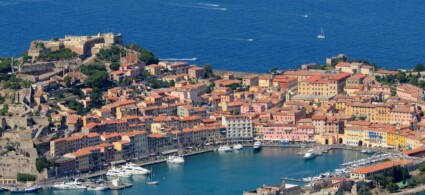
Portoferraio
The largest and most populous municipality on the island of Elba is Portoferraio, which with its historic centre and beaches makes an excellent base for exploring the island.
Read more
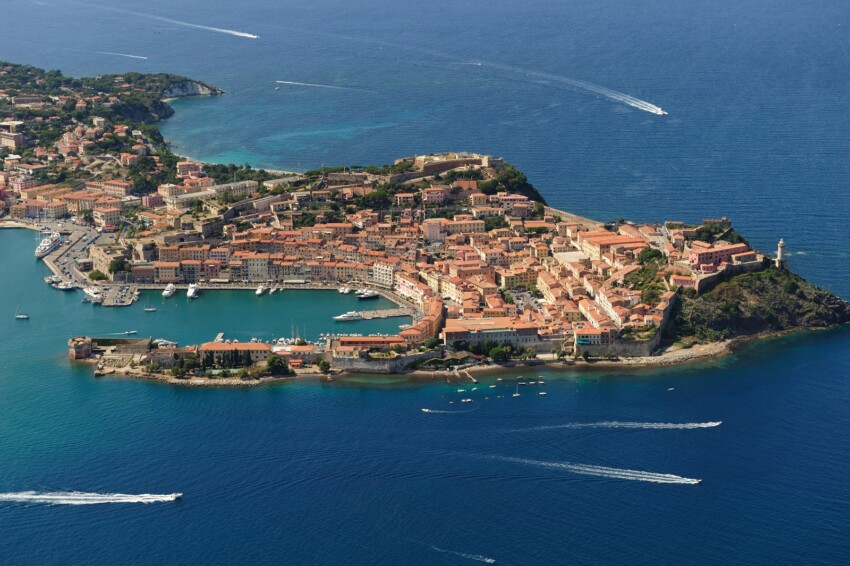
Elba is a fascinating island from both a landscape and historical perspective, as well as geologically and architecturally. The beaches, each unique in character, and the views are enchanting, whilst the archaeological sites, mines, museums and fortresses are captivating.
A jewel of the Tuscan Archipelago, Elba is renowned for the beaches of Cavoli, Fetovaia, l’Innamorata, Le Ghiaie and Seccheto, though numerous small coves, some barely accessible, can be found along its coastline.
The view from Monte Capanne is breathtaking: your gaze will sweep across stunning bays and reach the Italian coast and those of nearby islands such as Capraia, Montecristo and Pianosa.
Portoferraio, the island’s most important town, is a treasure trove thanks to the Medici fortifications of Forte Falcone, Forte Stella and Torre Linguella. Marciana and Capoliveri are equally captivating, with their characteristic narrow alleyways that wind across different levels.
Yet the island also safeguards Etruscan fortifications, Pisan towers and Roman villas.
The island’s most famous museums are linked to Napoleon Bonaparte’s exile.
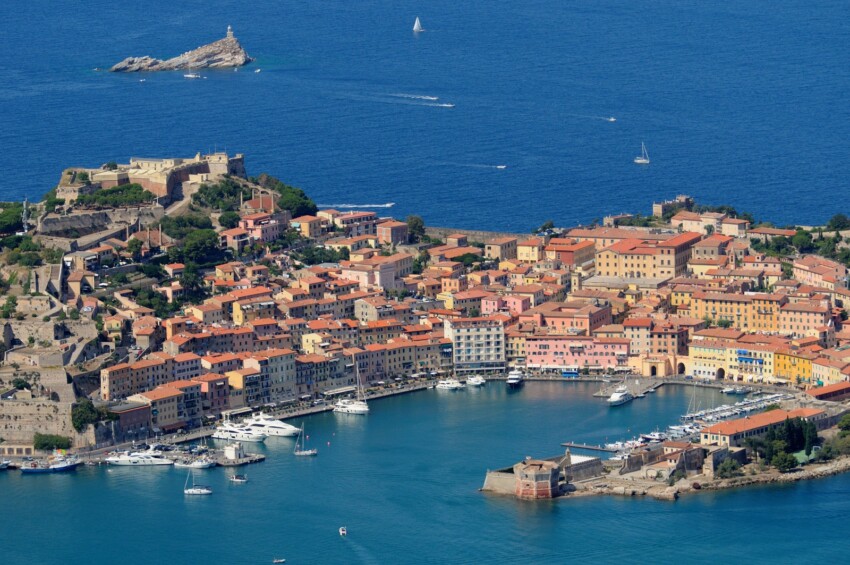
Portoferraio is the principal town on Elba and looks out over a beautiful inlet along the north-eastern coast.
The historic centre of Portoferraio, of remarkable beauty and singular charm, spreads across the slope of a small hill.
Known in Roman times as Fabricia, Portoferraio was also ruled by the Etruscans and Greeks. Its fortified Renaissance appearance, as we see it today, is due to the works commissioned by Cosimo I de’ Medici in 1548. The Medici fortifications, Forte Falcone, Forte Stella and the Torre della Linguella at the entrance to the port basin, were built by architect Giovanni Battista Bellucci and are connected to one another by sturdy walls.
In 1814, the island became home to the exiled Napoleon Bonaparte, who chose the Palazzina dei Mulini as his official residence.
In the north-western part of the historic centre lie the beautiful white pebble beaches of Le Ghiaie, Capo Bianco and Padulella. Just outside town are the beaches of Bagnaia, Biodola and Forno.
The view of the town upon arrival by ferry is truly spectacular.
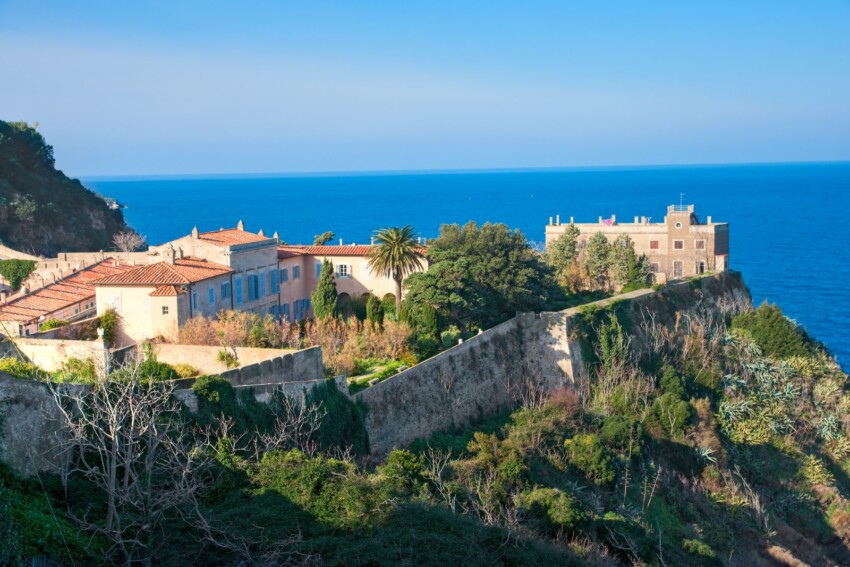
The Palazzina dei Mulini is located in the upper part of Portoferraio’s historic centre, on the natural terrace also occupied by the Medici forts Stella and Falcone, and was chosen by Napoleon as his official residence during his exile on Elba.
Built in 1724 by Grand Duke Gian Gastone de’ Medici within one of the bastions of the city’s fortified perimeter, it was adapted to Napoleon’s requirements by Livornese architect Paolo Bargigli. The villa is now a National Museum.
On the ground floor, which belonged to Bonaparte, are the drawing room, library and bedroom, study and servants’ quarters. The first floor, originally intended for his wife Maria Luisa but used by Paolina, is famous for the great ballroom where official ceremonies were held. The original furniture has since been lost, but the furnishings have been arranged with nineteenth-century pieces in Empire style.
A splendid garden spreads between the Palazzina dei Mulini and the Viste beach, boasting two important statues and a fine view of the open sea.
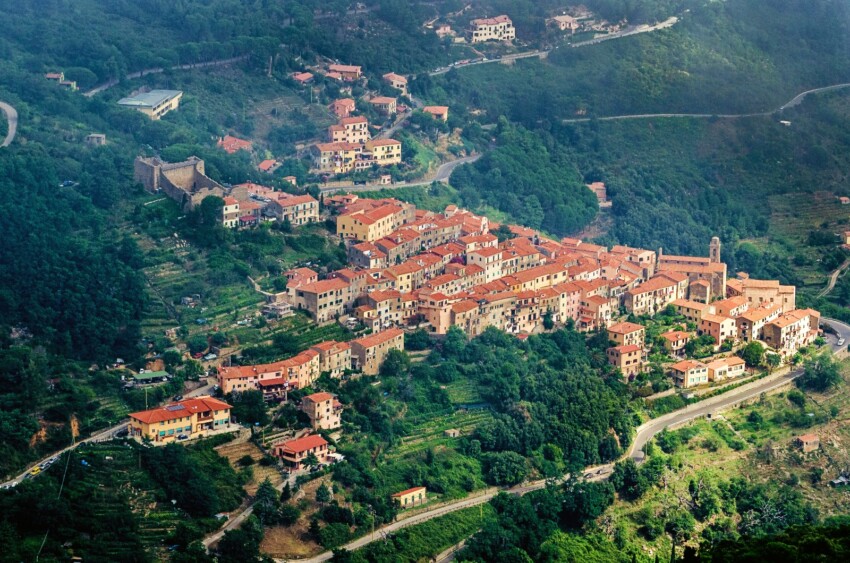
Dominated by the Pisan Fortress, the village of Marciana is situated in the north-western part of Elba, at 375 metres above sea level, nestled in a splendid valley of chestnut trees and Mediterranean scrubland.
This charming medieval village is one of the oldest on the island and has carefully preserved interesting historical and archaeological evidence. Picturesque alleyways, narrow and steep, and characteristic staircases wind through the centre up to the fortress, built in the twelfth century as a defensive stronghold.
Nearby are the village of Poggio, famous for its healing waters, and the beaches of Sant’Andrea, La Paolina and Marciana Marina.
Marciana is 27 kilometres from Portoferraio.
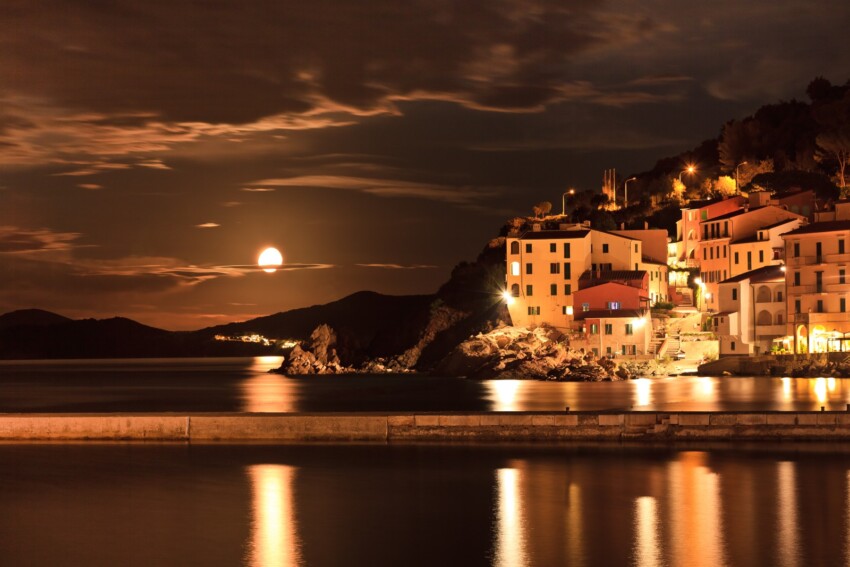
Among Elba’s most beloved tourist destinations, especially for Russian and German visitors, Marciana Marina lies along the island’s northern coast, at the left end of the large Procchio bay.
The main settlement sits on the Cotone cliff, though tourist facilities have spread both inland and along the waterfront. The nineteenth-century architectural features, typical of the Tuscan coast, have been preserved, giving it an elegant and romantic appearance.
The most famous beach is that of Fenicia, located behind the Saracen Tower built in the twelfth century and the village’s symbol, though Cala, Crocetta and the small beach of Sprizze are also beautiful.
Marciana Marina’s nightlife is lively and cosmopolitan, developing along the waterfront where small shops, restaurants, ice cream parlours, patisseries and bars line the promenade.
Marciana Marina is 20 kilometres from Portoferraio.
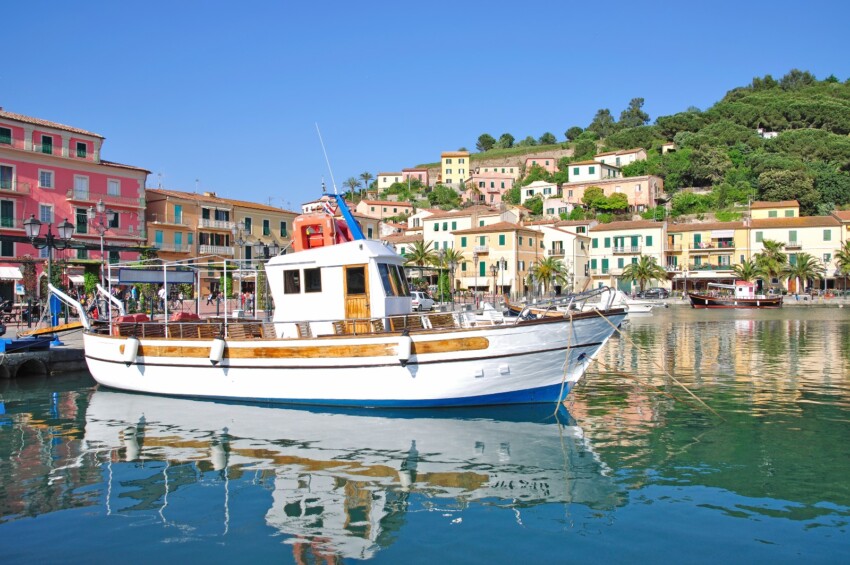
Among the most beautiful and romantic villages on Elba, Porto Azzurro sits within the deep Mola Gulf, the widest inlet on the eastern coast, and is dominated by the Spanish Fortress of San Giacomo, a star-shaped citadel built in 1603 and now a prison.
This renowned seaside resort has a fine tourist marina, lined with small restaurants, ice cream parlours and shops, and boasts a lovely, spacious piazza that comes alive in the evening with numerous events. Moreover, narrow and picturesque alleyways and staircases wind up the hillside, offering stunning views of the rooftops and bay.
Near Porto Azzurro lie the beautiful beaches of Barbarossa, La Rossa, Terranera, Reale, Mola and La Pianotta, as well as numerous wineries where you can taste wines produced on the island.
Porto Azzurro is 13 kilometres from Portoferraio.
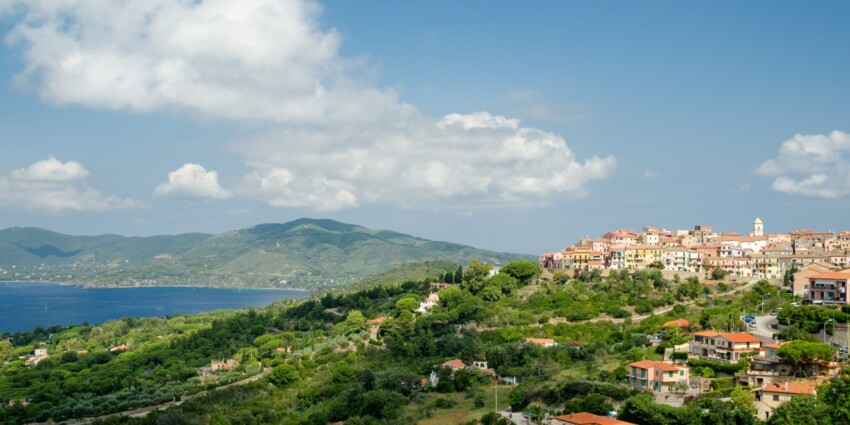
In the southern part of Elba, a few kilometres from Porto Azzurro, on a terrace of Monte Calamita at the centre of a verdant peninsula, lies the village of Capoliveri, an ancient castle fortified by the Pisans in the twelfth century.
A medieval character dominates Capoliveri’s centre, where houses face onto narrow alleyways and continual ups and downs leading to the main piazza, Piazza Matteotti, from where you can enjoy stunning views of the village’s rooftops. Beyond its picturesque charm, the centre offers splendid views of the coast and is vibrant and full of craft shops, small restaurants, wine bars and establishments.
Famous in the Etruscan age for its iron mines and in Roman times for its wine, Capoliveri continues this ancient tradition today with vineyards and excellent wine that can be purchased directly from the wineries found along the road from Portoferraio to Porto Azzurro and Capoliveri.
Several beaches are located near Capoliveri: at the foot of the promontory on which the village stands are the wonderful Madonna delle Grazie beach, the spectacular Zuccale, l’Innamorata, Barabarca and Naregno, whilst towards Marina di Campo, as well as Lacona bay, you can appreciate the beaches of Norsi, Capo Stella and Capo Fonza.
Not far away, at Morcone, is the Sanctuary of Madonna delle Grazie, whilst at Lacona you can visit the Sanctuary of Madonna della Neve and Forte Focardo. The vast mineralogical area surrounding the area is particularly interesting for walks and excursions by bicycle or horse.
The village of Marina di Campo is situated along Elba’s southern coast, in the beautiful Campo bay, and is characterised by a picturesque historic centre.
A white sand beach, stretching for 2 kilometres and ideal for children, has allowed the village, from the 1950s onwards, to develop as a tourist destination. Nearby are the renowned beaches of Fetovaia and Cavoli, and the smaller Fonza and Galenzana.
Marina di Campo boasts a large number of typical restaurants, where you can savour local Elban cuisine, hotels in all price ranges and numerous establishments, particularly popular with young people. The harbour area, the oldest part of the village, is the most suitable place for eating fish.
The tower of Marina di Campo, dating from the eleventh century and standing 25 metres high, is very striking, and of archaeological importance are the Roman columns at Secchetto. Among notable buildings are the Church of San Nicolò and the Church of San Giovanni at Sant’Ilario in Campo, a lovely hilltop village.
Marina di Campo is also home to the Elba Aquarium, one of Italy’s largest, and within municipal territory, the Elba Island airport.
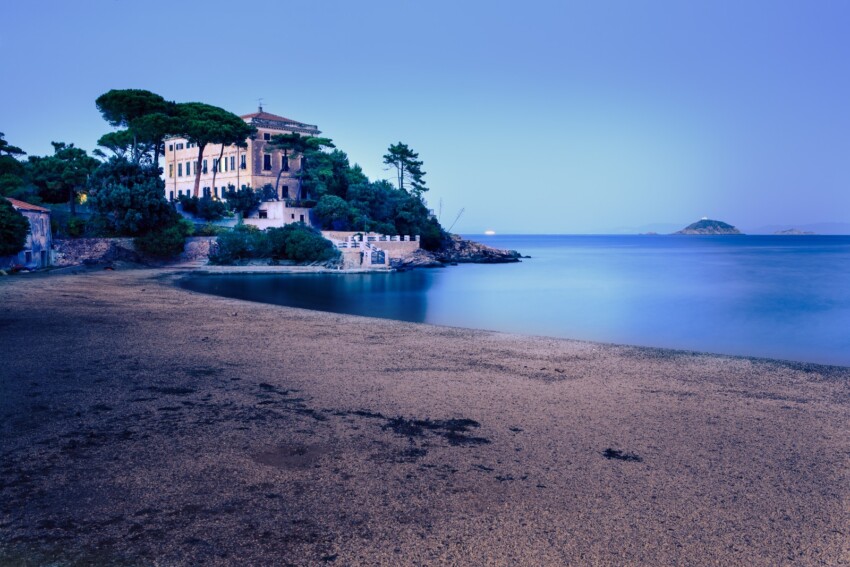
The small tourist marina of Cavo is located on the north-eastern tip of Elba, on a spur of Monte Capanne, facing the Tuscan coast, and is frequented mainly by families and couples seeking to escape the hustle and bustle. In the evening, a pleasant stroll along the Vespucci waterfront is a delight.
Cavo is among Elba’s earliest settlements and is organised around the Castle through wide staircases and narrow streets. Surrounded by holm oaks, pines and chestnut trees, Cavo manages to satisfy both sea lovers and those who prefer a mountain atmosphere. On the waterfront stands the nineteenth-century villa of the Tonietti family, where you can admire the Mausoleum designed by architect Coppedè.
A vast and long sandy beach, the beach of Cavo, serves this continually growing tourist resort, and beaches in the vicinity generally have a sandy seabed ideal for children. In the northern part of Cavo are the small peninsula of Capo Castello, the small beach of Cala dell’Alga and the ruins of the Roman Villa of Faleri dating from the first century AD.
Cavo is connected to Piombino with crossings of less than 30 minutes. Moreover, the small marina is reachable from Portoferraio by 20 minutes of ferry and 40 minutes by car.
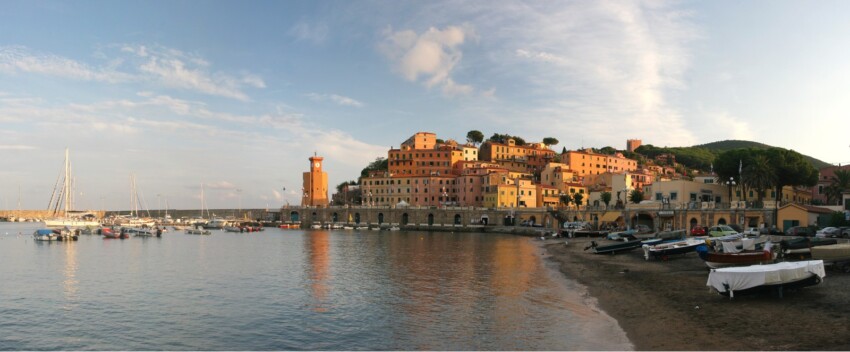
The village of Rio Marina is situated along Elba’s eastern side, the mining heart of the island exploited since Etruscan times, and is close to some particularly evocative beaches.
In Rio Marina’s centre are the Tower beach, dominated by the hexagonal Clock Tower, built in 1534 at the head of the pier, and the oratory of San Rocco, erected in 1570. The village is surrounded by hills characterised by the reddish colour of iron oxide.
The beaches near Rio Marina are very popular and mainly comprise fine, gleaming sand, some solitary and difficult to reach, others easily accessible and with some facilities. We recommend Capo d’Arco, Ortano, Topinetti, Vigneria and Cala del Telegrafo.
Rio Marina is connected to Piombino by Toremar with 45-minute crossings. The town of Porto Azzurro is about 12 kilometres away, whilst Portoferraio is 30 minutes by car.
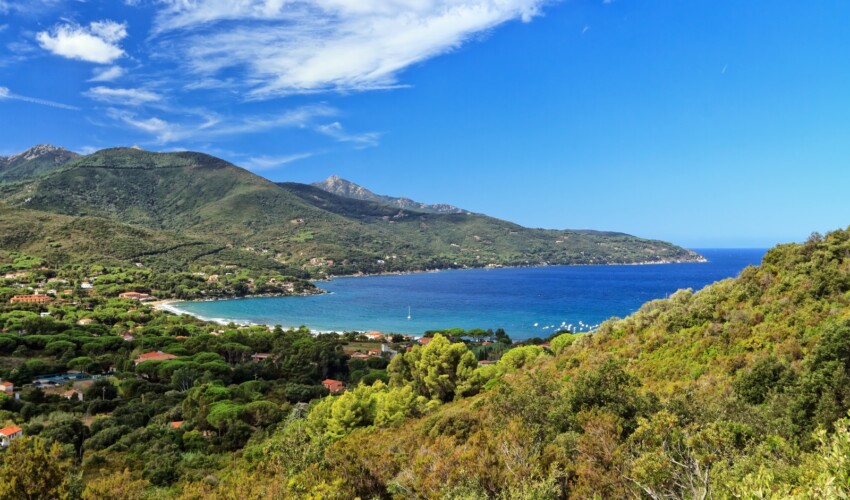
The village of Biodola overlooks one of the most enchanting bays on the island, along Elba’s northern coast, midway between Portoferraio and Procchio.
The resort is nestled within Mediterranean scrubland and is particularly sought-after thanks to three nearby beaches: Biodola beach, one of Elba’s finest stretches of sand, plus Scaglieri and Forno.
Excellent hotels and residences dot this area, but given its popularity, availability tends to run out quickly. We recommend booking several months in advance.
Biodola is a family-friendly destination, as the water slopes gently into the sea, making it safe for children. The village has numerous restaurants and a campsite.
This coastal spot is connected to Portoferraio during the day by minibus.
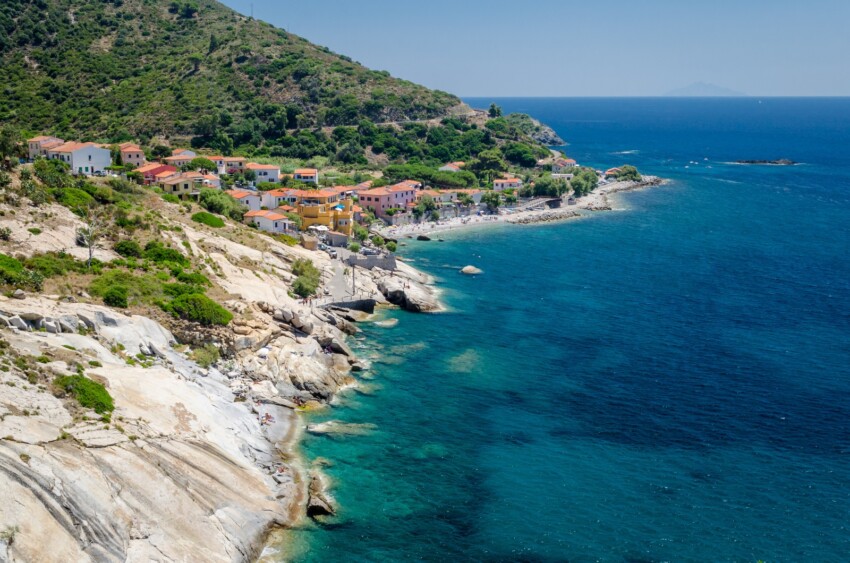
The village of Pomonte sits along Elba’s western coast, the island’s most rugged stretch, and despite being a picturesque hamlet, it remains largely off the mass tourism trail.
Nestled in a stunning valley at the foot of Monte Capanne, Pomonte is surrounded by terraced vineyards, small lakes and cascades. The village is particularly famous for the wreck of the Italian cargo ship Elviscott, which sank in 1972 and lies 12 metres down, just offshore.
A few hundred metres from the village you’ll find three small shingle beaches: Ogliera, the largest, Centrale and Quartiere, whilst nearby there are numerous shingle coves and granite cliffs.
On clearer days it’s possible to spot the islands south of Elba—Pianosa, Montecristo and Giglio—as well as Corsica‘s coastline.
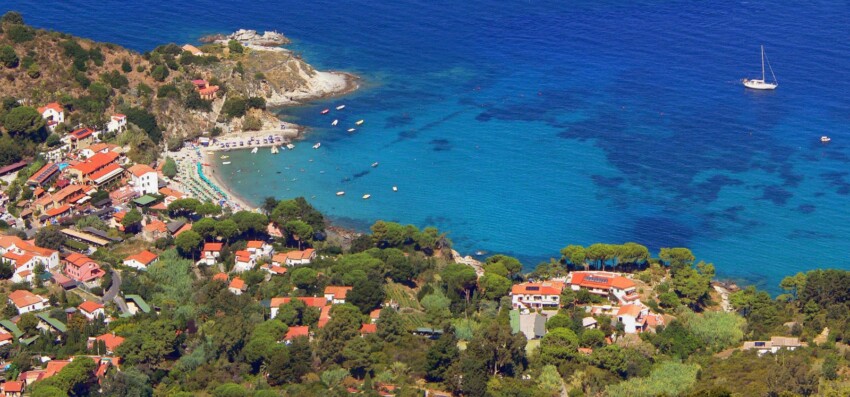
The hamlet of Capo Sant’Andrea sits on a promontory on Elba’s north-western side, roughly 30 kilometres from Portoferraio, and has been inhabited since Etruscan times.
This tourist destination, particularly suited to snorkelling, diving and mountain biking and canoeing enthusiasts, is immersed in a breathtaking landscape of dramatic cliffs and secluded coves.
Sant’Andrea bay and Cotoncello sandy beach are renowned inlets with crystal-clear waters. The areas of Cote Piane, where vast granite slabs are lapped by spectacular sea, and Le Piscine, a diving paradise, are equally picturesque.
Perfect for those seeking a holiday centred on relaxation and nature, Sant’Andrea sits apart from the island’s livelier areas whilst still boasting splendid hotels and charming local shops. The sunsets are spectacular.
Procchio, among Elba’s most developed tourist destinations, lies along the island’s northern coast, at the junction between Marciana Marina, Portoferraio and Marina di Campo.
Surrounded by greenery, the village of Procchio overlooks a beautiful gulf bearing its name and boasts numerous hotels, private villas, residences and apartments perfect for a holiday. Its popularity, however, means accommodation fills up fast.
Procchio’s nightlife revolves around the covered square, where you can enjoy live music whilst sipping a drink or browsing the craft market.
Near Procchio lie some of the island’s most beloved beaches: La Paolina, La Guardiola, Spartaia, Biodola and La Guardiola—all beautiful stretches of sand bathed in crystalline waters. The golden Procchio beach, stretching for about a kilometre, is also highly popular.
In the following map you can see the location of the main places of interest mentioned in this article.
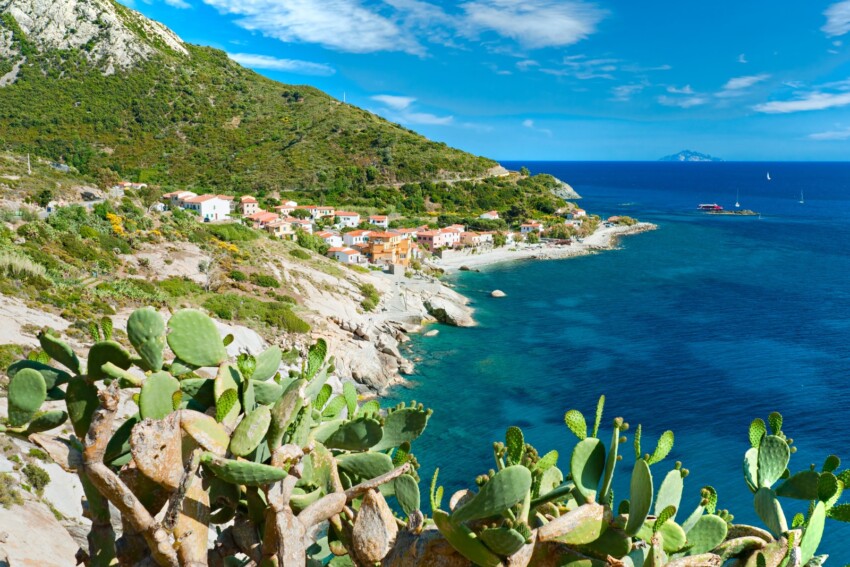
Beyond being an ideal summer holiday destination, Elba Island, the jewel of the Tuscan Archipelago, is the perfect choice for a romantic weekend escape focused on relaxation and outdoor living.
Elba is a paradise for sea lovers, snorkelling and diving enthusiasts and is equally ideal for those seeking thermal spa breaks: the excellent San Giovanni Thermal Springs complex has agreements not only with the National Health Service but with numerous hotels on the island.
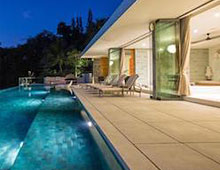
Hotel facilities are of excellent standard across much of the island, many with wellness centres, excellent opportunities to stay in private villas with swimming pools and stunning views, and luxury resorts.
Whether you reach the island by ferry or plane, begin your visit to beautiful Portoferraio, on the southern coast, famous for its Medici fortresses and the Mulini Palace. Have lunch at one of the many typical local restaurants and savour the exceptional dishes of Elban cuisine. After lunch, enjoy a lovely walk along the Capoliveri coast and then discover the marvellous bays of Lacona and Cavoli through to Fetovaia. After dinner, stroll through the lively streets of Porto Azzurro or along the seafront in Marciana Marina.
Explore the remains of the three Roman villas on Elba Island—the most fascinating is Villa delle Grotte—relax on the island’s beaches, each unique with their white, black, shingle or rocky shores, or discover the charming villages of San Pietro, Marciana and Sant’Ilario.
If you have a few extra days, visit Pianosa Island or Montecristo Island.
 Hotel
Hotel  Budget accommodations
  Apartments
  Family Hotel
  Luxury Hotel
  Resorts