Albergo Italia

Among all the provinces along the Tuscan coast, Livorno is certainly the most extensive and also the most varied. Indeed, along the Livorno stretch, known as the Costa degli Etruschi, you’ll find many different landscapes: endless deep beaches, tall windy cliffs, and stretches protected by pleasant pine groves. Moreover, it’s surrounded by a rich and varied environment that allows you to experience and discover parks and protected areas, typical Mediterranean vegetation and woodlands that embrace the hills.
Along this coastal stretch winds a number of tourist resorts, much frequented especially in summer by both Tuscans, who often have their holiday homes here, and tourists from the rest of Italy. From south to north, the Costa degli Etruschi includes the towns of Piombino, San Vincenzo, Castagneto Carducci, Bibbona, Cecina, Rosignano Marittimo, and finally the provincial capital Livorno.
Take your time to explore it thoroughly from end to end: you’ll find yourself facing breathtaking views and plenty of seaside resorts within reach, with a range of services designed to make your holiday perfect. Finally, don’t forget you’re in Tuscany: driving just a few kilometres inland you’ll find yourself in the heart of one of the territory’s most prestigious wine regions, where famous labels are bottled for export worldwide.

Piombino is the southernmost town in Livorno province, bordering Grosseto province. It’s a port town from which most ferries to Elba Island depart, but should you decide to stop, you’ll find a charming historic centre and, above all, beautiful beaches, even close to the town itself.
But it’s the surrounding area that really makes Piombino an unmissable destination on your journey along the Costa degli Etruschi: start by visiting Baratti, with its gulf dominated from above by the glorious Populonia, one of the most important Etruscan cities where you can visit an important archaeological park. The Sterpaia coastal park is also lovely, south of the town centre, which has received the prestigious Blue Flag award since 2008.
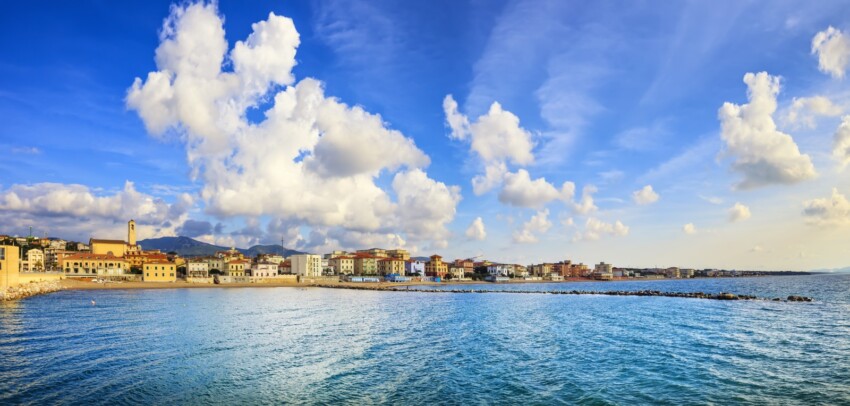
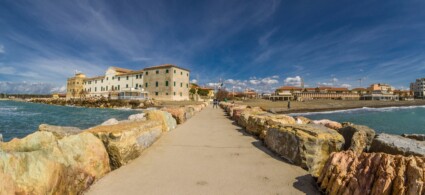
Among the seaside resorts on the Costa degli Etruschi, one of the most important is certainly San Vincenzo, thanks above all to its very long beaches. The high tourist appeal of San Vincenzo is particularly noticeable when driving south towards the pine grove area of the town, where numerous resorts, holiday villages and summer camps have been built.
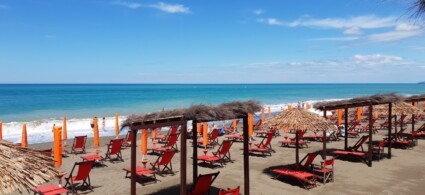
The San Vincenzo beaches are largely free, and in many stretches have a pine grove behind them, ideal for shelter during the hottest hours of the day. If instead you prefer to stay close to the town centre, San Vincenzo has a lovely town beach, fully equipped with loungers and parasols. South of the town, the Rimigliano coastal park begins, with its beach stretching for over 5 kilometres.

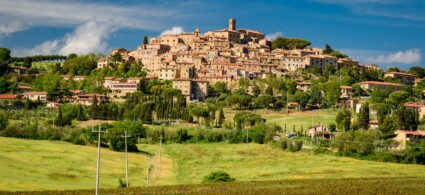
In the heart of the Costa degli Etruschi, in the Alta Maremma area, now also known as Maremma Livornese, lies the charming Castagneto Carducci, inextricably linked to the name of poet Giosuè Carducci, who spent his childhood here when the village was known as Castagneto Marittimo. Today, thanks to its beaches and historic village, it’s a must-see destination on a Costa degli Etruschi tour.
The municipality of Castagneto Carducci also includes Bolgheri, a name famous among all wine enthusiasts. It’s the perfect day trip for those in the area, to enjoy a different day exploring the Livorno hinterland, discovering a small medieval village situated at the end of a striking tree-lined avenue. In this tiny area, some of the world’s most famous and sought-after wines are produced, big names including Bolgheri DOC, Bolgheri Superiore, Sassicaia and Ornellaia.
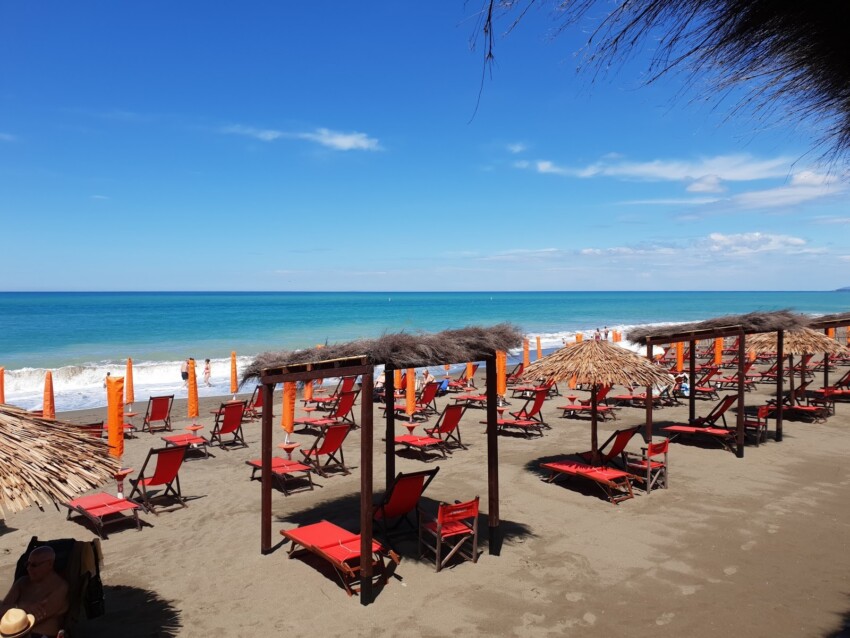
The historic centre of Bibbona is situated inland from Livorno province, but for many, even Tuscans, the name Bibbona actually refers to Marina di Bibbona, located along the coast. Its lovely beach with pine grove, numerous family-friendly services and beautiful countryside behind it make Marina di Bibbona a must-visit destination along the Costa degli Etruschi.
The Marina di Bibbona beach covers practically the entire municipal territory, and is largely free. Being extremely long, there are areas where even in the height of August you’ll find complete solitude, whilst those who prefer bustle and laughter will certainly find the ideal spot in the parts of the beach closest to the town centre.

Cecina and Marina di Cecina partly follow the same pattern as Bibbona and Marina di Bibbona: the first identifies the municipality, which is also rather large, whilst the second is the coastal resort, where you’ll find the beach and most of the accommodation. This is where most tourists and holidaymakers arrive, attracted by the lovely beach with pine grove and the Tomboli di Cecina nature reserve.
Between hotels, campsites, resorts, nightclubs and water parks, Marina di Cecina is gathering more and more support year after year. There are three beaches: the Gorette beach to the north, long and sandy, the town beach, fully equipped, and the beach of the Tomboli di Cecina natural park, wild and unspoilt.

The municipality of Rosignano Marittimo contains a series of very renowned resorts, major names in Tuscan seaside tourism and unmissable destinations on your journey discovering the Costa degli Etruschi. The most famous and frequented are undoubtedly Vada and Castiglioncello, the latter made famous by Dino Risi in the 1960s, who filmed Il Sorpasso here, and equipped with numerous beaches, decent nightlife and plenty of services for tourists.
Rosignano Marittimo also attracts many tourists and curious visitors to the Spiagge Bianche (White Beaches), a stretch of coast with Caribbean colours, azure water and brilliant white sand, but which conceals a significant deception: the water is heavily polluted and the stretch is not safe for bathing, and these magical colours are actually the result of discharge from the Solvay sodium bicarbonate factory. The bathing ban is practically ignored by everyone, but whether you love them or hate them, the Spiagge Bianche are one of the main reasons people visit the Rosignano Marittimo coast.

Finally, anyone visiting the Costa degli Etruschi cannot skip a visit to Livorno. The Tuscan provincial capital and a city off the beaten tourist trail, Livorno is famous throughout Italy above all for its port, which welcomes merchant vessels, ferries and cruise ships. But don’t dismiss it: give it a chance and it will win you over with its authenticity, relaxed lifestyle and the straightforwardness of its inhabitants, always ready with a quip.
There aren’t that many things to see in Livorno, but they’ll certainly keep you occupied for a day or two: start with the Fortezza Vecchia, in the heart of the port, and move towards the centre until you reach Terrazza Mascagni, the favourite photo spot of the city’s residents, next to which stands Livorno’s aquarium, one of the most important in central Italy. Don’t miss the Piccola Venezia (Little Venice), one of the most picturesque neighbourhoods, where you can walk along bridges and canals.
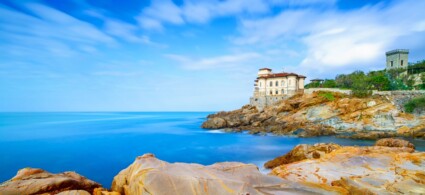
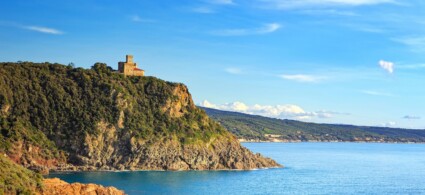
If you want to take advantage of your stop in Livorno to enjoy the sea, head south for a few kilometres: you’ll find the Calafuria nature reserve, with Cala Leone and Cala Quercianella.






 Hotel
Hotel  Budget accommodations
  Apartments
  Family Hotel
 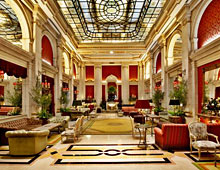 Luxury Hotel
 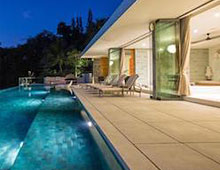 Resorts