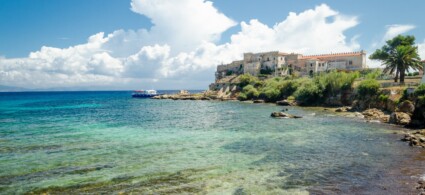
Pianosa Island
Distance: 33 km
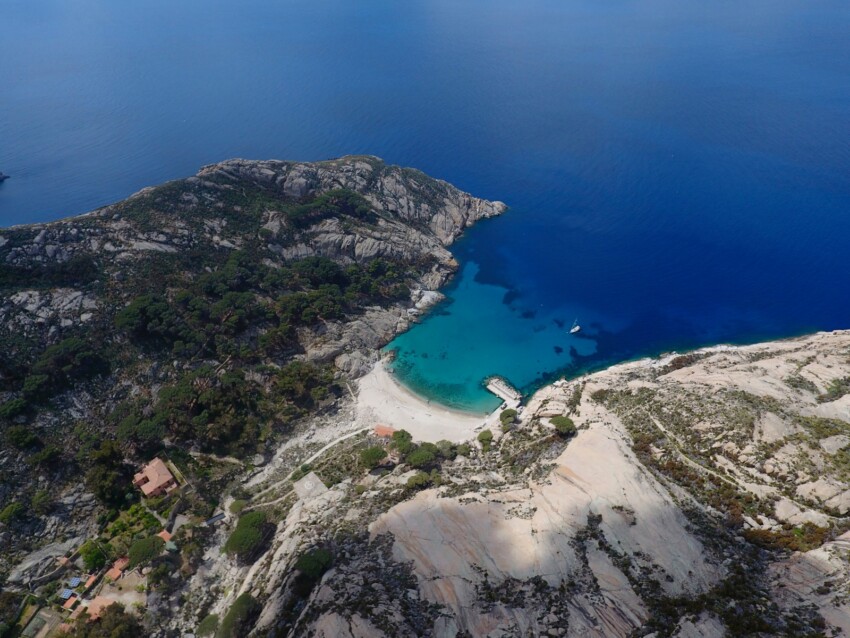
Montecristo was once known as Oglasa. Legend has it that San Mamiliano, a fifth-century saint and patron of seafarers, was taken prisoner and sold into slavery. After escaping aboard a pirate ship, he converted the crew during their voyage, bringing them with him as devout Christians. Through a twist of fate, he arrived at Oglasa, where a dragon was terrorising the inhabitants. He defeated the beast and spent the remainder of his days in solitude and penance, renaming the island Monte di Cristo.
The grotto where the saint is said to have lived is still visible today. Legend also speaks of a fabulous treasure that inspired Alexandre Dumas’s celebrated novel The Count of Montecristo. Today, the island is the most protected in the archipelago, a biogenetic nature reserve where only a limited number of visitors are permitted to land each year.
It’s worth joining the waiting list with the few tour operators authorised to dock here and exercising a little patience.
The biological protection zone restricts not only landings but also fishing and navigation in the waters surrounding the coast.
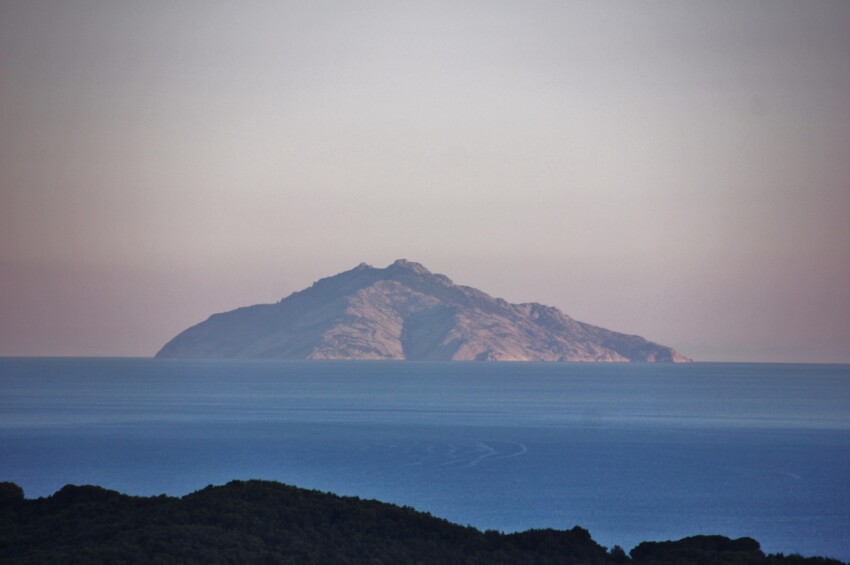
The island presents an imposing landscape, dominated by the 645-metre Monte della Fortezza, a granite massif named after a fortress built here by the Appiani, lords of Piombino. Numerous rocky coves indent the coastline, from Cala Maestra to Cala Corfù, Scirocco and Cala del Diavolo – names that evoke rugged terrain. Thanks to the protection it has enjoyed over the years, Montecristo remains the Tuscan Archipelago’s wildest jewel, inhabited largely by wild goats and rabbits, and by the endemic Montecristo viper.
 Hotel
Hotel  Budget accommodations
  Apartments
  Family Hotel
  Luxury Hotel
  Resorts