Hotel Residence Stella del Mare
Vada - Via Sardegna 15
Offering 2 outdoor pools featuring hydromassage areas, Hotel Residence Stella del Mare is 3 km south of Vada on the Tuscan coast.
Book now
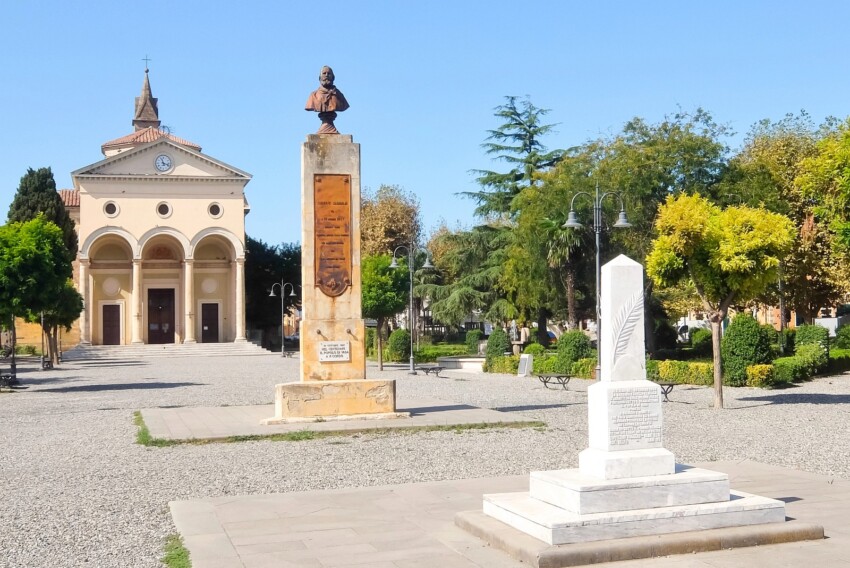
For those seeking an out-of-the-ordinary beach experience, Vada offers a striking blend of millennia-old history and crystal-clear waters. This hamlet of Rosignano Marittimo, awarded the Blue Flag, conceals beneath its soil the ancient Roman port of Vada Volaterrana, whilst its white sandy beaches attract thousands of visitors each summer.
The area stretches along the Etruscan Coast for over five kilometres of sandy shoreline. The modern settlement sits atop the ancient port city which, from the 1st century AD to the 7th century, represented a crucial trading hub for Volterra. Today, Vada boasts wide beaches shaded by dense pine groves, an equipped tourist marina and perfect conditions for water sports that make it a haven for surfers and sailors alike.

Vada’s coastline boasts distinctive features that set it apart in the Tuscan landscape. The beaches are divided into various stretches, each with specific characteristics that cater to different needs.
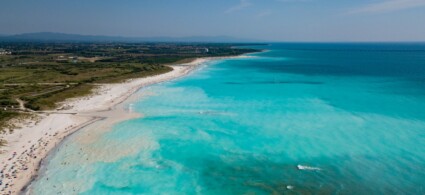
The famous White Beaches extend for roughly four kilometres between Rosignano Solvay and central Vada. The bright white, fine sand, reminiscent of Caribbean shores, characterises this stretch which is almost entirely free of charge. The place name Pietrabianca is documented as far back as the 1600s, testament to the particular geological nature of the area.
At Vada, there is a Blue Spot equipped with full beach facilities. This stretch is an ideal destination for water sports enthusiasts: the Lillatro Beach is home to the WindSurf Gorette Club, which organises sailing, windsurfing and kitesurfing courses. Throughout the year, storms bring surfable winds, whilst in summer the thermal mistral kicks in, creating perfect conditions for all ability levels.
The Vada town centre beach features light-coloured, fine sand with shallow waters that slope gently downward. This characteristic makes it particularly suitable for families with children, allowing bathing activities in complete safety. A vast pine grove surrounds the shore, bordered by a pedestrian and cycle path that connects the numerous beach establishments alternating with free beach areas.
Not far away is Bau Beach, an equipped beach where you can spend days by the sea with your dogs. Animal lovers appreciate this rare opportunity along the Tuscan coast. At the mouth of the Fine river, which after twenty-two kilometres flows into the Ligurian Sea, the coastal landscape takes on distinctive characteristics with wetland environments rich in biodiversity.
The San Gaetano archaeological area is Vada’s cultural jewel. Excavations carried out by the University of Pisa from 1960 onwards have uncovered a vast port district of the ancient Vada Volaterrana. The complex, built at the end of the 1st century AD, includes two magnificent thermal facilities, warehouses for goods (horrea), a large cistern, the headquarters of a port workers’ guild and probably a sacred area.
The buildings, constructed with concrete foundations and walls of semi-baked bricks, testify to remarkable architectural planning. In 2024, buildings with circular rooms clad in marble for ceremonial functions and a warehouse with eleven rooms were discovered. Spanning over 4.6 hectares, the site represents just one of the districts of the ancient port city.
Vada Tower, in its original form, dates back to 1279. The Republic of Pisa built it to serve dual purposes of surveillance and as a lighthouse for mariners in a treacherous stretch of sea. In the 15th century, the Florentine government restructured it to protect against Saracen raids, integrating it into Tuscany’s coastal defensive system. The thick lower walls could withstand artillery fire, whilst the overhanging upper section increased the surface area for gun emplacements.
The Pietrabianca Bridge, built in the late 18th century, stands as precious testimony to the territorial layout under Pietro Leopoldo, who began a land reclamation project completed by Leopoldo II around 1840. The Vada Farmstead is a characterful agricultural village with an 18th-century cistern for collecting rainwater, perfectly restored and preserved.
Castiglioncello, a few kilometres to the north, offers dramatic cliffs, pine forests and Pasquini Castle, which hosts cultural events. To the south, the coast stretches to Cecina with sandy beaches and a lively nightlife. The hinterland offers excursions towards Bolgheri with the famous Avenue of Cypresses and prestigious wine estates.
Vada’s accommodation offer has developed to meet the needs of international tourism. Hotels and residences are concentrated near the seafront, many nestled within the pine grove with swimming pools, entertainment and comprehensive facilities. Residences such as Stella del Mare offer apartments ideal for families seeking independence.
In the immediate hinterland stand farm stays such as Podere il Querciolo, surrounded by Tuscan countryside and just four kilometres from the beach. These properties represent the perfect choice for those seeking peace and quiet without sacrificing proximity to the beaches. The Vada railway station on the Grosseto-Livorno-Florence line facilitates travel for those who prefer not to use a car.
To see all the facilities and book accommodation in Vada use the form below, entering the dates of your stay.
We offer a selection of hotels at Vada to suit all categories of travellers. The most booked by tourists are the sea-facing hotels, often right on the beach. If you want to play it safe, choose one of the following: they are among the most booked hotels in Vada, sorted by number of reviews.
If you prefer space, privacy and the ability to prepare your own meals to a hotel holiday, book a holiday home at Vada. We recommend a few below, but in this case we advise you to book early because houses and apartments for rent at Vada are in high demand.
Vada is a hamlet in Rosignano Marittimo, in the province of Livorno, situated along the Etruscan Coast. It lies approximately twenty kilometres from Livorno, fifty minutes from Pisa via the A12 motorway (exit Rosignano Marittimo), and forty kilometres from Pisa Airport.


 Hotel
Hotel  Budget accommodations
  Apartments
  Family Hotel
  Luxury Hotel
  Resorts