Borgo al Cielo
Suvereto - Belvedere, Piazza San Tommaso, N. 23
Book now
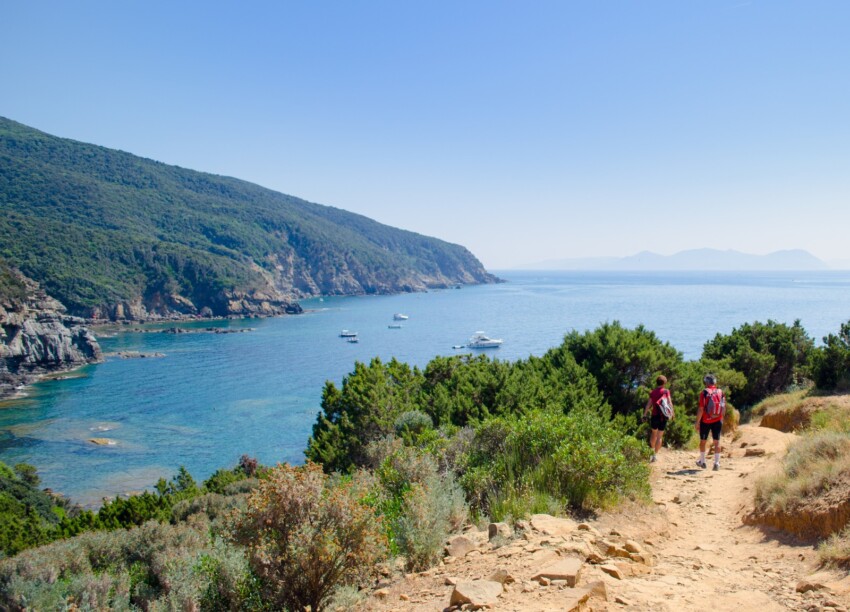
The Val di Cornia, the southernmost stretch of the Etruscan Coast and Livorno Province, is a strip of land facing the Island of Elba, behind the city of Piombino, which extends towards the Populonia headland and out to sea, as if seeking the ancient connection with the entire Tuscan Archipelago.
This land, largely reclaimed from the marshes and wetlands that once characterised its shorelines until the last century, today represents an extraordinary heritage of environmental and cultural testimonies, making this area an intriguing alternative to traditional tourist destinations: a place where nature and archaeology blend together to reveal the charm of “Lesser Tuscany”.
A Tuscany still not widely known, but greatly appreciated by those who have already discovered it.
The multiple archaeological and natural realities of the Val di Cornia Parks make this area a fascinating alternative to traditional tourist destinations: a place where nature and archaeology intertwine to reveal the charm of Lesser Tuscany, greatly appreciated by those who have already discovered it. In this section you’ll find all the information regarding visiting arrangements, opening times, admission fees and special offers. The expansion and complete reconstruction of the San Vincenzo–Piombino coastal road dates back to the Napoleonic period, remarkably completed in 1804–1805 to welcome Princess Marianna Bonaparte, later Elisa Baciocchi, to the city of Piombino. Her brother Napoleon had assigned her the principality of Piombino, with the addition later of Lucca.
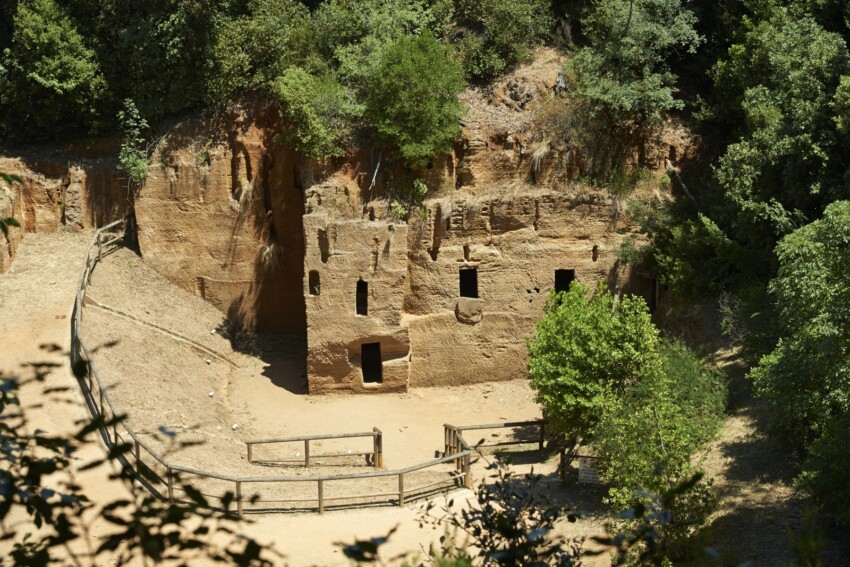
It extends between the slopes of the Piombino headland and the Gulf of Baratti, where the Etruscan and Roman city of Populonia once stood, renowned since antiquity for its intense metallurgical activity linked to iron production. It encompasses a significant portion of the Etruscan and Roman settlement of Populonia, with its extensive necropolises, calcarenite quarries and industrial quarters where hematite ore, sourced from Elba’s deposits, was worked to produce iron ingots. The park comprises several visitor areas that allow you to trace the transformation of the landscape over the centuries.
The wooded coast of the headland faces the archipelago: the dark silhouettes of the islands, including Elba and Corsica, have formed the dramatic backdrop to this land and seascape since ancient times. Until modern land reclamation, the plains extending inland from the Piombino headland were a succession of lakes and lagoons, rich in fish and marshland vegetation.
This was the landscape of the 9th–8th century BC, when important huts were built on the acropolis to house Populonia’s earliest aristocratic families. Only faint, evocative traces of these dwellings remain on the acropolis summit, not far from the monumental structures of another Populonia, the Roman city which around the 2nd century BC built impressive temples, thermal baths and sanctuaries at the very heart of the settlement. A network of trails connects the city of houses and temples to the industrial city and necropolises that nestle on the first hills surrounding the inlet. The paths, now as in antiquity, follow paved roads, cross woods and Mediterranean scrubland and open onto unexpected views alternately overlooking the Gulf of Baratti or the open sea and the Island of Elba. One of these routes leads to another landscape, that of the Middle Ages. Among the forests of the headland, the ruins of the Benedictine monastery of San Quirico tell the story of a vanished city and renewed interest in the region’s natural and mineral resources.
Located behind Campiglia Marittima and the Piombino headland, the park extends across an area of approximately 450 hectares.
The visiting routes wind through museums, mining galleries, a medieval mining and metalworking village founded around a thousand years ago, and trails of historical, archaeological, geological and natural interest.
Your visit to the Park begins at the Museum of Archaeology and Minerals, at the Ticket Office building, and continues, with an expert guide, in the Temperino Mine, discovering the evolution of mineral research and extraction techniques and the beauty and allure of the underground world.
Exiting the mine, you climb towards the Pozzo Earle area, where the exhibitions of the Mining Machinery and Miners Museums tell the visitor about the final decades of mining history.
You then experience a train ride through the Lanzi-Temperino Gallery, retracing the route of the minerals from the mines of the Temperino Valley to the processing plants in the Lanzi Valley.
When the train arrives in Lanzi Valley, visitors can observe mining plants that, originally built for ore flotation, were later converted into limestone crushing plants.
Against the backdrop of Lanzi Valley stands the medieval Rocca San Silvestro, which represents the heart of the Park and its visit.
Culturally and functionally connected to the Baratti and Populonia Archaeological Park, the museum represents the main exhibition hub of the Val di Cornia Parks System and illustrates, through evocative reconstructions of ancient landscapes, activities and environments, the transformations linked to the settlement of the headland from prehistory to the modern age.
It is housed in Palazzo Nuovo, in the historic centre of Piombino, built in the early 1800s for the rulers Felice and Elisa Baciocchi, sister of Napoleon, within the fortified “Cittadella”, to whose design Leonardo da Vinci contributed.
The rich archaeological heritage that forms the subject of the exhibition was transferred to the Museum under an innovative agreement signed between the Ministry for Cultural Heritage and Activities (Archaeological Superintendence for Tuscany), Val di Cornia Parks Spa and the Municipality of Piombino, based on the legislative principles governing collaboration between the State, Region, Local Authorities and Cultural Enterprises.
The museum, which spans 1,800 sq metres across three floors, houses over two thousand pieces, including prehistoric artefacts, finds from excavations of the Etruscan necropolises of Populonia and its territory, and materials from the Roman period.
Among these, the celebrated Silver Amphora (photo above), discovered in 1968 in the sea between Baratti and San Vincenzo, an object of exquisite craftsmanship and great intrinsic and artistic value, and the fine Fish Mosaic, from the Roman period.
The scientific exhibition project, curated by the Archaeology department of the University of Siena, placed great emphasis on educational and scientific communication aspects. The proposed itinerary uses as its key theme the historical relationship between man, territory and resources, among which the issue of ancient and recent iron production assumes particular importance.
To see all the facilities and book accommodation in Val di Cornia use the form below, entering the dates of your stay.
 Hotel
Hotel  Budget accommodations
  Apartments
  Family Hotel
  Luxury Hotel
  Resorts