Terme Di Venturina
Venturina Terme - Via Delle Terme 36/40
Offering a seasonal outdoor thermal pool and an indoor pool with hot water jets and hydromassage Hotel Delle Terme is set in the Tuscan countryside.
Book now
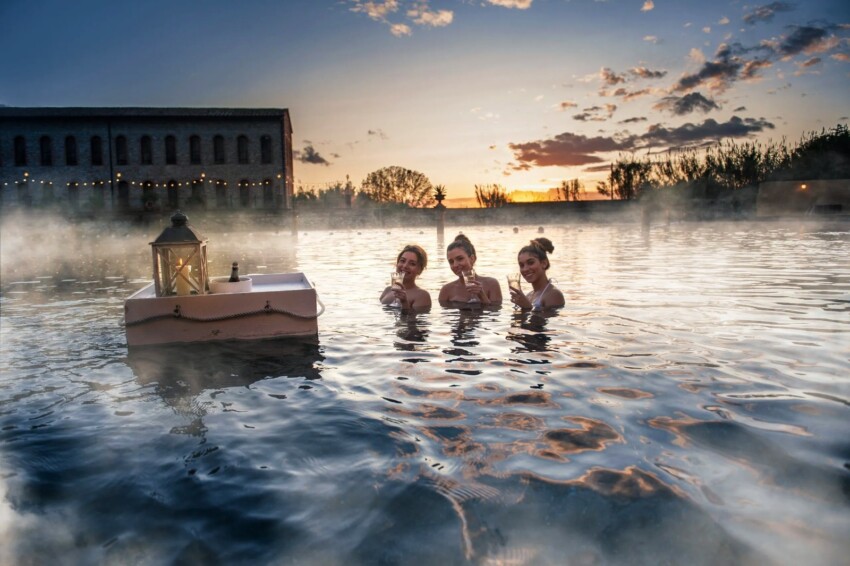
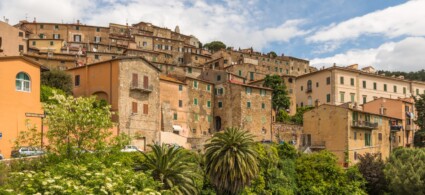
Venturina Terme is a charming resort in the province of Livorno, part of the municipality of Campiglia Marittima. You’ll find it in the heart of the Val di Cornia, not far from the Etruscan Coast. This allows for a versatile holiday: on one hand, there’s the excellent thermal spa offering for which the resort is known, and on the other, you’re close to the sea. And let’s not forget the Tuscan countryside, just a few kilometres away, featuring stunning landscapes, unspoilt farmland and plenty of agriturismos to choose from.
A stay at Venturina Terme lets you make the most of all this, so you’ll never be bored and can do something different each day. Its convenient location means, for example, you can reach the beautiful Baratti Gulf in just 15 minutes by car, Populonia in under 20 minutes, while heading north along the coast you’ll reach San Vincenzo town centre in just over 15 minutes, and the long public beaches in under 10 minutes.
Beyond its proximity to the sea, Venturina Terme is renowned for its thermal springs. These feed two magnificent resorts, which do allow non-guests to access the waters by purchasing a day or half-day ticket. You can enjoy therapeutic hot baths or take advantage of the spa treatments for a day dedicated to wellbeing.
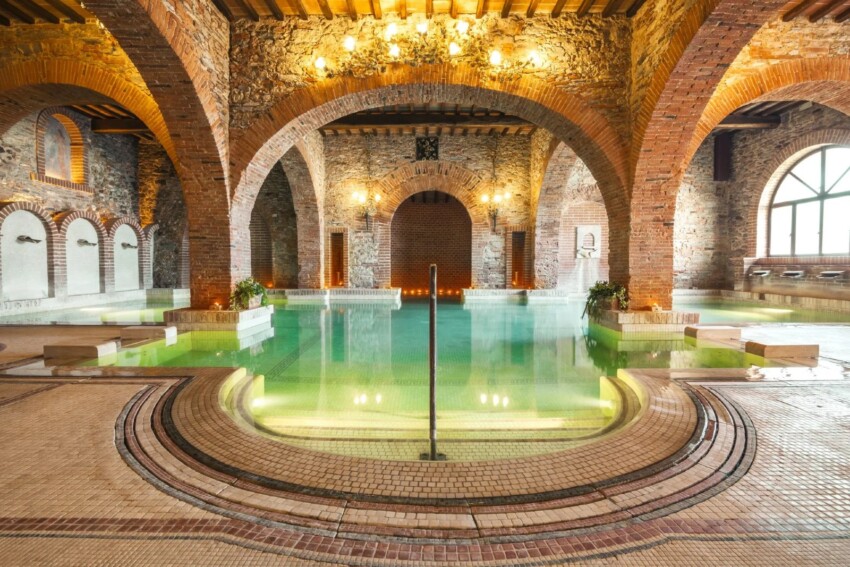
The Venturina thermal spas are the true highlight of the resort. Known since ancient Roman times, their thermal waters, rich in sulphur, calcium and magnesium, spring forth at 36 degrees from two separate sources, guaranteeing a flow of 12,000 litres per minute.
The waters of the Venturina thermal spas are recommended for preventing and treating conditions of the respiratory system, as well as ear, nose and throat ailments, rheumatic conditions and digestive disorders. Two magnificent facilities have been built around the thermal springs: the Hotel Terme di Venturina and the Calidario.
The Hotel Terme di Venturina houses a thermal spa facility specialising in thermal treatments, mud baths, balneotherapy and inhalation therapy, all covered by the Italian national health system. Of course, a significant portion of the facility is dedicated to relaxation and wellbeing, with the option of therapeutic massages and hydromassages.
The facility features two large pools, one outdoor and one indoor, both fed by the thermal spring. The outdoor pool, fed by 31-degree thermal water, is surrounded by a lawn and is very spacious, whilst the indoor one is more intimate and cosy, fed by 36-degree water.
It’s possible to access the pools even if you’re not a hotel guest, by purchasing an entrance ticket. Hotel guests have the advantage of accessing the pool area directly from their rooms.
The Calidario thermal spas are part of a beautiful resort called Calidario Terme Etrusche. They include a thermal lake covering over 3,000 square metres. The Calidario spring flows at a maximum temperature of 36 degrees with a flow rate varying between 100 and 450 litres per second: when the flow is greater, the temperature decreases and vice versa; therefore, the average water temperature at the natural spring is 32 degrees.
It’s possible to access the Calidario thermal spas even if you’re not staying at the facility, by purchasing a day or half-day ticket. Inside there’s also a lounge bar restaurant and a spa area with Thermarium, the ancient Etruscan wellness pathway, plus the opportunity to enjoy treatments using natural cosmetics.
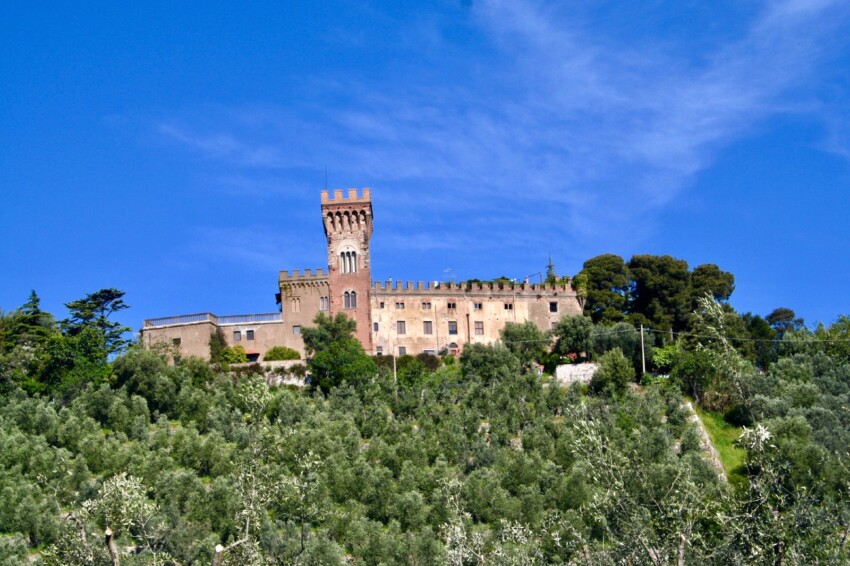
Venturina Terme certainly doesn’t stand out for its abundance of monuments. However, if you’re here for a spa break, or you’ve chosen it as a base for exploring the Val di Cornia and the wonderful landscapes of the Tuscan coast, make the most of your stay by visiting the main attractions.
The Caldana Roman mausoleum dates back to the 1st century AD and is an ancient burial site along the original route of the Via Aurelia. Today only the supporting structure remains visible, not the external walls, which were clad in marble slabs. The sarcophagus has also disappeared, but it’s believed to have belonged to Caius Trebatius, a Roman patrician, as his seal was found near Venturina.
North-west of Venturina town centre lies Tufaia Lake, nestled within the park of the same name. It’s a lovely spot for peaceful walks in nature. It’s popular with families with children, runners and elderly people alike. Tufaia Lake is a natural habitat for various animals including ducks, swans and nutrias, as well as numerous waterfowl.
This interesting Venturina Terme museum is housed in a pavilion at the Venturina fairground area. Here you’ll find tools used by Val di Cornia workers from the 19th century onwards, including farming implements, cooperage and saddlery tools, as well as blacksmithing equipment. Next to the museum is a lovely public park, where a coal-fired locomotive from the early 20th century is on display.
For dog lovers visiting the area, a pilgrimage not to be missed is to the statue of Lampo, the travelling dog who died in 1961, located near Campiglia Marittima railway station, just a few minutes’ drive from Venturina Terme town centre. The statue was created by sculptor Andrea Spadini, thanks to a fundraising campaign launched by the American magazine This Week.
Lampo earned the nickname the “railway dog” or “travelling dog” because he made numerous solo train journeys up and down Italy, learning train timetables and even walking the station master’s daughter to school every day in Piombino.
In the following map you can see the location of the main places of interest mentioned in this article.
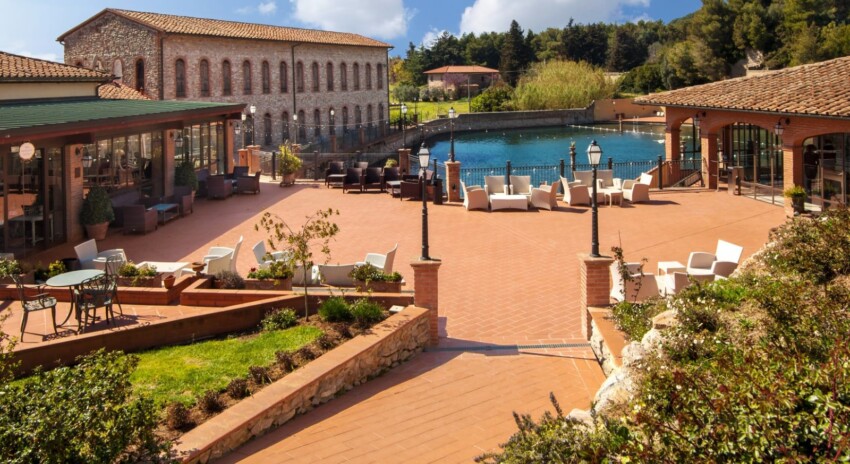
The absolute stars of Venturina’s hotel offering are the thermal spa resort hotels, namely the Hotel Terme di Venturina and Calidario Terme Etrusche, two splendid 4-star hotels situated directly on the thermal springs. These facilities attract most of the tourists who come here, but if your budget is limited, you can choose from the other properties near the spas: there are several residences with pools and also a lovely villa offering B&B services.
In Venturina town centre there isn’t much, just a couple of apartments, whilst in the surrounding area, especially on the hillsides north of the town, there are various agriturismos, country houses, villas and even castles. Along the road from Venturina Terme to San Vincenzo there are also some beautiful agriturismos. However, bear in mind that if you stay here you’ll need your own car to move around freely.
Venturina Terme is well positioned relative to Tuscany’s main road networks, so the journey is never too long regardless of your starting point. From Florence, for example, it takes just over an hour and a half, covering 150 kilometres along the FI-PI-LI arterial road as far as the Vicarello junction, from where you join the A12 motorway until the southern toll barrier at Rosignano Marittimo. As soon as the motorway ends, you pick up the SS1 Aurelia state road, which you follow until the Venturina Terme junction.
From Siena the route goes via Grosseto, which you reach after about 45 minutes, and then you head north along the Aurelia; the total journey time is around an hour and a half. From Arezzo the route is the same, reaching Siena first and then Grosseto: in this case you’ll cover 200 kilometres and journey times are around two and a half hours.
Finally, for Tuscan coastal towns like Pisa and Livorno, the journey takes about an hour, which you cover by heading south on the Aurelia.
For those travelling by public transport, Venturina Terme is fortunately served by Campiglia Marittima railway station, situated on the Tyrrhenian Railway connecting Pisa to Grosseto, and continuing to Rome. You can reach it from Florence Santa Maria Novella in around two and a half hours, on regional trains with direct services or changing at Pisa Centrale. Once you arrive at the station, you can reach Venturina Terme town centre conveniently by bus.
What's the weather at Venturina Terme? Below are the temperatures and the weather forecast at Venturina Terme for the next few days.

 Hotel
Hotel  Budget accommodations
  Apartments
  Family Hotel
  Luxury Hotel
  Resorts