Il Ciocco Hotels
Barga - Località Il Ciocco, 55051 Barga LU
Book now
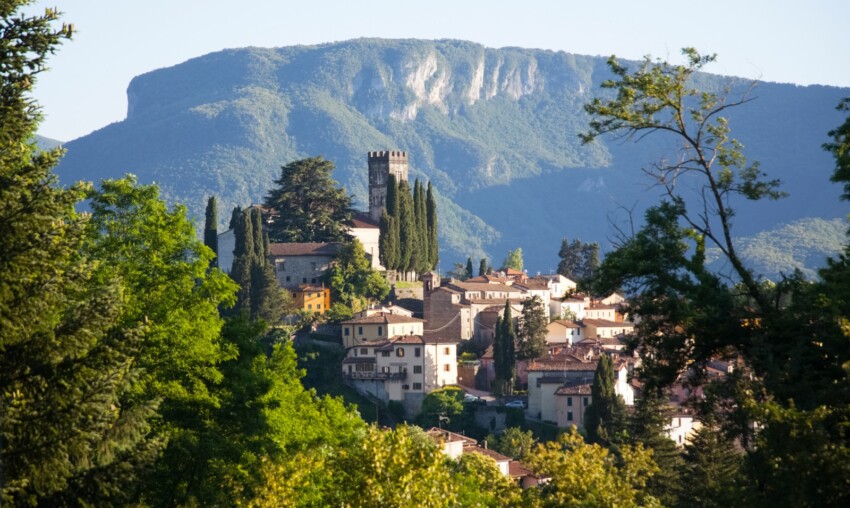
Nestled in the heart of the Garfagnana, in the province of Lucca, the small Barga enchants with its unassuming beauty. It’s a town of just under 10,000 inhabitants, best discovered slowly, step by step; it’s no coincidence that it’s part of the Cittaslow network, which is committed to improving the quality of life for residents and visitors alike.
But Barga’s accolades don’t end there: it’s also part of the prestigious list of Italy’s most beautiful villages, and simultaneously holds the orange flag designation from the Touring Club Italiano. This is precisely why, during a trip to Tuscany, you simply cannot miss visiting Barga. Its location at the far northern edge of the region, almost on the border with Emilia Romagna, may not have helped it achieve the tourist success it deserves, but give it a chance and you won’t want to leave.
Moreover, Barga is also a perfect base for exploring the Garfagnana, a historic region within Lucca province, which stretches inland through rolling hills and mountains. Cool climates year-round, breathtaking views and villages unchanged for centuries: choose Barga as your base and venture out on day trips by car. You’ll discover an area away from the usual tourist circuits but genuinely lovely and captivating, where art, culture and tradition blend into a unique mix.
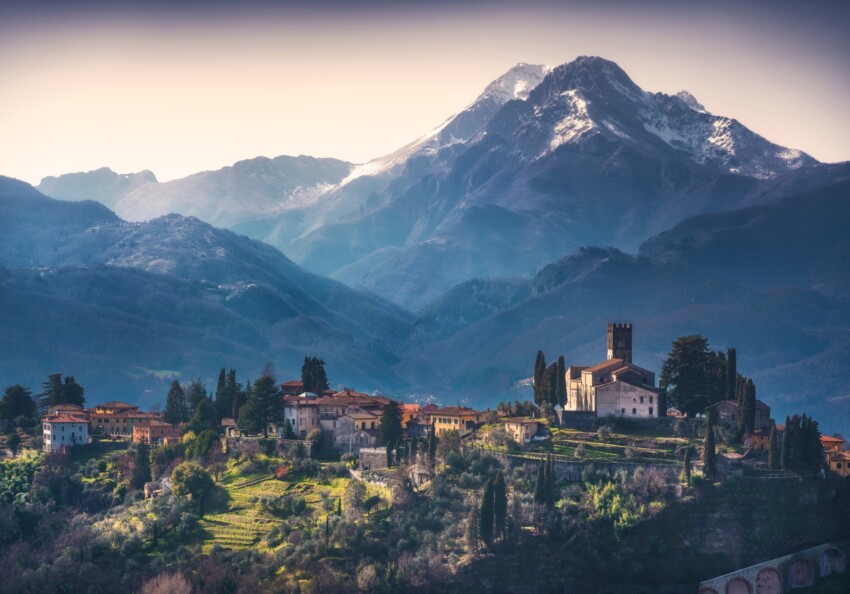
In the centre of Barga there’s plenty to see, despite its relatively modest size. Before you visit everything, though, wander aimlessly through the narrow medieval lanes, savour every corner, the natural terraces, the monuments and churches. Finally, set off to discover the marvellous surroundings.
Begin your visit to Barga’s main landmarks with the collegiate church of San Cristoforo, that is the cathedral of Barga. It’s an ancient church that towers over the historic centre, with construction beginning before the year 1000, though during its now thousand-year history it’s been remodelled many times, incorporating different architectural styles, from Romanesque to Gothic.
The façade is made of local stone, Barga’s alberese, and flanking the main entrance are two columns topped with lions, representing the strength of faith. The bell tower is equally striking, topped with three bells. Inside, the Barga cathedral comprises three naves and features a magnificent 13th-century marble pulpit. Among the sacred artworks within the cathedral stand out Andrea della Robbia’s Ciborium of the Holy Oils and a 14th-century painting of the Madonna del Molino.
Another of Barga’s most important religious buildings, the Church of the Santissima Annunziata dates to the late 16th century and was built to house two wooden statues, the Annunciate and the Angel Gabriel, both from the 14th century.
The façade is small and not particularly striking, whilst the interior is beautiful, featuring a single nave with Latin cross layout. The side chapels boast Baroque decorations and are adorned with some fascinating works, including the Madonna and Child with Saints Anthony Abate, Francis and another pilgrim saint, dating from the early 17th century.
In the right-hand chapel lies the body of San Fruttuoso, preserved within an urn.
Don’t leave Barga without visiting the Giovanni Pascoli House Museum, located in Castelvecchio Pascoli. The house was the poet’s home for nearly 20 years, and you can still admire it with period furnishings intact.
Pascoli taught at the Niccolini high school in Livorno in 1895, and whilst seeking a countryside retreat, he discovered Barga. He fell in love with it immediately and decided to live here with his sister. After his death, Pascoli’s sister continued living in Castelvecchio until 1953, when she passed away; during the almost 40 years she lived in the house, she made no modifications and didn’t even install electricity or running water to preserve its integrity.
Upon Maria Pascoli’s death, the house passed to Barga’s municipality, as stipulated in her will. In 1960 the house was officially reopened and converted into a museum, as well as serving as the seat of the Giovanni Pascoli Foundation.
Nestled in a mountain forest at 600 metres altitude, some 26 kilometres from Barga near Ponte a Gaio, the Orrido di Botri is an incredible limestone canyon that can be explored independently or with expert guides during summer, from June to September, when water levels are low and temperatures pleasant.
At the base, where conditions are most humid, vegetation consists of moss and ferns, whilst higher up you’ll find aquilegia plants, catchfly and beech trees. The Orrido di Botri’s walls reach 200 metres in height, and this is where golden eagles nest.
Access to the Orrido di Botri is from Ponte a Gaio, where you’ll also find the ticket office and visitor centre. A protective helmet and trekking shoes are mandatory for visits. The route, excluding stops, takes about 3 hours and is suitable for children aged 11 and over.
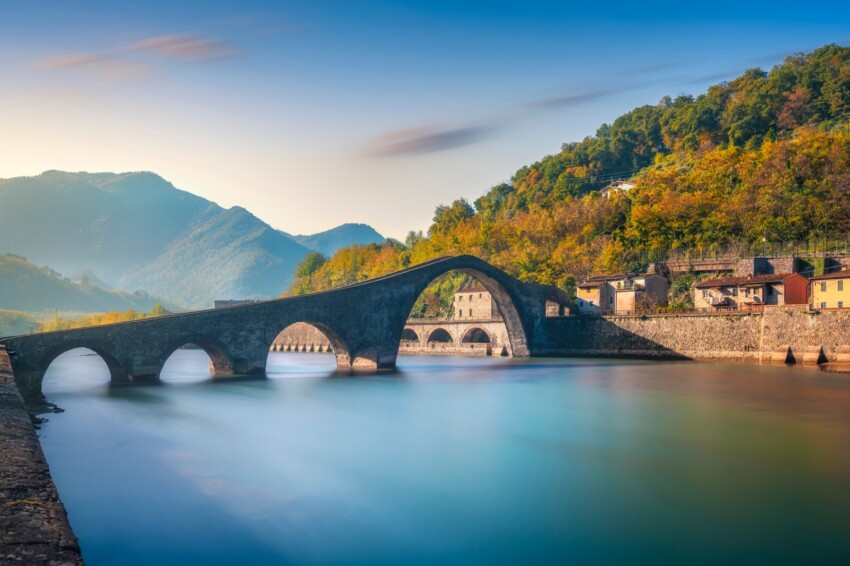
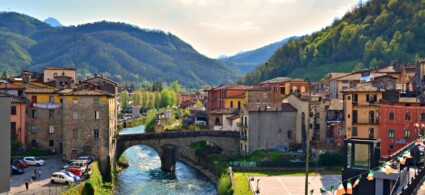
One of Garfagnana’s most famous attractions is found in Borgo a Mozzano, less than 20 minutes’ drive from Barga’s centre. It’s the Devil’s Bridge, which owes its fame to its unique profile, featuring an enormous round arch and three smaller arches.
Legends about its construction and name abound, but what’s certain is that its beauty must have been even greater in the past, before a dam upstream raised the water level of the Serchio River.
Fornaci di Barga is the most important and populated centre after the main town. Its development began in 1910, when it was reached by the railway line. Subsequently, construction of the Italian Metallurgical Company’s facility began, now L.M.I., which covers an area of 400,000 square metres and employs nearly 1,000 people. The small hamlet of yesteryear is today a modern town and a bustling commercial centre that stretches mainly along the state road, parallel to the Lucca-Aulla railway.
Castelvecchio Pascoli’s centre sits on the road from Barga to Ponte di Campia, though it encompasses numerous hamlets. It takes its name from poet Giovanni Pascoli, who established his residence here in 1895 on the Colle di Caprona and lived with his sister Maria until his death. Casa Pascoli, now a museum, is continuously visited by tourists and scholars. From Casa Pascoli, following the path alongside the Rio dell’Orso stream, you reach the church dedicated to San Nicolò, built in 1600. In front of the church stands the monument-tomb to the Poet, a work by Plinio Nomellini, gifted by Maria to Castelvecchio, which in 1923 dedicated it to those who fell in the First World War. Above Colle di Caprona stands the important “Centro Turistico Internazionale Il Ciocco”, venue for meetings and international sporting events.
Here you’ll find the Mordini family’s country villa, their summer residence. At the beginning of the access driveway stand two large cedars of Lebanon, transplanted here in 1824. From October 1944 to April 1945, when the Gothic Line of the front became stabilised, Albiano found itself in no man’s land and was partially destroyed by artillery and aerial bombardment. Today it has been completely rebuilt and attracts numerous tourists.
Sommocolonia was certainly a fortified outpost by the Romans. Surrounded by walls enclosing two towers, it was partially destroyed by bombardments between October 1944 and April 1945. It was an independent municipality for a long time until 1532, when it was incorporated into Barga. It was the centre of organised resistance against the Medici by the Barga native Amedeo Bartoli, known as Capitan Galletto. Today the village retains the characteristics of a medieval castle. Above a hilltop stands a monument commemorating a group of partisans who, on 26 December 1944, died fighting alongside American troops.
Tiglio Basso is a small village perched above the pass leading to Coreglia Antelminelli. From Tiglio Basso you can reach Tiglio Alto, in a marvellous position overlooking the Middle Serchio Valley and the Apuan chain. In the church, built in the shape of a cross and topped with a dome, two beautiful marble statues representing the Virgin and the Archangel Gabriel are set within the ornamental frame of the high altar. Throughout the Middle Ages, Tiglio Sanctuary was a destination for famous pilgrimages.
Renaio is the most important centre in Barga for the mushroom trade during summer and autumn collection. A smooth road, recently built, connects it to the main town. From Renaio you can reach a Forestry Service station at “La Vetricia”, where an inn for travellers from both sides of the Tuscan-Emilian Apennine ridge once stood. The road, following the ancient Via dei Remi route, joins through the Passo del Saltello at 1,624 metres with the Sanctuary of San Pellegrino in Alpe.
This flat area borders the Corsonna stream initially, then, well-irrigated, extends along the Serchio River. In San Pietro in Campo, where the church now stands, there was a monastery of Augustinian nuns around the year 1000, later transformed into a hermitage for monks. In 1723 it was elevated to parish status. “L’Arsenale”, which gave its name to a locality, was a shed 22 metres long and 9 metres wide, where logs of beech and oak wood were stored – brought down from the mountains by mules along the Via dei Remi – before being swept into the Serchio, so that during flood periods they reached the mouth. From here they were transported to the Arsenal in Pisa, where they were transformed into oars and other materials for the Tuscan navy. The centre of Mologno, where Barga-Gallicano railway station is located, is currently expanding rapidly with new construction.
Halfway between Barga and Fornaci di Barga, below road level, stands the ancient Pieve di Loppia (10th century). This fine Romanesque monument features three naves with loophole windows. The importance of Loppia church, dedicated to Santa Maria, is documented in a Lombard charter from 993. Indeed, in the Middle Ages, 28 parishes and churches from Calavorno to Lupinaia were under the jurisdiction of Pieve di Loppia. In 1390, after various historical vicissitudes, its title and duties passed to Barga, and only in the 14th century was it restored to parish status. From Loppia you climb steeply up the “Solco” onto the Filecchio plain, where most of the population lives.
Ponte all’Ania is a large hamlet at the extreme edge of Barga territory. It’s also accessible from the Filecchio plain via the village of Pedona. Throughout the period when Barga and all the parishes of its vicariate flourished under Florentine rule, Ponte all’Ania, being on the border of the Lucca Republic’s territory, became an important commercial centre and, thanks to abundant water from the Ania stream, the municipality’s most industrial location.
In the following map you can see the location of the main places of interest mentioned in this article.
In Barga’s historic centre there are numerous accommodation options: mostly apartments and bed & breakfasts, all generally of excellent quality. Choose to stay in the centre to be as close as possible to the main attractions, but be aware of some potential drawbacks, including parking shortages and the likelihood of being among other tourists.
Move to Barga’s newer area if you’re seeking more tranquillity and easier access to services: however, accommodation options here are limited, so you may need to make do if they don’t meet your expectations.
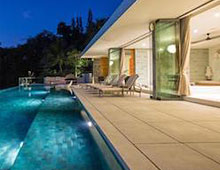
The alternative is to venture into the surrounding area, in the hills and mountains around Barga. Just a few kilometres outside Barga you’ll find yourself immersed in unspoilt nature, in complete tranquillity. In this corner of Tuscany numerous high-quality accommodations have been established, including resorts, villas, cottages and more, almost all with swimming pools, magnificent views over the Garfagnana and in-house restaurants where you can enjoy local produce at kilometre zero.
Barga is rather out of the way, so it’s never particularly straightforward to reach, even from Lucca, since the journey is roughly 40 kilometres and takes just under an hour. First, you’ll travel along the SS12 dell’Abetone e del Brennero state road, then continue on the SR445, which winds its way up to Barga’s centre.
It goes without saying that reaching Barga from other cities means you’ll need to get to Lucca first, which fortunately isn’t a problem, as the walled Tuscan town sits on the A11 Firenze-Mare motorway: from Florence it takes an hour, from Arezzo and Siena around an hour and 40 minutes, whilst from Tuscany’s coastal towns such as Pisa and Livorno it’s between 20 and 35 minutes. Add just under an hour to these times and you’ll have a clear picture of how long it takes to reach Barga.
If you prefer public transport, there are two options from Lucca: the regional train to Barga-Gallicano station, located in the Mologno area, or the bus from Lucca to Barga. The downside of the train is that once you arrive at Mologno, you’ll still need to catch a bus to get into Barga town centre. As for timings, the train from Lucca to Barga-Gallicano takes around 50 minutes, whilst the direct bus takes approximately an hour and 10 minutes.
What's the weather at Barga? Below are the temperatures and the weather forecast at Barga for the next few days.
Barga is located in Garfagnana, in the province of Lucca, along the SR445 road that follows the Serchio river. It sits roughly equidistant between Bagni di Lucca and Castelnuovo di Garfagnana.
 Hotel
Hotel  Budget accommodations
  Apartments
  Family Hotel
  Luxury Hotel
  Resorts