Hotel Country Club
Capannori - Via Pesciatina 874
Book now
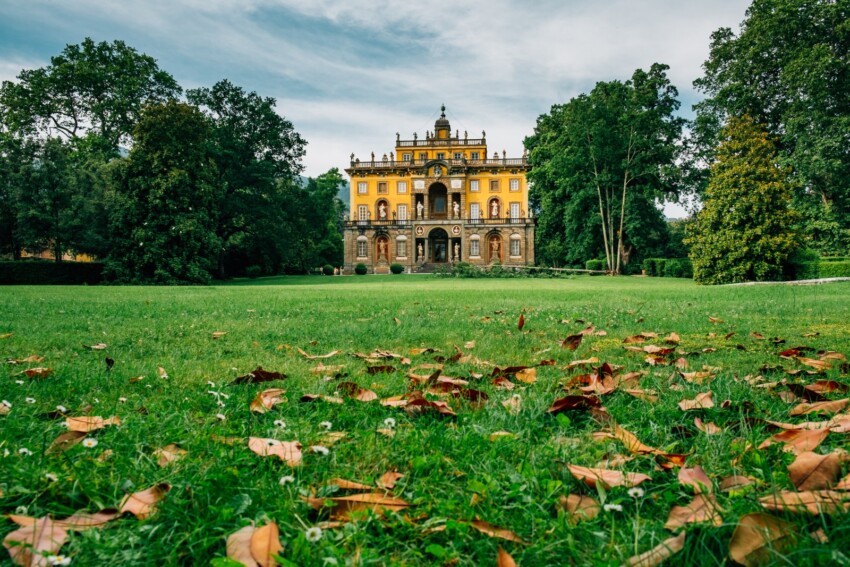
The municipality of Capannori lies at the heart of Tuscany and sprawls across the Lucca plain for 165.50 km², making it one of Italy’s largest rural communes.
The territory comprises a flat central zone and two hilly strips – one to the north near the Pizzorne Plateau, and another to the south where Monte Pisano is located.
Over time, the boundaries have undergone numerous changes, reaching their current configuration in 1925.
Capannori encompasses forty hamlets and villages, each with distinctive characteristics that make it unique. The Capannori territory is indeed complex and varied, presenting different realities and landscapes capable of satisfying the most diverse needs.
History, art, archaeology, traditions, nature… visitors will find all of this and much more, soaking up the atmosphere of this corner of Tuscany.
This Roman-style aqueduct represents a work of great significance designed by Lorenzo Nottolini, a native of Segromigno in Monte who became celebrated for his work in the service of the Grand Duchy of Lucca from 1818 to 1848.
The issue of supplying water to Lucca was a pressing concern, with serious hygiene problems. Whilst wealthy families in the city had water brought directly from the surrounding hills, poorer families relied on wells whose water was impure and unhealthy, often causing epidemics.
Located largely within Capannori’s territory, the aqueduct is a monumental structure stretching over 4 kilometres, characterised by a blend of elegant classicism with simple, austere architecture. It consists of a straight line of 459 stone and brick arches, each 12 metres high, with two water channels running along the top. To ensure the entire structure’s stability, 28 buttresses were built to reinforce the pillars. Unfortunately, some arches were demolished to allow for motorway construction.
The aqueduct crosses the Lucca plain, carrying water from the Guamo hamlet at the foot of Monte Pisano to a small temple located at San Concordio.
The signalling tower of Sant’Andrea di Compito stands in an area known as “San Pietro a Forcone”, also called “Vico Crociccle”, a name reflecting the site’s central importance. The tower is a unique structure within Capannori’s territory and formed part of the Republic of Lucca’s signalling tower system. Dating back to the 12th-13th century as an ancient watchtower, it was strategically positioned overlooking the border between Lucca and Pisa, along an important medieval pilgrimage route (the Via San Colombano).
Its original function was to provide warning signals in case of attack, as evidenced by the brazier positioned at the top, which was used in times of imminent danger. Later, the tower became a bell tower (it stands next to the small Church of Santa Lucia).
The tower was built from local stone in a quadrangular shape, measuring 4.20 metres per side and 18 metres in height. The metal cage positioned above the entrance door once served to display the heads of executed criminals, a function intended to discourage inhabitants from committing crimes – a sort of “preventative lesson”.
Over more than eight hundred years, lightning, earthquakes, conflicts, demolitions, lichens and acidic substances have failed to damage it, nor have various more or less significant destructions, changes of use, neglect and oversights, carelessness and underestimation.
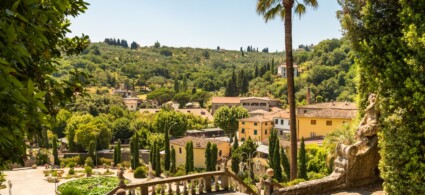
Throughout Capannori’s territory you can admire approximately one hundred and fifty villas, both major and minor.
Built between the 15th and 19th centuries by wealthy Lucchese merchants engaged in commerce and banking activities.
These villas, outstanding examples of architecture, constitute an actual landscape system formed not only by the main building itself, but also by parks rich in rare trees, hydraulic marvels featuring fountains and basins, small lakes, statues, fish ponds, nymphaea and tree-lined layouts.
Over the centuries (1500s, 1600s, 1700s), as these summer residences passed from one family to another, they were often enlarged and transformed according to the fashions of the time; they were situated in particularly beautiful locations, surrounded by thick woodland atop hilltops, overlooking valleys from halfway up slopes, or surrounded by magnificent Italian gardens.
Capannori’s territory can be divided into three main areas: the northern zone encompassing the Pizzorne Plateau and underlying hills, the central zone where the main town and surrounding hamlets are located, and the southern zone known as “Compitese”, including Monte Pisano and the towns below it.
Due to this particular configuration, the Capannori area offers the possibility of undertaking different routes to discover specific aspects of the territory.
Visitors interested in cultural aspects can organise visits to historic villas which, with their buildings, parks and gardens, are veritable architectural jewels and greatly enhance the landscape.
Another cultural route, equally botanically and naturally enriching, consists of the camellia itinerary, which winds through the towns of Pieve and Sant’Andrea di Compito, rich in beautiful camellia plants.
For those wishing to focus on the cultural-religious aspect, it’s possible to discover splendid parish churches and churches that, with their decorations and artworks, bear important testimony to this land’s past. Interesting parish churches, churches and places of worship can also be admired by following the rings connected to the Via Francigena, which crosses the heart of Capannori.
For those who prefer direct contact with nature, Capannori offers numerous trekking itineraries covering both the Compitese zone, particularly Monte Pisano, and the northern part, specifically the Pizzorne Plateau and hills. Alongside the network of footpaths, noteworthy is the Marlia fitness trail: an excellent opportunity to spend a few hours outdoors, immersed in nature, while enjoying healthy physical exercise.
Finally, Capannori does not overlook food and wine tourism. Visitors can indeed follow itineraries that will guide them to discover high-quality products: wine and extra virgin olive oil.
Worth noting is the existence of the Via della Buona Acqua (Good Water Route), a trail characterised by the Lorenzo Nottolini Aqueduct monument and featuring fountains dispensing water with characteristics that make it particularly prized.
The Exhibition of Ancient Camellias of the Lucchesia is a very important event held annually in March in the hamlets of Pieve di Compito and Sant’Andrea di Compito. Thanks to a particular microclimate and soil particularly suited to their needs, the camellia finds in Compitese (the southern zone of the municipal territory) the ideal environment for its growth and development.
To see all the facilities and book accommodation in Capannori use the form below, entering the dates of your stay.
 Hotel
Hotel  Budget accommodations
  Apartments
  Family Hotel
  Luxury Hotel
  Resorts