B & B Via di Mezzo
Coreglia Antelminelli - Via di mezzo, 10 - calavorno
Book now
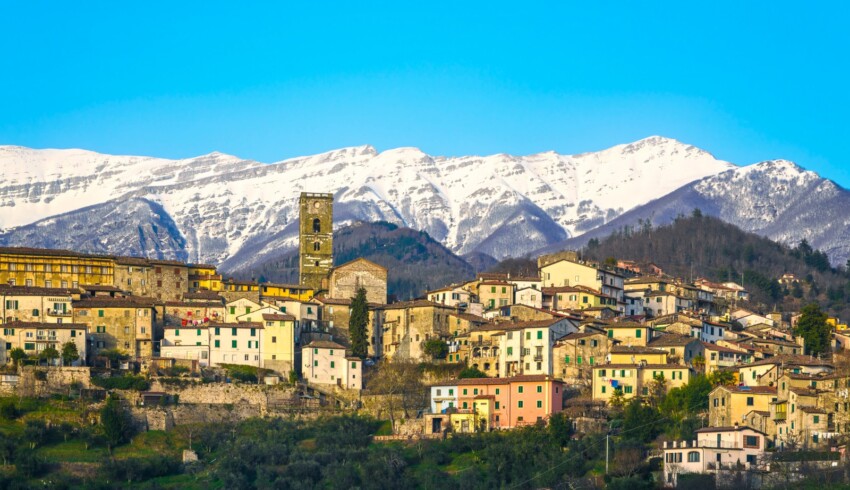
The village of Coreglia Antelminelli emerged during the High Middle Ages, when a castle was built and a small community developed around it. The castle was initially a fief of the Rolandinghi, lords of Loppia, before becoming an advanced outpost of the Lucchese Republic. In 1316 it came under the control of Castruccio Castracani, the great Lucchese captain and Ghibelline leader who became lord of Lucca that same year. In 1341, Coreglia fell into Florentine hands, only to be reclaimed by Francesco Castracani degli Antelminelli in 1352.
Under Francesco Castracani, the town reached its peak. Francesco Castracani probably expanded the church, enriching it with significant works of art, and took the title of Count of Coreglia in 1355. After 1369 the seat of the ancient vicariat moved from Coreglia to Borgo a Mozzano. During the first half of the century, whilst Florentine attacks and those of their allies threatened nearby settlements, the town remained steadfastly loyal to Lucca. This loyalty was rewarded by the Republic in 1562 with the establishment of the Coreglia Commissariat, which effectively created the municipal entity that exists today.
The name Coreglia Antelminelli derives from the Latin personal name Corelius, to which was added the specification “Antelminelli” in 1862 by ministerial decree, in memory of the Antelminelli family who in medieval times served first as vicars and then as counts in this territory. Birthplace of the earliest “gypsum artisans” who spread the art of plasterwork across the world, the town produced sons in the last century who generously took part in the campaigns of the Risorgimento, or distinguished themselves through their artistic talents and scientific achievements.
The modern village of Piano di Coreglia originated from the merger of three ancient fortified urban settlements, now known as Nestrignana (Villa di Cistrignana), Manciana and Colle (Colle Bertingo). Villa di Cistrignana, today’s historic centre, the parish church and the entire Nestrignana road, was already known in the 10th century and boasted a castle, forming part of the Loppia parish. The castle, an outpost of Coreglia’s defences, appears in imperial diplomas from 1185 and 1242 as one of Garfagnana’s most impressive fortresses. Of Manciana and its castle, most likely merely a fortified hamlet, we have few documented records, and by the late 13th century, along with the castle of Villa di Cistrignana, they disappeared entirely, probably because their strategic importance had waned. Colle Bertingo stood in what is now the area between Colle and Santa Lucia. Its castle occupied a small stretch of flat ground and for several centuries played an important role in Coreglia’s defensive system.
The earliest record we have of this place dates to 1171, when the Lucchese, having defeated the Pisans near Mozzano, reclaimed it from those who had seized it and laid it to waste. It is mentioned with its parish church of Santa Lucia in the “Libellus Extimi Lucanae Diocesis” (1260), in the “Decima della Tuscia” (1276-77) and in the 1387 catalogue of churches in the diocese of Lucca; it subsequently appears among the municipalities of the County of Coreglia in the Imperial Diploma of 8 May 1355 and, finally, in a 1378 document listing the towns and castles of Tuscany loyal to the Emperor. After that, Colle Bertingo, probably destroyed by Niccolò Fortebracci, left no further trace. After the mid-16th century, when Lucca established the Coreglia Commissariat, the inhabitants of Nestrignana, Colle Bertingo, Manciana and Curchi became part of this community as residents of Piano di Coreglia. And it is by this name that the town has come down to us, preserving the memory of its two oldest centres through the annual fairs of San Lorenzo (10 August) and Santa Lucia (13 December).
This village, like many others in the middle Val di Serchio, remained under the control of the Rolandinghi until the 12th century. It then passed to the Bizzarri, their successors, who maintained lordship over it for another century. Traces of this tiny principality are still visible in the upper part of the village, where you can admire the striking gateway that led to the fortress, and a 16th-century palazzo where the community held its meetings. Of interest in Lucignana are certain building stones richly decorated with carvings and inscriptions, possibly from the former dwellings of the Bizzarri, and the 12th-century parish church which, despite modifications over time, still reveals its primitive Romanesque structures on the street-facing side.
Vitiana announces itself from afar, concealing nothing. Once in the piazza, where houses form a ring around a chapel of pure Renaissance design adorned with frescoes, the village seems to vanish from prying eyes. To find it you must follow winding, steep paths that bend respectfully before the grandeur of its walls, where time is measured in centuries. The church forecourt is a grassy balcony overlooking the edifice; the rectory is charming in its decay, the bell tower austere. In the bell chamber the bronze bells are silent, no longer marking joys and sorrows. The youngest of these bells, cast in 1729, bears only a Crucifix as decoration. The other two are identical twins, fused in 1401. The first carries the inscription +MENTEM: DEO: PATRI(ae): LIBERATIONEM: MCCCCI along the top; the second bears instead a dedication to the patron saint: +SANCTI: SILVESTRI: DE: VITIANA: M.CCCCI. Both display the same precious decorative motifs – the Archangel Michael and the Madonna on opposite sides – framing three superimposed crosses at the centre, the largest mounted on three steps and entirely wreathed in vines, a symbol of Vitiana.
In the 3rd-2nd century BC the mountain of Tereglio was inhabited by Ligurian tribes, as evidenced by the necropolis at Margeglio. The history of the town from its foundation until 1287 is unknown; in that year it appears among the communities granted the privileges of Lucchese citizenship. From 1272 it formed part of the vicariat of Coreglia, and subsequently of the vicariat, then county, of Francesco Castracani. A castle of considerable strategic importance, until 1371 it remained the last feudal domain held in Lucchese territory by Francesco’s sons, and later, particularly in the 17th century, served as a bulwark defending the Republic of Lucca against continual threats from beyond the Apennines. Worth noting in the town are the medieval areas of the Fortino and Porta Mezzana, the 16th-century gateways, Casa Noccorini, the customs house and Casa Giannini, which repeatedly hosted, in the last century during the construction of the Foce da Giovo road, the Duchess Maria Luisa of Bourbon, notable men of letters and distinguished scientists. Finally, the parish church is exceptional both in structure and for the artworks it contains (a 13th-century Berlinghieri-style Crucifix, choir gallery, coffered ceiling, marquetry altars). The church reveals on its north side important traces of its original Romanesque construction from the 12th century.
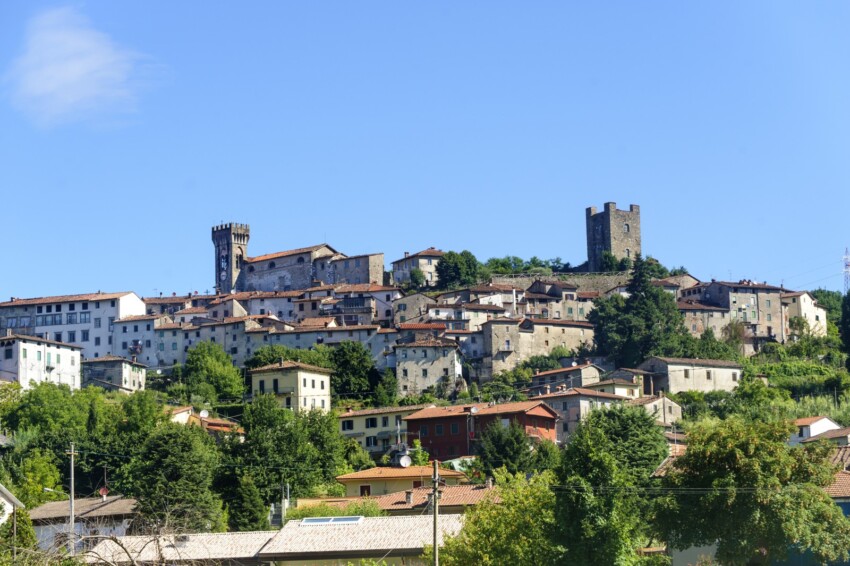
From the late 10th century to the mid-14th century, the village of Ghivizzano was a fief and jurisdiction of the Rolandinghi, then of the Castracani, who made it their family residence and the centre of their military operations. Its importance grew considerably under Francesco Antelminelli, first vicar then count of Coreglia, who between 1329 and 1355 spent lengthy periods at this castle with his wife Giovanna and son Filippo, and later with his second wife Tobiola, by whom he had several children. After his violent death at the hands of Castruccio’s sons, Francesco’s son Nicolao lived in Ghivizzano, maintaining jurisdiction over the entire mountain vicariat until 1369. From then on Ghivizzano remained at peace under Lucchese rule, except for the years following 1438 when, having been captured by Francesco Sforza, Florence’s ally, it became until 14 May 1441 a tiny principality of this famous captain. It then returned to the Lucchese State.
Entry to the village is through a dark, lonely arched gateway, from which two roads branch: the Via Piastronata, leading to the centre, and the Via Sossala (sub sala = below the palazzo), with a vaulted sky lit only by arrow slits. This road winds around the southern sector of the castle, and where it opens up, you see arches, steep little staircases, wooden suspended walkways, brick-framed windows and towers-turned-terraces. The Church of San Pietro, built in 994 by the Rolandinghi and later restored and enlarged during the full Romanesque period by the Castracani, as evidenced by the southern section still visible today, enlisted architects and sculptors who, through the fusion of stone and marble, achieved effects enhanced by representations throughout, symbolising the faith of that iron age. Unfortunately, changing tastes and, latterly, a violent earthquake, disrupted the original design’s purity, and only certain details survive. Intact, however, are the bell tower, the staircase leading to the fortress and the tower, and well preserved inside the Church of San Pietro are fine-quality paintings and an ancient tabernacle, whilst the Church of San Antonio houses a pulpit ambo and a 15th-century baptismal font.
The village has ancient origins, as revealed by the fortified area of Camfumalbi, which has yielded traces of a Ligurian fortified settlement and fragments of Roman pottery. First recorded under the name Grimignana in 983 in a document listing the lands of the Loppia parish, we have confirmation of its existence for several centuries before it disappeared, possibly destroyed in 1429 by Niccolò Fortebracci. Finally, from the 16th century to the dawn of the 19th century, its inhabitants were included in the Coreglia community. The medieval era in Gromignana is still recalled by the church’s exterior and some walls of the fortress beneath the bell tower. Of considerable historical interest appear to be the excavations carried out at Camfumalbi near the Metatelli, where traces of a second fortified complex, probably of medieval date, have been found. While of the first fortress of the Ligurian era only the defensive wall facing the Segone stream would remain, the second appears to offer the possibility of uncovering the entire grid of base walls. Further excavation work is therefore necessary to verify the findings and continue investigations. A new page is being turned on the mysterious Ligurian population, and Gromignana, the smallest and most scattered village of the Middle Serchio Valley, suddenly comes to the attention of history enthusiasts and the curious as a centre of extraordinary interest. The village is also home to a residential complex known as “Casa per Ferie”. Equipped with ample and convenient private parking and all necessary facilities, it can accommodate 35 people. Suited to hosting youth group stays in every season, it offers visitors a thoroughly relaxing stay, thanks to its fortunate position and an environment immersed in tranquillity and unspoilt nature.
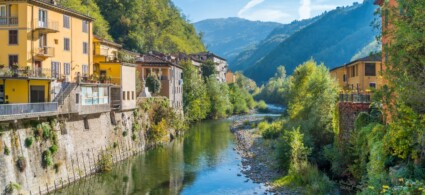
The Municipality of Coreglia Antelminelli is immersed in breathtaking natural scenery. A territory that blends nature into a mosaic of particularly distinctive facets. The local microclimate has enabled the development of exceptionally rich flora, thanks also to the protection of the Apennines, which act as a barrier against icy winds and encourage frequent rainfall. The majority of the territory is covered in lush forests, predominantly of chestnut, but also featuring beech, hornbeam, manna ash, holm oak, maple, willow, wild linden, laburnum and the rare yew – an evergreen plant with poisonous leaves.
The entire area is populated by many animal species: among mammals are roe deer, fallow deer, hares, marmots, martens, polecats, squirrels and foxes.
The birdlife is represented by several species of raptor including the golden eagle, goshawk, sparrowhawk, buzzard, honey buzzard, kestrel and peregrine falcon. Among songbirds are the yellow wagtail, black redstart, wheatear, dipper, crag martin, wall creeper and rock bunting.
Numerous opportunities await those wishing to spend an enjoyable holiday in the Coreglia Antelminelli area: walking, trekking, horse riding or mountain biking excursions, canoeing on the lake. For the more adventurous, it is also possible to hire helicopters in small groups from the heliport in Castelnuovo, to see the territory’s wonders from another perspective, or try paragliding in the Municipality of Borgo a Mozzano. Fishing enthusiasts can pursue their favourite activity fishing for the famous Fario trout, tench and other fish in the numerous lakes in the area. The most famous of these is Lake Vagli, where boat trips are also available over what is known as the ghost village, which reappears each time the reservoir is drained.
To see all the facilities and book accommodation in Coreglia Antelminelli use the form below, entering the dates of your stay.
 Hotel
Hotel  Budget accommodations
  Apartments
  Family Hotel
  Luxury Hotel
  Resorts