Hotel Tarabella
Forte dei Marmi - Via Versilia 13 B
Located 700 metres from the centre of Forte dei Marmi, Hotel Tarabella offers an outdoor pool, restaurant and accommodation with a balcony.
Book now
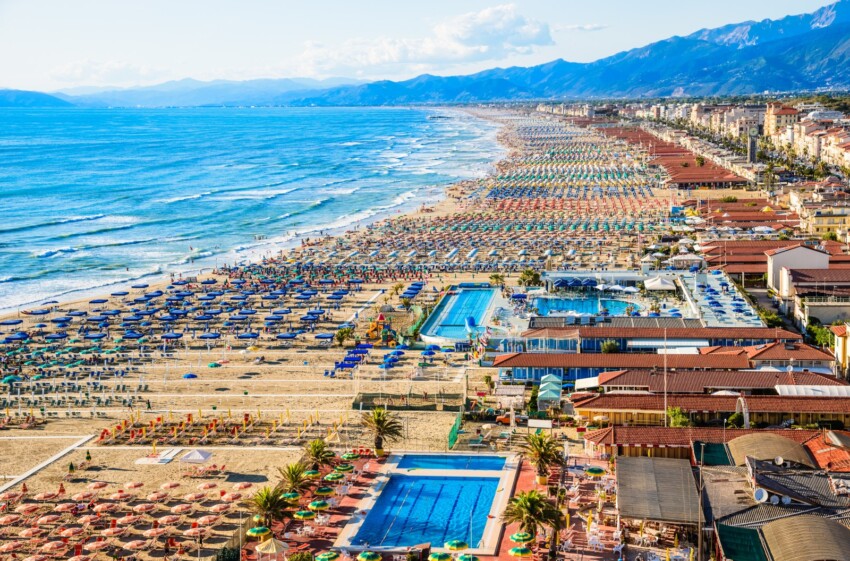
A perennial favourite with actors, footballers and entertainment figures, Forte dei Marmi is one of Tuscany’s most exclusive destinations. Located in Versilia, in the province of Lucca, it sits just a short distance from the border with the province of Massa-Carrara. It’s along its kilometre-long, golden shoreline that you’ll encounter VIPs from all walks of life, and where photographers gather in pursuit of the perfect gossip story for the tabloid headlines.
Yet beyond its glamorous façade, which some might find rather irritating, Forte dei Marmi remains a splendid holiday destination—a thoroughly pleasant town to visit for its centre, brimming with shops, boutiques and outdoor bars, and for its wonderful beach, fully equipped and meticulously maintained by the beach club operators.
Should you have decided that Forte dei Marmi will be your summer holiday destination, be aware that you’ll need to boost your budget: everything here is quite pricey, from hiring sun loungers and umbrellas, which can reach €100 a day, to bar drinks at a table. Not to mention hotels and parking. But if you can afford it, head off straight away: you’ll find one of Italy’s most intriguing destinations waiting for you. If you can’t, do bear in mind that Forte dei Marmi is an hour’s drive from Florence, half an hour from Pisa and just 20 minutes from Viareggio: don’t miss it, you might regret it.
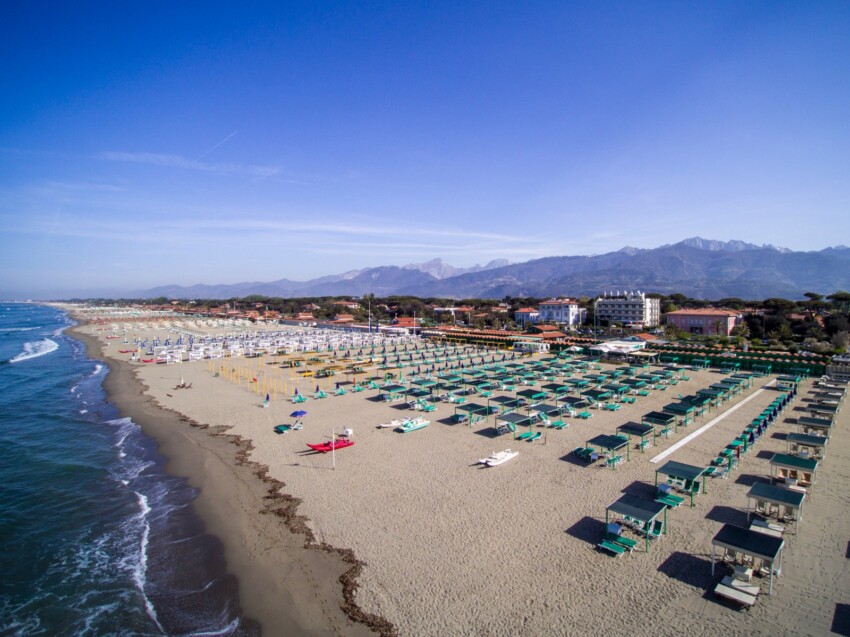
Since the late 1800s, Forte dei Marmi has been a renowned seaside resort, so much so that its first beach club, the Onda Marina, dates back to 1904. Today, over a hundred years later, countless others have sprung up alongside it, nearly all catering to exclusive tourism. They all overlook the beautiful Forte dei Marmi beach, a stretch of fine, golden sand that extends the length of the entire municipality.
The entire beach is equipped with beach clubs lined up one after another. Choose your preferred one based on the services it offers, or simply according to the rental prices for sun loungers and umbrellas. Some have very few umbrellas, which tend to go quickly anyway, spaced far apart to guarantee maximum privacy and as much space as possible. Many have a swimming pool, whilst others are specifically designed for families with children.
Practically all of Forte dei Marmi’s beach clubs are equipped with an internal bar or restaurant, where you can lunch or dine, as well as basic facilities such as reception, hot showers, changing rooms, toilets and lifeguards.
At the northern edge of the municipality, practically on the border with the locality of Cinquale, already in the province of Massa-Carrara, you’ll find the free beach Le Dune, part of the WWF nature reserve of the Forte dei Marmi dunes. It’s a free beach, equipped with lifeguard services and basic facilities such as toilets, showers and dividers serving as changing rooms. The beach is well-maintained, spacious and clean, and represents the perfect solution for spending a day by the sea without having to pay to hire sun loungers and umbrellas.
The free beach Le Dune also has free parking and a bar that provides everything you need for lunch. Despite all this, the beach is generally not too crowded, though it does fill up during high-season weekends. It’s also worth noting that the beach welcomes dogs.
Don’t expect a historic centre with medieval monuments or Baroque churches: in Forte dei Marmi, you come to experience rather than to sightsee. Strolling through the streets of the elegant, immaculately maintained centre, you’ll find an array of boutiques, upmarket shops and fashionable bars. There’s something for everyone, but should you wish to visit something specific, here are the town’s best attractions.
The “small fort”, officially Forte Lorenese or Forte Leopoldo I, sits in the heart of Forte dei Marmi and is a military construction that quickly became the town’s symbol. Once serving a defensive function and as a marble storage facility, Forte Lorenese is a single building with a quadrangular floor plan, composed of two structures built on top of one another.
In the 20th century, after serving first as a Fascist party headquarters and then as a post office, it became home to the museum of satire and caricature, established on the basis of works presented at the political satire award, founded in 1973. The museum houses numerous works by illustrators, painters, humorists and cartoonists who made satire their forte. Inside the museum library you’ll find extensive collections of historical newspapers and magazines, both Italian and foreign, published between the late 19th and 20th centuries.
The natural boundary between Forte dei Marmi and Marina di Pietrasanta, Parco della Versiliana is physically located within the territory of Marina di Pietrasanta, yet it should still be counted among the things to see in Forte dei Marmi.
The park covers approximately 80,000 square metres and extends along the coast for over a kilometre. Within it you’ll find a rich forest heritage, remarkable for its natural and environmental wealth: there are areas with holly oaks and pines with dense undergrowth, alternating with clearings; the park is crossed by a canal whose banks are rich with reeds and habitat for terrapins and moorhens.
You can enter Parco della Versiliana on foot and explore it thoroughly via an extensive network of trails, which also offer an excellent way to escape the summer heat.
Finally, each year the park hosts the La Versiliana festival, which runs throughout the summer from July to September: every day features cultural events, concerts, theatrical performances, film screenings and much more.
Forte dei Marmi is also known for its nightlife: many of the Versilia nightlife venues are located here. Let’s start by clearing up a common misconception: the most famous venue in Forte dei Marmi is actually not here, but in Marina di Pietrasanta. We’re talking about Twiga, of course, Flavio Briatore and Daniela Santanchè’s exclusive beach club, right on the seafront with a pool and lounge area, which comes alive from the afternoon onwards and keeps its guests entertained until late evening.
Then there’s the unforgettable Capannina di Franceschi, simply “la Capannina” to everyone, one of the historic venues of the Versilia scene and still very much in fashion with younger crowds. There are also other emerging venues, such as the Almarosa Art Music Bar, excellent for nightlife, the Riviera Lounge Club Bistrot, which comes alive with cocktails and live music, and a series of small bars, such as the Caffè Morin, where there’s excellent evening activity.
Beach clubs are also very popular—”simple” beach establishments where you dance, socialise and stay on the beach for aperitivos and beyond.
There are over 50 hotels in small Forte dei Marmi, including some 5-star properties catering to the most discerning clientele. However, more modest accommodation is also available, with 7 one or two-star hotels on offer. Rental apartments are also very popular, and are often actual villas with luxury amenities such as a private swimming pool or sauna.
As for the best area to stay, it depends on the type of holiday you’re planning. If you’re after beach relaxation, look for accommodation just steps from the sea, preferably with private parking, so you can reach your umbrella in just a few minutes on foot. Otherwise, head towards the centre: you’ll certainly hear more noise, but you’ll be in the heart of Forte dei Marmi’s vibrant scene.
We offer a selection of hotels at Forte dei Marmi to suit all categories of travellers. The most booked by tourists are the sea-facing hotels, often right on the beach. If you want to play it safe, choose one of the following: they are among the most booked hotels in Forte dei Marmi, sorted by number of reviews.
If you prefer space, privacy and the ability to prepare your own meals to a hotel holiday, book a holiday home at Forte dei Marmi. We recommend a few below, but in this case we advise you to book early because houses and apartments for rent at Forte dei Marmi are in high demand.
Forte dei Marmi is located in Versilia, an area of Tuscany very well served by major transport routes. The A11 Florence-Seaside motorway runs parallel to the coast, and whilst the distances are long in kilometres, journey times are considerably shorter.
From central Florence to Forte dei Marmi takes just over an hour, whilst from Pisa it’s less than 40 minutes. The provincial capital Lucca is about half an hour away, but Massa is the nearest Tuscan province: just 20 minutes’ drive. Whatever your starting point, take the A11 motorway and exit at the Versilia junction: from here to Forte dei Marmi’s centre is just 4 kilometres.
If you’re planning to arrive at Forte dei Marmi by public transport, the relevant railway station is Forte dei Marmi Seravezza-Querceta, on the Genoa-Pisa line. Regional trains from and to Pisa and Florence stop here, ensuring good connectivity with the Tuscan rail network. Once you’ve left the train, you’ll find local public transport buses waiting for you, operated by CTT Nord Lucca: the E35 line takes you directly to Forte dei Marmi in about 20 minutes.
What's the weather at Forte dei Marmi? Below are the temperatures and the weather forecast at Forte dei Marmi for the next few days.
Forte dei Marmi sits in Versilia, in the province of Lucca. Located roughly halfway along the coastline, it borders Marina di Pietrasanta to the south and Marina di Massa to the north.
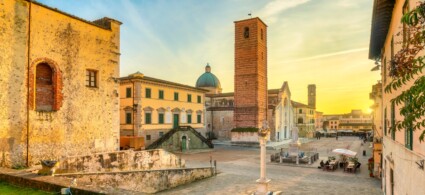
 Hotel
Hotel  Budget accommodations
  Apartments
  Family Hotel
  Luxury Hotel
  Resorts