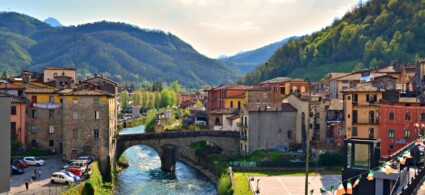
Castelnuovo di Garfagnana
Distance: 2 km
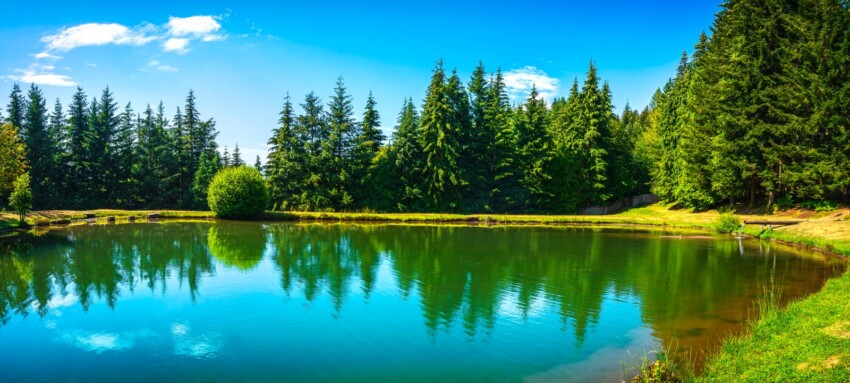
Garfagnana is nature incarnate. It evokes images of a proud and secluded territory, almost isolated from the rest of Tuscany. A treasure chest nestled between the Apuan Alps and the Apennines, carved through by the Serchio river. You don’t stumble upon Garfagnana by accident; you don’t end up in this land by taking a wrong turn: only the desire to experience its rewards and discover an incredible and rare cultural and natural integrity will guide you here.
It’s a landscape you wouldn’t expect. There are natural revelations like the Orrido di Botri, Tuscany’s canyon carved out by streams that plunge into this prehistoric crevasse. A spine-tingling narrow gorge with shrubs clinging to the rock faces, reaching desperately for the only sliver of sunlight able to penetrate.
Garfagnana’s natural wonders don’t end there: among the finest is the Grotta del Vento, with its suspended walkway over marvels and chambers with evocative names – the Baratro dei Giganti, the Salone dell’Infinito – that hint at the sensations you’ll experience here. Come and discover it, and step by step it will reveal wonders and legends.
Among the other unmissable sites in Garfagnana is the Eremo di Calomini, the story of a sacred image that reappeared only here, in this spot towering above the Turrite valley, where a cave sanctuary was built for this reason – a place where you can also rest. The Devil’s Bridge near Borgo a Mozzano will capture your eye with its appearance and probably the legend that accompanies it. Of course, there aren’t only legends; there’s also the reality of welcoming towns, jealous custodians of folklore and gastronomic traditions.
You’ll find an abundance of rituals, pageants and historical re-enactments, opera theatre, craftsmanship – all accompanied by culinary specialities centred on the chestnut, the staple food that, in sufficient quantities, sustained the valley’s population until after the Second World War. Today these are joined by ancient products enjoying great popularity, such as spelt, mondiola and cheeses.
Nature outings and simple, welcoming villages, good food and traditions – this is the recipe Garfagnana offers you.
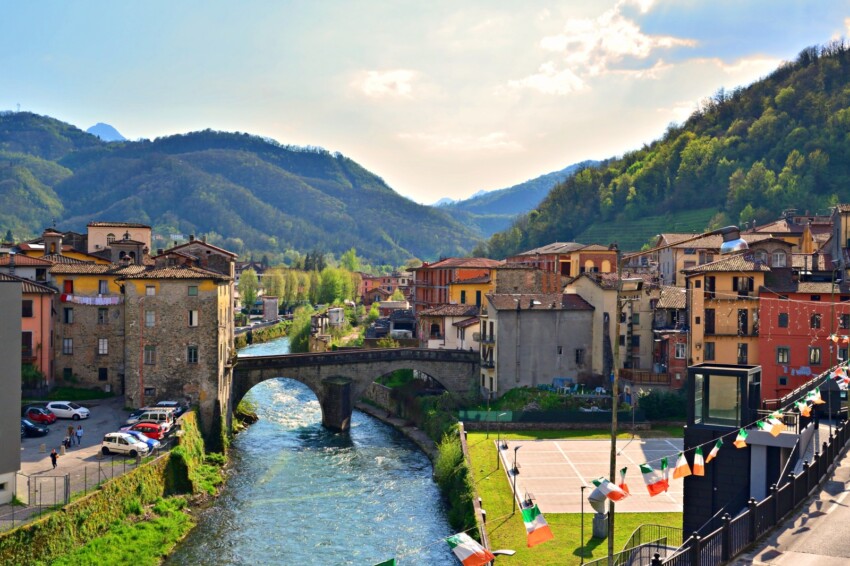
The hub and beating heart of Garfagnana, start your exploration of the area in Castelnuovo, the largest and most important town in the valley. It’s an excellent base for discovering nearby villages and the stunning surroundings, thanks to plenty of accommodation and services.
Once in the centre, visit the beautiful Cathedral located in the heart of the old town, and head towards Mont’Alfonso where you can admire the splendid fortress. But as regards military fortifications, the most important in Castelnuovo and all of Garfagnana is undoubtedly the Rocca Ariostesca, situated at the entrance to the town centre.
The name might intrigue you, as not everyone knows that the poet Ludovico Ariosto lived here for about three years. To commemorate him, there’s even a walking trail, the Sentiero dell’Ariosto, an absolute must for anyone visiting these parts. Walk it with the whole family as it’s suitable for all ages, and in under two hours it will let you enjoy the main attractions of Castelnuovo and its surroundings.
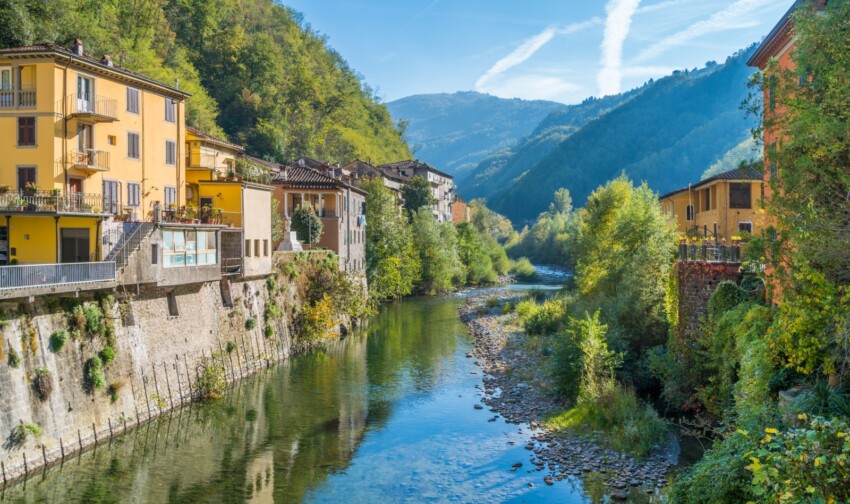
Bagni di Lucca lies along the road leading to the Montagna pistoiese, along the course of the Lima river. It’s therefore situated at a border point between two areas, and to further confuse matters, it’s also a renowned thermal spa resort.
So, during your visit to Garfagnana, don’t miss a stop at Bagni di Lucca: you can use it to stroll through its historic centre, to cross the famous Chain Bridge, which echoes in miniature its Budapest counterpart, or simply to relax in the thermal waters, at the end of a day spent outdoors between Garfagnana and Montagna pistoiese, straddling the inland areas of the Tuscan provinces of Lucca and Pistoia.
If you have time, or if you’re travelling with teenage children, don’t miss a visit to the Museum of the Impossible, inside Villa Buonvisi Webb, where folk beliefs, legends, mysterious finds and esoteric inspirations are on display. Enjoy the guided tour, and for your hour and a half there, think of nothing but having fun.
The surroundings of Bagni di Lucca are also very beautiful, starting with the Orrido di Botri, a spectacular limestone canyon to discover on your own or with expert guides. Access is from the entrance at Ponte a Gaio.
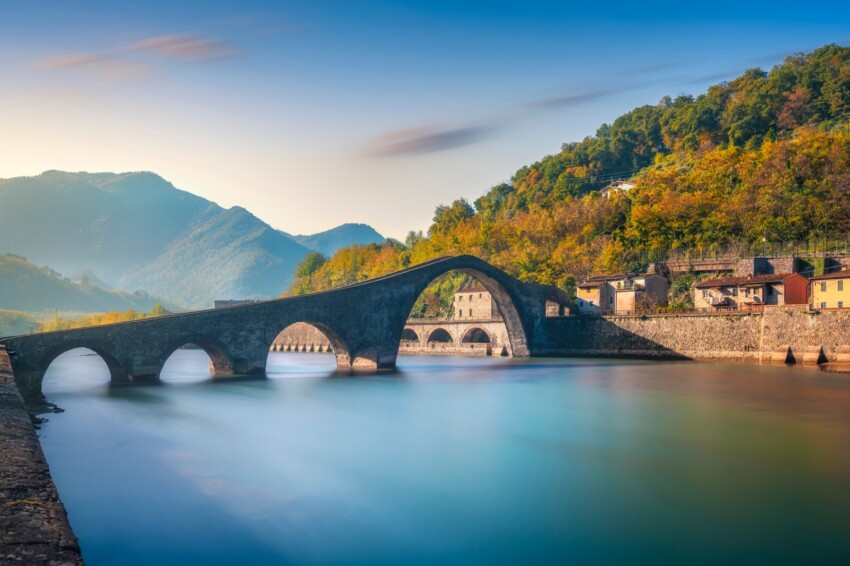
The Devil’s BridgeThe small but charming Barga sits perched on a hilltop in the heart of Garfagnana. It’s part of the Cittaslow network, of the association of Italy’s most beautiful villages, and holds the orange flag of the Italian Touring Club. In short, it certainly doesn’t lack accolades, and once you arrive, it’s easy to see why.
In the centre, visit the Cathedral of San Cristoforo, dating back even before the year 1000, and once you leave the walls, don’t miss the house museum of Giovanni Pascoli, in the locality of Castelvecchio Pascoli, which takes its name from the poet who decided to live here while teaching in Livorno.
Furthermore, about 20 minutes from the centre of Barga, near Borgo a Mozzano, stands the famous Devil’s Bridge, Garfagnana’s postcard image: it’s an ancient bridge with a truly distinctive profile featuring one large arch and three smaller ones. Take a photo and post it on social media, and you’ll make all your friends jealous.
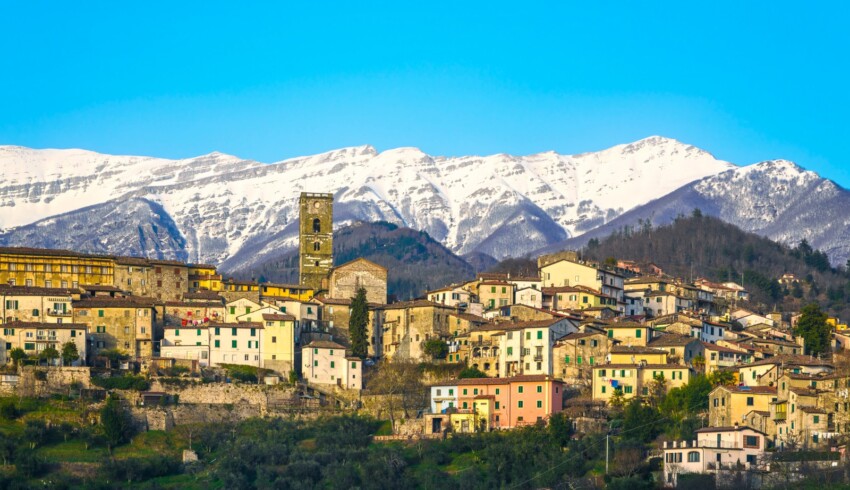
The beautiful village of Coreglia Antelminelli, located in the heart of Garfagnana, takes its name from the ancient noble family that ruled the town during the Middle Ages. Today Coreglia is one of the most famous locations in the region, thanks both to the beauties of its historic centre and the unspoilt nature surrounding it.
Its beautiful natural landscape allows for walking, horseback riding or cycling trips, or relaxing by canoe on the lake. Coreglia Antelminelli is also an interesting base for exploring the Garfagnana surroundings, including the artificial lake of Vagli, from where a boat trip lets you admire a submerged village that reappears each time the lake is drained.
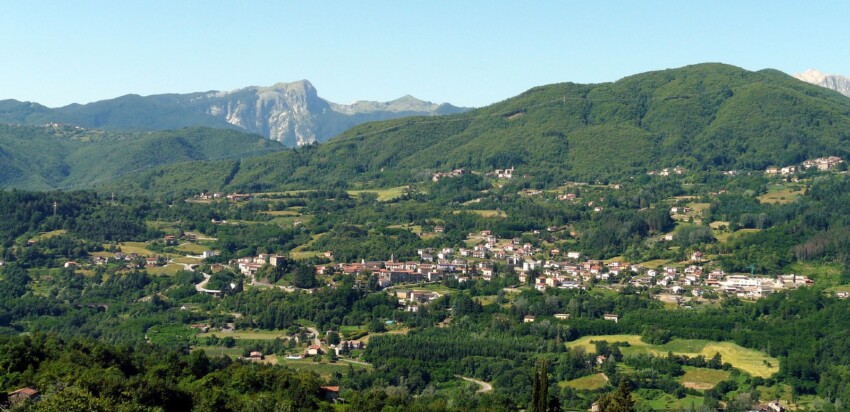
In the upper valley of the Serchio, between the Apuan Alps and the Apennines, lies the small Camporgiano, situated in a truly unbeatable natural setting. It’s a location in Garfagnana that spans 27 square kilometres, and within it are several hamlets and small settlements, of which Camporgiano itself is the largest.
Noteworthy is the historic centre, with its beautiful Este fortress dominating the central square, but it’s especially the surroundings that make Camporgiano one of the most interesting destinations in Garfagnana: you can spend entire days in the open air, among rivers, lakes and forests, and also interesting is the public forest nursery La Piana, established in the 1950s and now a centre for experimentation and dissemination of forestry and agricultural techniques.
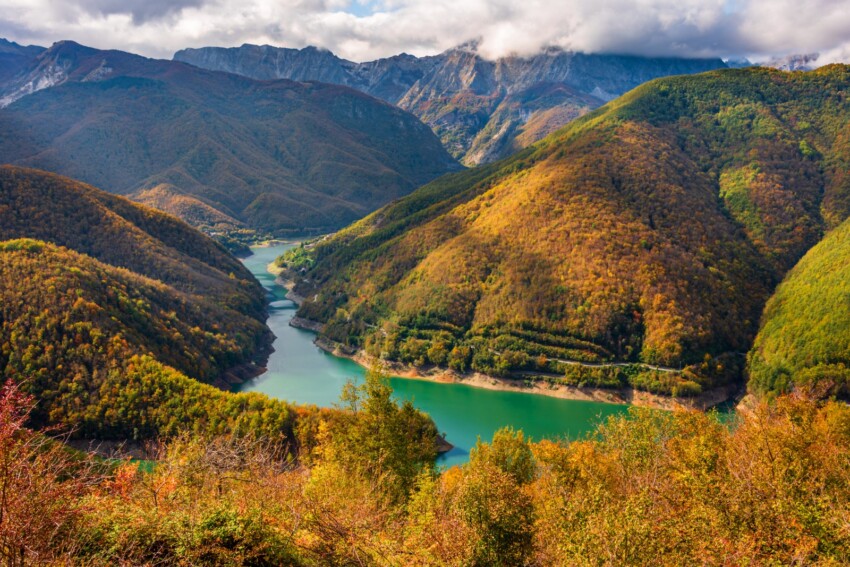
At the foot of the Apuan peaks of Tambura, Sumbra and Roccandagia, it’s characterised by the presence of an artificial lake famous for the “Ghost Village” of Fabbriche di Careggine. Worth seeing: Lake, Church of San Agostino, Marble Quarries, Campocatino
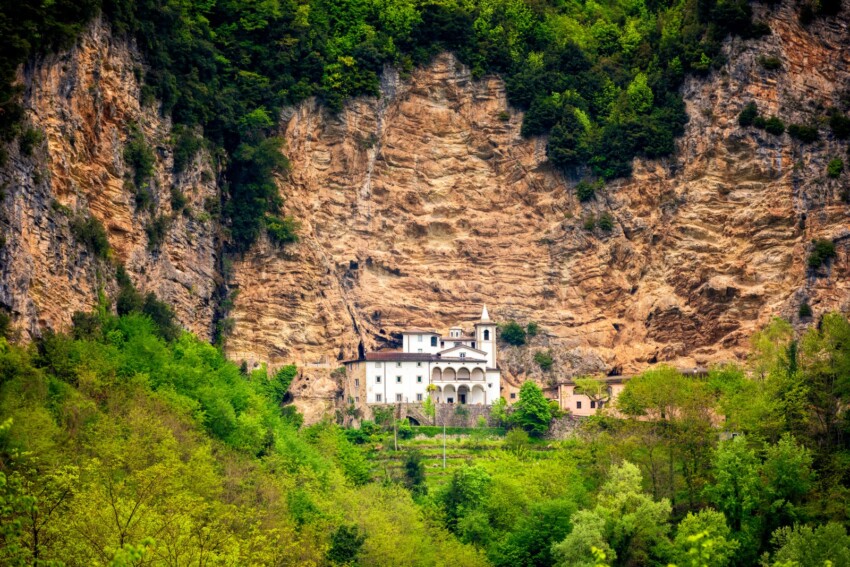
Positioned at the eastern foot of Pania della Croce, Monte Forato and Pania Secca, it’s geographically one of the most beautiful corners of the entire Garfagnana. Worth seeing: Grotta del Vento, Monte Forato, Eremo di Calomini
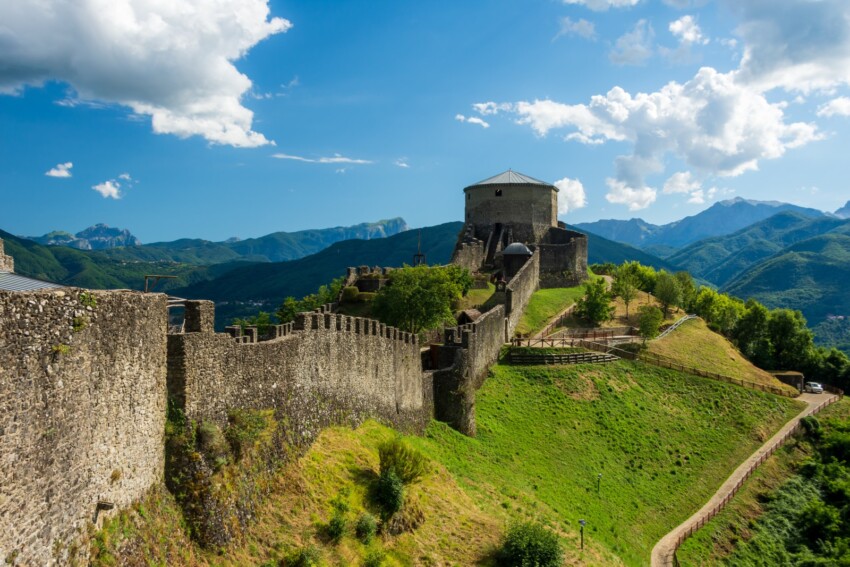
San Romano is one of the towns in the upper Garfagnana where history has left its strongest mark. Excellently positioned, it’s characterised by medieval buildings. Worth seeing: Fortezza delle Verrucole, Parco dell’Orecchiella
A popular summer retreat nestling at the foot of Monte Sumbra, this is an ancient village dating back to around the year 1000. It still retains the walls that enclose the Pieve di San Pietro e Paolo.
An ancient fortress and crucial defensive stronghold, Castiglione is distinguished by its well-preserved town walls, within which stands the old citadel. Worth seeing: Chiesa di San Michele, town walls
The village of Fosciandora and its hamlets are set on a hillside, enjoying excellent sun exposure and a mild climate. The centre still retains its medieval character with the castle, church and tower. Worth seeing: Santuario di Migliano
It’s the first town you encounter in Garfagnana when heading up from Lucca. Active in crafts and industry, it hosts numerous shops and a shopping centre. Worth seeing: Chiesa di San Jacopo
This is the highest town in the entire Garfagnana, located at an altitude of almost 900 metres. It sits in a secluded spot, surrounded by chestnut and beech woodlands, ideal for immersing yourself in nature. Worth seeing: Altopiano dell’Argegna, Santuario Madonna della Guardia
Located on the border between Garfagnana and Lunigiana, between the watersheds of the Serchio and Magra rivers. Part of its territory falls within the Parco delle Alpi Apuane and is home to the highest peak, Monte Pisanino. Worth seeing: Lago di Gramolazzo, Marble Quarries, Natalecci
The municipality of Molazzana stretches along the right bank of the Serchio river as far as Pania della Croce, also known as “the queen of the Apuanes” for the incomparable views it offers.
Worth seeing: Fortezza and Chiesa di Cascio
Named after the ancient 8th-century pieve around which the main town developed with its narrow streets flanked by old stone houses. Worth seeing: Lago di Pontecosi, ancient village of Sillico
On the border between Tuscany and Emilia Romagna, it lies close to the summit of Monte Prado which, at 2,054 metres, is Tuscany’s highest peak. Surrounded by chestnut groves renowned for producing “farina di neccio” (chestnut flour). Worth seeing: 13th-century wooden crucifix, the small lakes
The territory of Villa Collemandina extends across the left bank of the upper Serchio valley in Garfagnana.
Before the 11th century, this area was ruled by the Lombard family of the Rolandinghi, who established their residence or administrative seat at Villa known as Colimundinga after their family patriarch. Over the centuries, this name evolved into Collemandina.
In 1265, the Nobles of Villa united their fiefdom with the free commune of Castiglione di Garfagnana, a stronghold of the Republic of Lucca, where they wielded considerable political influence.
In 1451 it came under the rule of the Este family and remained so until Italian unification, except during the brief Napoleonic period and the principality of Elisa Bonaparte. Between 1803 and 1806, following the abolition of the pre-existing “comunelli”, the municipality of Villa Collemandina was formed.
In the past, the local economy was based on integrating agricultural resources with those derived from forest exploitation.
Agriculture still plays a significant role today, but summer tourism is developing rapidly, directed towards the Parco dell’Orecchiella and the botanical garden of Pania di Corfino. At Corfino, the medieval church of San Lorenzo underwent radical renovation in the 18th century, incorporating the original Lombard columns into pillars, furnishing the nave with vaults in place of the ancient exposed timber roof trusses, whilst the decoration was further modified in the following century according to the taste of a belated Neoclassicism.
Also at Corfino, a sanctuary – the Madonna del Soccorso or del Monte – gained particular importance from the 17th century onwards, originating around a miraculous episode attributed to a panel of the Virgin Mary.
At Pianacci, the church of Madonna di Caravaggio, built in the 19th century, is noteworthy.
In the following map you can see the location of the main places of interest mentioned in this article.
 Hotel
Hotel 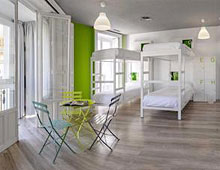 Budget accommodations
  Apartments
  Family Hotel
 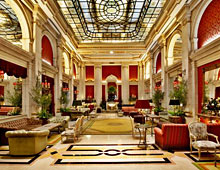 Luxury Hotel
 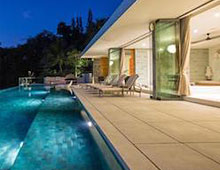 Resorts