Borgo Isola Santa
Isola Santa - Via della Torre, 1
Book now
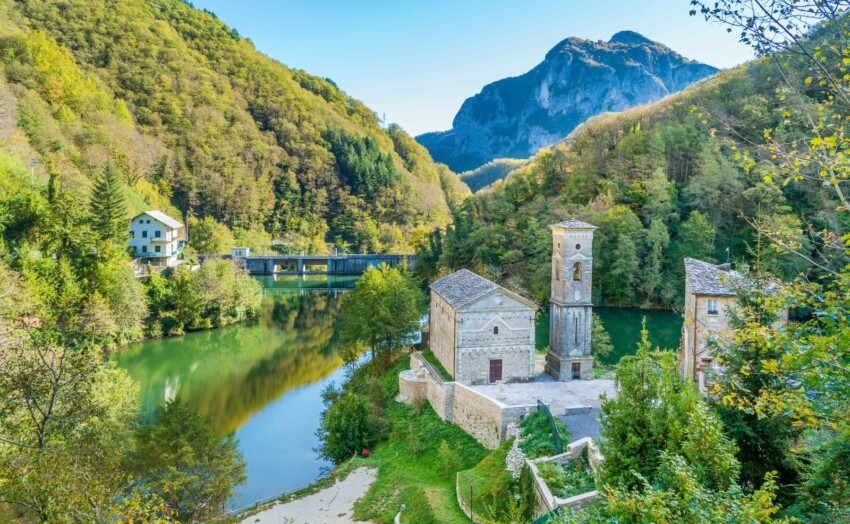
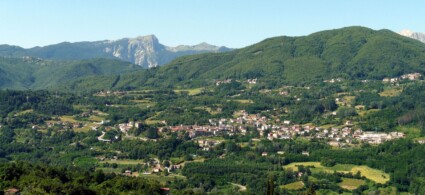
On the banks of a small lake, surrounded by chestnut forests and towering mountains, lies Isola Santa, a charming holiday destination in every season. We’re in the province of Lucca, in the historic region of Garfagnana, at an altitude of 550 metres above sea level.
The village stands on the ruins of an ancient hospice, a stopping point for travellers crossing the Apuane Alps, between Versilia and Garfagnana, as this was the only road in the area. Isola Santa’s fortunes gradually declined because from 1880 onwards, the Cipollaio road – today’s provincial road to Arni – provided far more convenient connections.
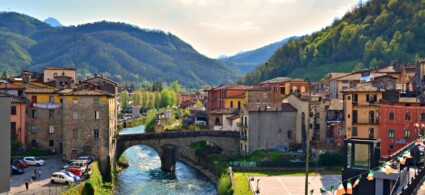
Stone cottages with slate roofs are all that remains of the original settlement, partly submerged beneath the waters of the artificial reservoir known as Isola Santa lake. Picturesque and well-preserved, the village offers stays brimming with charm, thanks to its stunning panoramas and the quiet rustle of the forests. An ideal spot for mushroom foraging, fishing for wild trout and hiking. Numerous trails wind into the woodland towards the majestic peaks of the Apuane Alps, whilst pleasant walks brush past springs and abandoned hamlets.
Truly curious are the so-called Giants’ Kettles, cauldron-shaped holes carved out by swollen rivers. Enormous examples can be seen at the Fosso del Fatonero and the Fosso dell’Anguillaia. The experience is rounded off by a rich gastronomy with local specialities that delights food lovers with excellent grilled meats, exquisite truffle dishes and typical cheeses.
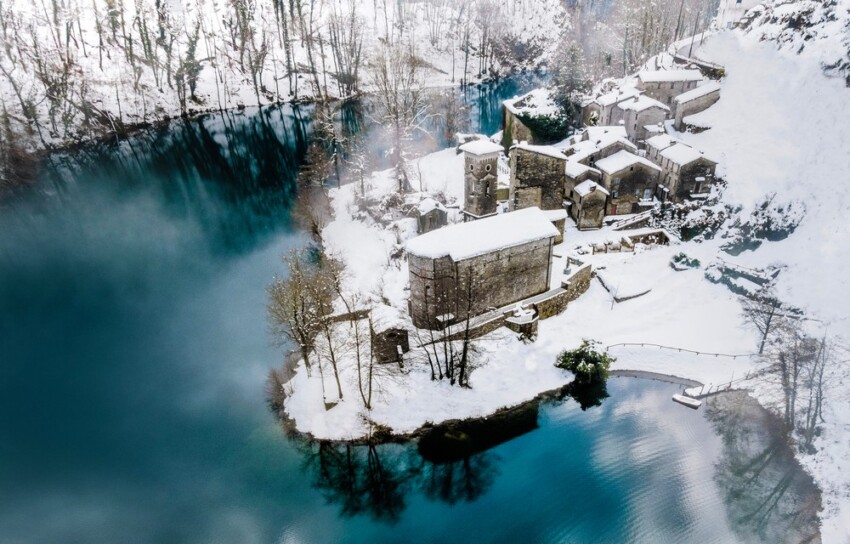
Isola Santa is such a small village that you can walk around it in minutes; however, if you’re in this area, there are several attractions worth considering.
The historic village of Isola Santa has been revived after a period of abandonment lasting several decades. Today it has been partly restored, whilst maintaining its rustic character, and transformed into a diffused hotel.
It’s worth visiting the ancient church dedicated to San Jacopo, now deconsecrated and completely bare but documented in chronicles from at least 1260. Its position is beautiful, overlooking the lake directly, and the bell tower is truly distinctive, standing separately from the main structure.
In 1948, a dam was built along the course of the Turrite Secca river at the village’s edge to power the nearby hydroelectric plant, which led to the creation of a lake – the Isola Santa lake. The entire project resulted in the destruction of part of the old settlement, which was completely submerged by the lake; however, every 10 years the reservoir is emptied, allowing the resurfacing of certain buildings that were part of the original village, including a mill and a small stone bridge.
The Isola Santa lake is suitable for swimming and is also frequented by fishing enthusiasts, as sport fishing for Brown Trout is practised here.
Isola Santa is the starting point for a range of hiking trails that wind across the Apuane Alps and lead to the summit of some of the most important and renowned peaks, such as Monte Corchia, Freddone, Monte Penna di Sumbra or the Panie Range.
Moreover, less experienced walkers can take a stroll along the right bank of the lake to reach the Pollaccia, a karst spring that feeds the lake.
The best option for staying at Isola Santa is undoubtedly the Borgo Isola Santa diffused hotel, which occupies much of the village. Equipped with a restaurant, it’s the best choice for those seeking relaxation and peace and quiet, also thanks to its pedestrian-only access. A short distance away is the B&B Borgo delle Panie, in the Salceta area, which also features a lovely external swimming pool with views.
There are no other accommodations in the immediate vicinity of Isola Santa: the closest ones are found at Castelnuovo di Garfagnana, about 20 minutes’ drive away.
Isola Santa is located in the heart of the Apuane Alps, and therefore far from major transport routes. The distance to reach the village from Tuscan provinces is never particularly short, nor is the road easy, as the SP13 really puts itself through its paces with curves, tunnels and narrow stretches of carriageway.
However, the destination is definitely worth the journey, and in any case you’ll be treated to beautiful panoramas along the way. From Florence, for example, you can reach Isola Santa in around two hours: the route involves taking the A11 Florence-Sea motorway to the Lucca Ovest exit, entering the A12 at Viareggio and exiting at the Versilia junction near Forte dei Marmi. From there, you head along the SP68 towards the interior, turning onto the SP9 near Querceta and continuing through Seravezza and Luchera. At Fontaneto you take the Arni road, which goes through the Cipollaio tunnel and becomes the SP13, all the way to your destination.
From central Lucca there are two alternatives: one is the motorway, following the route just described; the other is to take the SS12 towards Ponte a Moriano and Borgo a Mozzano, then continuing into the heart of Garfagnana through Piano di Coreglia, Fornaci di Barga and Gallicano. Either way, you’ll arrive in just over an hour.
As for other Tuscan cities, from Siena it takes two and a half hours and 200 kilometres, little more from Grosseto, whilst from Arezzo it’s over 3 hours. You’ll fare better arriving from the coastal cities: from Livorno it takes an hour and a half to reach your destination, from Pisa just over an hour.
Although challenging and complicated, the road to Isola Santa can also be covered by public transport. It’s best to arrive by train at Forte dei Marmi – Seravezza – Querceta station, which is on the Pisa-La Spezia line. From here you continue by regional bus E36, which departs from via Alpi Apuane and terminates at the junction for Arni, a few kilometres from Isola Santa. The final leg of the journey is covered by a second bus, which fortunately departs from the same stop and takes you to the Via Arni Diga stop, essentially the dam for Isola Santa lake. Be aware that services aren’t very frequent.
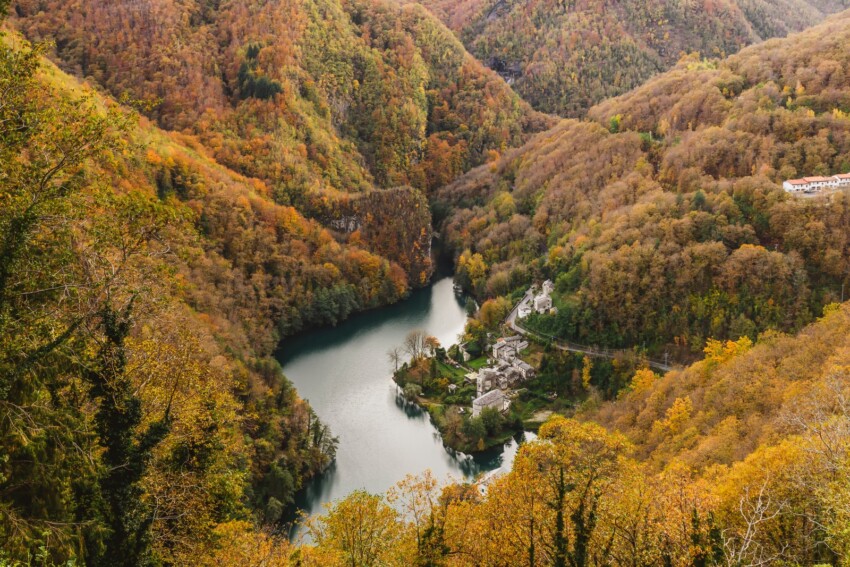
The origins of Isola Santa are traced to its geographical position and the existence of a “hospice” that welcomed travellers crossing the Apuane by way of the Foce di Mosceta pass, travelling from Versilia to Garfagnana or vice versa. Along this harsh and arduous route, Isola Santa represented an essential stopping point.
We have certain records of the hospice from 1260 onwards, though its origins are certainly older.
According to some historians, the village of Isola Santa, which grew up around the hospice, was apparently once a small fortified settlement. Imagining it as it was before the artificial lake was built, it’s easy to understand its position overlooking the valley floor road. It’s therefore possible that Isola Santa served as a “watchpost”, positioned in a particularly narrow valley that was then crossed by a bridge now submerged beneath the lake’s waters.
Documents also record the existence of an old tower, now clearly demolished, whilst a significant “Torre Road” remains.
The sparse records that take us from the Middle Ages to the 1700s speak of a small community living around the hospice, with an extremely poor economy and tremendously difficult connections to the nearest centres.
To illustrate this final point, it suffices to cite what Costantino De Nobili wrote in 1615, when commissioned by the Hospital of S. Luca to inspect the one at Isola Santa, which was under its jurisdiction. Having departed from Lucca, De Nobili spoke of “roads so poor that from Castelnuovo onwards one had to travel mostly on foot” to reach the hospital situated “at the foot of Pania, surrounded on all sides by extremely high and precipitous mountains”.
What’s most interesting is that this state of isolation (and yet an isolation that placed it in a strategic position along the only existing route of communication) – Isola Santa and the small nearby hamlets (Col di Favilla, Puntato, Capanne di Careggine) maintained it until just a few decades ago when the Cipollaio road, today’s Valdarni provincial road, was built.
Once that incredible isolation was broken, in 1949 the dam was built for hydroelectric exploitation of the Turrite Secca waters.
This thus created stability problems for the settlement due to the large daily water level fluctuations imposed by the electrical company of the time (Selt Valdarno) on the lake level. This situation was resolved in the late 1960s, but by then the depopulation had occurred and irreparable damage had been done.
In 1975 the last remaining inhabitants, during a period when the artificial reservoir was emptied, occupy it to claim their right to new and safe housing. The struggle is largely successful, houses are built elsewhere and the village empties completely.
What's the weather at Isola Santa? Below are the temperatures and the weather forecast at Isola Santa for the next few days.
Isola Santa is a small village situated in the province of Lucca, nestled between the Garfagnana region and the Alpi Apuane National Park. It lies along the provincial road SP13, which connects Forte dei Marmi to Castelnuovo di Garfagnana.
 Hotel
Hotel  Budget accommodations
  Apartments
  Family Hotel
  Luxury Hotel
  Resorts