Villa Gherardi
Barga - Via dell'Acquedotto 8
Book now
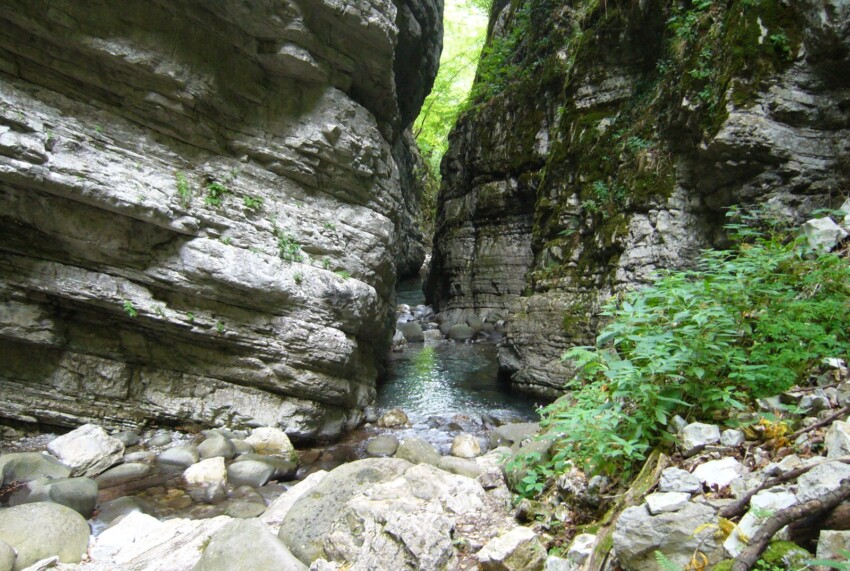
The Orrido di Botri State Biogenetic Nature Reserve protects a rocky gorge with steep limestone cliffs, covering an area of 192 hectares across the municipalities of Bagni di Lucca and Coreglia Antelminelli.
The Orrido di Botri is an impressive limestone gorge, characterised by sheer walls carved deep into the rock, reaching heights of up to 200 metres and in places just a few metres apart. It presents itself as a genuine karst canyon, a narrow, sunken valley created by the erosive action of the Rio Pelago on the limestone rocks of the Apennines. The stream cuts through towering rock faces, creating a natural environment of rare beauty and considerable geological and naturalistic interest. The establishment of the Orrido di Botri and Balzonero nature reserve in 1971 on the initiative of the Ministry of Agriculture and Forests enabled the preservation of this particular site, where flora and fauna find an ideal, intact and protected habitat. The flora is particularly rich and interesting: numerous botanical species that are rare elsewhere can be seen here, such as the uncommon butterwort (Pinguicola vulgaris), an insectivorous plant with violet flowers and sticky leaves designed to trap small insects on which it feeds.
Thanks to its integrity, the Orrido di Botri territory is also an optimal environment for numerous animal species, foremost among them the golden eagle, which still nests here, along with many other bird of prey species.
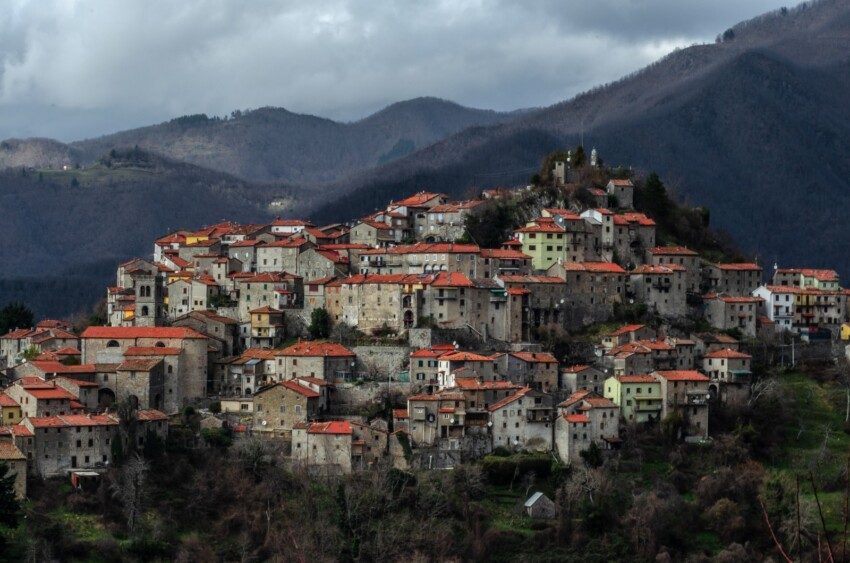
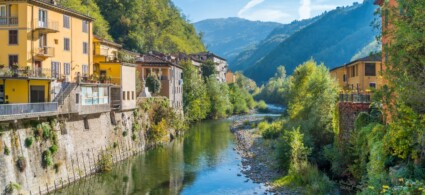
The charming village of Montefegatesi, surrounded by some of the most striking peaks in the nature reserve (Rondinaio, Tre Potenze, Pratofiorito and Coronato), serves as the gateway to the Orrido di Botri, just a twenty-minute drive from the visitor centre at Ponte a Gaio. Its name almost certainly derives from the liver-red colour characteristic of the geological formation on which the village stands. The village offers considerable points of historical and artistic interest; not to be missed is the splendid church dedicated to San Frediano, dating back to the 13th century, whose sacristy houses two fine panels from the Florentine school of the 15th century. With the exception of a brief period during which Montefegatesi fell into Florentine hands, the fortress remained consistently under the protection of Lucca and the Guinigi family, annexed to the vicariate of the Val di Lima. The castle was indeed positioned in a strategic area, an advanced outpost of the Lucchese republic towards the Modenese border. To this day, the fortress of Montefegatesi, situated in a privileged position, commands the valley through which the Fegana stream flows, into which the Rio Pelago discharges, the wonderful architect of the Orrido di Botri.
The distinctive village of Tereglio is also situated just a few kilometres from the nature reserve. The presence of its walls testifies to the village’s importance as a stronghold and crossroads of considerable significance. Here we find one of Tuscany’s oldest roads: the “Strada Maria Luisa Duchessa di Lucca”, which, following the valley of the Fegana stream, reached the peaks of the Apennines and the passes giving access to the Po Valley. The Botri nature reserve encompasses the “Strada Maria Luisa” and from this route wind evocative itineraries.
The parish church, of Romanesque origin and modified in the 15th century, is dedicated to S. Maria Assunta; it is enriched by a fine wooden crucifix by Barone Berlinghieri (13th century) and a wooden panel depicting the Annunciation, dating to the 14th century. In addition to the fortress and the Porta Mezzana, evocative testimonies of Tereglio’s medieval past, several Renaissance palaces are well preserved, embellished with stone portals and furnishing details from the 17th and 18th centuries, whose façades, with their characteristic loggias and terraces, dominate the hilltop on which the village is perched.
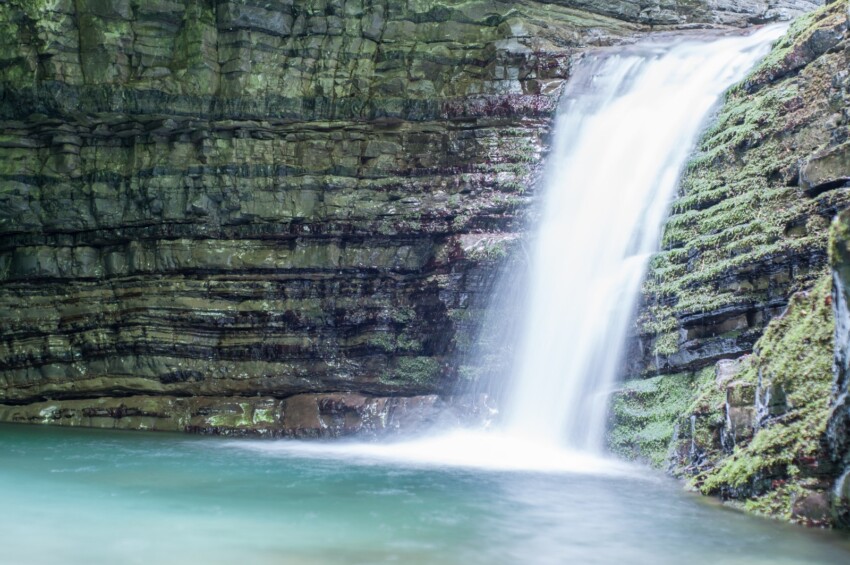
Visits inside the gorge, which must be accompanied by authorised guides, follow two routes of varying difficulty, accessible only in summer. Guided tours depart from Ponte a Gaio, the only access point to the gorge, home to the visitor centre and refreshment point where, in addition to purchasing publications, guides to the nature reserve and local products, you can taste dishes from the rich local culinary tradition.
By car: from Lucca follow the SS 12 Brennero to Fornoli, where you turn off for Tereglio, following provincial road 56 and signs for Ponte a Gaio – Orrido di Botri. Ponte a Gaio is also accessible from Bagni di Lucca by following signs for Montefegatesi.
To see all the facilities and book accommodation in Orrido di Botri use the form below, entering the dates of your stay.
 Hotel
Hotel  Budget accommodations
  Apartments
  Family Hotel
  Luxury Hotel
  Resorts