La Bouganville e Il Gelsomino
Pietrasanta - 81 Via Tre Fontane
Book now
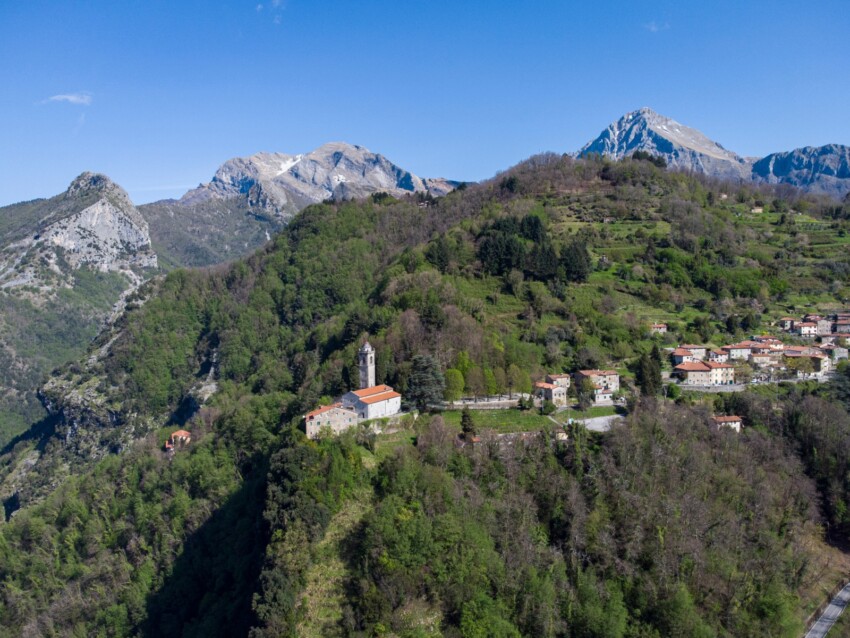
Sant’Anna di Stazzema is located in the province of Lucca, part of the municipality of Stazzema. Its name is inextricably linked to the massacre carried out by German forces in this locality during the Second World War, when they entered the village and killed almost 600 people, mostly refugees, as the area had been designated a white zone.
Sant’Anna is an extremely tiny settlement with fewer than 50 residents, nestled peacefully on the southern slopes of the Apuan Alps. It can only be reached via a single road from Camaiore, or alternatively by mule tracks from neighbouring villages.
Despite its remoteness, it’s well worth making the detour to Sant’Anna di Stazzema to honour the memory of the Nazi atrocity and pay respects to those who were killed, including many children. A series of monuments have been erected on the site to commemorate the victims.
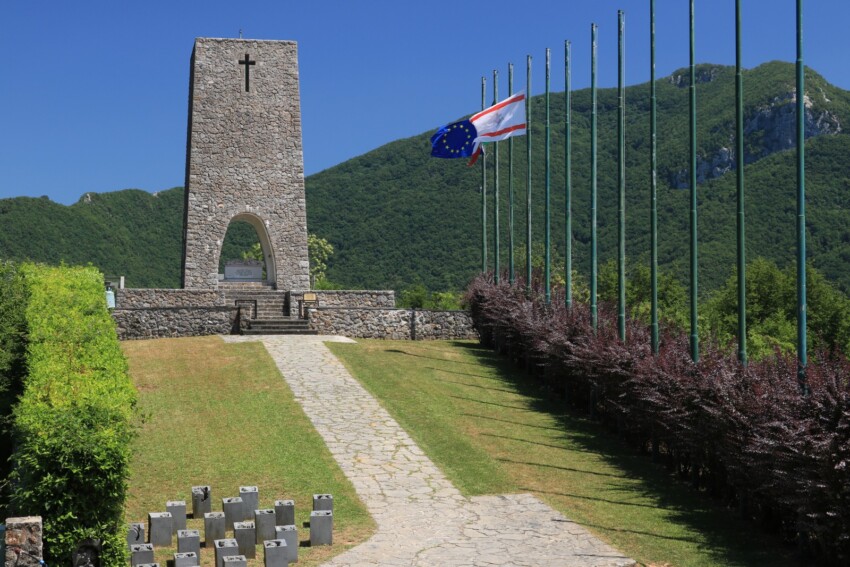
Sant’Anna di Stazzema is a genuinely small place, and all its monuments were built to commemorate the Nazi-Fascist massacre.
The main monument at Sant’Anna di Stazzema commemorates those who died in the massacre. It’s an ossuary with a square base and an imposing appearance, built on Col di Cava entirely in stone, topped with a Catholic cross. It’s a place to pause and reflect on the atrocity committed by the Germans, surrounded by the magnificent landscape of the Apuan Alps.
The Sant’Anna museum, opened in 1982 by then president Sandro Pertini, stands at the southern edge of the village and offers visitors a powerful emotional experience to remember the massacre experienced by the inhabitants during the war. Inside are the names and photographs of those killed, along with multimedia content installed in 2013.
On the external wall of the museum is a sculpture featuring a detail from Picasso’s famous painting Guernica.
The museum is open Thursday to Saturday from 9am to 5pm, and Sunday from 10:30am to 6pm. Opening hours may vary, so it’s advisable to check the official website before visiting, email santannamuseo@comune.stazzema.lu.it or telephone 0584-772025.
The Peace National Park is another major attraction at Sant’Anna di Stazzema. It extends across the hills surrounding the village up to Col di Cava, where the ossuary monument stands. The park was established in 2000 to preserve the historical memory of the massacre and promote respect among peoples. Today it’s an oasis of peace and tranquillity, the perfect place for a walk in nature.
At the south-eastern edge of this small settlement stands the village church, dedicated to Sant’Anna. It’s a small church situated at the end of a beautiful garden, with a white façade and two bas-reliefs at the ends, rather like supporting columns. Above the entrance is a circular rose window.
The interior is richly decorated with numerous frescoes on both the walls and the vault above the altar, and the crucifix stands behind an imposing marble monument.
Sant’Anna di Stazzema is infamous for being the site of a war crime committed by German Nazi forces during the Second World War. It occurred on 12 August 1944, when Sant’Anna was surrounded and all escape routes blocked, resulting in the deaths of almost 600 people, including many children.
The judiciary determined that the massacre was actually a terroristic act to sever links between civilians and partisan fighters; this occurred despite Sant’Anna di Stazzema having been classified by the Germans as a white zone, suitable for sheltering evacuees – which is precisely why so many people were in the village.
Investigations began in 1994, some 50 years after the massacre, when a military prosecutor in Rome stumbled upon nearly 700 files documenting the Sant’Anna atrocity. The trial began 10 years later and concluded in 2007 with life sentences for the Nazi non-commissioned officers responsible, who were by then in their eighties.
There are no accommodation facilities at Sant’Anna di Stazzema or in its immediate surroundings. The nearest options are in the hamlet of Culla, about 5 kilometres away, offering apartments and farmhouses renovated in typical Tuscan style. What they share is the marvellous panorama visible from their windows, offering views across the entire Versilia coast.
There are also other properties near Farnocchia; however, the drive from Farnocchia to Sant’Anna takes about an hour, as there’s no road connecting the two hamlets directly. You can walk there along a path of about 3 kilometres, which takes roughly an hour and a half.
The largest settlement where you can stay near Sant’Anna di Stazzema is undoubtedly Camaiore, approximately 10 kilometres away, taking about 20 minutes to drive. Here you’ll find plenty of accommodation options: hotels, bed and breakfasts, apartments, and numerous farmhouse stays and country houses on the surrounding hills.
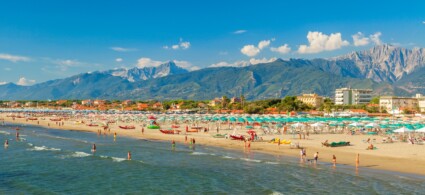
You might also consider staying by the sea on the Versilia coast: Lido di Camaiore is less than half an hour’s drive away, Viareggio and Forte dei Marmi are about 35 minutes away. Needless to say, this option gives you virtually unlimited hotel choices.
Sant’Anna di Stazzema is isolated in the Apuan Alps, and access is never entirely straightforward. From Florence, for example, it takes about an hour and a half, initially via the A11 motorway to the Viareggio exit after taking the slip road at Lucca Ovest, then heading inland into the municipality of Camaiore, passing through Capanne and Capezzano Pianore before taking the steep road that climbs on the right, passing Monteggiori and Culla, until you reach your destination.
Regardless of where you’re coming from, the final stretch from Camaiore to Sant’Anna must always be driven, covering about 10 kilometres in 20 minutes.
Reaching Sant’Anna from other Tuscan provinces means first getting to Camaiore. From Siena, take the Florence-Siena motorway link and then the A11 motorway, taking 2 hours and 15 minutes. From Arezzo it takes the same time, though you’d approach Florence via the A1 motorway. From Tuscan coastal towns the journey time is shorter: both Pisa and Livorno are about 45 minutes away.
As for public transport, the final 10 kilometres of the access road to Sant’Anna di Stazzema cannot be travelled by vehicles longer than 10 metres, so the journey is completed by minibus. Services run only on weekdays on Saturdays, departing Pietrasanta at 9:00am and 4:20pm, arriving respectively at 9:20am and 4:40pm; the return journey leaves Sant’Anna at 11:30am, arriving at Pietrasanta at 11:50am, and at 4:50pm, arriving at Pietrasanta at 5:10pm.
What's the weather at Sant’Anna di Stazzema? Below are the temperatures and the weather forecast at Sant’Anna di Stazzema for the next few days.
Sant'Anna di Stazzema is located in the province of Lucca, inland from the coast. Part of the municipality of Stazzema, it sits at an altitude of over 600 metres.
 Hotel
Hotel  Budget accommodations
  Apartments
  Family Hotel
  Luxury Hotel
  Resorts