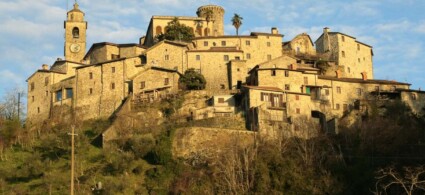
Licciana Nardi
Distance: 8 km
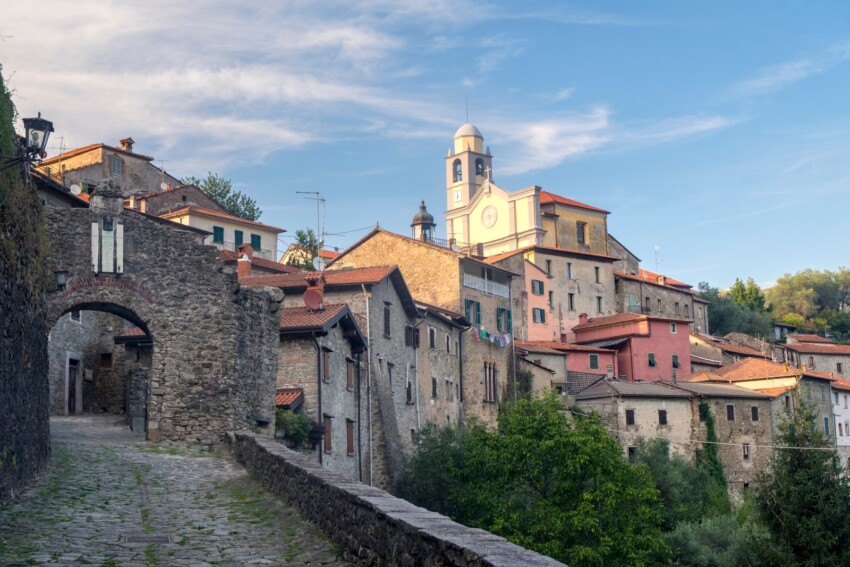
Lunigiana is an experience of another world, a journey through time: it’s like a tale where a hidden mechanism opens a secret door and grants access to a landscape frozen in time, bearing the marks of its past.
Administratively, it forms part of the province of Massa-Carrara: we are therefore at the north-western tip of Tuscany, straddling Liguria and Emilia-Romagna, in a blend of dialects, customs and traditions, preserved over time thanks also to the isolation of these places. The villages of Lunigiana are there for anyone wishing to capture their charm. It’s learning by looking, taking possession of moments of history that this valley of the moon bequeaths to those who pass through and stay. And indeed, this land has seen its share of wanderers—green with chestnut and beech forests, crossed by clear waters.
This has always been its destiny; it is a land of passages and borders, and therefore a land to defend. The Romans thought so, and so did those who secured access to the sea via the Via Francigena. This explains the castles that define these horizons, the strongholds and fortified villages. There are still around thirty of them today, though there were approximately 160 during the feudal period, when enemies were plentiful and small fiefdoms warred for supremacy. They remain living testimonies for those willing to listen.
Voices still captivating for ears accustomed to the whispers of noble and secret cities, emotions always deeply intense for those who sense the allure of millennial stories. Consider only the mystery of the statue-stelae that emerged from prehistory—a shiver will run through you in the presence of these sculpted and stylised stone idols. Deities or chieftains, symbols or well-armed warriors with their adorned and prosperous women. A story still open, a mystery yet unsolved.
A land of transit, as we said, and therefore of communication and hospitality for wanderers of old and visitors today. With its people—hospitable and unique, feeling neither Tuscan, nor Ligurian, nor Emilian—who have created an essential, flavourful cuisine, free from excess. You’ll discover testaroli and panigacci, honey, olive oil, and wines such as Candia, the most renowned, yet another pleasant way to become acquainted with this enchanted valley, which takes its name from the ancient Luni, a Roman town situated at the mouth of the Magra River, located approximately where Sarzana stands today, in the province of La Spezia.
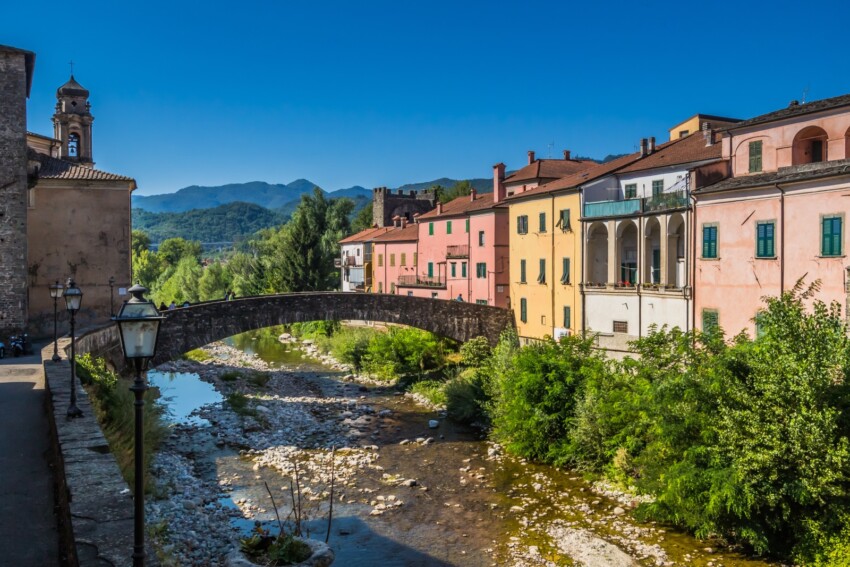
Pontremoli is the northernmost municipality in Tuscany, a village well worth visiting for its beauty, both in the centre and surroundings. Begin with the Cathedral, dedicated to Santa Maria Assunta, and take a photo of the Campanone, one of the watchtowers of the ancient city fortress, today the only one still standing; then head to the hill north of the centre to visit the Piagnaro Castle.
Pontremoli’s position along the course of the Magra River makes it picturesque even for those who simply decide to pay it a brief visit. But if you want to come into close contact with the history of Lunigiana, don’t miss the statue-stelae museum, anthropomorphic sculptures created in prehistory by the people who inhabited this valley centuries upon centuries ago.
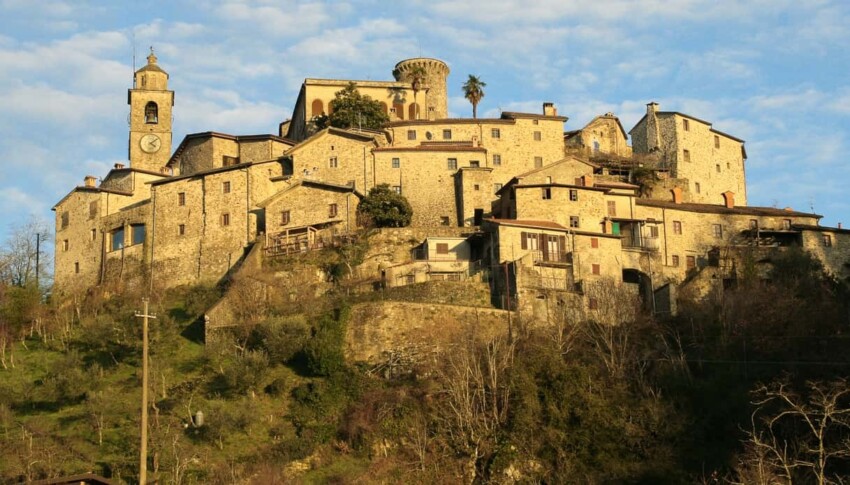
The Taverone River in Lunigiana traces a series of sinuous curves, along one of which nestles the village of Licciana Nardi. We are in an area of cultivated lands and hillside copses, immersed in breathtaking scenery. You feel as though you’re thousands of kilometres away from everything and everyone, yet within minutes you can reach the motorway and the sea.
In the surroundings of Licciana Nardi there are also a number of beautiful medieval castles well worth visiting, starting with Bastia Castle, which overlooks the village of the same name, then moving on to the castles of Monti and Terrarossa. Licciana Nardi village itself also has its own castle, built in the 13th century and later transformed into an elegant residence.
Of note, finally, are the parish churches of Licciana Nardi and its hamlets, including Santa Maria Assunta in the Venelia-Monti locality and San Nicolò Varano, within which you can admire a 15th-century altarpiece by Angelo Puccinelli.
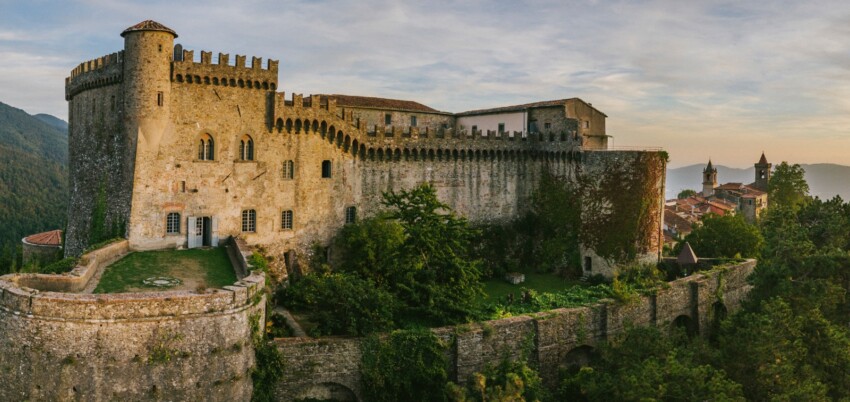
With its Malaspina Castle dating back to the Middle Ages, Fosdinovo is one of the most interesting villages to visit in Lunigiana, thanks also to its history. Founded to control Lunigiana’s access to the sea, it is situated at an altitude of 550 metres above sea level, in the lower Magra valley, north of the Luni plain.
Among the things to see in Fosdinovo, first and foremost is Malaspina Castle, one of the finest and best-preserved in all of Lunigiana. After devoting the time it deserves to it, move on to the parish church of San Remigio, where Galeotto Malaspina rests, then head to the surroundings where you can admire, from the outside only, the villa of Caniparola.
Aulla is one of the largest and most important municipalities in Lunigiana: with over 10,000 inhabitants, it’s a town with various services, and the fact that it’s easy to reach makes it the perfect gateway to Lunigiana. You get there via the A12 motorway exit at Santo Stefano di Magra, then proceed for just a few kilometres heading north up the course of the Magra River via the SP14 provincial road; alternatively, for those coming from the north, the A15 motorway is convenient, exiting right at the Aulla toll booth.
On arrival in town, you’ll immediately see the Brunella Fortress, which dominates it from above, built by Giovanni de’ Medici known as Giovanni delle Bande Nere. In the historic centre, the San Caprasio Abbey complex is also notable, whilst lovers of modern history will be pleased to visit the monument to Bettino Craxi and that to the victims of Tangentopoli.
In the surroundings of Aulla there are finally a number of attractions worth visiting, such as the birthplace of Napoleon Bonaparte, in the Stradano Bonaparte locality, or the sanctuary of Madonna degli Angeli at Arforara.
The small village of Casola is located in the eastern part of Lunigiana, almost at the border with Garfagnana. It’s positioned on a rocky spur, and in the Middle Ages, thanks to its position astride some important communication routes, it experienced its period of greatest splendour. Today what remains of that era’s grandeur are the sandstone palaces, the tower at the entrance to the village that originally belonged to the castle, and some stretches of town walls here and there.
A visit to the museum of the territory of the upper Aulella valley is also of interest, located within the rooms of the municipal palace, as is the church of Santa Felicita. After carefully exploring the centre, venture into the surroundings, made up of forests and mountains, where you’ll find numerous marked trails. If you’re here in summer, don’t miss some food festivals, such as the Regnano bread festival, held in the hamlet of the same name, and the cooked apples festival at Codiponte.
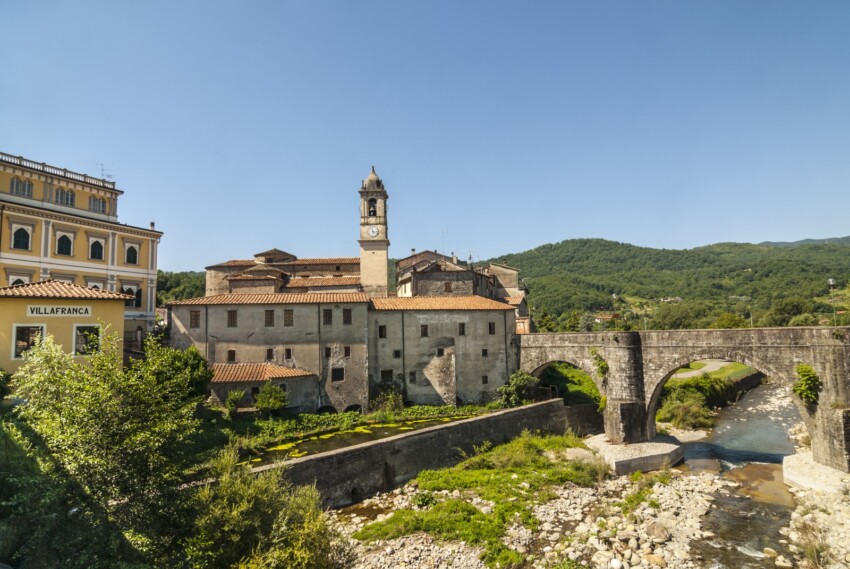
Villafranca in Lunigiana is located in the valley floor, in a position easier to reach than other villages in the area. Dating back to the 11th century, built along the ancient Via Francigena, today it’s worth visiting its historic centre, which also houses the interesting ethnographic museum of Lunigiana, housed in a restored mill dating from the 15th century.
The Malnido Castle and the church of San Francesco are also lovely, the latter dating from the 16th century. After visiting the centre of Villafranca in Lunigiana, head to the surroundings: it’s worth visiting the hamlet of Filetto, where the medieval market and the San Genesio fair are held every year. The Malgrate Castle is also very beautiful, as is the historic village of the Virgoletta hamlet.
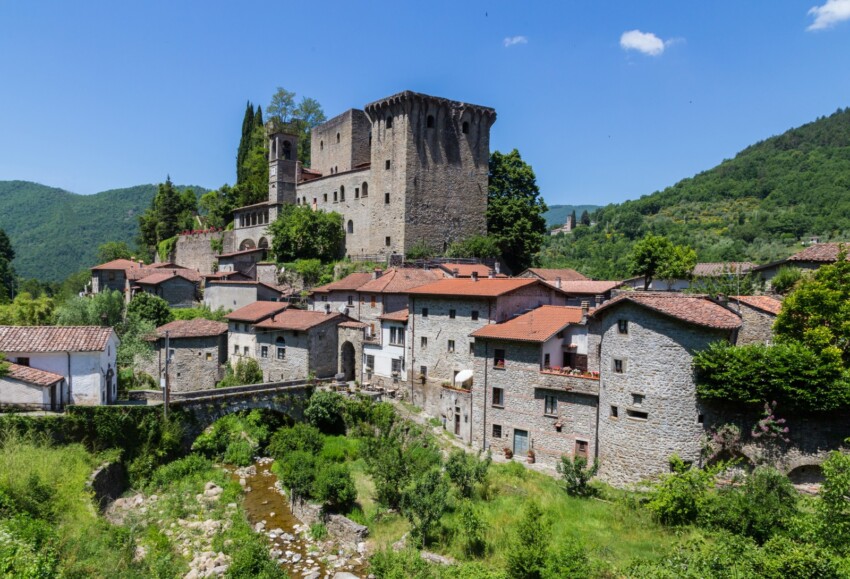
In the eastern part of Lunigiana lies the municipality of Fivizzano, straddling the provinces of Massa-Carrara, Lucca and Reggio Emilia. It is comprised of many small hamlets, so much so that it is affectionately called “the town of 100 villages”. In the midst of them nature is at its best, with hills, valleys and watercourses that then flow into the Aulella River.
The second epithet that Fivizzano enjoys is “the Florence of Lunigiana”, because it was one of the first villages to be conquered by the Medici, but at the same time it has elegant architecture and sumptuous palaces to its credit, as well as a perimeter of town walls built at the behest of Cosimo I in 1540. Visit the Medici Square, with its beautiful marble and pietra serena fountain, and the church of Saints James the Apostle and Anthony. Of note, finally, is a visit to the printing museum dedicated to Jacopo da Fivizzano, housed within the elegant Fantoni Bononi palace.
The San Carlo thermal spa facility is 4 km from the centre of Massa and 7 km from Marina di Massa. Known since the time of San Carlo Borromeo, the Thermal Baths enjoy an extraordinary position, situated midway between the Apuan Alps massif and the Versilia coast. Immersed in extensive grounds, the facility was completely refurbished in 1992. The centre is one of the best-equipped for hydropathic treatments and renowned for the direct bottling of its waters.
San Carlo’s geographical position allows for spectacular excursions from Carrara towards the great marble-bearing basin (Colonnata, Fantiscritti and Ravaccione quarries). Its proximity to the Versilia coastline is of great tourist value.
A picturesque village in eastern Lunigiana, situated within the Apuan Mountains park, Equi was already known to the ancient Romans for its thermal spring. Today the tradition is entrusted to a modern complex equipped with all comforts. The healthy climate and beautiful surroundings contribute to making Equi Terme an ideal holiday destination. At the Equi thermal spa facility, open from June to October, you can enjoy warm baths, hydromassages, massages, nebulisations and endotympanic insufflations. A large pool offers thermal bathing with running water.
In the characteristic medieval village of Equi Terme you can visit: the natural cavern called “la buca”, “il solco”, a deep fissure created in the mountainside by water erosion, and the suggestive grottos, with an underground lake and river. Alongside the considerable and renowned beauty of the landscape and the numerous historic centres in the surroundings (Fivizzano, Verrucola, Codiponte, Pievi di Vano and San Paolo), there are organised sports and recreational centres, as well as marble quarries in the Apuan Alps and the ancient castles of Lunigiana.
In the following map you can see the location of the main places of interest mentioned in this article.
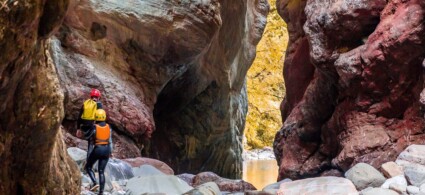
 Hotel
Hotel  Budget accommodations
  Apartments
  Family Hotel
  Luxury Hotel
  Resorts