Cà Del Moro Resort & SPA
Pontremoli - Via Bellotti 2
Book now
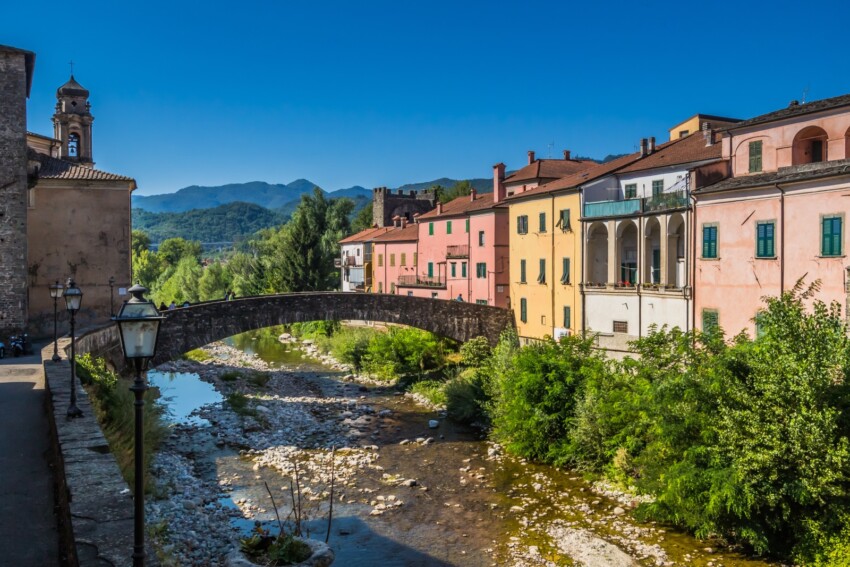
Along the Via Francigena, the ancient road that connected England (particularly Canterbury) to Rome, lies the small town of Pontremoli. It sits within the province of Massa-Carrara, in the Lunigiana area, a territory waiting to be discovered, rich in ancient traditions. We find ourselves straddling the Ligurian Apennines and the Tuscan-Emilian Apennines, in an area largely untouched by mass tourism, yet more than capable of delivering endless rewards to those who choose to spend a few days here.
Pontremoli, owing to its size and infrastructure, is one of the principal gateways to the Lunigiana region, which coincides with the basin of the Magra river, flowing between the provinces of Massa-Carrara and La Spezia. Think of it as your base camp for exploring this lesser-known corner of Italy, one that will certainly surprise you at every turn.
Dedicate a few hours to discovering Pontremoli’s historic centre, visiting all the must-sees before heading off to explore Lunigiana and its charming villages. A word of advice: if you’re planning to spend just a weekend in the area, focus on Pontremoli itself, and save a proper visit to Lunigiana for another trip, given there’s plenty more to see.
The Pontremoli cathedral, officially the co-cathedral of Santa Maria Assunta, stands right in the historic centre, on the piazza known as Piazza del Duomo or Piazza del Vescovato. It’s a church built in 1600 in Baroque style by architect Alessandro Capra, although the façade was redone in the late nineteenth century.
Inside there is a single nave with side chapels, ending in an impressive dome beneath which stand magnificent nineteenth-century stuccos; stucco work is equally evident in the decorations of the presbytery and choir, though roughly a century older. Among the works housed within the Pontremoli cathedral, we highlight the Birth of the Virgin by Giovanni Domenico Ferretti known as L’Imola, the Visitation by Vincenzo Meucci, and the Annunciation by Giuseppe Bottani.
Among all the remaining evidence of medieval Pontremoli, Piagnaro Castle stands out most prominently—a substantial defensive structure built on the hillside north of the town centre.
Originally part of the town’s defensive system, alongside towers and walls that have since vanished, it now belongs to the Association of Castles of the Duchy of Parma, Piacenza and Pontremoli, and has housed the museum of Lunigiana stele statues on its lower level since 1975, dedicated to Augusto Cesare Ambrosi. It’s an archaeological museum displaying numerous stele-type statues found throughout Lunigiana, mostly dating to the Bronze Age (2800-2300 BC).
The imposing Villa Dosi Delfini is a real source of pride for Pontremoli. It’s a private residence, still inhabited by the Dosi Delfini family, but guided tours can be arranged through the villa’s website, and it’s also available for private events such as meetings, celebrations and weddings.
The villa is renowned as one of the masterpieces of Pontremoli Baroque, with sumptuously appointed interiors, and features a large garden filled with centuries-old trees, notable sculptures and terraced landscaping. Since 1988 the villa has been recognised as a site of particular historic and artistic interest, protected by the Superintendency for Archaeology, Fine Arts and Landscape.
The Pontremoli tower, the only still-visible part of the ancient medieval fortress of Cazzaguerra, is simply known to all as the Campanone. Located in the heart of town, it overlooks Piazza della Repubblica; it dates from 1322, when Castruccio Castracani ordered the separation of the town’s Guelph and Ghibelline factions.
The Campanone gets its name from the bell installed at its top since the year of its construction, originally intended to alert citizens to potential dangers.
In the following map you can see the location of the main places of interest mentioned in this article.
The ancient Roman city of Luna has long since disappeared, but still lends its name to the territory of Lunigiana, which stretches into the hinterland of the provinces of Massa-Carrara and La Spezia, straddling Tuscany and Liguria. For exploring Lunigiana, staying in Pontremoli is ideal, as it’s one of the larger villages and consequently well-equipped with services, whilst also being conveniently positioned for transport links such as the motorway and railway.
Lunigiana is home to numerous villages worth visiting, including Filattiera, with its fine church and watchtower, and Villafranca in Lunigiana, situated in a picturesque location near the ford of the Magra river. A visit to the Pieve di Sorano is equally worthwhile, as is Fivizzano, known as the Florence of Lunigiana, as it was among the first to be conquered by the Medici.
In little Pontremoli there are several accommodation options: in the centre you’ll find small hotels, apartments and bed and breakfasts, while in the immediate surroundings, particularly near the locality of Casa Corvi to the north-west of town, there are a number of farm stays, holiday homes and resorts set within the countryside, where you can enjoy your break in complete peace, surrounded by the beauty of the surrounding landscape.
There are also several lovely farm stays in the hills to the east of the village. It goes without saying that to stay in these properties you’ll need your own transport, as reaching them by public transport is virtually impossible.
Its position at the far north-west tip of Tuscany makes Pontremoli rather distant from all the region’s major cities, despite having a motorway junction on the A15 Cisa motorway, which is named Pontremoli itself.
From Florence, for instance, it takes nearly two hours by car, first travelling the entire A11 motorway to Viareggio, then joining the A12 until the junction with the A15 at the Ligurian location of Santo Stefano Magra, and finally exiting at Pontremoli. From the motorway exit to the historic centre takes just 5 minutes.
From other Tuscan cities the situation is similar, as is the route: from Arezzo and Siena it takes around two and a half hours, from Pisa and Livorno, situated on the coast, it takes approximately one hour and 15 minutes; in all cases you need to reach the A12 and then join the A15.
Pontremoli is also served by railway: there’s a railway station with regional trains to and from Florence, as well as services on the Pontremoli Railway, which runs between La Spezia and Parma.
From Florence Santa Maria Novella station the direct train journey takes just under 3 hours. Alternatively, though the journey time is roughly the same, you can opt for connections via Pisa Centrale. The journey from Pisa Centrale to Pontremoli takes just over an hour and a half.
What's the weather at Pontremoli? Below are the temperatures and the weather forecast at Pontremoli for the next few days.
 Hotel
Hotel 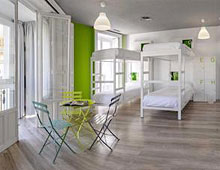 Budget accommodations
  Apartments
  Family Hotel
 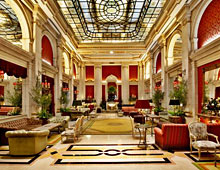 Luxury Hotel
 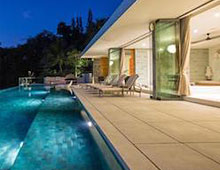 Resorts