b&b BORGO CAPITANO COLLECTION Albergo diffuso, Village Experience
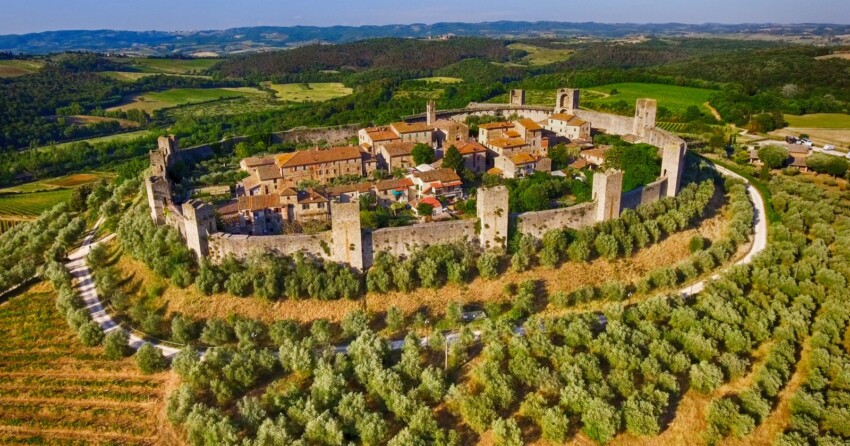
A holiday in Tuscany would be incomplete without visiting a historic village: Tuscan towns are among the region’s most celebrated attractions, adored by all who visit.
You’ll find them scattered throughout – north to south and east to west – perched atop gentle hills planted with olives and vines, nestled in valleys amid wheat fields, at the foot of verdant mountains, or along stretches of breathtaking coastline.
The classic image is a walled medieval town, its character perfectly preserved. Yet not all Tuscan villages follow this pattern. Some feature distinctly Renaissance layouts, defined by elegance and harmony; others grew up around thermal springs known since ancient times.
Which villages should you include in your Tuscan itinerary? You might take a geographical approach, focusing on a specific area such as the Val d’Orcia, Garfagnana or Val d’Elsa. Alternatively, create a themed itinerary – perhaps a food and wine tour of the Chianti region, a coast and mountains escape, or a spa and culture break.
To help you choose, we’ve selected the 15 most beautiful villages in Tuscany: a list to inspire your next weekend getaway or tailor-made holiday.
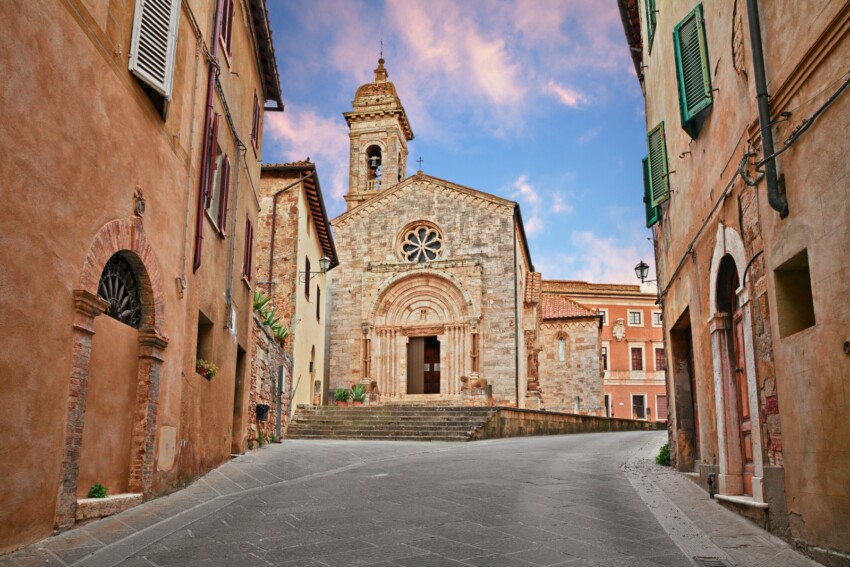
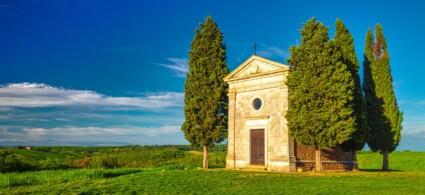
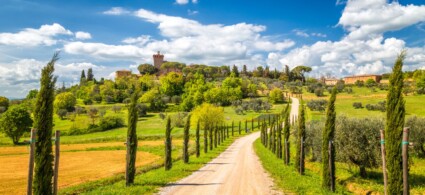
Green, golden yellow, white and rose are the colours that paint the palette of San Quirico d’Orcia: the pale green of meadows and the deep green of cypress trees, the warm gold of sunflowers and ripened fields in summer, the white of winding lanes crossing the hills, the rose-tinted stone of historic buildings.
This charming walled town crowned atop a gentle hillside epitomises postcard-perfect Tuscany and is undoubtedly one of the must-see villages in Siena province.
It’s an ideal base for exploring the Val d’Orcia, an enchanting rural area in southern Tuscany famed for its soft, rolling landscape – best appreciated on a leisurely drive or motorcycle tour. Before you lie sweeping vineyards, olive groves and cultivated fields, punctuated here and there by a small village, castle or ancient church.
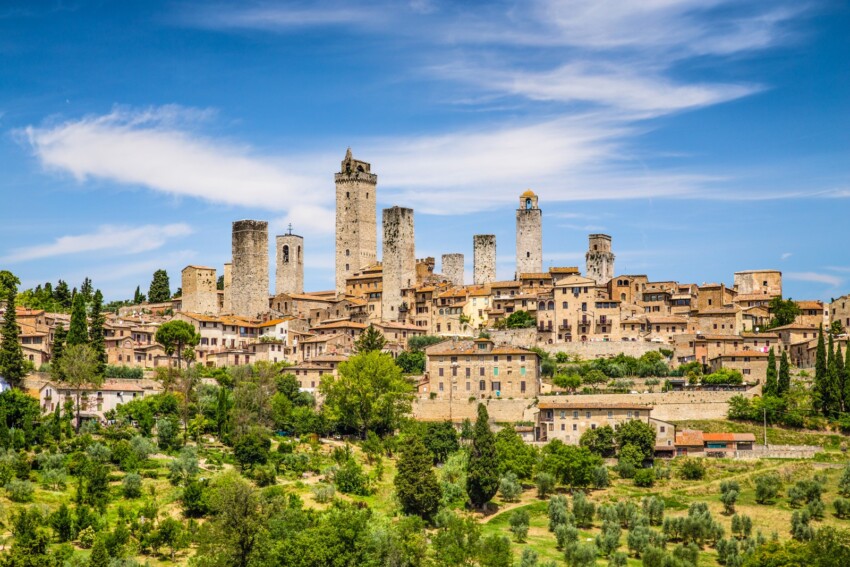
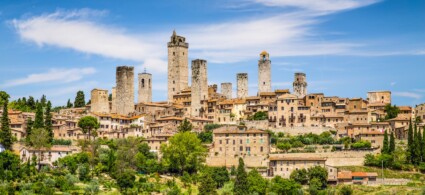
The village of San Gimignano announces itself from afar, recognised by its 13 towers that pierce the sky. Reaching skyward, almost competing to see which stands highest, they create a striking silhouette – remarkable when you consider these are but a fraction of the towers that once graced the village (estimates suggest 72 once stood here).
Located in the north-western part of Siena province, considered medieval Tuscany’s heart, San Gimignano is among the most visited villages in Tuscany and should definitely feature in your itinerary if you love towers, walls, gateways and ancient palaces. The town experienced economic decline during the Renaissance, and this fortunate turn preserved its medieval character intact.
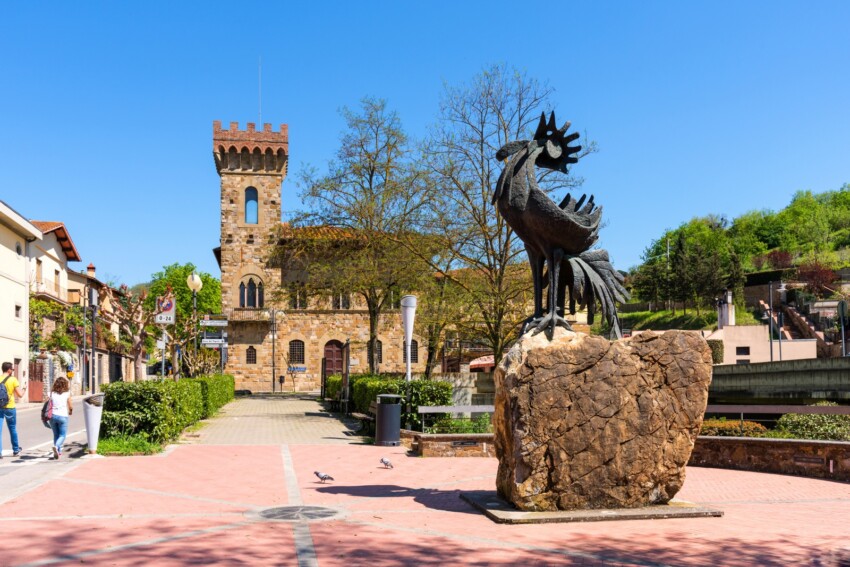
Another recommended area for a Tuscan itinerary by car or Vespa is the Chianti region, the zone between Siena and Florence where Italy’s most famous red wine abroad is produced. The entire region can be explored in two days following the Chiantigiana route: several versions exist, with the classic route starting from Impruneta.
Short on time and want to visit just one village? Greve in Chianti is an excellent choice. Like other Chianti villages, it boasts a characterful medieval centre brimming with wine bars, restaurants and shops selling local specialities. Better still, there’s an interesting Wine Museum established by a local farm that charts the wine-making process and the evolution of production techniques.
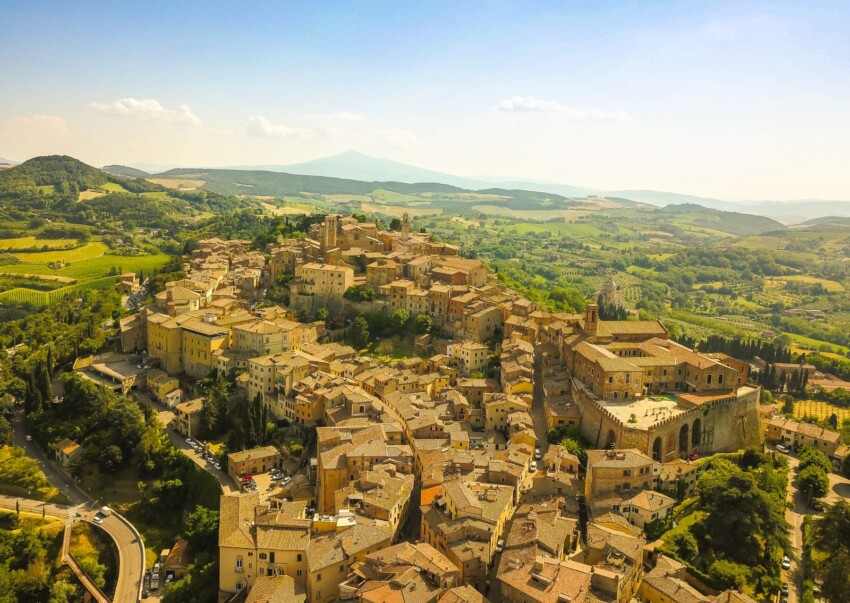
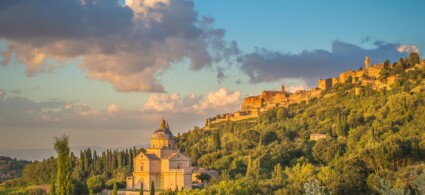
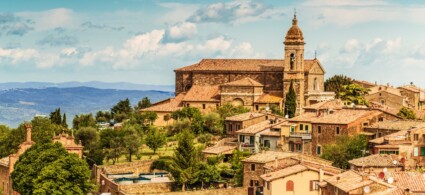
Another famous Tuscan wine lends its name to Montepulciano, a poetic village nestled among gentle hills in the southern reaches of Siena province, almost on the Umbrian border.
Cradled in the soft rural landscape of the Sienese countryside, Montepulciano is a magnificent vantage point: from its houses and terraces you can admire splendid views across the Val d’Orcia and the Valdichiana.
The historic centre brims with medieval and Renaissance palaces and churches, complemented naturally by wine bars and restaurants serving excellent local wines.
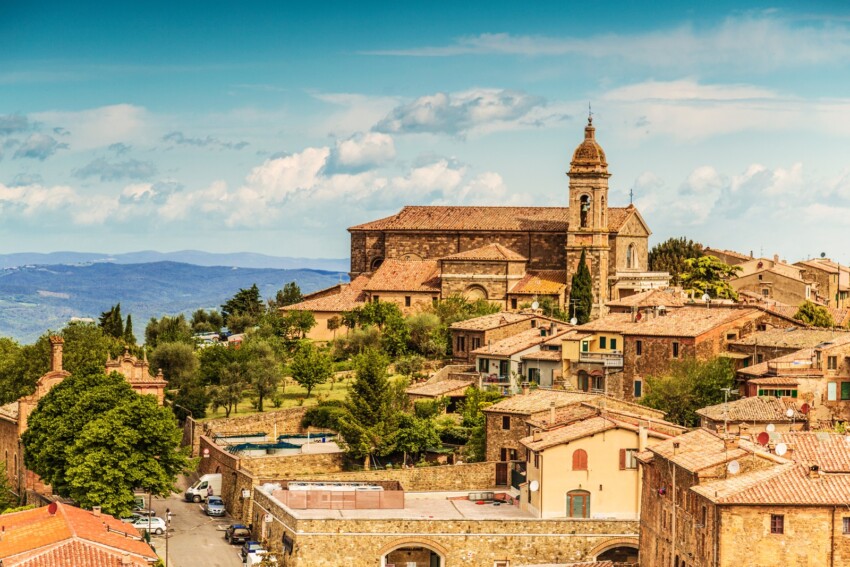
We complete our trio of must-visit villages on a Tuscan wine tour with Montalcino, whose fame is inseparable from the Brunello wine. Less than 40 km from Montepulciano, you can comfortably explore both villages in a single weekend.
Most visit for the wine bars, but Montalcino offers far more: art, history, panoramic views and cultural events.
The town is enclosed within sturdy, well-preserved walls. Its defining landmark is the Rocca, an austere medieval fortress that in July becomes an exceptional venue for the thrilling Jazz & Wine Festival.
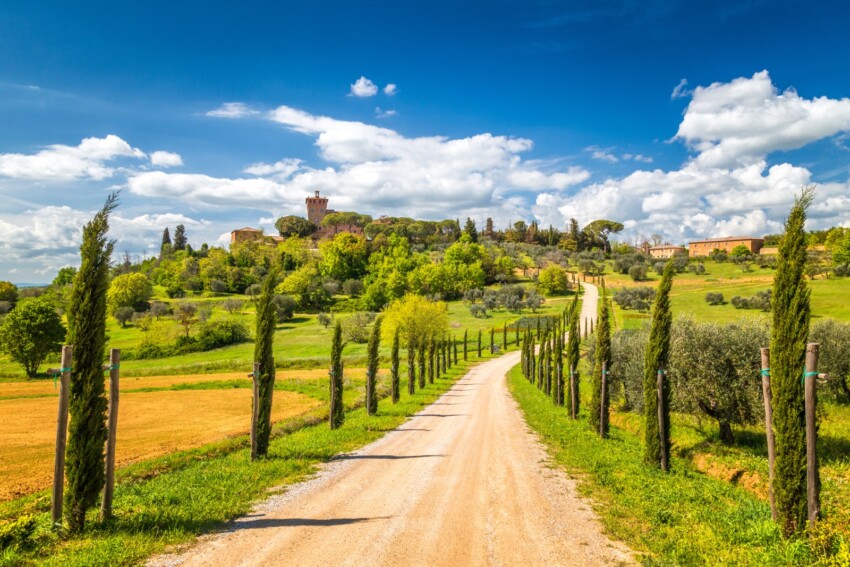
If the Middle Ages feel a touch restrictive and you prefer the harmonious, elegant beauty of the Renaissance, add Pienza to your plans – the ideal city envisioned by Enea Silvio Bartolomeo Piccolomini, better known as Pope Pius II.
One of the fifteenth century’s most influential pontiffs and a profound scholar of Latin and Greek culture, Pius II transformed his birthplace – once a humble hillside village – into a city embodying classical philosophy and Italian Renaissance aesthetic principles. His grand vision resulted in a harmonious ensemble of elegant buildings we can still admire today.
Pienza is also essential for all food-loving travellers: it’s the home of the renowned Pienza pecorino cheese and other delicious local products.
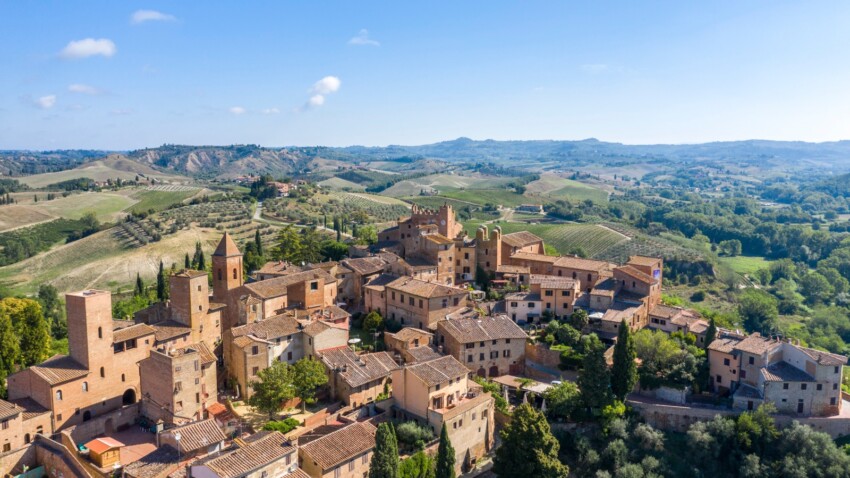
Certaldo is one of the Val d’Elsa’s most enchanting villages, another area of stunning rural landscapes between Siena and Florence.
Awarded the Orange Flag by the Italian Touring Club, the village divides into an upper section – the historic centre – and a lower, more modern area. The historic nucleus is enclosed within walls with three entrance gates.
Certaldo is renowned as the birthplace of Giovanni Boccaccio, one of Italian literature’s founding fathers. The celebrated writer’s birthplace still stands and has been converted into a museum.
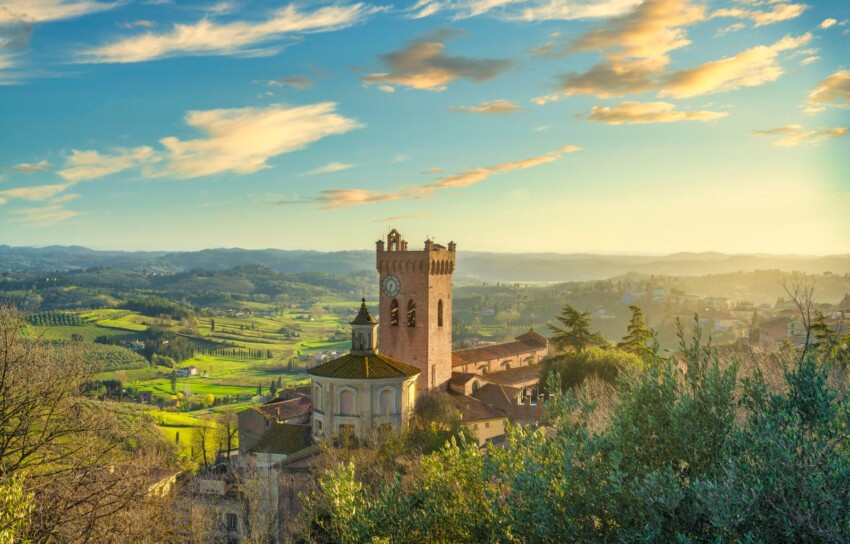
A journey through Tuscany’s varied and delicious food and wine world must include San Miniato, the celebrated city of white truffles nestled between Pisa and Florence.
It’s a slow-travel destination perfect for those seeking escape from modern life’s frenzy, instead savouring life’s simple pleasures: good food, beautiful landscapes, and friendly conversation with locals.
Like all Tuscan villages, San Miniato brims with history and art. Among its many cultural attractions stand the Rocca of Frederick II with its iconic tower and the Cathedral featuring a facade decorated with ceramics depicting the Great and Little Bear constellations.
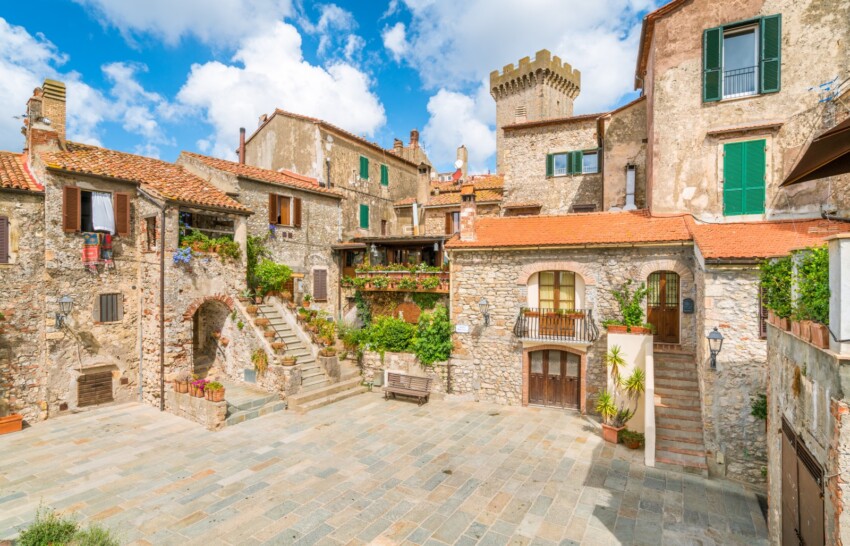
Coastal Tuscany is far from lacking charming historic villages. One of the Maremma‘s most renowned settlements – that expansive coastal zone stretching from central-western Tuscany into Lazio – is Capalbio: a classic medieval village crowned atop a hill just kilometres from the beach.
The landscape seen while strolling Capalbio’s walls differs markedly from the Val d’Orcia or Chianti region. Before you spreads a plain stretching to the sea; few olives and vines here – instead, Mediterranean scrubland dominates the view.
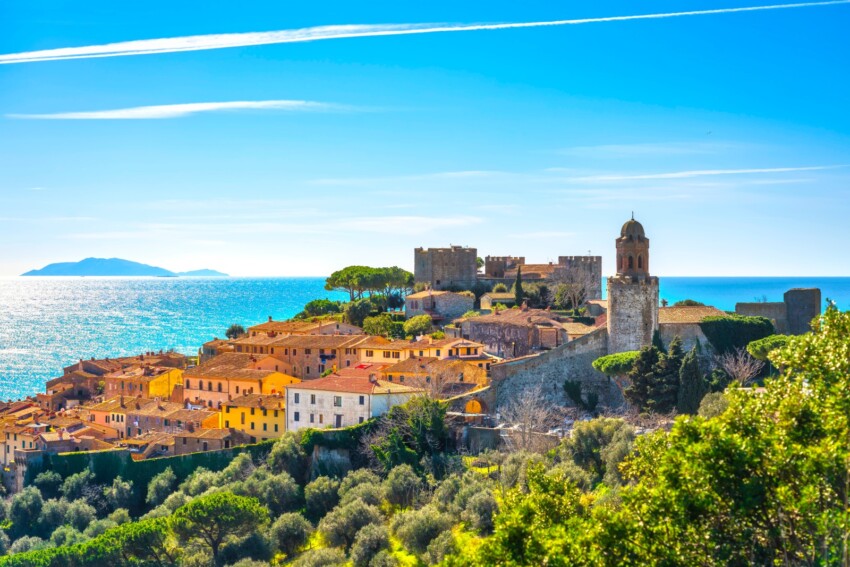
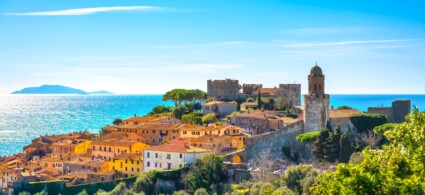
Another Grosseto Maremma location letting you combine beach and romantic bygone atmospheres in one holiday is Castiglione della Pescaia, a delightful historic village perched along a clifftop promontory.
Castiglione della Pescaia’s two top attractions are the Aragonese Castle crowning the promontory – a magnificent vantage point overlooking the azure Tyrrhenian Sea – and the long sandy beaches catering to all tastes, from well-serviced facilities to peaceful, unspoiled stretches.
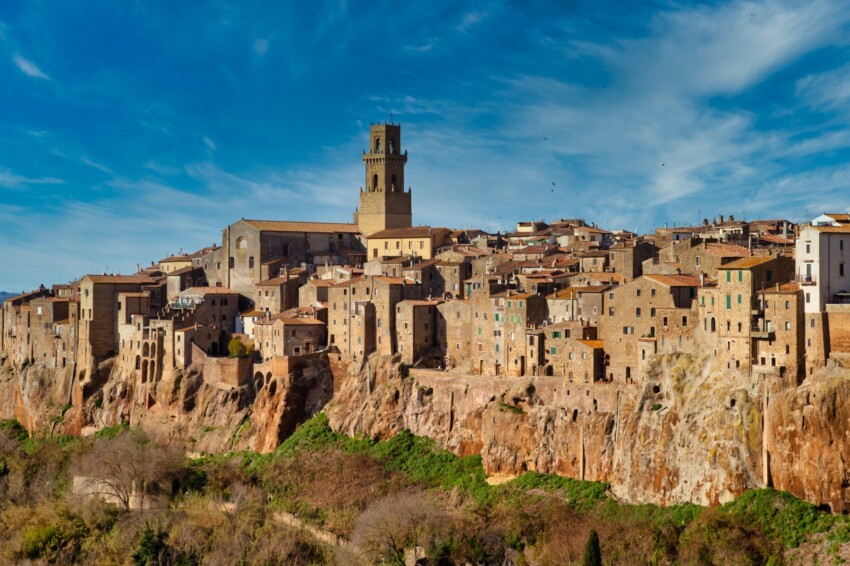
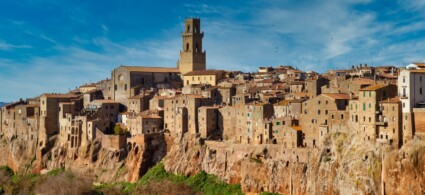
At first glance from a distance, Pitigliano might seem just another beautiful medieval Tuscan village. It’s actually a unique case, distinguished from its neighbours by two defining characteristics.
First, the entire town is carved from tufa, built on a vertiginous vertical cliff face: its buildings appear as a natural extension of the tufa wall itself.
Second is the presence of a fascinating Jewish ghetto, legacy of a substantial Jewish community that settled in Pitigliano during the fifteenth century. For this reason the village is also known as Little Jerusalem.
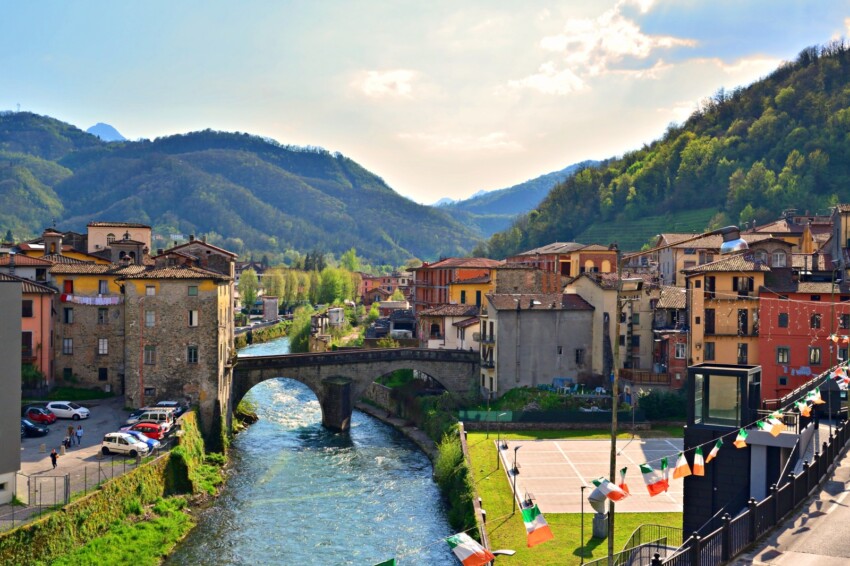
About 40 km from Lucca, Castelnuovo is the essential stop in Garfagnana, the part of northern Tuscany between the Apuan Alps and Versilia: a lush region rich in nature reserves perfect for exploring on foot or by bike.
Castelnuovo di Garfagnana’s defining attraction is the Rocca Ariostesca, a mighty trapezoidal fortress dominating the central square; the building’s name honours Ludovico Ariosto, the poet and author of Orlando Furioso who governed Castelnuovo from 1522 to 1525.
Also worth visiting are the Cathedral, likewise in the historic centre, and the Fort of Mont’Alfonso, nearby.
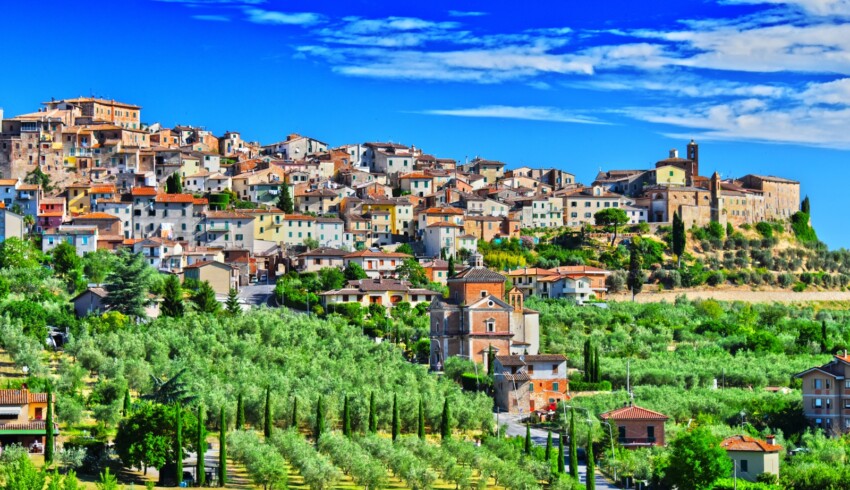
Among Tuscany’s spa towns, Chianciano is the one that has best preserved its medieval character. Known to the Etruscans and Romans for the healing properties of its waters, Chianciano Terme is today a charming medieval village brimming with cultural attractions.
Before taking a dip in the sensory spa waters, it’s worth exploring the historic centre and its fascinating museums: the Municipal Archaeological Museum of Waters and the Art Museum; the latter features both ancient and contemporary art sections, along with the Clock Tower.
Chianciano Terme also makes an excellent base for exploring south-east Tuscany and Umbria by car or bicycle.
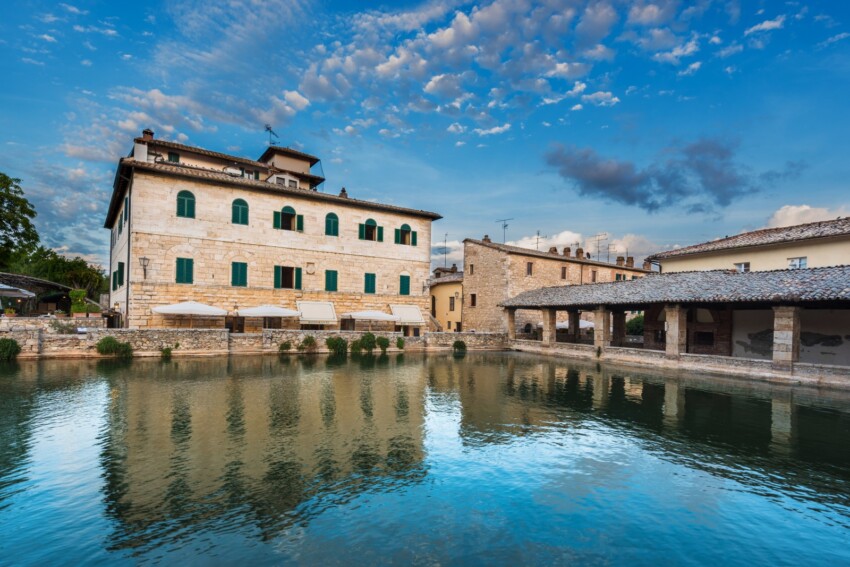
Less glamorous and perhaps less well-known than Chianciano, Montecatini and Saturnia, Bagno Vignoni is a Tuscan spa town with a uniquely captivating charm. The main square of the village is almost entirely occupied by a naturally heated pool measuring 49 metres long, dating back to ancient times; surrounding the pool are traditional stone houses with a rustic yet romantic appeal.
Whilst bathing in the central piazza’s pool isn’t permitted, you can instead unwind in the swimming pools of the luxury spa hotels in the surrounding area.
Following the water’s flow from the central basin, you can reach the Mill Park, a complex of ancient mills, gorges and man-made channels that have ensured the town’s water supply throughout the centuries.
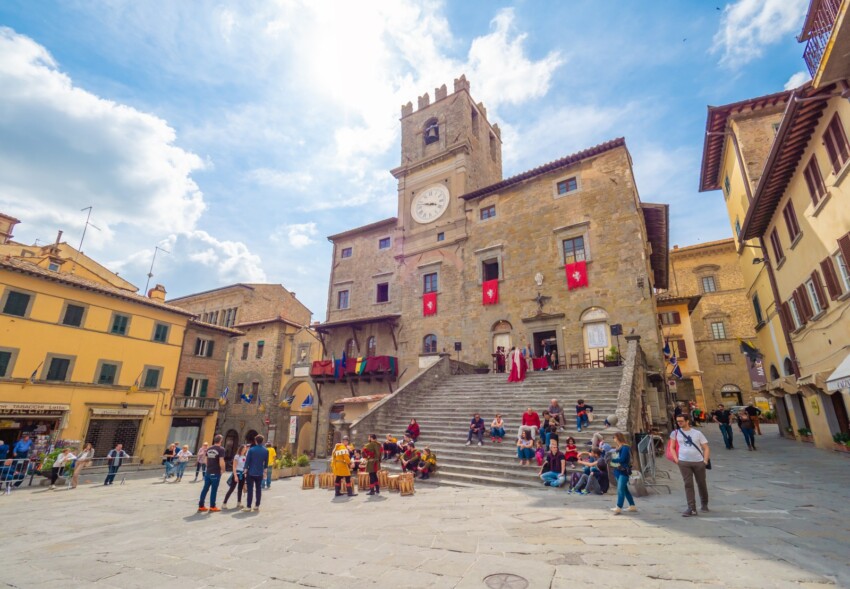
Cortona is one of the top villages in Arezzo province. We’re in south-east Tuscany, almost on the border with Umbria: the shores of the romantic Lake Trasimeno can be reached by car in under half an hour. Splendid views across the Valdichiana valley with the lake in the distance can be enjoyed from the village’s scenic viewpoints.
Despite being frequented by many celebrities – including Jovanotti, who visited with his family as a child and later made it his home – Cortona is refreshingly unpretentious, maintaining the simple, relaxed lifestyle typical of Tuscan villages.
In the following map you can see the location of the main places of interest mentioned in this article.
 Hotel
Hotel  Budget accommodations
  Apartments
  Family Hotel
  Luxury Hotel
  Resorts