Pisa: Entrance Ticket to Leaning Tower & Cathedral
13.832 reviews
Go directly to the Leaning Tower at your reserved entrance time, climb up the tower at your own pace and avoid the long lines at the ticket office.
Buy now
From 24,00€ per person
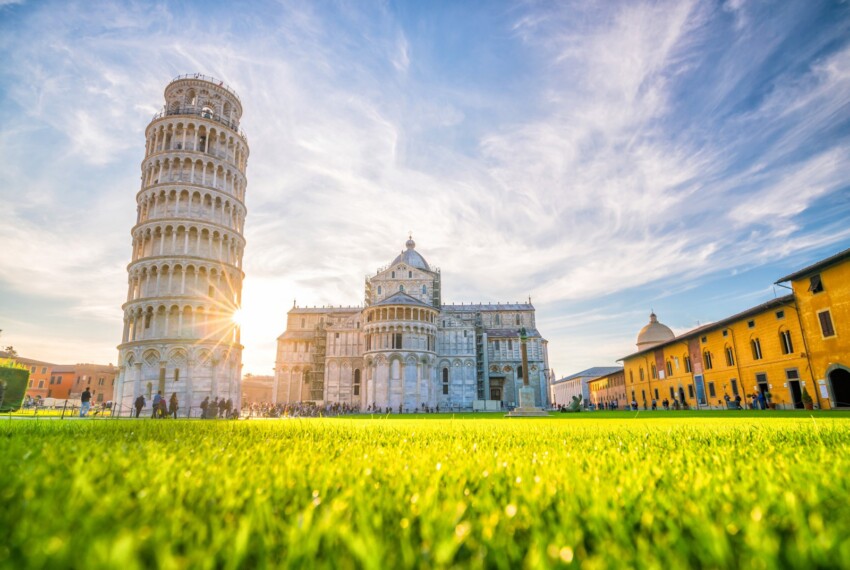
Pisa and the Leaning Tower are inextricably linked, rather like Paris and the Eiffel Tower. This is evident from the fact that in the collective imagination, the city’s most famous bell tower has no official name – it’s simply “the Tower of Pisa”.
There are other leaning towers in the world, but none is quite as beautiful or as iconic, having become a monument symbolising Italy alongside other architectural wonders renowned worldwide, such as Rome’s Colosseum or Venice’s Rialto Bridge.
That’s enough comparisons – it wouldn’t be fair to Pisa. It’s an extraordinary city that deserves proper attention: true, the most famous attractions face each other and can all be visited in half a day, but Pisa is far more than Piazza dei Miracoli, and rushing through it would be a real shame. Spend a full day here, or even better, an overnight stay. There are plenty of good reasons – here are just a couple.
Pisa is a city of science and learning: birthplace of Galileo Galilei, it’s home to the Scuola Normale di Pisa – one of Italy’s most prestigious universities – and the National Research Council.
It was one of the four Maritime Republics alongside Amalfi, Genoa and Venice, and its maritime trade brought enormous wealth to the city, enabling the construction of magnificent palaces that we can still admire today. It remains a dynamic and modern city, with a lively nightlife and plenty of charming bars and restaurants.
Have you ever thought of Pisa as a seaside destination? The beach resort of Marina di Pisa is just a dozen kilometres from the city centre. Keep this in mind: it’s rather nice to spend a few hours on the beach after visiting so many museums and monuments.
A visit to Pisa starts for everyone at Piazza dei Miracoli… and for many it ends there. Don’t relegate Pisa to a rushed visit: there’s so much to see and it’s all wonderful. Here are the attractions you shouldn’t miss.
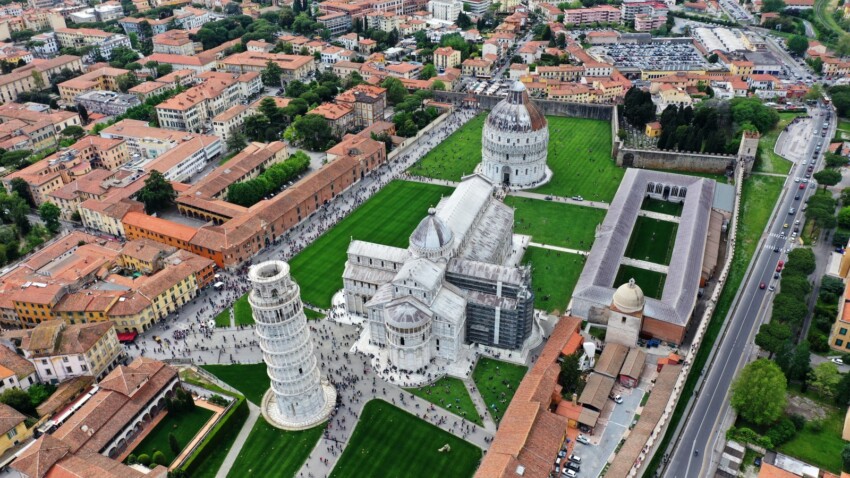
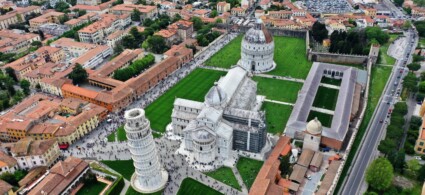
The Pisa Cathedral Square, or Piazza dei Miracoli, is a truly incredible place where you can observe and visit the main attractions of this Tuscan city. Within this enormous square you’ll find no fewer than 4 of Pisa’s principal sites of interest:
The square’s beauty is such that UNESCO included it in its World Heritage List from 1987 onwards.
Piazza dei Miracoli, with its distinctive rectangular layout and the vast expanse of grass upon which the 4 monuments stand, is not located in Pisa’s city centre but rather on its outskirts, towards the north-west. Needless to say, despite this characteristic, it remains by far the most visited area of the city, attracting millions of tourists every year.
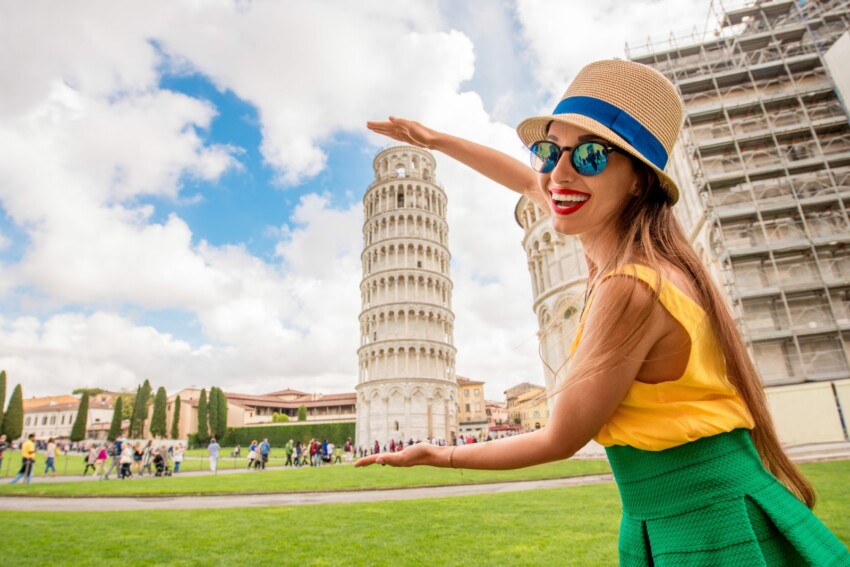
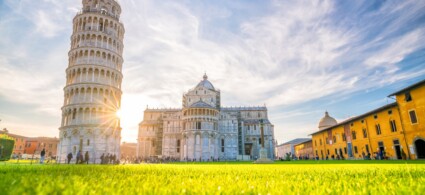
The city’s main attraction is the Tower of Pisa, or Leaning Tower, a veritable symbol of Pisa throughout the world. It’s the bell tower of the Cathedral of Santa Maria Assunta, begun in 1173 on soft ground that caused it to lean from its very inception. Surprisingly, this very fact made it unique in the world, and it has been proposed as one of the seven wonders of the modern world.
Located in the heart of Pisa, in Piazza dei Miracoli, the Tower can also be visited from within upon payment of an entrance fee. As you climb towards the top, you’ll experience the lean firsthand whilst enjoying extraordinary views of the Cathedral and Pisa’s city centre.
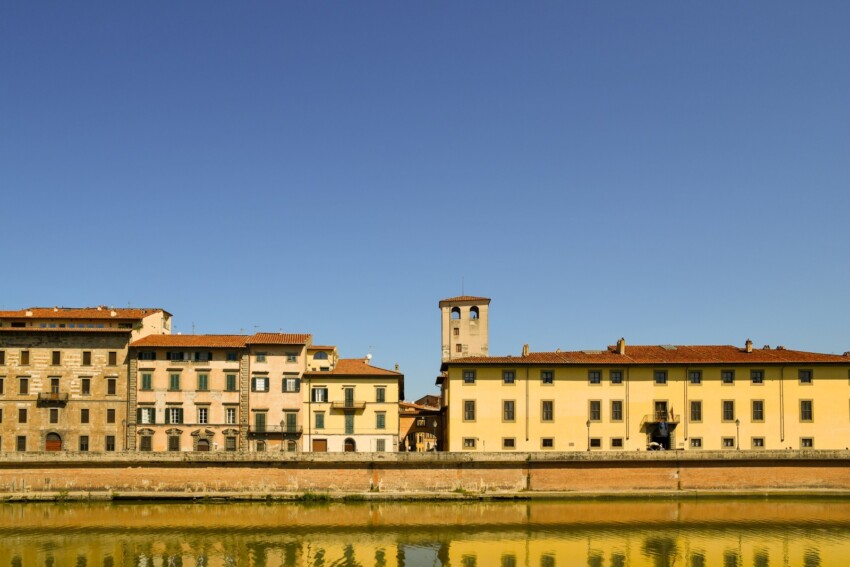
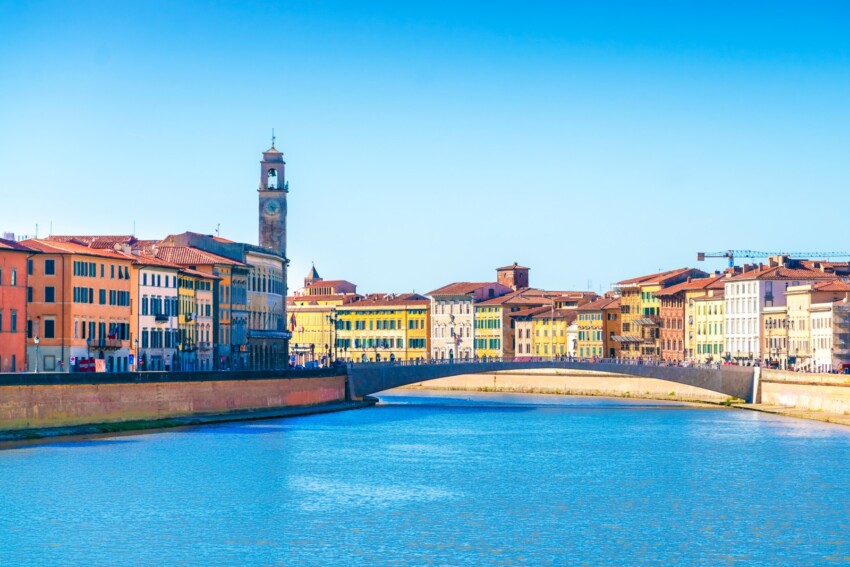
Whilst Piazza dei Miracoli is besieged by tourists daily, locals tend to congregate along the Lungarni.
As the name suggests, these are thoroughfares that run alongside the River Arno: flanked by elegant palaces, many of which house shops, bars and restaurants on the ground floor, they’re popular meeting places both day and night.
At one time, they were residential areas for wealthy families, which explains the abundance of fine buildings; unfortunately, many were rebuilt in the latter half of the nineteenth century.
The lungarni aren’t limited to Pisa’s city centre but extend all the way to where the river meets the Tyrrhenian Sea, taking on different names in different sections. The most famous is Lungarno Mediceo, though the list is long and includes: Lungarno Pacinotti, Lungarno Simonelli, Lungarno Galilei, Lungarno Sidney Sonnino, Lungarno Buozzi, Lungarno Fibonacci and Lungarno San Ranieri.
Among the architectural gems you can admire whilst strolling along the lungarni are the Palazzo dei Medici, the Palazzo Toscanelli, the Church of San Matteo in Soara and the Church of Santa Maria della Spina.
16 June is a special date to visit the lungarni: on this day the Luminara di San Ranieri takes place, and the beauty of the area is heightened by the natural light of hundreds of flickering candles.
The other nerve centre of Pisan civic life is Borgo Stretto, simply called “Borgo” by locals: it’s a characteristic arcaded street lined with elegant medieval and Renaissance palaces alongside numerous bars and cafés with outdoor seating.
The centre of the street is marked by Piazza delle Vettovaglie, where a market has been held for centuries; at the end of the arcades opens Piazza del Pozzetto, also called Borgo Largo.
There are many fine buildings to admire during a stroll through Borgo Stretto: the most beautiful are the Casino dei Nobili, the Church of San Nicola and the Church of San Michele degli Scalzi. Don’t miss the “little sisters” of the Tower of Pisa, two leaning towers situated near the churches mentioned above.
Another square you shouldn’t miss in Pisa, second in importance and beauty only to Piazza dei Miracoli, is Piazza dei Cavalieri, which for centuries was the seat of power; today it’s considered the cultural heart of the city as it’s home to the prestigious Scuola Normale di Pisa.
It gets its name because it was once the headquarters of the Order of the Knights of St Stephen, founded at the behest of Cosimo I de’ Medici. It was designed by Giorgio Vasari, one of the most important artists of the sixteenth century.
This square too is graced by magnificent monuments, including the Palazzo dell’Orologio, the Church of Santo Stefano dei Cavalieri and the Statue of Cosimo I.
Built by a wealthy Pisan family in 1159, the Royal Palace of Pisa was enlarged and embellished by the Medici in the second half of the sixteenth century. For centuries it served as a noble residence, first under the Medici and then under the Grand Dukes of Tuscany. The current name, however, refers to the House of Savoy, Kings of Italy, who used the palace after Italian unification.
The building is particularly notable as the place from which Galileo Galilei demonstrated his ingenious invention – the telescope – to Florentine nobility.
It now houses the National Museum of Royal Palace, which displays artistic masterpieces collected by the families who resided there.
You’ll gain a real sense of Pisa’s maritime power if you visit the two arsenals in the city, both located along the lungarni.
The Republican Arsenals are the oldest and were dedicated to the construction and repair of galleys, the fast vessels typical of the Pisan Maritime Republic.
In the Medici Arsenals, larger war galleys were built instead; they remained operational until the twentieth century. Severely damaged during the Second World War, they have since been restored and now serve as exhibition spaces.
Pisa isn’t merely ancient splendour: it continues to be fuelled by cultural vitality. Proof of this is the famous mural Tuttomondo, the last work created before his death by celebrated American street artist Keith Haring.
It’s a gigantic, colourful mural covering a 180 square metre wall with no doors or windows in a high-traffic area: the rear wall of the Convent of the Servants of Mary, situated behind a church overlooking the intercity bus station.
Created in the summer of 1989, the mural depicts 30 figures touching one another, interlocked like puzzle pieces; each has a symbolic meaning.
Keith was invited to create the work by a young Tuscan art enthusiast who had met him by chance in New York two years earlier; he used only paints generously donated by a local company.
The Botanical Garden of Pisa is also well worth a visit – it’s the world’s oldest university botanical garden (not to be confused with the one in Padua, which is the oldest still in its original location).
Founded in 1543 on the banks of the Arno, it was relocated to its present site about fifty years later and progressively expanded. It’s currently divided into seven areas, each hosting one or more botanical collections: in total, around six thousand plants grow within Pisa’s botanical garden, originating from all five continents.
There’s also a Botanical Museum displaying documents and objects related to the teaching of botany in the eighteenth century.
In the following map you can see the location of the main places of interest mentioned in this article.
Like Florence, Pisa is a very touristy city and offers a wide choice of hotels and bed & breakfasts to suit all budgets, from hostels to luxury hotels; however, Pisa’s accommodation is generally more affordable than that of the regional capital.
Bear in mind that it attracts many visitors, so despite the large number of hotels, it’s advisable to book in advance, especially during peak season.
Generally, tourists prefer to book a hotel near Piazza dei Miracoli to be within easy walking distance of the city’s main monuments. This isn’t necessarily the best area, particularly if you’re price-conscious: accommodation in Santa Maria, the area that includes the famous Leaning Tower, is the most expensive.
Given that Pisa is a small city and the main attractions are easy to reach, you might also consider hotels, bed & breakfasts and apartments in other areas.
The recommended area for those seeking budget accommodation in Pisa is Sant’Antonio, situated south of the Arno; it’s also convenient if you’re travelling without a car as it’s very close to the central railway station.
If you prefer peace and quiet, try San Martino, a neighbourhood away from the busier streets; a good compromise is San Francesco, an area slightly more tranquil than Santa Maria yet at the heart of the city’s cultural scene, where you’ll find cinemas and theatres.
If you’re travelling by car, you might consider staying in a farmhouse or villa outside the city centre to combine cultural visits with relaxation in the countryside. If you prefer a sea-view room, look for accommodation in Marina di Pisa.
After Florence, Pisa is the most easily accessible city in Tuscany. Like the regional capital, Pisa has an airport served by numerous budget flights to and from many Italian cities.
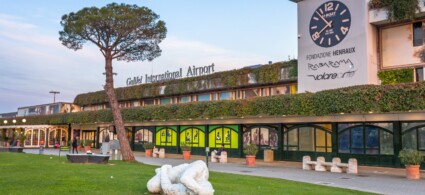
The Galileo Galilei International Airport is just 3 km from the city centre: given this short distance, a taxi ride is quite affordable, and public transport – both buses and trains – works very well; you can even walk if you don’t have heavy luggage.
You can easily reach Pisa by car from several directions thanks to the A11 motorway (Florence-Seaside), which crosses the Tuscan interior for about 80 km to the Pisan coast. You can access the A11 from the A1 motorway (Milan-Naples), Italy’s longest motorway; the A11/12 connector allows quick travel to and from Liguria.
Getting to Pisa by public transport is also very convenient and saves you the hassle of finding city centre parking. The railway station is right next to the city centre and is served by frequent trains to Florence, from which you can quickly reach all the main towns in Tuscany and central-northern Italy.
Bus travel is also an option worth considering: there are many bus connections to regional and national destinations.
What's the weather at Pisa? Below are the temperatures and the weather forecast at Pisa for the next few days.
Pisa is a municipality in Tuscany and the capital of its namesake province. It is located in the north-western part of Tuscany, approximately 80 km from Florence, 25 km from Livorno and 120 km from Siena.


 Hotel
Hotel  Budget accommodations
  Apartments
  Family Hotel
  Luxury Hotel
  Resorts