MORF suites-THE LAB
Casale Marittimo - Via Cecinese, 70
Book now
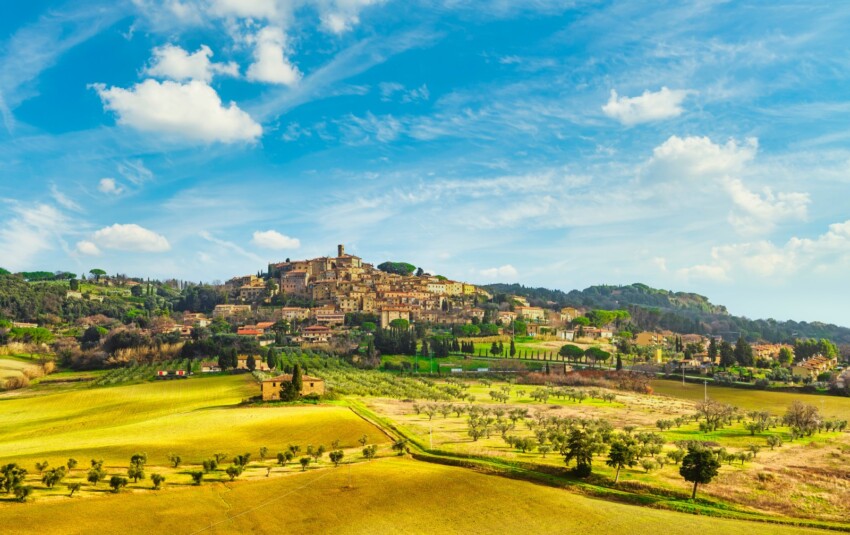
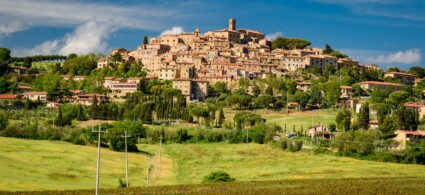
Casale Marittimo sprawls south of the River Cecina on an inland hilltop known as Poggio al Pruno, commanding sweeping views across the Tyrrhenian coast. The sea, pine forests and beaches lie just ten kilometres away, and the islands of the Tuscan archipelago – Elba, Capraia and Gorgona – are clearly visible. The medieval old town has remained virtually unchanged to this day, displaying remarkable architectural features of considerable interest. Of the castle, an ancient fortification defending the coast and valley, the remains of its walls still stand. This ancient village, nestled within the green hills of the Pisan countryside, offers wonderful opportunities for walking, horse riding, cycling and nature experiences. The foreign population in Casale has grown steadily. The municipality, with roots stretching back to the ancient Etruscan period, boasts important archaeological finds, including the famous “tholos” tomb with its cylindrical drum and central pillar dating from the 6th century BC (now housed in Florence’s Archaeological Museum). During the Roman period, it was also an important centre, yielding the remains of a significant villa believed to date from the golden age of the Empire. From medieval Casale, you can still see the castle ruins (particularly the walls incorporated into the urban fabric) and the Palazzo Rocca. Casale shows the typical development of a settlement built around a residential outcrop, expanding in successive rings following the line of the town walls. Evidence of two distinct castles has been found – an older “Casale Vecchio” and “Casale Nuovo”, corresponding to present-day Casale Marittimo, possibly built after the first was destroyed. Casale Nuovo, capital of the Pieve, remained a fief of the Counts Della Gherardesca until the 15th century, after which it came under Florentine rule.
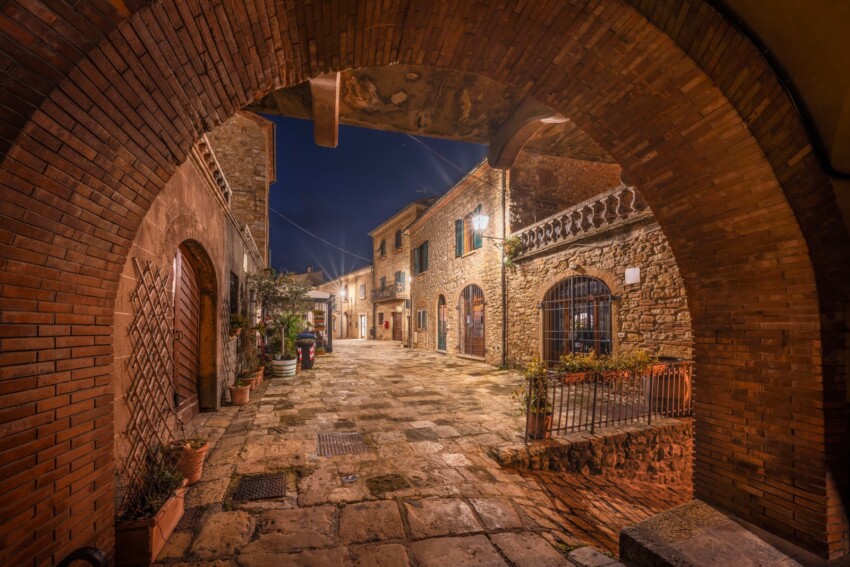
This house stands near the Clock Tower (the former Civic Tower) and formed part of the town walls. It is one of the oldest buildings in the village, as the camarlingo was a kind of treasurer responsible for tax collection and appointed directly by the feudal lord.
With the parish priest’s permission, you can visit the “Roman room” inside, which houses further artefacts from the Roman villa, including a mosaic floor.
The palazzo stands opposite the Town Hall and was rebuilt in 1940 using materials from the Roman villa, so much so that Roman capitals and doorframes are recognisable in its façade.
Of considerable interest are the finds from the Etruscan Necropolis of Casa Nocera, featuring tombs from the 7th and 6th centuries BC whose rich burial goods speak of a wealthy and powerful ruling class. Most famous is the “tholos tomb” dating from the 5th century BC, discovered by chance in 1896 at “Poggiarella”: a circular tomb measuring 3.30 metres in diameter with a “dromos” (corridor) and “tholos” (false dome) covered by an earthen mound. In 1937, in the localities of La Pieve and Il Poggio, the remains of two ancient Roman villas were found, testament to the transition from the Etruscan to the Roman period. According to local legend, two castles existed in the area – Casale Vecchio and Casale Nuovo – although no archaeological evidence supports this claim.
Casale Marittimo spreads south of the River Cecina on an inland hilltop called Poggio al Pruno, from which you can admire a vast panorama of the Tyrrhenian coast. Reliable records of Casale begin in the feudal era, around the year 1000, a period to which traces of two distinct castles belong: an older Casale Vecchio and Casale Nuovo corresponding to present-day Casale Marittimo, probably built following the disappearance of the first. “Casale Nuovo” displays the typical growth pattern of a village built around a residential outcrop: evidence of this includes development in successive rings corresponding to the town walls, as well as the urban sprawl beyond them, arranged in an agglomeration that retains the colour and fascinating imprint of antiquity. To the north and west you can discover the remains of what were once mighty structures, built by the Pisans, designed to defend the coast and the important Via Aurelia from the threats posed by the bishops of Volterra. In the latter half of the 1800s the settlement underwent significant changes due to population growth: in 1854 the south gate was demolished to build the Civic Tower with its clock; in 1872 construction began on the new church, which required demolishing part of the town wall and the old town hall to make way for a new road. The old church was converted into a town hall. From medieval Casale, the castle remains are still visible, particularly the walls incorporated into the urban fabric and the Palazzo Rocca.
Casale Marittimo, in the province of Pisa, sits at 214 metres above sea level. “…on the right a ridge of hills branches off, stretching towards the sea, and on its furthest crest sits modern Casale. In its highest part there are many horizontal layers of limestone, interspersed with whitened tuff layers…all the buildings of Casale are made of limestone, which contains many shells and is quarried in those nearby areas, in a place called prato…”
So wrote G. Targioni Tozzetti in 1770 during his travels through Tuscany.
The area, rich in mineral springs, game, salt, combined with its mild climate, has favoured human settlement since the earliest times.
Of considerable interest are the finds from the Etruscan Necropolis of Casa Nocera, with tombs from the 7th century BC whose rich burial goods testify to a wealthy and powerful ruling class. Most famous is the Tholos dating from the 5th century BC, discovered by chance last century in the “Poggiarella” locality, already plundered in antiquity. In the area, in the localities of La Pieve and Il Poggio, you will find the remains of two ancient Roman villas, which bear witness to the transition from the Etruscan to the Roman period. The medieval castle is mentioned in documents from as early as 1004 and belonged to the Della Gherardesca family (Count Gherardo and his wife Giulia donated a church and thirteen farms “that are in the court of Casale” to the monastery of S.M. di Serena of Chiusdino).
According to local legend, two castles existed in the area – Casalvecchio and Casale Nuovo. No archaeological findings support this belief. Only the remains of Etruscan and Roman dwellings from the 7th to the 1st-2nd centuries BC have been found on the peak of Casalvecchio.
What did exist, above the ancient Roman villa, was the Pieve of S. Giovanni Battista, which was the mother church of the district, equipped with a baptismal font, and to which the Pieve of S. Andrea in Casale Nuovo, Guardistallo and Montescudaio were subordinate.
In 1363, during the war between Pisa and Florence, the church suffered severe damage, indeed it was “demolished and destroyed almost entirely”, so much so that in 1413, following a pastoral visit by the Bishop of Volterra, it appears “completely ruined” and therefore the baptisms of all the children from the nearby castles were held every Holy Saturday “at the baptismal font in the Pieve of S. Giovanni Battista in Santo Andrea di Casale”. Following the conquest of Pisa by Florence, Casale, like the other municipalities in the area, followed the fortunes of the Florentine Republic, received permission to constitute itself as a municipality and to adopt a statute.
The 1500s and 1600s lack particular accounts; these were centuries characterised by defence against Saracen pirate raids, struggle against the malaria that plagued the coastal plains and reached inland villages, periodic famines and epidemics, and the social and economic stagnation that distinguished this period of Medici Grand Ducal rule in these areas. All these factors certainly made life difficult for the population. In 1551 Casale had 245 inhabitants.
From 1642 comes news that the community resolved to fortify the walls to defend against pirate raids from the sea. In 1648, following Montescudaio’s example, Casale was given as a fief to the Ridolfi and in 1738 became part of the marquisate of Riparbella, granted in fief to Count Carlo Ginori.
At the beginning of the 1700s, the countryside was in a state of extreme poverty and backwardness. Vast lands remained reserved for the feudal lord’s hunting and forests advanced. In 1709 “it was proposed that it would be very necessary to obtain a doctor, given the bad air and the multitude of sick people who often die miserably without treatment”. Nevertheless, Casale was perhaps better off than many other villages since Targioni Tozzetti, who visited it in 1742, wrote that: “Modern Casale is the largest and healthiest castle in the entire Marquisate. The reason for its healthiness is not only a nearby spring of good water, but also the favourable situation on a hilltop outcrop that is elevated and very well ventilated”.
By 1745 the population had grown to 315 inhabitants. In 1777, with the reforms of Grand Duke Pietro Leopoldo, the process of land redistribution began and consequently its concentration in the hands of a few wealthy families: the names of the Cancellieri, Sparapani, Mannari and Marchionneschi families emerged in Casale, who subsequently held power in the municipality throughout the 1800s and into the first half of the 20th century. The concentration of lands and the spread of sharecropping brought an increase and improvement in agricultural production. In 1800 malaria still raged, country houses did not exist, wolves were so abundant that in 1810 a government decree lifted all hunting restrictions on wolves, but in the village the population was beginning to rise: there were 817 in 1833 and twenty years later, in 1854, they exceeded the thousand mark with 1070 people; by 1861 the number had risen to 1174. The progressive reclamation of the coastal marshes favoured agricultural development. In the latter half of the 1800s the settlement underwent some significant changes due to population growth: in 1854 the south gate was demolished to build the civic tower with its clock; in 1872 construction began on the new church, which required demolishing part of the town wall and the old town hall to make way for a new road. The old church was transformed into a town hall. The cemetery disappeared under the new bell tower, but a new Cemetery had already been inaugurated in 1855 along the road to Guardistallo. At the same time, the village beyond the walls had also grown, and at the beginning of the 1900s Piazza del Popolo, then called Piazza Cancellieri, was laid out. The village gradually assumed its present-day appearance.
In 1862, Casale, until then called Casale nelle Maremme, took the name Casale Val di Cecina; from 1900 it has been called Casale Marittimo.
In 1936 the population reached a peak of 1583; but in the 1950s the process of emigration to the developing plains centres, which were expanding rapidly and offered secure jobs, fixed hours and less arduous work than sharecropping, began. At the beginning of the 1960s, the phenomenon of abandonment of the land was at its height and the sharecropping system collapsed. Especially young people settled in the plains or emigrated to cities in the North.
By 1971 the population had fallen to 837. The risk of the village becoming “a place of old people” was only mitigated by the fact that many inhabitants, using money earned elsewhere, renovated village houses and equipped them with modern comforts.
The countryside too, following the purchase of farms by non-residents (particularly Swiss and German), resumed being cultivated with cereals, oil and wine, crops that characterise much of the Tuscan countryside.
The well-preserved medieval appearance of the village and its countryside have contributed to a strong tourism boost which has practically become the village’s primary source of income. Increasing numbers of tourists choose Casale Marittimo as a place to rest and holiday.
What's the weather at Casale Marittimo? Below are the temperatures and the weather forecast at Casale Marittimo for the next few days.
To see all the facilities and book accommodation in Casale Marittimo use the form below, entering the dates of your stay.
 Hotel
Hotel  Budget accommodations
  Apartments
  Family Hotel
  Luxury Hotel
  Resorts