B&B La Taccola
Castelnuovo di Val di Cecina - 14 Via Repubblica
Book now
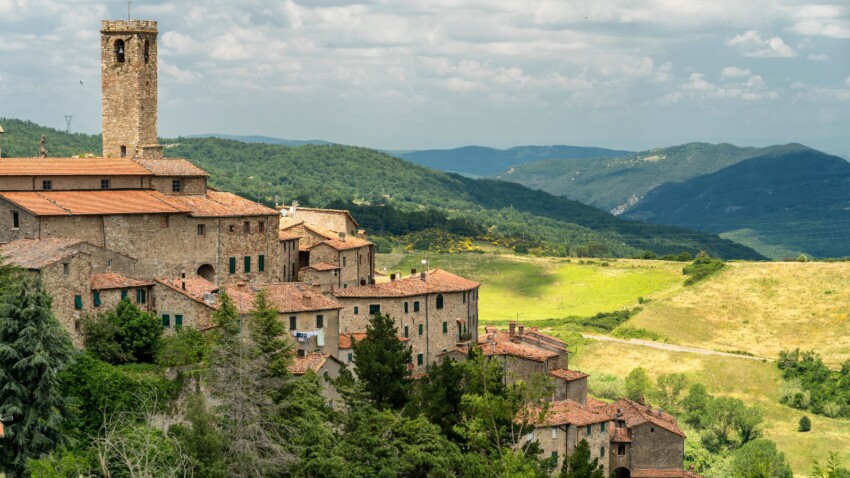
A medieval borough built on a steep rocky outcrop, with narrow winding streets leading up to the parish church, which retains Romanesque features. The village of Castelnuovo has a characteristically medieval appearance and presents itself as a most welcoming place, surrounded by woodland. It offers considerable tranquility, as it is not accessible by car.
Castelnuovo di Val di Cecina is a small village in the Metalliferous Hills, situated on the outer edges of the Maremma region, which opens towards the Tyrrhenian Sea and the island of Elba. Its medieval name was “Castri Novi de Montanea” (Castle New of the Mountain), an appellation far more fitting to the physical characteristics of this urban settlement. Its origins are uncertain, but certainly date back to the Lombard era (7th century), when this people carved out new roads in search of minerals and built a series of lookout towers and fortified strongholds along the route that wound from Volterra to Massa Marittima.
The municipality’s territory is characterised by the presence of notable archaeological sites from the Neolithic, Etruscan, Barbarian and medieval periods, as well as pre-millennial parish churches that bear witness to the establishment and spread of Christianity in this area. Indeed, following the course of the River Cornia, they travelled inland from the sea: St. Regulus, St. Cerbonius, St. Octavian, St. Justus and St. Clement, the African saints who evangelised Volterra and the Metalliferous Hills. An important pilgrimage route to Rome, opened by St. Peter, saw the presence of St. Roch and St. William, as well as abbots and hermits. After 1000, Castelnuovo was long a fief of the Alberti counts until the “revolution” of 1213, when the class of free men of Lombard descent (freiherren) succeeded in seizing power with the help of the powerful commune of Volterra, under whose protection the economy and civic life experienced considerable development.
Castelnuovo and its community were at the centre of conflicts over the possession of mineral resources (silver, sulphur, alum and vitriol) between the bishop-count and the free commune of Volterra for roughly two centuries, until 1429, when they finally entered the orbit of the Florentine Republic, following its fierce struggles and suffering invasions and sackings by imperial armies and mercenary troops in the service of enemy cities. At the end of the 15th century, Lorenzo de’ Medici and his court of humanists chose the thermal baths establishment of Bagno al Morbo to spend long periods taking the waters and resting. Given in feud as a marchesate to the Albizi family of Florence in 1639, it was rebuilt as an autonomous community in 1776 by Pietro Leopoldo I, the great Enlightenment sovereign who initiated the industrial and social renaissance of his territory. A destination for men of letters, geographers and scientists (Lucretius, Pliny, Dante, Ugolino da Montecatini, Leandro Alberti, Marullo, Busching, Miller, Mascagni, Hoefer, Giovanni Targioni Tozzetti, Maria Curie and many others), from 1818 onwards it experienced a new phase of economic development, following the advances of the borax industry carried out by Francesco de Larderel, a development that for nearly two centuries shaped its history, down to the present day.
The castle of Bruciano stood on the summit of a steep mountain south of Castelnuovo, and its remote origins can be traced back to the Lombard period (7th century). The castle was a fief of the Pannocchieschi counts around the 12th century. They ceded it to the Commune of Volterra in 1422. The church of St. Mary was subject to the Pieve of Commessano and is recorded as such in the “tithes” of the 13th–14th centuries. The farm, formerly owned by the noble Ricciarelli family of Volterra from 1727 to 1909, boasts an original oratory erected on a medieval spring and an older Etruscan-Roman settlement, in the first half of the 19th century; an oratory dedicated to St. Octavian and St. Mary, rich in evocative memories.
The Lombard castle is very ancient and is first mentioned in the 10th century. Here stood the feudal chapel and later the church of St. Bartholomew the Apostle, a suffragan of the Pieve of Commessano, which received a baptismal font in 1440; the font was fashioned from an Etruscan funeral cippus from the 7th century BC. In 1882 the church was enlarged and elevated to the status of archpriest. The religious history of Sasso is intertwined with the fortunes of St. Peter, St. Roch and St. William, and the latter saint spent a long time there. The ancient and precious relics were destroyed by fire, but in the parish church there remains an important painted panel from 1585, the work of an unknown local artist. Not far from the village, at the Lagoni, stands the modern chapel designed by Giovanni Michelucci (1958), an important work in the creative journey of this great Florentine architect. On the road to La Leccia, a left turning leads to the site of the “Aquae Populoniae”, an important Etruscan-Roman thermal city from the 3rd century BC, currently being excavated.
The village of Leccia is extremely ancient and its medieval history is fascinating. The castle church, dedicated to St. Bartholomew the Apostle, belonged to the “sesto di Montagna” (Mountain district) of the Pieve of Morba. Near the village a chapel or oratory of the Virgin Mary was erected to honour a vow related to an apparition of the Madonna in the “leccia forest”. Until a few years ago, the painting of the “Madonna of the Book” was kept here, a work by the painter Matteo di Pierantonio de’ Gondi from Leccia (1540–1632), a local man. Not far from the oratory stood a small chapel dedicated to the Madonna of Milk, near a thermal spring whose waters are still considered beneficial for women who have recently given birth. Devotion to the Madonna at Leccia remains very much alive, and since time immemorial her feast day has been celebrated on 14 June, invoking her protection against hail.
The sanctuary of the Madonna of the Book is located near the village. The sanctuary’s origins date back to 1472 when Lorenzo de’ Medici declared war on Volterra. The people of Leccia turned to the Virgin in prayer, until the moment when the Virgin appeared, promising peace. Thus arose the devotion, which still exists today, to the Madonna of Graces, also known as the Madonna of the Book. A short distance from the church is the Fonte del Latte (Milk Spring), a spring renowned for its ability to increase milk supply in nursing mothers.
The Ancient Baths of Bagnone are situated on the road between Sasso and Leccia. Within them we can find an extensive Etruscan-Roman thermal complex dating back to the 3rd century BC, which ceased operation in the late imperial period, bearing witness to the exploitation of local geothermal resources.
Montecastelli has Lombard origins and constituted an important lookout and defensive position on the mineral road that ran north to south through the Metalliferous Hills. However, the site was already frequented in the Etruscan era, as testified by some tombs from the Villanovan period (7th century BC) where early Christians practised their worship during the time of Arian persecution. Around the 11th century the village was fortified and divided between the comital families of the Aldobrandeschi and the Pannocchieschi. In the church were placed relics of Saints James and Philip, transferred from a nearby castellare, Bucignano. A bishop’s fief, long disputed by Volterra and Florence, and finally a free commune, it found itself at the centre of bitter wars over the possession of copper and silver mines. Its municipal statutes of 1427 are highly important and original. The church of the village, which houses a splendid painting by Cosimo Daddi, is a pure example of Romanesque architectural style and, together with the Pannocchieschi Tower, forms an evocative ensemble of great significance.
To see all the facilities and book accommodation in Castelnuovo di Val di Cecina use the form below, entering the dates of your stay.
 Hotel
Hotel 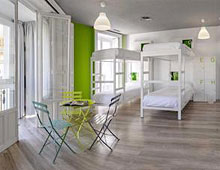 Budget accommodations
  Apartments
  Family Hotel
 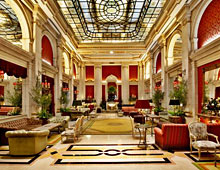 Luxury Hotel
 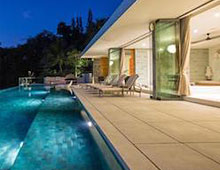 Resorts