Villa Conti
Fauglia - 8 Via Pontita 8
Book now
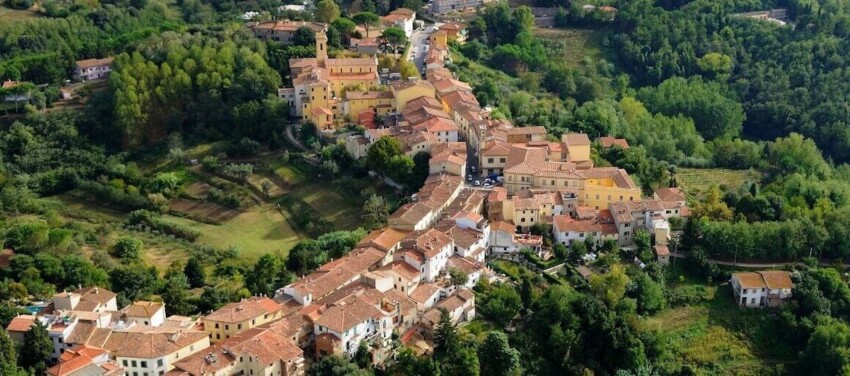
Fauglia has retained the character of a typical rural village, bearing witness to a peasant civilisation that has all but disappeared. Following the destruction of the castle in 1433 by the Florentines, the village gradually developed into the form we see today, spreading along the ridge of the hilltop.
Along the single street that runs through the settlement stand buildings and palaces constructed largely between the 17th and 19th centuries, during the area’s period of greatest prosperity. The main points of interest are the Church of San Lorenzo, the town hall and the bell tower of the old church. Worth visiting are the underground grain stores, recently discovered in Piazza del Mercato.
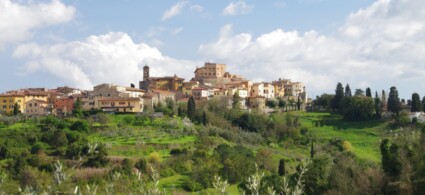
The surrounding countryside offers some of the most striking panoramic views in the Pisan Hills. The terrain is predominantly hilly, though there are also flat areas, such as those around the hamlets of Valtriano, known for its furniture makers, and Acciaiolo. Whilst agriculture was once the main occupation of most inhabitants, today, despite the continuing production of DOC wines, the predominant activities are commerce and the service sector.
Fauglia is renowned for its villas, where nobles, writers and artists have stayed. Among these stands out Villa Trovarsi, which belonged to the celebrated actress Marta Abba, who named it in remembrance of a Pirandello comedy dedicated to her.
Fauglia is home to two museums linked to the work of two notable artists: Alvaro Marioni, painter and woodcarver, and Giorgio Kiernek, post-Macchiaioli painter who immortalised the surrounding countryside through his paintings.
To see all the facilities and book accommodation in Fauglia use the form below, entering the dates of your stay.
 Hotel
Hotel 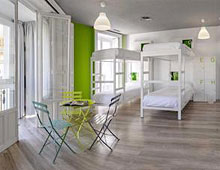 Budget accommodations
  Apartments
  Family Hotel
 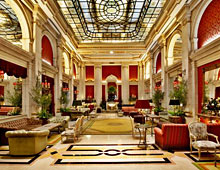 Luxury Hotel
 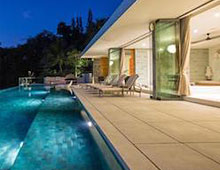 Resorts