Il Castello di San Ruffino
Lari - Via San Lorenzo 1- Frazione San Ruffino
Book now
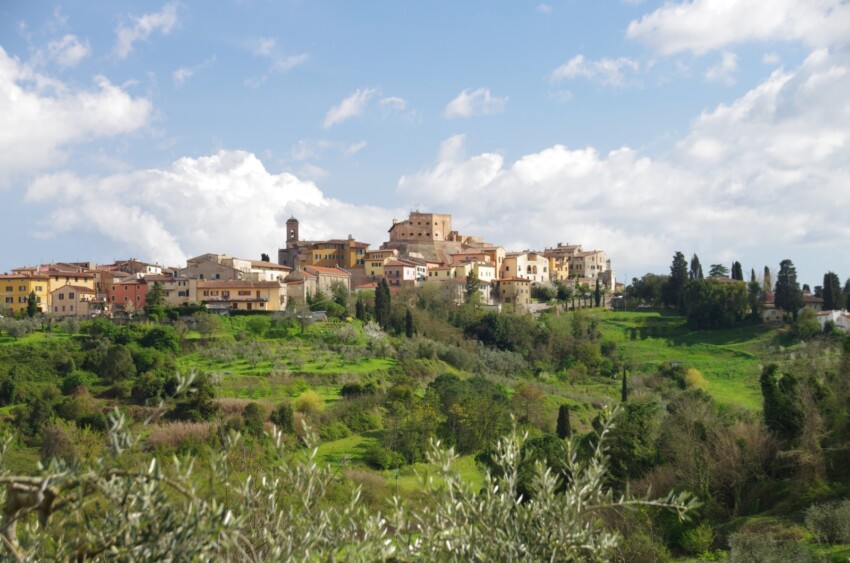
Perched at the intersection of three ridges in the upper Pisan hills sits Lari, a small village that has been inhabited since Etruscan times. At the centre of the village stands the imposing silhouette of the castle, documented as far back as the early Middle Ages, though its current structure dates from the first half of the 17th century. Thanks to its commanding position overlooking the entire Valdarno valley (from its walls, the view spans freely from the Pisan mountains to the cliffs of Volterra, from the Livorno coast as far as beyond Peccioli), it was an important military stronghold of the Pisan Republic until its conquest by Florence in October 1406. The castle is defended by an outer wall with three access gates: Porta Fiorentina, Porta Pisana and Porta Volterrana.
The latter was the main entrance to the village and was equipped with a drawbridge, which was removed in 1798. Worth noting is the Pieve church, dedicated to San Leonardo and Santa Maria Assunta, dating back to the 15th century, with canvases by Melani and two marble statues attributed to Andrea Pisano, as well as the market arcades, whose original layout dates from the late 16th century, whilst its present appearance is from the mid-19th century, when an earthquake caused substantial damage to the structure.
Lari is nonetheless a village to visit without haste, on foot, to discover step by step the countless treasures hidden in the lanes that wind through the surrounding countryside. “I came to Lari and from its fortress I showed a vast landscape, the most beautiful part of Tuscany,” as Grand Duke Leopold II of Tuscany said when he visited this small village.
The Castello dei Vicari in Lari, beyond its past as a central power base for Tuscan rulers, has a present that is increasingly raising its importance in the life of the surrounding area. In 1991, work began to restore it as a historic building, opening it to public visits (which have increased steadily, demonstrating genuine appreciation for what visitors see) thanks to volunteers from the “Il Castello” Cultural Association, supported by the Municipal Administration.
After a few years, the first restoration works began to restore some of its ancient beauty. The Castle retains virtually unchanged the architecture imparted by its ancient function as a centre of power, standing on the summit of the Lari hill, from where it is possible to control the entire Valdarno valley, a reason that made it important and contested over the centuries. Inside there was a prison, a Chancellery, the residence of the Vicario and the Court.
The latter, which remained active until 1962, is now mainly used for conferences and civil ceremonies, meeting with the satisfaction of couples and speakers.
For both wedding ceremonies and holding conferences or presentations, the castle’s entrance courtyard is also available, framed by 92 coats of arms (recently restored) left by the numerous Vicari who inhabited the Castle for over four centuries.
The fortress frequently hosts exhibitions of various kinds in its rooms, from painting to poetry and even displays of war artefacts.
In the courtyard and along the ramparts, “Magica Storia”, a recreation of chivalrous battles performed by children, takes place.
Enlarged in 1682, it was the seat of the Chancellery of the community of Lari during the reign of Tuscany, and until the end of the 19th century it served as Lari’s town hall before being converted into a barracks in 1898.
Inside is a square cloister, along the sides of which runs a portico with three cross-vaulted arches.
Also called Porta Pisana, it is the most evocative entrance to the village. It is characterised by the presence of two gates; in this way, attackers, once they had penetrated through the first and more slender defence, could easily be subject to attack.
In 1559 the people of Lari asked Duke Cosimo I for permission to create a square with a covered market arcade. The arcade was completed in 1565 with the application of the Medici coat of arms. In 1625 it was decorated with frescoes.
Damaged by the 1846 earthquake, it was completely rebuilt, modifying the original layout which had three arches. During the fascist period a fascist club was built above the arcade, now the council chamber and seat of post-unification archives.
A church already existed in Lari in the 10th century; in 1420 it was enlarged. Restored in 1682, 1811 and 1846-51; it retains the original structure’s foundations in the apse section. In 1910 further restoration works transformed the then-Baroque church into the current Neo-Gothic style.
Inside is preserved the Madonna with Child by Andrea Della Robbia, transferred here in 1921 from the Castle. It was commissioned by Vicario Alessandro di Piero di Mariotto Segni in 1524.
In the left side chapel are two canvases depicting “Madonna of the Rosary” of good Florentine school from the 16th century and “The Coronation of the Virgin between Saint Martin and Saint Bona” restored in 1888.
In the presbytery two statues of the “Annunciation” by Andrea di Francesco Guardi, active in the second half of the 15th century, have been placed.
The bell tower, dating probably from the 14th century, was rebuilt as a tower in 1671 and completed with a spire in 1767.
It stands to the left of the Church. Here in the 16th century was the cemetery covered by an arcade. In the 18th century it was transformed into an Oratory. In this Church the Confraternity of the SS.Sacramento and San Rocco, documented since the 16th century, carried out its activities with charitable assistance functions.
Inside are 18th-century sepulchral and commemorative plaques, a 17th-century holy water font and in the presbytery an interesting 17th-century wooden choir.
It is easily reached from the Florence-Pisa-Livorno motorway: for those arriving from Pisa or Florence, the exit is Pontedera-Ponsacco. From here Lari is about 10 km away and is signposted. If instead you arrive from the coast (from Livorno), the exit is Lavoria, from here continue to Cenaia and then to Quattro Strade – Perignano. At this point you are 5 km from Lari and signs are not lacking.
If you arrive from the A12 motorway, take the Collesalvetti exit, which is about 15 km from Lari, which you reach via Cenaia, continuing towards Quattro Strade – Perignano. If instead you arrive from the A11 motorway, you must exit at Altopascio, continue to Pontedera, Ponsacco and then follow the signs.
What's the weather at Lari? Below are the temperatures and the weather forecast at Lari for the next few days.
To see all the facilities and book accommodation in Lari use the form below, entering the dates of your stay.
Lari is a small village situated close to the Tuscan coast (approximately 40 km away), just south of Pisa, which lies roughly 30 km distant, and south-west of Florence, some 80 km and 45 minutes' drive away.
 Hotel
Hotel 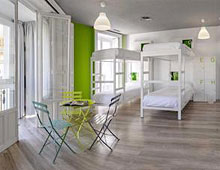 Budget accommodations
  Apartments
  Family Hotel
 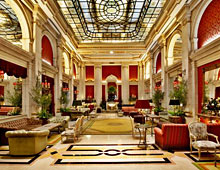 Luxury Hotel
 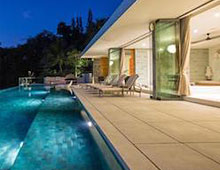 Resorts