Hotel Portavaldera
Peccioli - Via De Chirico 6
Book now
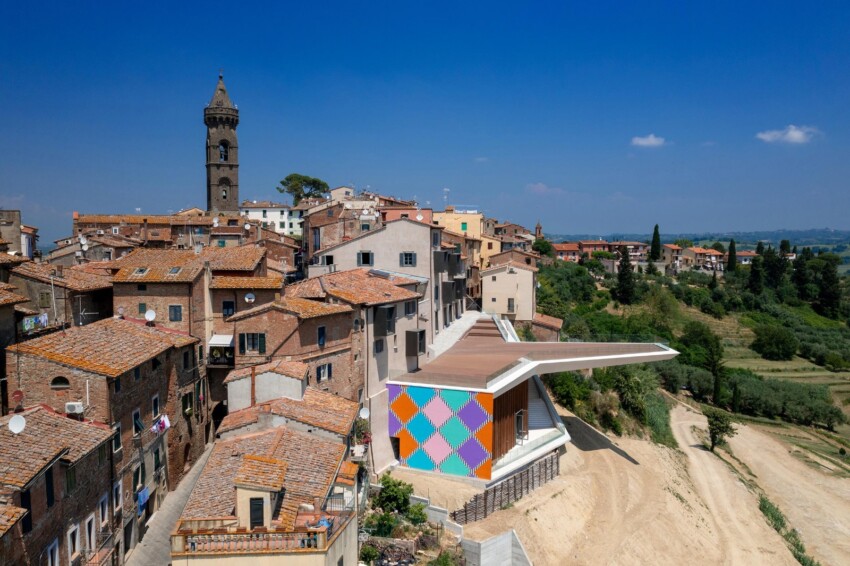
Nestled in the gently rolling hills of Valdera, Peccioli is an authentic medieval gem that commands views across the Tuscan countryside. This picturesque village, awarded the Orange Flag by the Touring Club Italiano and named Italy’s Most Beautiful Village in 2024, represents a perfect blend of millennia-old history and contemporary innovation. Its ancient walls enclose a magnificently preserved historic centre, where cobbled alleyways and charming piazzas alternate with striking modern art installations.
Over recent decades, Peccioli has transformed into a genuine open-air museum, where contemporary art engages harmoniously with medieval architecture. The Tuscan village has become a model for sustainable and cultural development, attracting visitors seeking an authentic experience away from the mass tourism that characterises more famous Tuscan destinations. The local community has embraced this transformation, actively participating in cultural projects whilst keeping alive the artisanal and gastronomic traditions that make this place unique.
Peccioli offers a unique tourist experience combining contemporary art, medieval history and stunning views across the Tuscan countryside.
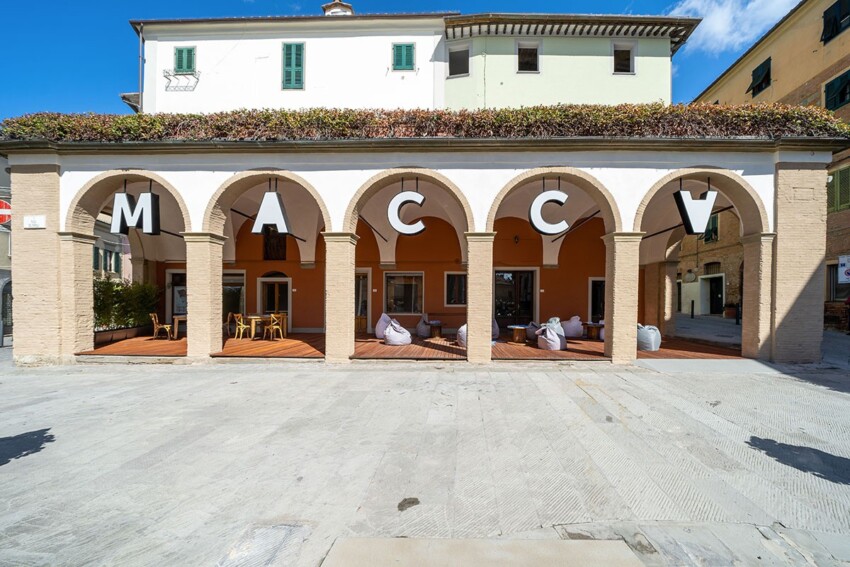
MACCA is a unique institution that coordinates and manages all artistic projects distributed across Peccioli and its hamlets. The result of three decades of commitment, the museum boasts a collection of over seventy works, primarily large-scale installations, created by artists who have developed projects in close harmony with the Peccioli territory.
The museum functions as a dispersed entity that invites visitors to explore not only the historic centre but also the hamlets of Ghizzano, Legoli, Montecchio and Fabbrica. A particularly innovative aspect is the integration of contemporary art with modern infrastructure, such as the Waste Treatment and Disposal Plant, where artworks coexist with a theatre, and the Multi-Storey Car Park, characterised by a colourful spiral walkway offering panoramic views across the valley.
Admission is free and, given the dispersed nature of the museum, there are no set opening or closing times. For specific experiences, such as visits to the Treatment Plant and the “Voices” tour, advance booking is required. This innovative museum structure allows visitors to discover an authentic area of the Tuscan hills through the lens of contemporary art, creating a unique dialogue between historical heritage, modern art and the local community.
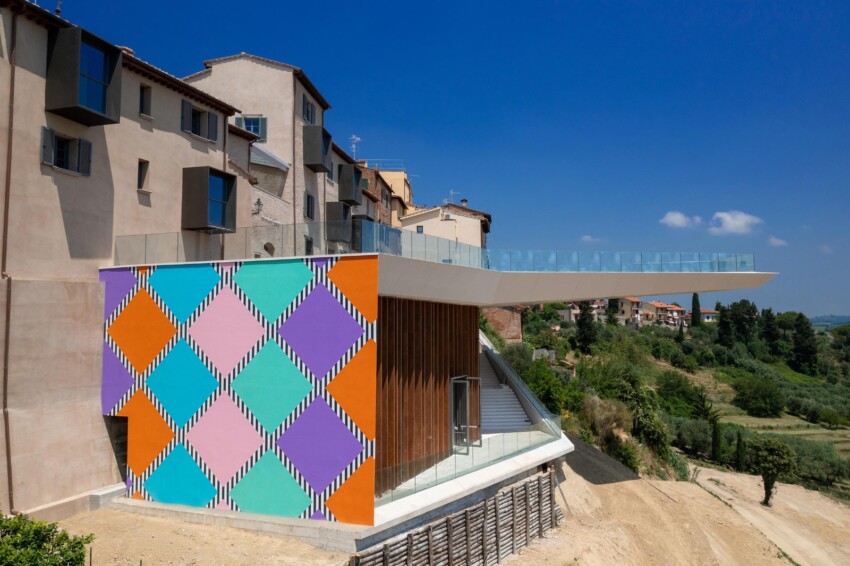
A historic building masterfully restored that exemplifies Peccioli’s philosophy of merging the ancient with the modern. The structure, designed by architect Mario Cucinella, is distinguished by its suspended panoramic terrace overlooking the valley, offering spectacular views across the surrounding countryside. Inside, the palace houses exhibition spaces, a civic library and a refined restaurant. The terrace has become one of Tuscany’s most photographed spots, thanks to its bold architecture that seems to defy gravity.
The palace restaurant, run by local chefs, offers cuisine that reinterprets Tuscan tradition with modern techniques, using local ingredients. The exhibition spaces regularly host temporary exhibitions by international contemporary artists, whilst the library holds a significant collection of volumes on local history and contemporary art.
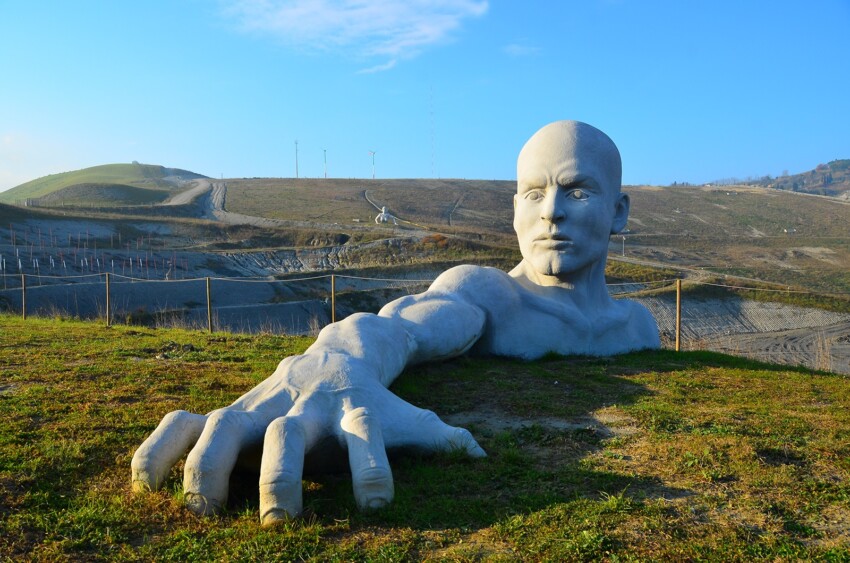
This land art work, visible from considerable distances, represents a unique example of how contemporary art can engage with the natural landscape. The three sides of the triangle are illuminated at night, creating a captivating spectacle that redraws the profile of the hills.
The project also includes a nature trail that allows exploration of the hills and observation of the installation from different angles. Along the path, rest areas have been created with information panels about local flora and the territory’s history. The night-time lighting uses low-energy LED technology, in line with the council’s commitment to environmental sustainability.
This majestic 12th-century Romanesque church dominates the village’s main piazza. The building represents one of the most significant examples of Romanesque architecture in Valdera. The interiors contain precious frescoes and a Madonna and Child attributed to the school of Cimabue. The bell tower offers exceptional panoramic views across the surrounding valley.
The church also preserves a fine 18th-century historic organ, still used for sacred music concerts during summer. The façade, characterised by elegant sandstone ashlar work, features sculptural decorations of significant historical and artistic interest. Recent restorations have uncovered ancient frescoes previously hidden beneath layers of plaster.
A contemporary architectural work that sits harmoniously within the hilly landscape. This open-air amphitheatre, built following the natural slope of the hill, hosts a rich programme of cultural events during summer, from concerts to theatrical performances. The structure offers breathtaking views across the surrounding countryside, particularly evocative at sunset.
The amphitheatre can accommodate up to 800 spectators and its natural acoustics make it perfect for live performances. The events calendar includes the Festival 11 Lune, a summer festival of music, theatre and dance that attracts internationally renowned artists. The area is equipped with modern lighting systems that create atmospheric effects during evening performances.
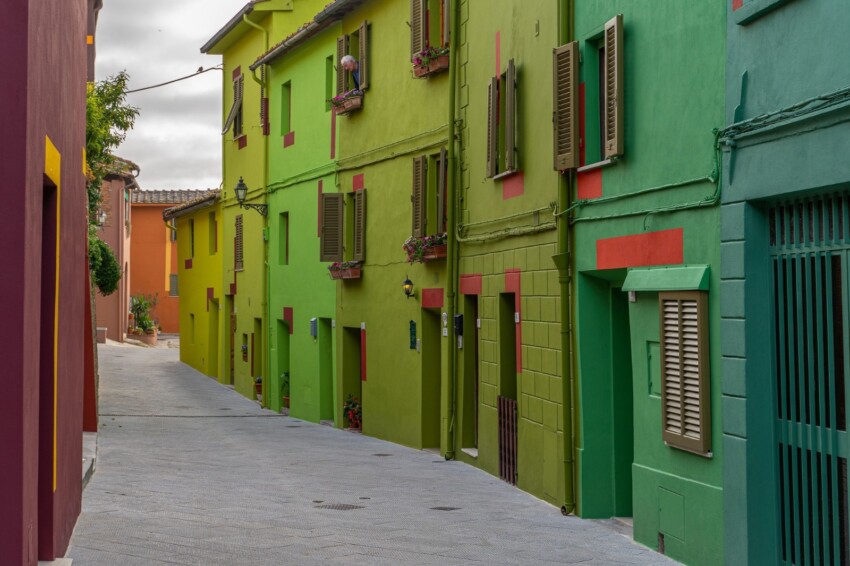
Accommodation options in Peccioli are concentrated in the historic centre and its immediate surroundings. The medieval heart offers characterful bed & breakfasts housed in restored historic palaces, where you can enjoy the authentic atmosphere of the village. The properties combine original architectural elements such as exposed beams and terracotta flooring with modern comforts.
In the surrounding countryside, you’ll find charming agriturismos that combine modern comfort with Tuscan rural architecture, ideal for those seeking a relaxing break in touch with nature. Many agriturismos produce organic wine and olive oil, offering their guests tastings and traditional cooking courses.
Peccioli is easily accessible by car, lying just 40 minutes from Pisa Airport and roughly an hour from Florence. The nearest airport is the Galileo Galilei in Pisa, from where you can hire a car or use the bus service that connects Pontedera (the nearest town) with frequent departures. The journey from the airport to Pontedera takes approximately 25 minutes.
From Pontedera, local buses travel directly to Peccioli with regular daytime services. The journey takes around 40 minutes and offers lovely views of the Tuscan countryside. For those travelling by train, Pontedera-Casciana Terme station is the main reference point, well connected to Italy’s major cities via the Florence-Pisa line.
By car, Peccioli is accessible via the Fi-Pi-Li Superstrada, exiting at Pontedera and following signs for Valdera. The route is well signposted and passes through picturesque scenery of hills and vineyards. The village has several public car parks at the edges of the historic centre.
What's the weather at Peccioli? Below are the temperatures and the weather forecast at Peccioli for the next few days.
All photographs in this article are © Fondazione Peccioliper
Peccioli lies in the heart of the Valdera, in the province of Pisa, strategically positioned to explore lesser-known Tuscany. The village sits 35 km from Pisa, 45 km from San Gimignano and 60 km from Firenze. This prime location makes it easy to reach both Tuscany's major art cities and other captivating medieval villages in the area, such as Volterra, which is just 20 km away.
 Hotel
Hotel 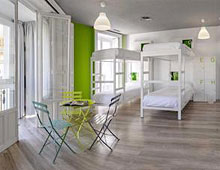 Budget accommodations
  Apartments
  Family Hotel
 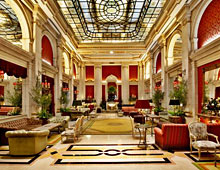 Luxury Hotel
 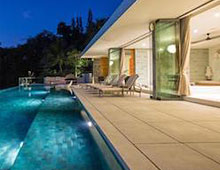 Resorts