Florence: Uffizi Timed Ticket & Masterpieces Audio App
7.148 reviews
Buy now
From 27,20€ per person
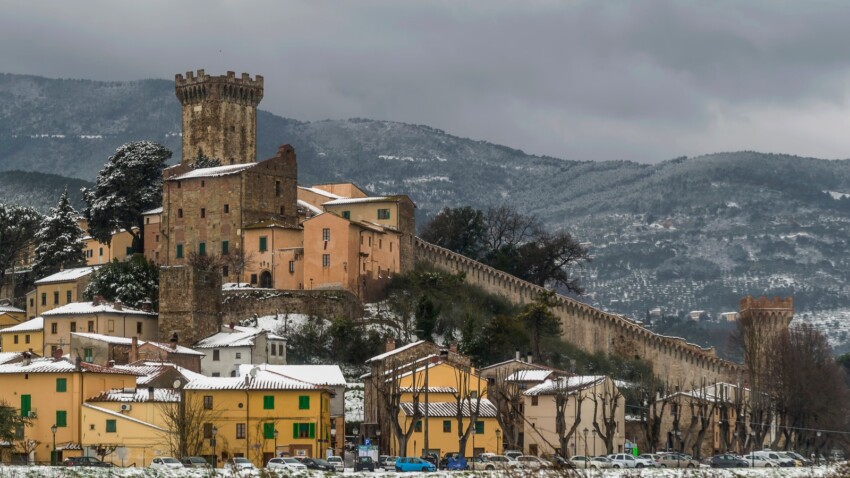
A journey of discovery through the ancient castles that dot the Pisan hills – historic fortresses built during the Tuscan Renaissance and developed as city-states emerged. The route winds through the old villages of small communities across the Pisan territory, where you can still breathe in the atmosphere of the medieval commune period, when fierce rivalries between competing city-states held sway.
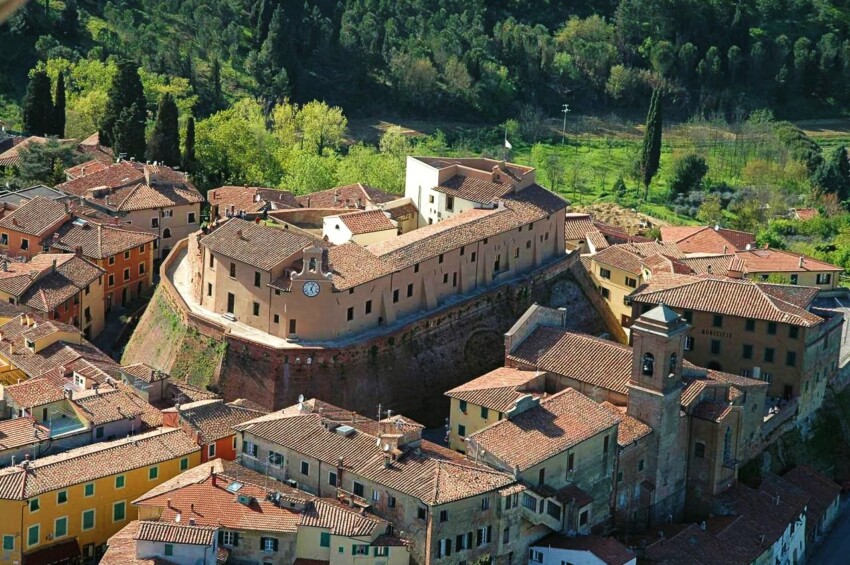
Built as a border stronghold in the 11th century and serving as both a residence for noble families and the seat of the Vicar of Justice, Castello di Lari now houses a museum. Inside, you can visit the 18th-century Tribunal Hall, the Chamber of Torments displaying torture instruments, and the underground dungeons dating from the 16th to 19th centuries. The historic rooms contain archaeological finds, numerous works by the Della Rabbia family, and fragments of 14th and 15th-century frescoes. The castle is now home to the Museo Civico Baldinucci, which exhibits artefacts and documents relating to Lari’s history.
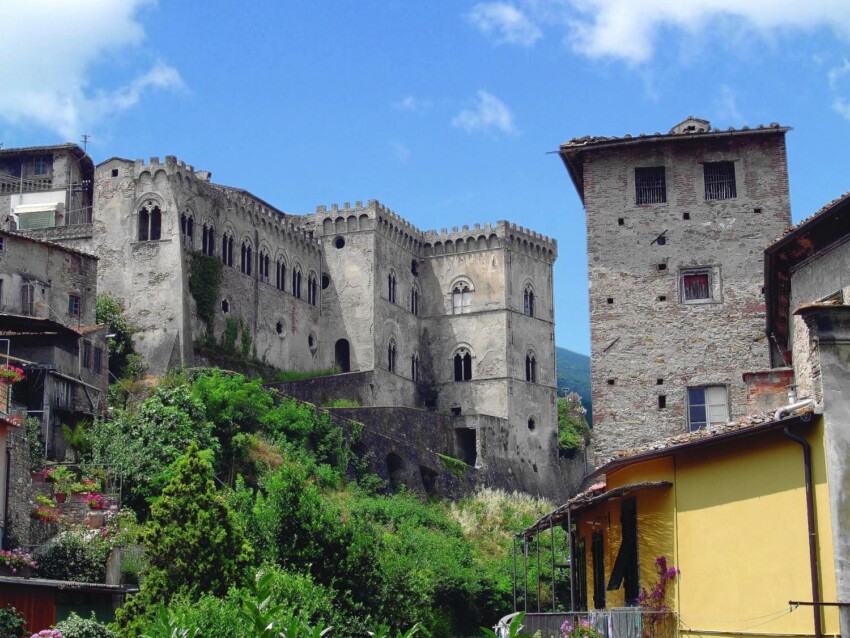
This castle still dominates the town and the historic centre that surrounds it today. It is defined by an entrance gate and features several palaces dating from the 16th and 17th centuries, the most important being the Tonini palazzo, which was once also a Medici villa and contains numerous frescoes by Giarrè. In medieval times, other castles stood around the present Castello Tonini – now vanished or reduced to ruins – which formed part of an integrated military defensive system.
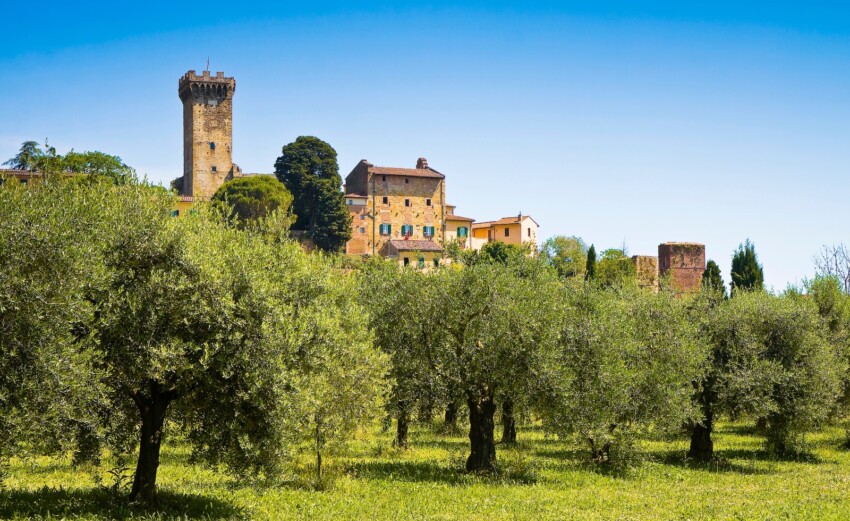
The construction of this fortress was commissioned from Filippo Brunelleschi, who devised a design considered revolutionary for its time. Work began in 1435: several churches and palaces were demolished, and the fortification incorporated a 12th-century tower, which became the keep of the fortress, still retaining its medieval character. The real innovation lay in a series of drawbridges that, when raised, would isolate different sections of the fortress from one another.
This defensive system would have been activated if an enemy managed to breach one area of the stronghold. The hallmarks of Brunelleschi’s design are its geometric precision and the harmonious proportioning of its individual elements.
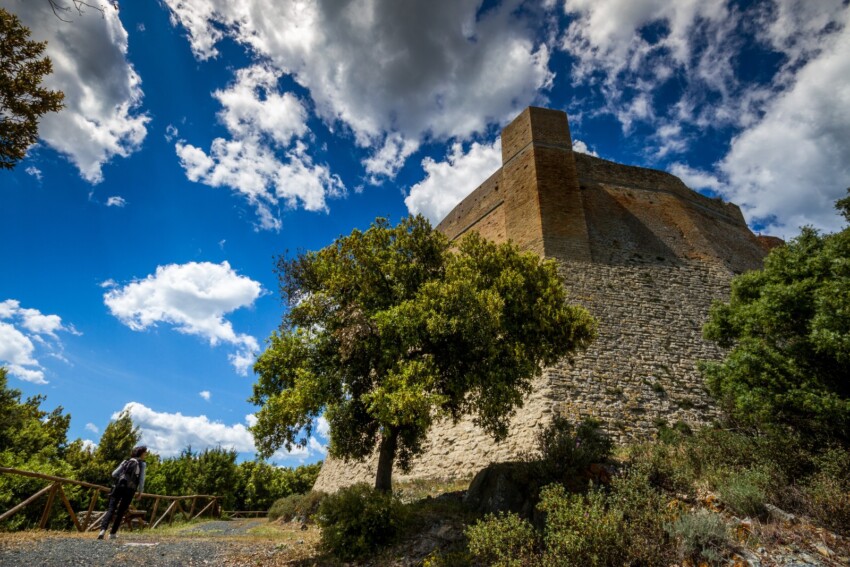
Perched at approximately 500 metres above sea level, this fortress commands views over the Val di Cecina and the Possera and Pavone streams. Its foundations date to the 13th century, established by the Bishops of Volterra. By the 15th century it had become part of Florentine territory and was reinforced; together with nearby Montecastelli, it repelled the troops of Alfonso of Aragon. Originally surrounded by three rings of walls, what remains today is the central structure with its impressively tall tower, visible from considerable distances. The Rocca is accessible on foot via approximately a one-kilometre uphill walk.
This fortification, perpetually contested in the ongoing struggles between Pisa and Lucca since it was the linchpin of an extensive defensive network in this sensitive border zone, appears to date from before the year 1000. Above the village rise imposing high walls enclosing the heart of the fortress. The later brick additions by Sangallo, dating from the 15th century, are still visible, contrasting sharply with the dark stone of the medieval construction. The sole entrance, still bearing the heraldic shields of various Pisan and Florentine podestà, leads into the parade ground, where you can see the ruins of the keep – the former watchtower and the castle’s oldest nucleus. Also in the inner courtyard are the ruins of the constable’s residence and entrances to the underground chambers and water cisterns. Two corner towers complete the defences, while several watchtowers stand around the perimeter of the fortress.
A stronghold had occupied this strategically ideal position for controlling the Arno river and its plains stretching to the sea since 780. The fortress always served as an almost impregnable bastion for any army or power intent on conquering and controlling the surrounding territory. Its current appearance is the result of reinforcement work carried out after numerous wars. The Verruca is considered a heterogeneous structure owing to the different phases and various architects involved in its construction. The walls represent one of the few examples of fortification built using stones of various kinds rather than the characteristic fired bricks typically employed for military architecture of that era. Overall, you can see the construction appears to have been executed somewhat hastily and without the usual attention to proportions – probably driven by the urgent need to make this critical strategic point defensible. The main front features cylindrical bastions at both ends, attributed to architect Luca del Caprina, with the main entrance opening at the far left of this façade. The north-west bastion is attributed to Antonio da Sangallo.
This imposing fortress sits on a hillside between the Sterza and Fascia streams, at 550 metres above sea level, in a commanding position overlooking the Era valleys and part of the Val di Cecina. The structure rests on a large mass of alberese stone, which makes the northern slope virtually impregnable. The name “pietra cassa” – meaning broken stone – derives from the fissure running through this rock face.
The fortress is mentioned in a 1028 document concerning an exchange of lands and castles. Today, half-destroyed, what remains bears witness to its former grandeur. Its oldest nucleus is the watchtower, whilst the perimeter wall dates from the 8th century and extends only along three sides of the castle. The sole entrance lies along a 45-metre-long wall devoid of arrow slits or openings, positioned at an elevated height so it could be sealed from inside during a siege. At the wall’s extremity stand two towers of different designs: one more massive with a heptagonal base, the other more slender with a square base.
 Hotel
Hotel  Budget accommodations
  Apartments
  Family Hotel
  Luxury Hotel
  Resorts