Bagni Di Pisa Palace & Thermal Spa
San Giuliano Terme - Largo Shelley 18
Book now
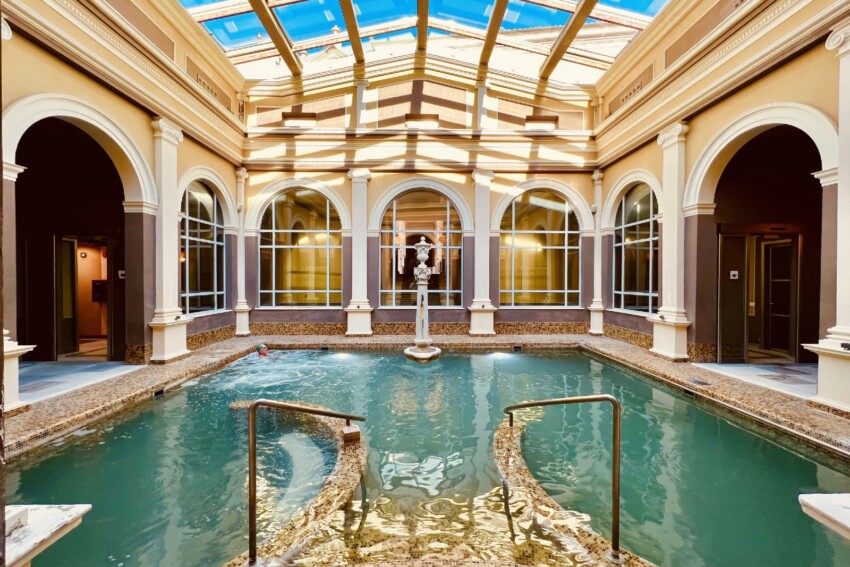
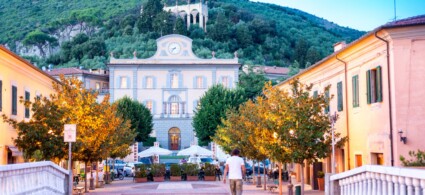
Situated at the southwestern foot of Monte Pisano, between the courses of the Serchio and Arno rivers in the province of Pisa, San Giuliano Terme is an ancient spa town that experienced its heyday in previous centuries. This is evidenced by the numerous villas that have been built in the town and surrounding areas, many of which still belong to ancient families today.
The appeal of the thermal springs at San Giuliano remains exceptionally high even today, so much so that they are housed within a luxury 5-star hotel. The thermal establishment and its associated wellness centre are the principal reason visitors come to San Giuliano. But after a day of relaxation, there’s nothing better than heading out to explore the surrounding countryside, strolling through the mountains and admiring ancient military fortifications, erected particularly along the old Pisa-Lucca border.
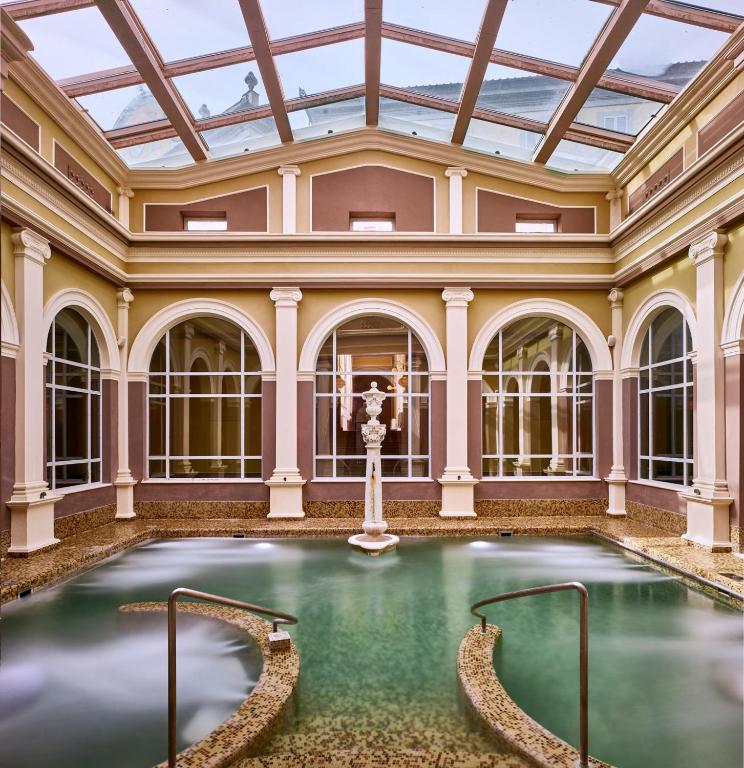
The thermal establishments of San Giuliano Terme are undoubtedly the principal reason that brings visitors here. The thermal springs of San Giuliano are today entirely contained within the luxury hotel Bagni di Pisa Palace & Thermal Spa. A truly beautiful facility, equipped with all creature comforts and services. However, access to the thermal springs is possible for non-guests of the property on a paid basis.
The thermal pools are fed by a natural spring that emerges at the surface at a temperature of 37°C, indicated for therapeutic treatments of inflammatory conditions, respiratory and cardiovascular disorders. They have been built around the structure, exceptionally elegant and meticulously maintained, with marble and lighting effects that create a truly magical ambience.
You can enjoy free entry, or book a series of spa experience packages that include massages, scrubs and other beauty and wellness treatments. Furthermore, the facility organises aperitifs, extraordinary evening openings until midnight and oriental experiences with water flotation such as Aquam Massage and Thalasso Mindfulness.
Among the wellness treatments are massages, facial and body treatments, sauna and Turkish bath, and a menu of scrub treatments. But the main attraction of the thermal springs is represented by the Hammam dei Granduchi complex, a series of thermal caves where you can immerse yourself and breathe in the beneficial vapours. The caves are connected to the underground pools by a tunnel built in the eighteenth century by the Medici, and there is also a beautiful waterfall here that flows at 38 degrees.
At the thermal springs of San Giuliano you can also take advantage of 12 treatments covered by the national health service, by presenting a request from your doctor and paying the entrance fee.
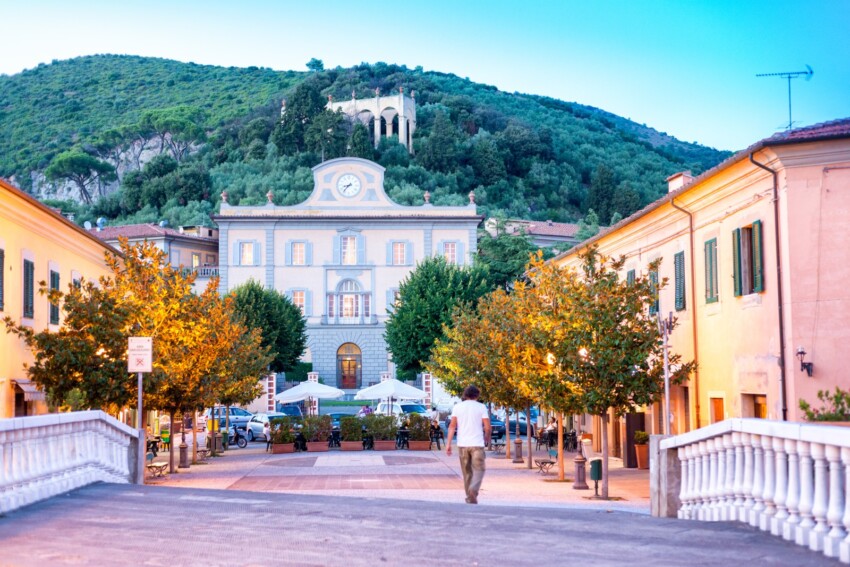
Besides the thermal springs, San Giuliano doesn’t offer much. However, its surroundings are very beautiful, and it’s worth taking time to visit a number of truly interesting attractions.
There are many villas built in San Giuliano Terme, especially in the eighteenth century. Like many other Italian spa towns, San Giuliano was indeed frequented by wealthy bourgeoisie keen to treat themselves with the mineral-rich waters and beneficial properties that flow from the springs.
Among these, we mention Villa Alta, Villa Belvedere, Villa di Agnano, Villa di Asciano, Villa di Corliano and Villa del Lupo. They form the system of the so-called “historic villas” of San Giuliano Terme, the work of many Pisan and Florentine families who chose to build these private residences at the foot of Monte Pisano, attracted by the richness of nature and the mild climate.
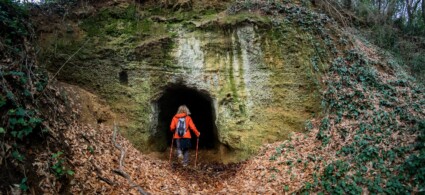
Officially named Hermitage of Santa Maria ad Martyres, to everyone it is simply Rupecava. It is an Augustinian hermitage dating back to 1200, built on the hills of Ripafratta which fall within the municipality of San Giuliano Terme.
After many centuries in which the structure housed Augustinian friars, in the nineteenth century the convent was inhabited by a hermit, but upon his death it remained uninhabited and became abandoned. It was only in the 1970s that it was restored, by private hands who had since purchased it.
In the locality of Mirteto, at the foot of Monte della Conserva, stands the church and monastery of Santa Maria di Mirteto, a truly interesting place to visit, as it is an abandoned church lacking its roof, which collapsed some 50 years ago.
Originally an ancient church belonging to the Cistercian order, there are also traces from the nineteenth century, when it was the private oratory of the wealthy Ricci family. Today the church is abandoned but you can enter and see the apse, the interior, as well as some outbuildings including some dwellings, an oil mill and granaries.
The Rocca di Ripafratta, or Ripafratta Castle, is part of the medieval defensive system of the Pisa-Lucca border. Its position is indeed strategic, along the ancient communication route that linked the two cities, which today has become the state road SS12.
The structure today is in ruins but can be visited externally: you can observe its irregularly-shaped perimeter, with a quadrangular tower inside and two other smaller towers. The defensive system is completed with a series of towers in the surrounding area, which are the Torre Centino, the Torre Niccolai and an anonymous tower.
Every year in September, the area hosts the Festa della Rocca e del suo territorio (Festival of the Rocca and its Territory), and on this occasion the local Pro Loco association organises a series of guided tours of the complex. Since 2021, the Rocca di Ripafratta has officially become the property of the municipality of San Giuliano Terme, so you can expect that in the coming years an important restoration project will begin.
Among the most incredible testimonies to the presence of the Romans in the Pisan territory is certainly the Aqueduct of Caldaccoli. Dating back to the 1st century AD, its function was to carry water from Caldaccoli, near San Giuliano, to the thermal baths of Pisa.
Of the original 6 kilometres of the aqueduct, today only 8 arches remain standing, along with a right-angled corner 5 metres high. However, there are some remains along the route. The ingenuity of the work was remarkable: water was transported in two separate conduits, one along the backs of the arches and the other underground, because it was necessary to separate the cold water from the hot water.
Among the numerous hiking trails traced on Monte Pisano, a mountain located a short distance from San Giuliano Terme, it’s worth following the one that leads to Passo di Dante, which takes this name because the Poet mentions it in the Divine Comedy.
At the pass there is a commemorative plaque bearing the line in question (“… al monte per che i Pisan veder Lucca non ponno”) and a bust of Dante.
Reaching Passo di Dante is straightforward, the trail is short, well-marked and not very difficult. It’s therefore an excellent excursion to do with the family, without excessive effort. Once you reach the pass, the view of the surrounding panorama is very beautiful.
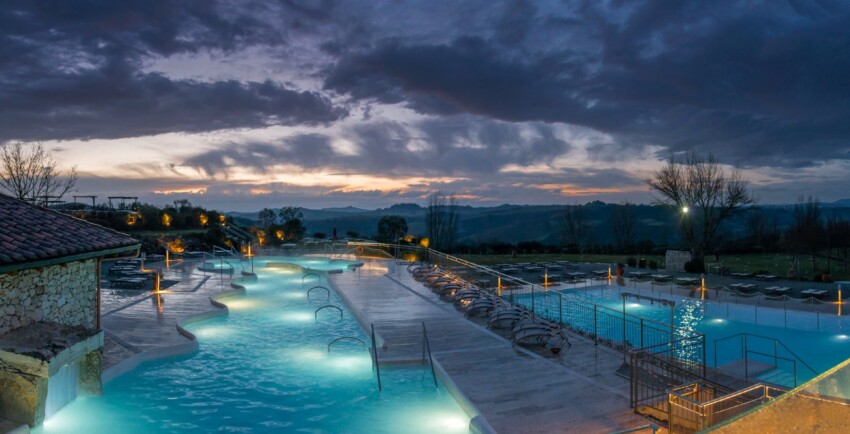
There are not many facilities where to stay in the centre of San Giuliano Terme, except for a couple of bed and breakfasts, and of course the splendid 5-star hotel Bagni di Pisa Palace & Thermal Spa.
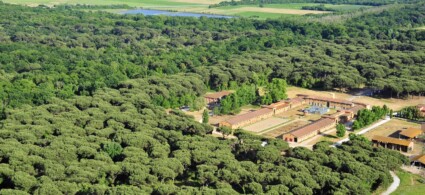
In the surrounding area there are different types of accommodation on offer, given that San Giuliano Terme is surrounded by Pisan countryside: just outside the town there are many farm stays, country homes, farmhouses and isolated apartments.
So choose to stay close to the centre if the main reason for your stay in San Giuliano is the thermal springs, or otherwise enjoy the relaxation of the countryside with its fragrances and flavours, by staying on a farm.
From the centre of Pisa, San Giuliano Terme is conveniently reachable by taking the state road SS12 in the northbound direction; you’ll find it after 5 kilometres, for a total journey that will take only 10 minutes. However, it may be preferable to use public transport, which is fast, comfortable and abundant.
You can choose, for example, bus E3, which departs from Piazza Vittorio Emanuele which is right in front of the central station, and which also stops opposite the Leaning Tower of Pisa. Alternatively, San Giuliano Terme has a railway station, served by regional trains running on the Pisa-Lucca line. The train journey takes only 10 minutes, although once you get off at San Giuliano station you’ll need to walk a few minutes to reach the town centre, as it is located on the outskirts of the town.
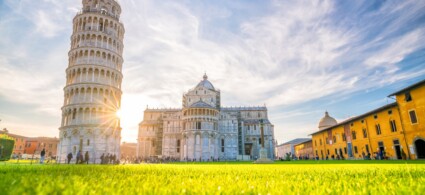
Being so close to Pisa and so easy to reach, it follows that reaching San Giuliano Terme from Tuscany’s most popular tourist cities means first arriving in Pisa, and then following the itinerary described above. The only exception is Lucca: if you are visiting the walled city and want to reach San Giuliano Terme, simply take the SS12 bypass (known as via Nuova per Pisa) in the southbound direction and you will reach your destination in approximately 20-25 minutes.
What's the weather at San Giuliano Terme? Below are the temperatures and the weather forecast at San Giuliano Terme for the next few days.
San Giuliano Terme is located in Pisa province, a few kilometres north of the main town, easily accessible via the SS12 state road.
 Hotel
Hotel  Budget accommodations
  Apartments
  Family Hotel
  Luxury Hotel
  Resorts