Hotel Portavaldera
Peccioli - Via De Chirico 6
Book now
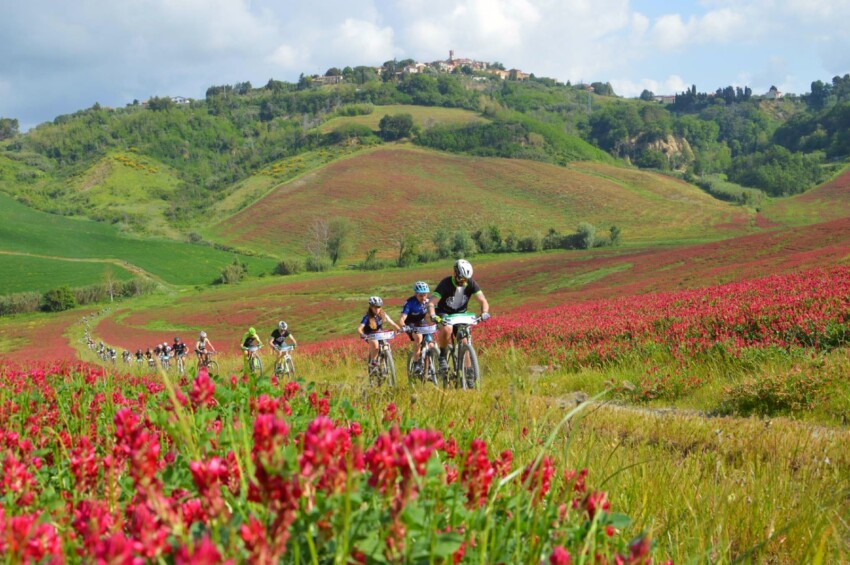
The Parco della Valdera comprises six municipalities: Capannoli, Lajatico, Peccioli, Palaia and Terricciola.
The area doesn’t present visitors with the traditional image of a protected natural reserve. It isn’t, that is, a “sanctuary of nature”, but precisely because of this it represents a more advanced concept of what a park should be. What drove its promoters was indeed a simple idea: that the ultimate goal of creating parks is to establish a satisfying model of coexistence between man and nature. The creation of “sanctuaries” in this sense represents a transitional phase, an emergency intervention to save something on the verge of disappearing.
And if we consider a park as a complex and balanced system between man and nature, much of Tuscany could rightfully be a park. But here, in Valdera, there’s something more besides.
The park lies 25 km from Pisa, 30 km from the Pisan coast, 60 km from Florence, 45 km from Siena, 65 km from Versilia, 50 km from the Costa, and boasts a surprising wealth of churches built over ten centuries. Each tells its own story, offering a glimpse into a land rich in ancient traditions. The calendar of patron saint festivals, many serving as tourist attractions, is packed with some truly evocative celebrations.
The Park is crossed by the Strada del Vino delle colline pisane (Wine Road of the Pisan Hills), along which you’ll find cellars where you can taste and purchase excellent wines.
Dining plays a leading role, with cuisine featuring local and organic produce.
A defining characteristic of this area is the high number of farm stays. Along all the roads you’ll find plenty of signs pointing towards detours to one farmhouse or another.
The Valdera trails are pleasant and varied, crossing the territory via white roads.
Setting off from Peccioli, we descend the steep Greta lane. In less than a kilometre we find ourselves on the bed of the Era river, characterised by wild vegetation, lush and rich in bird varieties.
We continue along the river course until we reach the Molino di Ripabianca mill. From the beaches, where the striking sight of the tufa cliffs flanking the Piccioli-Fabbrica municipal road accompanies us on the left, a detour to Ripabianca is possible, to be used in case of river flooding.
After about four kilometres we begin to climb back to reach the asphalt of the municipal road, which takes us to the charming hamlet of Montecchio. We continue, still on dirt track, through the countryside of the Serre zone, varied in its crops and still a natural habitat for various game species. There are two ways to traverse this zone; one from the Costie and another that returns to Peccioli via the Madonna delle Serre byway, named after the church of the same name situated on this stretch, on a slight rise, and characterised by the presence of a cool and welcoming small wood, a pilgrimage destination on the first Sunday of May.
Starting from Fabbrica, after a few hundred metres we leave the asphalt road and enter a beautiful landscape colourful with spring crops: oats, alfalfa, and so on. On the clay hills we descend towards the Ripassaia plain, created by the Era river, which we skirt for a couple of kilometres; in summer rich in broom and wheat fields. At the Tonaca farmhouse we begin to climb again, finding the fish-rich Lake Gatterosulla on the right.
At the Diacceroni hills we climb towards Montecuccheri, shortcutting the route, or we continue towards Poggio Rosso, crossing stretches of lush wild vegetation, until the “La Bonifica” road. After about three kilometres we take the road to Montelopio-Fabbrica, concluding the trail here.
Near the Strada Provinciale delle Colline per Legoli (Provincial Road of the Hills for Legoli), at the old cylindrical mill of Calfalo, trail three begins. After a stretch of asphalt road, you skirt the wooded zone between Fratello, Libbiano and San Teodoro, reaching the Molinaccio area, extremely beautiful but difficult to traverse in autumn and winter due to abundant rain and the confluence of several streams. Halfway along we encounter Villa Monti from the 17th century, certainly built on a pre-existing fortress, which stands alone in an almost deserted area. From here the trail continues through pleasantly tranquil countryside with stretches of asphalt from the provincial road that, passing Legoli, leads to Castelfalfi.
From the eastern side of Peccioli, descending towards the Racosa stream and leaving behind an intact view of the village, we cross the countryside of the Serre, characterised by vast holdings of the Gaslini Foundation, rich in olive groves, vineyards and cypress-lined avenues. Taking a right near the junction after Colombiano, we reach Poggio al Pino via the old road that once connected the two areas. We descend to reach the San Sebastiano municipal road, soon re-entering the dirt track of the Bandonica area, below Poggio Cosmiano.
From this point the trail winds through flat terrain for a few kilometres, returning near Villa Antinori and climbing back to Peccioli, skirting its park. Shortly before the Capuchin Fathers’ convent, at the Paretaio farmhouse, we encounter the Parco Preistorico with 18 life-sized fibreglass animals. A place for leisure and fun.
The trail begins at the foot of the small hamlet of Guizzano, opposite the Church of the S.S. Annunziata which houses wooden sculptures by Nino Pisano from the 15th century inside, and flanking the portal a contemporary art work, “Ospiti” (Guests), by Fortuyn/O’Brien. Through the small centre we continue into the neighbouring countryside towards the east to the boundaries of the Municipality and Province in a flora and fauna habitat of wild beauty, almost unspoilt. After a few kilometres we enter the hamlet of Cedri, where the beautiful Villa Alessandria dominates the panorama.
Having completed several kilometres of asphalt road that winds easily along the slopes, we return to Guizzano. Halfway through it’s possible to choose a variant that shortens the length.
Brief but interesting is this link connecting trail one to trail three. From the summit of the Serre hill we pass through countryside free of buildings at the foot of the wooded Fratello-Libbiano hill, inhabited by the occasional roe deer which often peeks out from between the tree branches. Between the two summits lie the Filetto and Roglio streams, flanked by tall rows of poplars; a decidedly challenging stretch during periods of abundant rain.
The trails of Peccioli municipality, pleasant and varied, cross the territory using white roads, farm tracks and ancient paved ways, largely almost uninhabited.
The trails wind through a succession of streams, woods and vast countryside characterised by varied vegetation of cypress, poplars and broom. The woods of various kinds, from which the paths depart, offer visitors historical, artistic and cultural testimonies of undeniable significance. The landscape variety allows enthusiasts of various sports disciplines such as mountain biking, horse riding and hiking to be satisfied. Nature lovers will also find the Peccioli territory a relaxing environment.
Villas are evenly scattered throughout Valdera and choosing examples isn’t easy; we find:
An important villa-farmstead of ancient origins, situated in the south-east zone of the municipality and accessible either from the State Road linking Lajatico with Volterra or from the one leading to Saline di Volterra. According to some, it was once an ancient Roman castle. Certainly in the Middle Ages it was a monastery of the hospitalier friars (hence the name) of Altopascio and, subsequently, a Medici farmstead. Since 1607 it has been the property of the Corsini Princes of Florence and still constitutes one of the largest agricultural complexes in the area.
A villa in late Baroque style with neoclassical motifs belonging to the Baciocchi family, today the municipal villa, home to the Zoological Museum. On the facade of the building, with rectangular layout, two towers are notable, probably pre-dating the villa. On the ground floor, where the museum is housed, numerous frescoes decorate the rooms.
To see all the facilities and book accommodation in Valdera Park use the form below, entering the dates of your stay.
 Hotel
Hotel 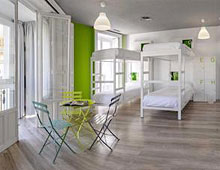 Budget accommodations
  Apartments
  Family Hotel
 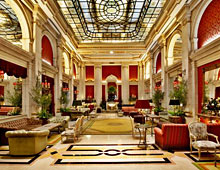 Luxury Hotel
 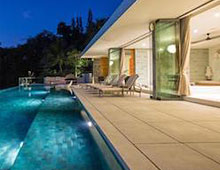 Resorts