HG Abetone e Piramidi Resort
Abetone - Via Brennero 456
Book now
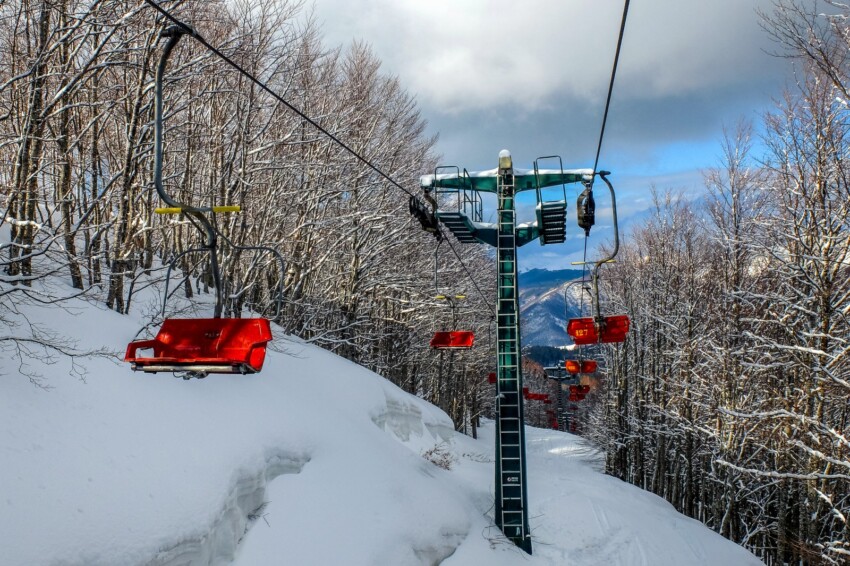
At the heart of an area recognised as the most celebrated ski resort in the Tuscan-Emilian Apennines, Passo dell’Abetone at 1,388 metres above sea level owes its reputation to the towering peaks that crown it.
Abetone is the quintessential mountain destination for Tuscans. One of central Italy’s most important ski areas originates here, with roughly 50 km of slopes and beginner training fields, whilst the resort itself boasts ski schools and a snow park; meanwhile, in recent years it has increasingly attracted summer mountain enthusiasts, thanks to the wealth of activities on offer, from mountain biking descents to leisurely walks.
Located in the Pistoia mountains, along the SS12 state road, not far from the Emilia-Romagna border and administratively part of the scattered municipality of Abetone-Cutigliano, it is essentially a mountain pass, on whose summit the main inhabited centre has been built, with roughly 200 residents. It’s hardly large, but during winter and summer weekends it is literally overrun with tourists, especially visitors from other Tuscan provinces or Emilia.
Spending a day at Abetone, or even a week, is ideal for refreshing yourself, breathing in fresh mountain air and soaking up the panorama. In winter, naturally you come to ski, and the resort enjoys its heyday thanks to winter sports enthusiasts, whilst in summer, especially when the plains swelter in heat, it’s thronged with visitors keen to spend a few hours in the cool.
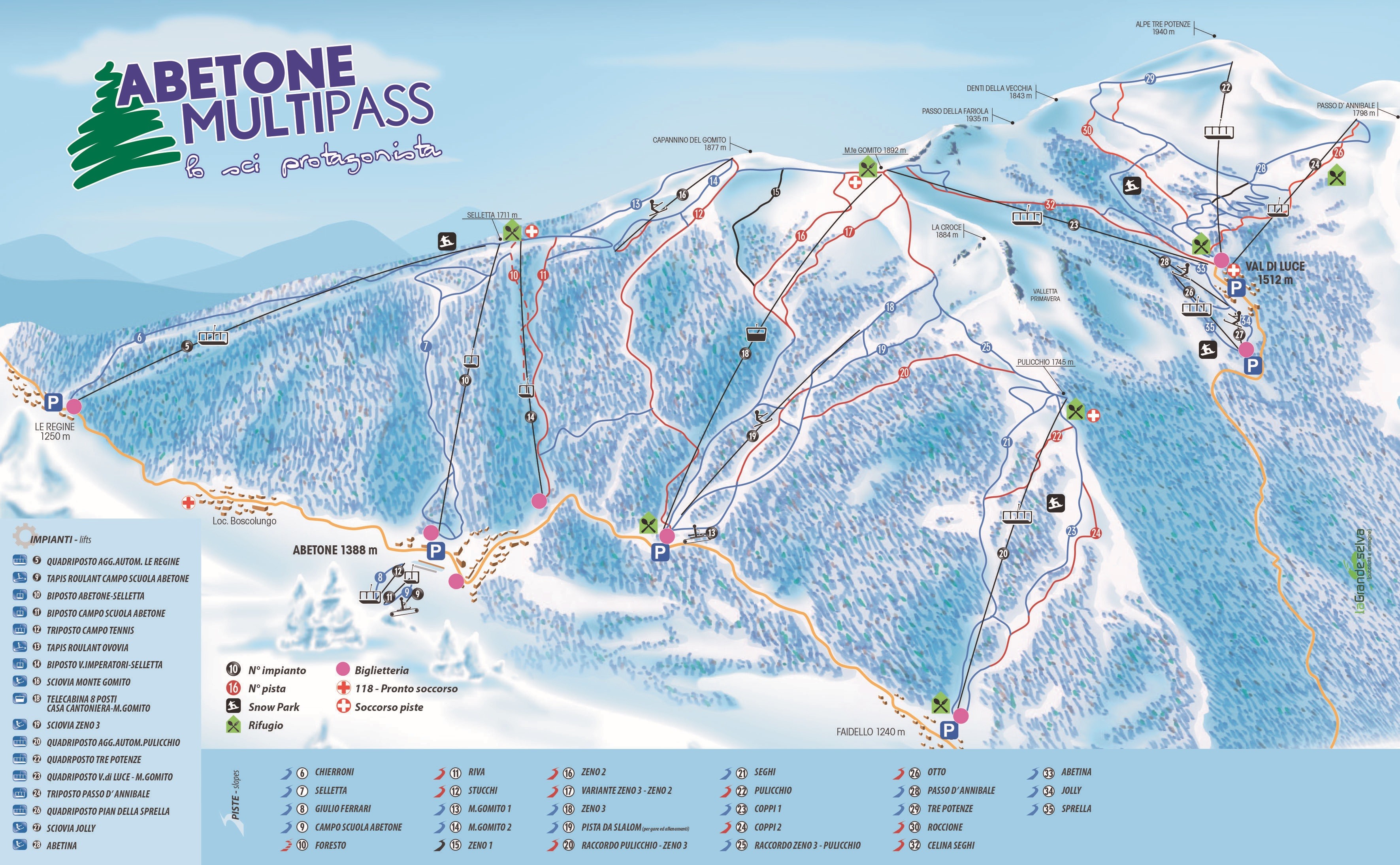
Abetone’s slopes are designed to safely cater for everyone from the most demanding skier to the complete beginner. There are 22 easy runs, 12 intermediate runs and 2 challenging runs. There are also pistes for alpine skiing (50 km) and cross-country skiing (18 km).
Abetone is Tuscany’s principal ski area, and one of central Italy’s most important. It boasts around 50 kilometres of slopes, to which are added those of the smaller Cutigliano-Doganaccia resort, situated roughly 15 minutes’ drive away. Skiing takes place at the base and summit of Monte Gomito, accessible via a modern lift system—an 8-seater cable car departing from near the town centre, though everyone calls it the “Ovovia”. This peculiar name derives from the old system in place until the mid-1990s, a two-seater cable car with a curious oval shape.
From the centre of Abetone1, colloquially known as “il piazzale” (essentially a vast car park), departs the Selletta chairlift, which takes you up to Passo della Selletta, whilst a few kilometres away towards Pistoia—you’ll encounter it before reaching Abetone—lies the Le Regine area, where another chairlift also leads to the Selletta.
Part of Abetone’s slopes lies on the rear face of Monte Gomito, which forms what is known as Val di Luce, from where further lifts connect to the main resort. Val di Luce marks part of the geographical boundary between Tuscany and Emilia-Romagna, which is why many skiers arriving from Modena head here.
The 50 kilometres of slopes are artificially snow-made as well, served by 21 lift systems including chairlifts, ski tows and cable cars, and ski passes are purchased directly at the base of any lift. At the Abetone piazzale there’s a ski school, and dedicated training fields for beginners.
Parking tips
If you’re heading to Abetone to ski and you’re coming from Pistoia or from the Tuscan side of the SS12, it’s best to park at Le Regine and take the chairlift from there to the Selletta, saving yourself a few kilometres of driving and making parking much easier to find.
Whilst in winter Abetone attracts visitors practically daily, in summer it’s especially on weekends that it comes into its own. On Saturdays and Sundays the road to the pass is crowded with motorcyclists, and once you arrive, the piazzale has outdoor tables available to the public.
For children, what becomes a ski training field in winter is converted into a giant slide, whilst the little ones can have fun in the inflatable play area, open daily. Those seeking an adrenaline rush can ride the Ovovia to the summit of Monte Gomito, then descend via mountain bike (also available to rent locally) on what’s known as the Abetone Gravity Park2, whilst trekking enthusiasts can find walking trails of varying duration and difficulty.
Finally, in summer Abetone also attracts those who love traditional mountain cuisine, as many restaurants, both in the resort and at higher altitudes, remain open and serve their specialities.
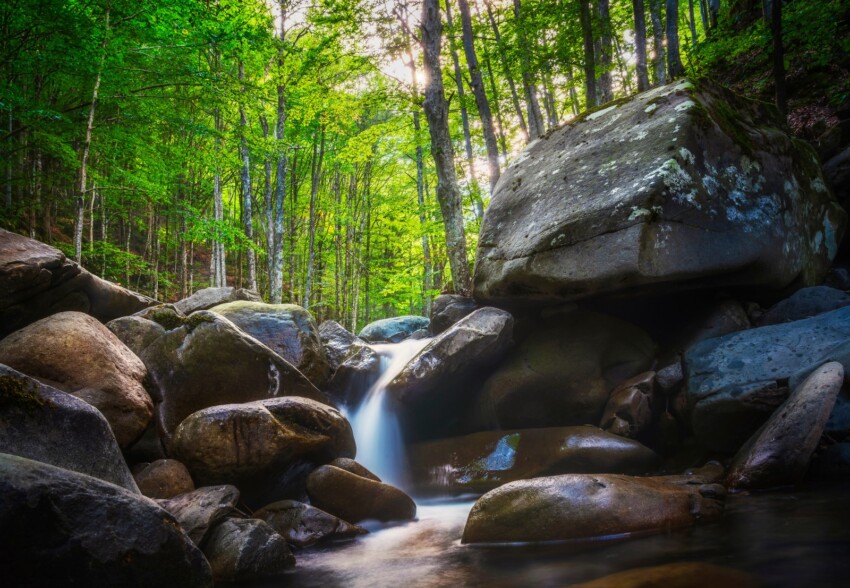
During the hiking season, thanks to the numerous trekking possibilities, Abetone becomes a favoured destination for those wishing to experience the Apennine landscape, flora and fauna. Whilst a thorough knowledge of trails requires consulting the Club Alpino Italiano (Italian Alpine Club) maps, we suggest a few of particular scenic interest.
From Boscolungo3, a two-and-a-half hour walk via a steep but spectacular route, you reach the summit of Libro Aperto4 (1,937 metres), an intriguing mountain with two peaks that from a distance resemble an open book, offering sweeping views.
Continuing on, after another two hours’ walk, you can reach Monte Cimone5, which at 2,165 metres is the highest peak in the Tuscan-Emilian Apennines.
Also from Boscolungo, there are two other highly rewarding routes to higher elevations: the first, taking three hours, after crossing the sources of the Sestaione stream, leads to Foce di Campolino6 (1,775 metres); the second, known as the lakes variant, suited for those with a full day available, takes in charming high-altitude lakes. Among these, Lago Piatto7 sits in Val di Luce, in a harsh landscape dominated by the striking architecture of the Farinati Hotel. Val di Luce, well equipped for winter sports, is also easily reached by driving along the SS12.
From the nearby village of Cutigliano8, you can instead set out on walks towards Lago Scaffaiolo9.
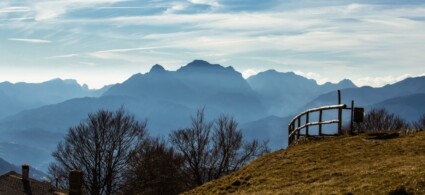
Abetone also offers a network of easy walks and, for those keen to explore Apennine flora in depth, a Botanical Garden, which is the starting point for one of five itineraries of the Ecomuseo Montagna Pistoiese10. During winter, the busy ski resort becomes the destination of choice for snow lovers, who find slopes of every difficulty level and a vast landscape where bare peaks alternate with wooded slopes.
The Alto Appennino Modenese Regional Park encompasses the entire Modena ridge, from the Alto Appennino Reggiano Regional Park to the Bologna park at Corno alle Scale, with highly diverse environments, and in some cases of significant natural value, ranging from around 500 metres to over 2,000 metres elevation. Particularly from mountain summits like Monte Cimone (2,165 metres), the highest peak in the entire northern Apennines, you enjoy sweeping views and can admire the splendid surrounding landscapes, with valleys crossed by numerous streams, dense beech forests and coniferous plantations, blueberry heathland, grassy clearings and crystal-clear lakes.
Among the finest examples of glacial formations found throughout the summit zone are the cirques of Monti Giovo and Rondinaio, which shelter patches of snowbed vegetation; beneath the steep sandstone cliffs of these mountains are some beautiful lakes, frequent destinations for outings and excursions: Lago Santo, Lago Baccio and the small Laghi Torbido and Turchino. Historic evidence of mountain architecture is also common, such as the so-called “Celtic huts” at Doccia.
The Ca’ Silvestro Visitor Centre situated a kilometre from Fiumalbo was once a completely self-contained residential settlement with its own oven and well. Today it has been fully restored and the old metato, the characteristic building used for drying chestnuts, now hosts the park information point and shop.
The facility features outdoor spaces for visitor rest, an exhibition room and spaces dedicated to the theme of Earth and Fertility, with thematic exhibitions on wildlife, forest life and specific aspects of local culture (chestnuts, charcoal pits, Celtic huts).
An imposing coniferous forest immediately marks the territory of the municipality, whose interest is primarily naturalistic and sporting in character. However, a few buildings linked to the area’s history and the Via Modenese passing through it are worth mentioning: the Customs House and Post Station, the Church of San Leopoldo and the Pyramids.
Abetone, situated at 1,388 metres, is the hub of the eponymous tourist resort. Being a small locality of some 600 inhabitants, scattered across various hamlets such as Boscolungo and Consuma, there isn’t a great deal to see at Abetone. However, we’d highlight the botanical garden, opened in 1987 and easily reached by car following signs for Pian di Novello, though it’s only open in summer from June to September.
In the resort, it’s worth stopping to see the international monument to peace, built in cast bronze in 1994 by master sculptor Gino Terreni, depicting three young people releasing doves of peace.
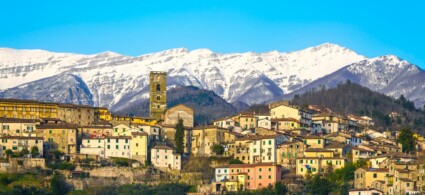
Don’t miss the settlement of Cutigliano either, which you’ll find 13 kilometres before the pass when coming from Pistoia. It’s a beautifully preserved medieval village, whose historic centre is compact yet decidedly pleasant to explore on foot. There are various shops, a few bars and restaurants, and everything has a more relaxed, less touristy atmosphere. From Cutigliano you can also take the cable car that departs directly from the village to reach the sunny Doganaccia mountain, where in winter there are some ski runs suitable mainly for beginners, whilst in summer it’s a perfect destination for relaxation or to set out on exciting walks.
In the following map you can see the location of the main places of interest mentioned in this article.
Don’t expect wild nights at Abetone, but this small mountain resort does have some cards to play, especially in winter, given that many people stay overnight, particularly at weekends but also during white weeks. Therefore, at Passo dell’Abetone you’ll find several bars and restaurants open late.
The premier nightspot at Abetone is the Lupo Bianco nightclub, situated right in the piazzale.
Despite its small size, there are several hotels at Abetone, some located directly in the resort, others scattered around the other settlements or hamlets. Accommodation is fairly evenly split between hotels and holiday apartments. There’s also a hostel, suitable for young people or those on a tight budget.
There are plenty of hotels at Abetone, some even offering excellent facilities and services. Skiing enthusiasts can choose a hotel near the lifts, so you can reach the slopes on foot. Alternatively, other hotels are scattered across the municipality. It’s also worth considering staying in Cutigliano village centre, with its charming historic core and far more “village” feel compared to Abetone, though it’s about 20 minutes’ drive away.
Those preferring independence and self-catering can choose from the numerous private accommodation options at Abetone and its surroundings. In the resort there are several holiday homes, residences and apartments let to tourists especially during the winter season. Book them well in advance: you risk finding everything fully booked, particularly in seasons when snow is abundant.
From Florence, the route to Abetone takes you first to Pistoia, then up the SS66 Pistoiese state road, which winds its way up the mountainside through the villages of San Marcello Pistoiese, Campo Tizzoro and Limestre, crossing the Oppio pass at almost 900 metres above sea level. Further down, at La Lima, it joins the SS12 Abetone and Brenner state road, and after passing through Cutigliano, leads directly to the pass.
From Florence city centre, allow approximately two hours, taking the A11 motorway to Pistoia and following signs for the SS66. From the Pistoia motorway exit, the journey takes around one hour and 10 minutes, covering roughly 50 kilometres.
If you’re coming from Pisa, Lucca or the Tuscan coast, the route to Abetone is different. The journey goes via Lucca and the Garfagnana, taking the SS12 state road directly through the villages of Ponte a Moriano, Borgo a Mozzano and Bagni di Lucca, before reaching La Lima (where the SS66 from Pistoia merges in) and continuing towards the Abetone pass. In terms of travelling time, it takes roughly two hours from Pisa, one and a half hours from Lucca, and almost two hours from Viareggio.
Abetone is also accessible by public transport. There are no trains, of course, given that it’s a mountain pass, but there are buses departing from Santa Maria Novella station. Public buses also run from Pistoia, right in front of the railway station. You can therefore take the train to Pistoia first, then continue by bus.
What's the weather at Abetone? Below are the temperatures and the weather forecast at Abetone for the next few days.
The Abetone Pass lies within the municipality of Abetone-Cutigliano in Pistoia province, along the SS12 state road connecting Abetone and the Brenner Pass. You'll find yourself in the heart of the Pistoia Mountains, just a stone's throw from the Emilia-Romagna border.
 Hotel
Hotel  Budget accommodations
  Apartments
  Family Hotel
  Luxury Hotel
  Resorts