Hotel Villa Delle Rose
Pescia - Via Del Castellare 21
Book now
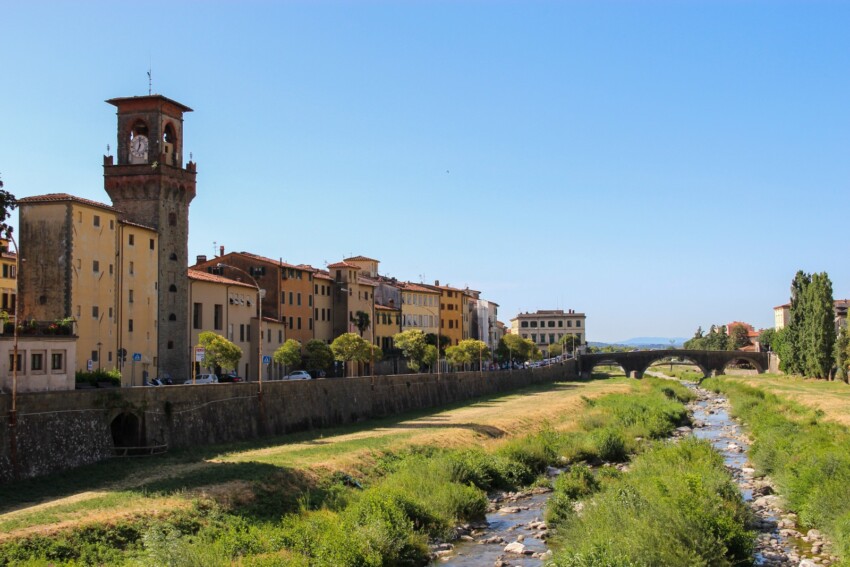
The town of Pescia has ancient medieval origins; divided by the river, it is distinctly characterised by two urban sectors: that of the Cathedral and that of the Town Hall, where the great piazza extends.
Ancient palaces and elegant churches characterise the historic centre which, despite having undergone considerable restoration, still retains its original form.
To the east is the urban nucleus of circular form that originated from the Pieve di S. Maria, now the Cathedral; to the west, by contrast, the nucleus of the civitas develops with a distinctive longitudinal urban design, featuring the piazza and the palaces of civic administration; the latter originated from the castle of Pescia which in the medieval period was under the jurisdiction of the Bishop of Lucca.
The Ponte del Duomo unites these two so distinctly divided poles, the “religious and the civic”.
Pescia, precisely because of its urban layout and its history rich in events, has for time immemorial been considered the capital of the Valdinievole.
Rich in documentary and artistic testimony, Pescia still appears today as a fascinating place where you can spend days amongst the verdant surrounding hills and the characteristic streets that tell a tradition and a history spanning several centuries.
The earliest images of Pescia date back to the Fifteenth century and highlight the two positions (castle-church) and the steep hill that descends towards the river.
In 1339 the castle of Pescia, after a history of several centuries under Lucchese rule, passed under Florence. On 6 February 1339 the Florentines entered Pescia and from that moment the community followed the fortunes of the Florentine government.
The grand ecclesiastical structures, whilst almost all having medieval foundations, underwent significant architectural and decorative alterations in the Seventeenth and Eighteenth centuries.
In the Seventeenth century, indeed, Pescia experienced its finest artistic and political season; the community began to acquire a more urban character; the small institutional entities, which until then had had a more familial nature, began, so to speak, to become genuine services for the local society.
The Municipality of Pescia extends over a territorial area of 79.14 square kilometres. Its main tourist attractions are the Castles of the Valleriana and the village of Collodi, which is famous throughout the world because the author of The Adventures of Pinocchio chose to take the name of this village.
Today the town of Pescia is renowned for its floriculture production and as a distribution centre for flowers from Central Italy.
Passing through the narrow passage beneath the bell tower, we find ourselves before the Duomo. We are right in the religious heart of the town. Preceded by the fine Fourteenth-century bell tower, here stands the great façade of the Cathedral. The imposing Twentieth-century architecture conceals the medieval origins of the building. Indeed the first church dates back to the Ninth century. The Duomo inside displays elegant and austere architecture, and also possesses important works of art.
The citrus garden in Pescia is an internationally acclaimed garden, unique of its kind as it houses over 200 varieties of citrus fruits from around the world. A genuine botanical park, where every visitor has the opportunity to admire and deepen their knowledge of citrus plants.
Hesperidarium offers a particularly inviting experience for visitors unfamiliar with the subject. The plant collection is set within a scenic context straddling ancient and modern times, featuring pathways, vegetative tunnels, fountains and large figures inspired by the tale of Pinocchio that rise among the plants and captivate even the youngest visitors.
The garden will surprise visitors with a new and curious route: giant fruits with intricate and horn-like shapes, spherical and elongated forms, foliage in different colours and patterns, fragrances and hues from the most remote corners of the earth. You can admire ancient cultivars and rare and exotic varieties, as well as more recent discoveries from the Southern Hemisphere.
With 2,000 square metres of space, the large greenhouse acts as a protective cover for the park, shielding it from the elements and allowing you to visit in any weather conditions.
Walking along Via della Cattedrale (alongside the Duomo) you arrive at Piazza Garzoni where we find the church of S. Chiara and the convent of the Poor Clare nuns with its beautiful cloister restored in 1582. The church of S. Chiara, despite showing an Eighteenth-century façade, preserves inside the wooden beams of the roof, typical of Franciscan architecture.
Opposite the Duomo is the church of S. Maria Maddalena. On the Baroque altar stands the Crucifix known as “della Maddalena” dating from the second half of the Fourteenth century. Since 1700, every twenty-five years, the crucifix is carried through the streets of the town and on that occasion, called the “Festival of May”, the palaces and hills are illuminated with wax candles.
Before leaving the quarter, in the area called “sdrucciolo del Duomo” (Piazzetta Ducci), you can see the Palazzo of the Cecchi family with a fine internal portico characterised by columns and Renaissance capitals.
Walking along Via Giusti towards the bell tower of the Duomo, on the left you will find the Arch of the Pozzino.
It is believed to have been an elevated passage from one building to another. The stone arch, possibly reclaimed from the ancient walls, connects two palaces.
One that once belonged to the canons of the Duomo and another belonging to the Bellandi family.
Coming from Montecatini Terme, the first monument a traveller encounters is the Porta Fiorentina. It was erected in honour of Gian Gastone dei Medici.
The architecture reveals a distinctly Florentine style with artistic decorations from the Baroque period, and was completed in the spring of 1733.
Passing through the arch of the bell tower you access the cloister of the Bishop’s Palace. Inside the palace is the Bishop’s Chapel, adorned by a beautiful triptych by Luca della Robbia.
To see all the facilities and book accommodation in Pescia use the form below, entering the dates of your stay.
 Hotel
Hotel 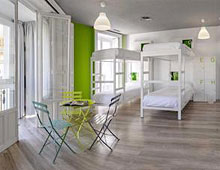 Budget accommodations
  Apartments
  Family Hotel
 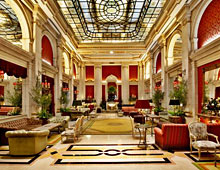 Luxury Hotel
 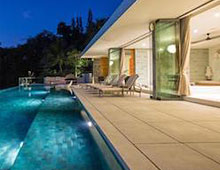 Resorts