Florence: Uffizi Timed Ticket & Masterpieces Audio App
7.148 reviews
Buy now
From 27,20€ per person
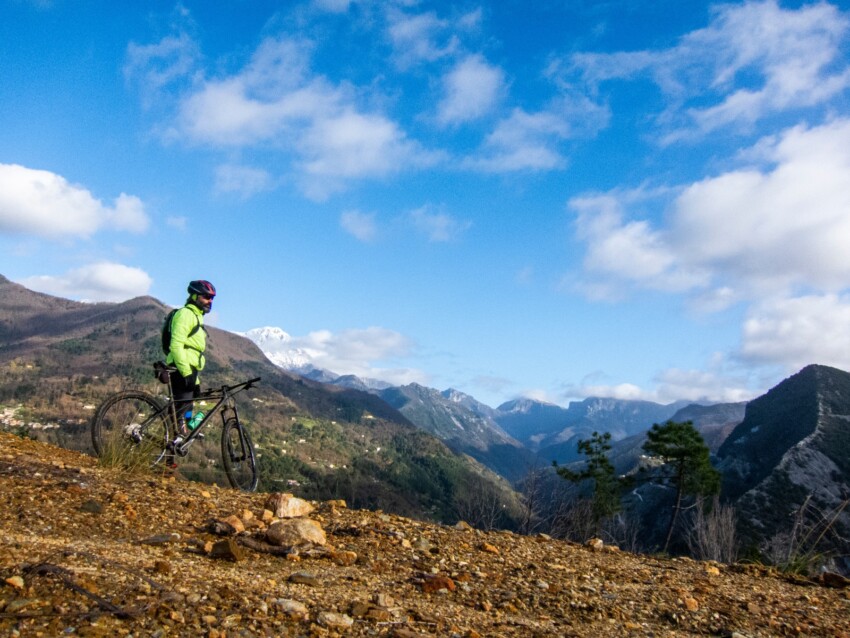
Mountains, as natural obstacles, are often regarded as frontiers meant to separate opposing realities. Yet border zones cannot be viewed solely as separating elements: they should instead be understood, in their salient characteristics, as “centres of expansion and influence, small worlds endowed with their own value and capable of attracting, of binding together, tightly, men and countries” (Febvre).
Amongst the distinctive features of border zones, especially mountainous ones, were—and remain recognisable today—the roads leading to mountain passes; places of welcome for travellers (churches, hospices and inns); customs posts and other military and/or commercial control structures.
The mountain environment, particularly in the past, but not only then, was characterised by concentrated human settlements (castles and hamlets), by the presence of extensive woodlands, pastures and meadows, by streams and watercourses dotted with mills and by a dense network of trails. Dominating it all—and still dominating—was “the alp”, a natural frontier passable according to the various seasons of the year.
The evidence of material culture, popular traditions and tales, and indeed the very reports of government officials, speak to us of a world of hardship and scarce resources.
Historical cartography, notable also from an aesthetic standpoint, allows us, as if through a “snapshot” from the past, to visualise the mountain “landscape” as it appeared in ancient times, through to the transformations of the modern age.
Drawing inspiration from this rich documentary heritage, the project “The Ancient Frontiers of Pistoia Mountain” positions itself as a meeting point between the demands of historical research and the contemporary needs of cultural and sporting tourism, as well as education, fostering the preservation of the territory’s original character and a genuinely ecological, participatory and conscious awareness.
An easy 8 km circular route, half on unsurfaced track and half on footpath. Halfway round there is a fountain and an equipped rest area. The unsurfaced section is gently graded at 2.5% and can be tackled by families with children and wheelchair users (with mandatory accompaniment). Fine views over Libro Aperto and the Modena side.
A more demanding itinerary: a short initial climb to the summit of Monte Maiori, descent to Serrabassa and then continuous climbing to the peak of Libro Aperto at 1937 m. It is advisable to top up on water at the fountain along the route. Excellent panoramic views across the Apennine ridge and of Monte Cimone (recognisable by the buildings at its peak).
An easy loop to complete entirely on mountain bike. It is not very long but allows for interesting hiking variants such as the Monte Maiori loop and variants requiring moderate fitness: towards Libro Aperto on valley paths, towards Secchia and Bicchiere, then down to Rivoreta and back up to Abetone from Pianosinatico; or from Boscolungo you can take the CAI trail no. 102 which links with the Sestaione valley. We recommend bringing a water bottle and, above all, a helmet.
An easy 2 km route (there and back) on road and mule track. Most atmospheric yet little known. From the car park, after a short gently sloping section, you quickly reach Castruccio bridge, then the small bridge over Rio Torbecchia. A short further stretch of mule track skirting the Lima watercourse brings you to the bridge over the Liesina stream. This itinerary can be done at any time of year.
Having crossed Castruccio bridge you join the old mule track that climbs up to the village of Popiglio and from there, via old characteristic roads you climb to the upper part of the village and finally to the ancient towers built on the promontory overlooking the Limestre and Lima valleys.
A challenging 37 km loop on unsurfaced and surfaced roads to complete entirely on mountain bike. From Lambure car park you reach the surfaced road connecting to Piteglio. Beyond the hamlet of Migliorini, after a few hundred metres you turn right and reach the village of Piteglio. Near the schools you descend to the valley bottom and climb back up to Casa di Monte on a surfaced road. From here you descend to the junction to reach first Crespole, then Lanciole and Pontito before climbing back to Croce a Veglia. On unsurfaced road you descend near Lucchio to continue on surfaced road until the bridge near “Tana”. From here you climb back to Popiglio and then descend on the mule track to Castruccio bridge.
We recommend bringing a water bottle and, above all, a helmet.
A moderately demanding 15 km route (there and back) on footpath and mule track. From Orsigna village you walk a short surfaced section before taking the ancient mule track that climbs fairly steeply to Case Moretto, then to Case Aldria. Near the unsurfaced road to Case Paoluccio you bear left and walk a nearly level section to the Gabelletta spring. The entire route is shaded by chestnuts and beech trees with scattered conifer groves.
From Case Paoluccio you continue eastwards along the unsurfaced road climbing gently. In just under 30 minutes you reach the junction for the path that climbs steeply to Passo del Termine. The ridge marked the frontier between the Papal States and the Grand Duchy of Tuscany.
It is advisable to top up on water at the start.
A loop with considerable elevation gain, quite demanding at 33 km to be tackled almost entirely on mountain bike. From Orsigna village you reach Case Corrieri and take the unsurfaced road that climbs to Porta Franca refuge (the last section on foot). From the refuge you climb steeply onto the Apennine ridge before descending on footpath to Casetta Pulledrari. After a few kilometres of tarmac you follow a comfortable unsurfaced road that cuts across the southern slope of Punta della Crina before finally descending to the surfaced road for Pracchia, which brings you back to Orsigna.
We recommend bringing a water bottle and, above all, a helmet.
A moderately demanding 7.5 km route (there and back) entirely on footpath. From Doganaccia you first climb steeply then at mid-slope traverse the southern side of Monte Spigolino to reach Passo della Calanca. A short further stretch brings you to Scaffaiolo Lake. Halfway round you encounter livestock enclosure gates and a fountain. Fine views across the entire Apennine ridge.
From Scaffaiolo Lake you continue eastwards along the ridge path. In just under 45 minutes you reach the summit of Corno alle Scale at 1945 m. It is advisable to top up on water at the start.
A quite demanding 20 km loop to complete entirely on mountain bike. From Doganaccia you descend on unsurfaced road to Vizzaneta, a small hamlet near Lizzano. Then on surfaced road you descend to State Road no. 12 and follow it to Casotti. Having crossed the Lima stream bridge you climb for a kilometre to Cutigliano. From here you can reach Doganaccia by cable car or by retracing the surfaced road past “Il Melo”. The route allows for numerous interesting hiking variants. We recommend bringing a water bottle and, above all, a helmet.
An easy walk on unsurfaced road. From Pian degli Ontani village you descend to Sestaione stream and follow it uphill at gentle gradient until you reach the foot of the steep path to Torre del Fattucchio.
The route follows well-marked CAI paths through an area considered amongst the most beautiful in Pistoia Mountain until it connects with the summit of Tre Potenze, the ancient frontier between the Grand Duchy of Tuscany, the Duchy of Modena and the State of Lucca. From the summit there are excellent views.
The route runs almost entirely on unsurfaced track through the beech forest of Pian di Novello. It presents no technical difficulties, however, given the elevation gain on the ascent, reasonable fitness is required.
An easy walk on unsurfaced road. From Pian dei Termini you follow a gently sloping section that soon enters a dense conifer forest. A small spring with mineral-rich waters is the destination of this route.
The route follows well-marked CAI paths through Teso forest. From Pian dei Termini you climb continuously, except for brief nearly level sections, to the excursion’s destination. Along the route you enjoy striking views across the major peaks of the Northern Apennines.
A loop of moderate difficulty, though very short. The first tarmac section connects to Pratorsi refuge, then continues on footpath and unsurfaced road stretches. The elevation gain and steep descents make this itinerary particularly distinctive.
An easy walk on mule track. From the village you take the old mule track that climbs first to the Convent then to Sambuca. You quickly reach the fortress from which you enjoy a striking panorama of the Limentra valley and the Apennine peaks.
From the fortress you descend through the village and take the path that retraces the ancient Via Francigena to Pavana. The gently sloping route passes through lush forests of chestnut, maple and alder in an almost surreal tranquillity, before finally arriving at Pavana.
From the spa resort famous for its waters you climb fairly steeply to the saddle between Poggio dei Lagoni and Poggio del Papa and traverse the ridge that divides the Reno and Limentra valleys at height. The loop closes by following State Road no. 64 to Ponte alla Venturina and then along State Road no. 632 “Traversa di Pracchia” for roughly fifteen kilometres.
 Hotel
Hotel  Budget accommodations
  Apartments
  Family Hotel
  Luxury Hotel
  Resorts