Holiday Home Il Borgo Degli Agrumi
Uzzano - Via Alessandro Bardelli 32-36b
Book now
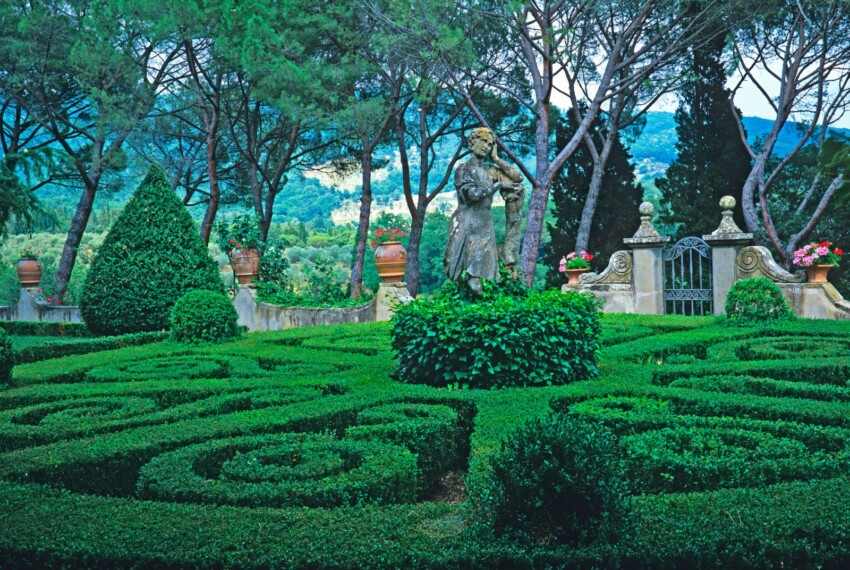
One of the most evocative medieval settlements in the foothills of Valdinievole, this charming town stretches across 7.82 km² of rolling hills, commanding views over the flat basin of the Pescia stream. Originally a free commune and later the seat of a podestà, it was formally constituted as a municipality in 1775 and reached its current boundaries in 1963 following the separation of the Chiesina Uzzanese district. Records of Uzzano as a commune under Lucca’s authority date back to the early 12th century, though the fortified settlement has even earlier origins. It became part of the Florentine State in 1339. The castle is accessible from Pescia and the S. Lucia district, entered through the Porta delle Pille, formerly known as the Porta Nuova.
The castle once had three gates: one near the church, called the Porta Tassinaia, which has since vanished. The main square, paved entirely in stone, is dominated by the Palazzo del Capitano del Popolo, featuring single-light windows on the first and second floors and a spacious loggia supported by sturdy pillars on the ground floor. A short climb brings you to the Church of Saints Jacopo and Martino: a single-nave structure with a magnificent façade crowned by a colonnade and adorned with a rose window and a lunette in white and green marble from Prato, flanked by an elegant bell tower with twin-light windows. Inside are several notable artworks: a 15th-century sculpture of Sant’Antonio Abate in the Robbian style, together with paintings from the 16th and 17th centuries.
From the piazza, you can enjoy magnificent panoramic views.
The town’s historical prosperity was rooted in thriving agriculture, particularly the cultivation of olives and vines. In the 18th century, mulberry trees were introduced to support the raw silk industry. Today, olives still flourish on the hillsides, whilst flower cultivation has developed in the plains. Historically and still today, the area has supported brick kilns and glassworks, supplemented in modern times by metalworking shops and enterprises involved in paper, textiles and rubber production. The town’s coat of arms depicts burning wood with flames leaping upwards in their natural colours.
In heraldry, fire symbolises courage and generosity, and this emblem may well reference the theory that Uzzano‘s name derives from the Latin “urere”, meaning to burn. This connection to fire appears to be supported by Boccaccio, who mentions Uzzano whilst describing a small volcano near the Rio Furicaia.
The Palazzo del Capitano stands as an important example of 13th-century architecture, with the earliest documents referring to it dating from 1202. When much of Valdinievole came under Florentine control, Florence appointed a Podestà to lead the Council and a Capitano with twelve soldiers to garrison the Rocca. It served as the seat of the Comune until 25 August 1773, when the administrative centre relocated to Pescia at the Palazzo Magnani. During this period, the palazzo underwent Baroque architectural modifications, including the closure of the loggia, the addition of a balcony on the south side, the installation of an internal staircase within the loggia and other alterations that diminished its original splendour.
The building was restored to its current form through restoration work undertaken in 1934, which focused primarily on the external structure, though limited attention was given to the interior, where only a fresco and the central pillar survived.
To see all the facilities and book accommodation in Uzzano use the form below, entering the dates of your stay.
 Hotel
Hotel  Budget accommodations
  Apartments
  Family Hotel
  Luxury Hotel
  Resorts