Florence: Uffizi Timed Ticket & Masterpieces Audio App
7.148 reviews
Buy now
From 27,20€ per person
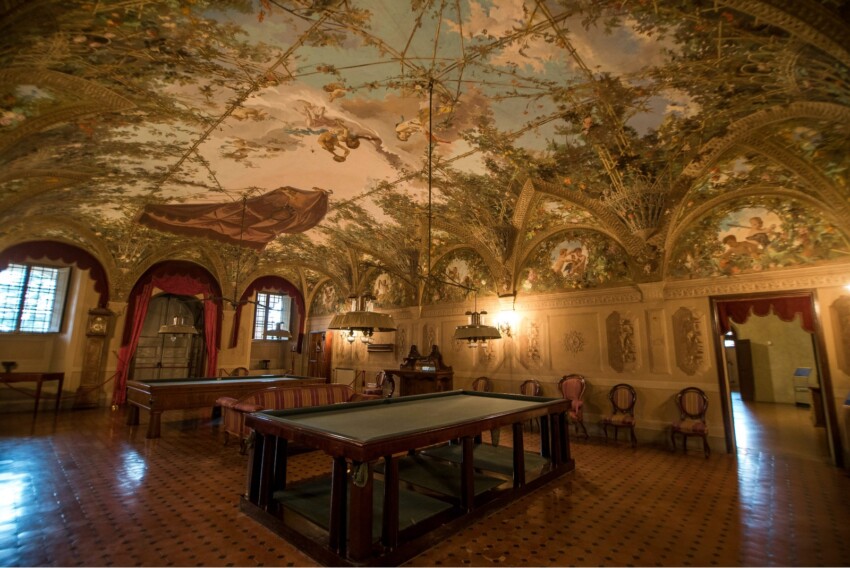
Nestled in the Tuscan landscape among farmhouses and hamlets, cultivated fields and gardens, the Pistoia villas embody a culture of relationships where rural labour, scholarly pursuits, conversation, and a passion for excellence, art and nature intertwine – all reflecting a harmonious balance between man-made beauty and the landscape’s natural splendour.
A tradition born in the Middle Ages, enriched through the Renaissance, Baroque and enlightened eighteenth century, which you can still experience by visiting one of these villas.
Leaving Pistoia towards Capostrada, just a few kilometres away, you can visit the villa that Tommaso Puccini commissioned from Pistoia engineer Buonsignori in the eighteenth century. In the park surrounding the villa, known as the villon Puccini, statues and many exotic plant species were placed. The villa is currently home to the School of Music and the Italian Academy of Music for Organ. The park is open to the public.
Heading out of Pistoia towards Montale, in the Santomato area, you’ll find Villa di Celle. The noble Pistoia family of Fabbroni transformed the building and had the garden redesigned by architect Giovanni Gambini. In 1969 it was acquired by businessman Giuliano Gori, an art collector, who created an extraordinarily rich open-air contemporary art museum set within lush greenery. The park boasts numerous tree species, from firs and cypresses to pines.
Not far from Villa di Celle, in the Montale area, you’ll find numerous villas, including the fifteenth-century Villa Smilea, which boasts remarkable architectural charm, distinguished by two tall towers. Once a fortified stronghold, it later became a grand residence and agricultural estate. Recently acquired by the Municipality of Montale, it now hosts modern and contemporary art exhibitions among other events.
Very close to Quarrata town centre, the villa, designed by Buontalenti, retains its late Renaissance architectural features, with stone-framed windows and a stone gate decorated with columns leading into the park of oak, holm oak and black walnut trees. The garden with its pond follows a Baroque layout. For its outstanding landscape value, the “Bosco della Magia” (Magic Wood) was awarded the Touring Club Prize in 2008 in the “Protected Natural Areas” category.
Not far from Montecatini town centre, the villa, which served as a summer residence for a noble Florentine family during the eighteenth century, is surrounded by an extensive park. It is currently home to the municipal library.
At Borgo in Buggiano, heading towards Ponte Buggianese, you can visit Villa di Bellavista, one of the finest examples of Tuscan Baroque, now housing the Historical Museum of the Fire Brigade. Designed by Antonio Maria Ferri, the most fashionable architect in late seventeenth-century Tuscany, its interior is decorated with frescoes by Pier Dandìni. The garden is divided by a grand avenue with statues and ornamental vases on either side.
Renaissance and Baroque merge in the garden and villa Garzoni. The spectacular centrepiece is the imposing staircase, with a cascade running along its central axis and a double flight decorated with mosaics and terracotta statues. Also worth visiting are the Medici villas of nearby Montalbano.
Now owned by the municipality, the villa stands at the heart of the town. It was built for journalist, writer and politician Ferdinando Martini by architect Cesare Spighi in 1887. Inside, the rooms are decorated with coffered ceilings featuring roundels of polychrome ceramics. The villa is surrounded by an extensive park. Today Villa Renatico houses the “Mac, n”: Museum of Contemporary Art.
The villa is located just outside Pescia and has belonged to the Cecchi family since the late seventeenth century. The park comprises a large lawn stretching in front of the villa, with two gardens on either side of it.
Just outside Lamporecchio, in the Spicchio area, the Pistoia-born pontiff Giulio Rospigliosi commissioned a splendid villa in the second half of the seventeenth century, designed by Gianlorenzo Bernini, still known today as the Villa di Spicchio. Inside, the spacious oval hall is decorated with frescoes by Ludovico Gemignani. Access to the villa is approached along a long avenue of holm oaks. The garden is a large lawn with a basin at its centre.
 Hotel
Hotel  Budget accommodations
  Apartments
  Family Hotel
  Luxury Hotel
  Resorts