Hotel La Pineta
Follonica - Via Delle Collacchie 67
Follonica's Hotel La Pineta features a bar with patio, and air-conditioned rooms and suites.
Book now
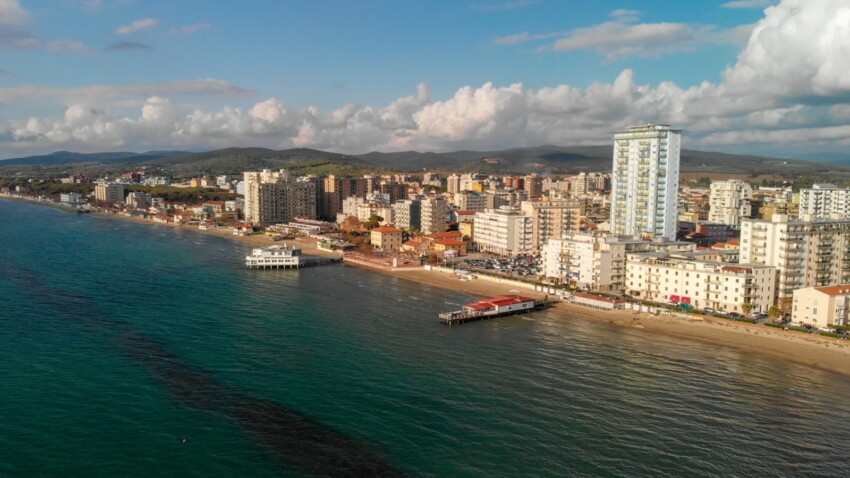
Follonica is located in Grosseto province, at the centre of the gulf of the same name, stretching from Piombino to Punta Ala. A town of around 20,000 inhabitants, it is undoubtedly one of the most important holiday destinations in southern Tuscany. Hugely popular with both tourists and residents of neighbouring provinces, Follonica caters to all ages and tastes.
Once an important iron and steel centre, Follonica today is almost entirely devoted to seaside tourism, thanks to its exceptionally long beaches and the numerous facilities it offers. Furthermore, Follonica makes an excellent base for exploring the surrounding area, from the Maremma to the Grosseto coastline: the exclusive resort of Punta Ala is just over 20 minutes away, while only 10 kilometres south you’ll find Cala Violina beach, one of Tuscany’s finest. Baratti, Populonia and other important spots on the Livorno coast are roughly 30 minutes’ drive away.
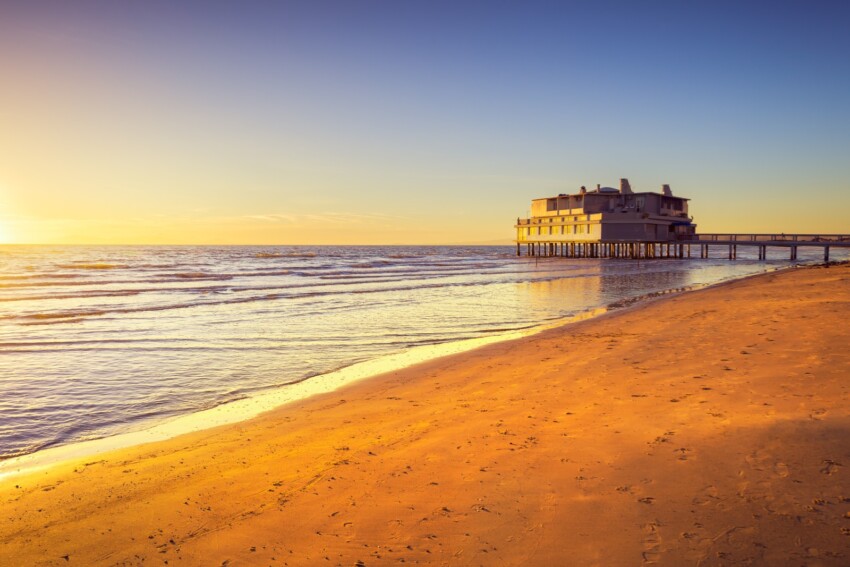
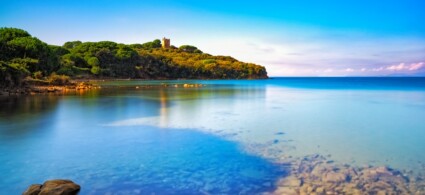
The main reason tourists flock to Follonica is its beaches. There’s a long town beach, popular with locals too, whilst to the north and south the atmosphere becomes more exclusive; the beaches are often isolated, backed by pine groves, trees or Mediterranean scrub.
What’s special about Follonica’s town beach is that it’s just a stone’s throw from the historic centre. In this area, Viale Italia, which runs along the entire coast, becomes pedestrianised and serves as the seafront promenade. The beach is mostly equipped with facilities, featuring several beach clubs where you can hire sunbeds and parasols, as well as enjoy services such as hot and cold showers, changing rooms and lifeguard cover. You can hire pedalos and take advantage of beachfront bars and restaurants, in an atmosphere that perfectly blends beach life with city living: behind the beach you’ll find numerous hotels, shops, ice-cream parlours, bars and restaurants.
Follonica’s town beach is divided in two by the channel mouth, which has created a small inlet where the Calaviolina sailing club is located. After crossing it, the beach continues: here you’ll discover a distinctive feature – many houses, many of which are rented to tourists during the summer months, overlook the sand directly.
North of Follonica you’ll find a series of less busy beaches compared to the town beach, sometimes even exclusive; however, they’re also much smaller, so they can still get crowded, especially during August weekends.
South of Follonica you’ll find the beautiful Levante pine wood, one of the town’s main green spaces. There are some beach clubs here, as well as several stretches of free beach.
Follonica is primarily a seaside destination, so attractions and monuments play a secondary role in the town’s tourism economy. That said, if you’d like to take a break from the beach and enjoy some culture, here are the most interesting sites.
The San Leopoldo church in Follonica is one of the town’s most distinctive and unusual buildings. It was built in 1836 at the behest of Leopold II of Lorraine, inspired by neoclassical style. What’s particularly striking is the use of cast iron, an highly unconventional material for religious buildings, but which here features abundantly both outside and inside.
The main entrance is notable, flanked by two rows of columns on either side, making it truly original. Inside there’s a single nave in the shape of a Latin cross with a barrel vault. Cast iron also appears frequently here, in the columns of the apse, at the base of the pulpit and in the presbytery balustrade.
Among the artworks to admire inside San Leopoldo church, particularly fine are the marble bust of Raffaele Sivieri, a statue of St John the Baptist and the Madonna and Child – a cast iron statue also known as Madonna Ilvania.
In Follonica, a striking witness to the town’s industrial past is the Ilva foundries area, known to all as the “ex-Ilva area”. Follonica was originally a crucial hub for ore traffic from the island of Elba, which was processed and refined here. Leopold II of Lorraine wanted to create what was known as a factory-town, now disused since Follonica’s iron and steel industry ceased in 1960; nevertheless, it’s interesting to visit some of the representative buildings to gain insight into the town’s past.
Among these, note the Bottaccio, a water reservoir dating back to the 16th century, the Magonale Gate, the entrance to the complex, featuring an artistic portal entirely in cast iron built in neoclassical style, the Condotta houses, which were lodgings for horse and cattle workers, a number of buildings (the Director’s residence, the Hospital, the inn and many others) and of course the foundries themselves, one of which today houses the Fonderia Leopolda Theatre.
The Bandite di Follonica, also known as the Bandite di Scarlino, are a protected natural area spanning over 8,000 hectares, designated as a site of regional interest and shared between the municipalities of Scarlino, Follonica, Castiglione della Pescaia and Gavorrano. Here you’ll find forests of considerable maturity and an interesting mining system both open-cast and underground, with alum mines of great naturalistic interest.
Much of the Bandite site is within the Montioni park, shared between Grosseto and Livorno provinces. Within it you can observe rare birds such as the Levant sparrowhawk and lesser grey shrike, which nest in this Mediterranean forest ecosystem rich in flora and fauna.
Within the park you can undertake hiking or mountain biking, thanks to an extensive network of trails and nature itineraries. The area is managed municipally, following a resolution approved by the Tuscany Region.
For art lovers, the Follonica civic art gallery is a must-visit during your stay in town. Located in this building in Piazza del Popolo is a collection of contemporary art inaugurated in 1995, featuring works by local artists such as Aviero Bargagli, Giuseppe Linardi and Walter Sabatelli, alongside renowned artists like Enzo Faraoni, Amedeo Modigliani and Piero Nincheri.
Moreover, since its opening, the gallery has organised exhibitions and shows, including those dedicated to Amedeo Modigliani, Joan Mirò and the Macchiaioli movement, as well as sculpture and photography. The layout spans two floors: ground level hosts temporary exhibitions, while the upper floor features permanent collections.
The gallery building is the former casa del popolo (people’s house), in neoclassical style with Art Nouveau decorations, built during the fascist era and originally used to house the fascist headquarters.
MAGMA (Museum of Cast Iron Arts in the Maremma) is one of Follonica’s most popular museums. Located within the old spaces of the San Ferdinando Furnace, the town’s oldest building, it’s dedicated to Italian iron and steel industry. It’s highly appreciated by visitors as it tells the story of industrial archaeology in an innovative way, making use of advanced multimedia technology.
The museum is within the ex-Ilva area and is open year-round six days a week (closed Mondays). Opening hours vary by season, so check the official website to plan your visit. Admission tickets are purchased at the desk; discounts are available for school groups and various memberships, while entry is free for under-12s and disabled visitors with a companion.
In the following map you can see the location of the main places of interest mentioned in this article.
Follonica is a tourist resort of nearly 20,000 inhabitants, so the municipal territory is quite extensive. If you’re looking for the best location to stay in town, you might consider remaining close to the centre, as you’ll have plenty of bars and restaurants, numerous shopping opportunities and access to the town beach.
If you prefer to stay in a quieter location head north, where you’ll find hotels just steps from the sea nestled in Mediterranean scrub, with all amenities available. South of Follonica, accommodation options are limited, with just a couple of campsites and a few hotels; this area is ideal if you’re seeking maximum peace and quiet.
We offer a selection of hotels at Follonica to suit all categories of travellers. The most booked by tourists are the sea-facing hotels, often right on the beach. If you want to play it safe, choose one of the following: they are among the most booked hotels in Follonica, sorted by number of reviews.
If you prefer space, privacy and the ability to prepare your own meals to a hotel holiday, book a holiday home at Follonica. We recommend a few below, but in this case we advise you to book early because houses and apartments for rent at Follonica are in high demand.
Follonica is easily accessible from the Tuscan coast as it sits on the SS1 Aurelia state road; the town centre is just a few kilometres from the Follonica Nord exit. From Pisa it takes about 1 hour and 25 minutes, whilst from Livorno it’s 1 hour and 10 minutes. From Florence the distance is greater, roughly 2 hours and 15 minutes: you’ll travel via the Florence-Pisa-Livorno expressway, which meets the A12 motorway at the Collesalvetti junction. From Rosignano Marittimo you rejoin the SS1 Aurelia and follow it to Follonica.
Follonica also has a railway station, located on the Tirrenica railway line, which connects Pisa to Rome, passing through Livorno as well. For this reason, reaching Follonica by train means first passing through one of these cities. From Florence for example the train journey takes between 2 and 3 hours. Once you leave the station, walking south for less than a kilometre will bring you to the seafront.
What's the weather at Follonica? Below are the temperatures and the weather forecast at Follonica for the next few days.
Follonica lies in the province of Grosseto, along the coastal stretch bordered by the headlands of Piombino and Punta Ala. The municipal area is adjacent to Massa Marittima and Scarlino.
 Hotel
Hotel  Budget accommodations
  Apartments
  Family Hotel
  Luxury Hotel
  Resorts