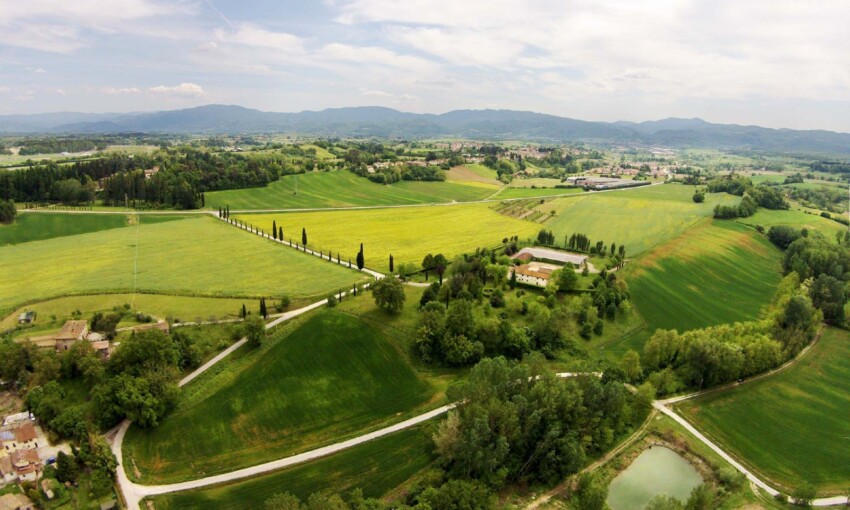
The expansive Mugello valley lies to the north of Florence, and is a fascinating tourist destination waiting to be discovered, thanks to the beauty of its landscape.
The Mugello is a hilly area situated north of Florence province. It boasts an ancient history, with Etruscan, Roman and Lombard remains, but it was under the Medici – the family that ruled Florence and hailed from these very parts – that the region truly flourished: villas and castles were built, still visible today, and the economy received a considerable boost.
Today, Mugello is a fascinating destination waiting to be explored, away from the beaten tourist track yet retaining considerable charm. For many, Mugello is synonymous with the international circuit, whilst for others it’s linked to Barberino Designer Outlet; others still will appreciate the Medici villas and the immense artistic heritage they house, whilst art lovers will want to visit Giotto’s house museum in Vicchio.
Whatever your ideal holiday, visiting Mugello means you’ll discover its charming towns and villages, along with some of its remarkable landscapes, from the Bilancino Lake near Barberino to the chestnut forests in the Marradi area, where chestnuts are practically an institution.
Mugello can be divided into two parts: one closer to Florence, which includes the municipalities of Barberino di Mugello, Borgo San Lorenzo, Scarperia e San Piero and Vicchio, and a more northern zone, known as Romagna toscana or Upper Mugello, encompassing the municipalities of Firenzuola, Marradi and Palazzuolo sul Senio.
Barberino di Mugello is among the most important municipalities in the Mugello area, located at the western edge of the region. With around 10,000 inhabitants, it’s a lively town year-round and conveniently accessible thanks to its motorway junction on the A1 autostrada.
In Barberino, the most important monument to visit is the Medici villa of Cafaggiolo, though the Villanova castle, Villa Torre il Palagio and Villa Le Maschere are also worth exploring.
Finally, Barberino di Mugello is close to the lovely Bilancino Lake, ideal for a relaxing day or water activities, and within its territory lies the Barberino Outlet Village, a true shopping paradise.
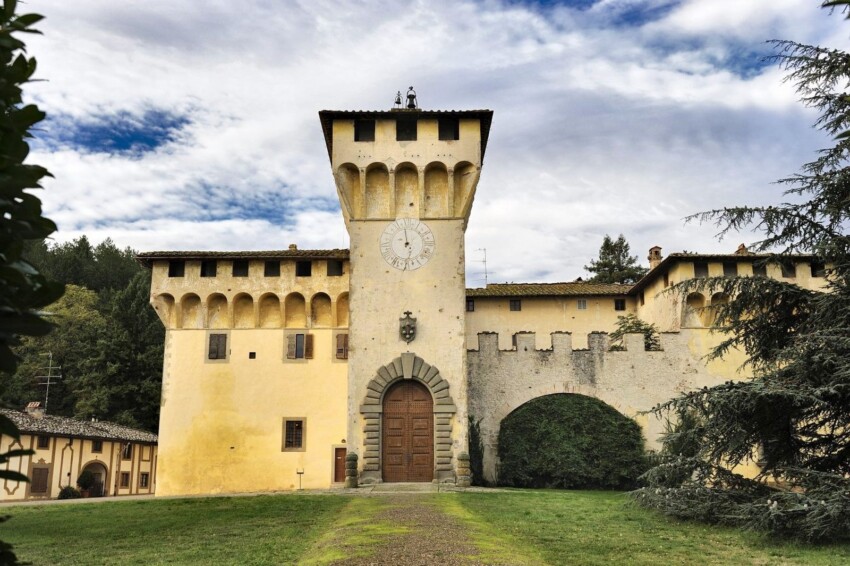
Cafaggiolo Castle
1Via Nazionale, 16, 50031 Barberino di Mugello FI, Italy
The villa or castle of Cafaggiolo was one of the Medici’s first residences outside Florence. Restored from the nineteenth century onwards, the villa no longer retains its original appearance, though Medici-era references aren’t lacking, particularly in the door decorations and sixteenth-century stables. The woods behind are noteworthy – an ancient hunting ground of the Medici family.
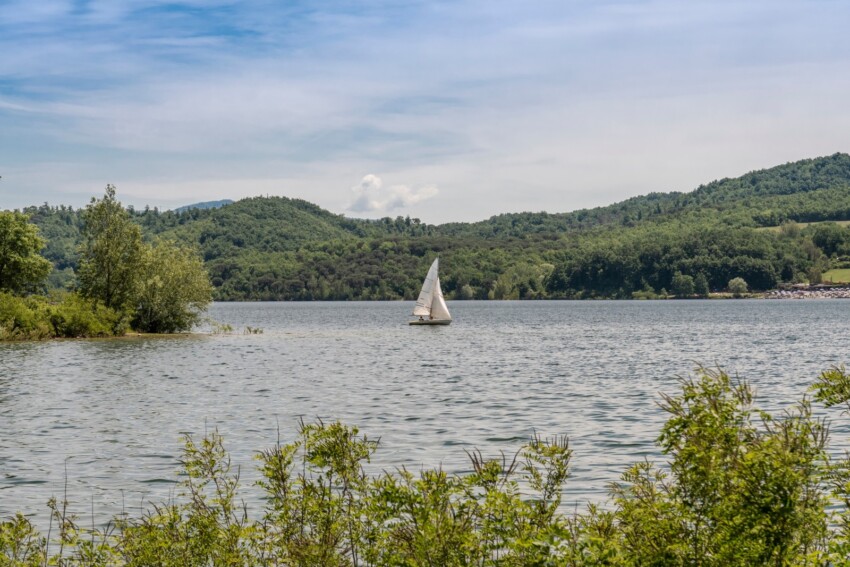
Bilancino Lake
2Lago di Bilancino, 50031 Barberino di Mugello, Metropolitan City of Florence, Italy
The Bilancino Lake is located in Barberino di Mugello and is an artificial lake created in 1999 with the opening of the dam on the Sieve river, designed to provide Florence with a water reserve in case of drought, whilst also limiting flood risks in the Arno plain.
The lake is an interesting destination for spending a day outdoors, and its shores offer opportunities for water sports such as canoeing, kayaking, sailing and windsurfing. There are several designated swimming areas, and during summer you can take a swim. You can also enjoy sport fishing or stroll along its banks thanks to the network of cycling paths and trails.
Furthermore, the lake is home to the Gabbianello WWF oasis, where you can participate in workshops and guided tours to discover local fauna, including mallards, storks and pink flamingos.
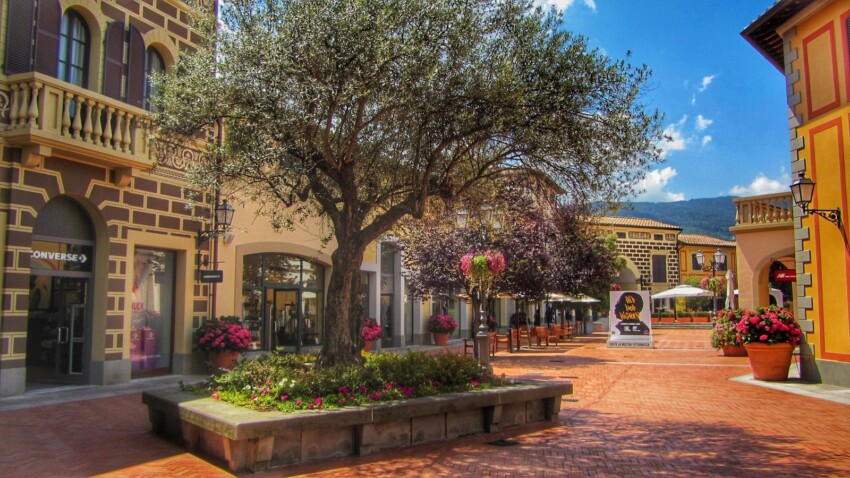
Barberino Designer Outlet
3Barberino Designer Outlet, Via Antonio Meucci, 50031 Barberino di Mugello FI, Italy
The Barberino Designer Outlet is located very close to the A1 motorway exit at Barberino and is a place where fashion and shopping enthusiasts will love spending an entire day. Part of the renowned McArthur Glen chain, it offers discounted prices on clothing from top brands.
Barberino Outlet Village, open daily from 10am to 8pm, is also accessible via shuttle service departing from Florence at Santa Maria Novella station, with departures every Friday, Saturday and Sunday at 9.30am, 11.30am and 2pm. Those preferring to drive will find ample free parking.
4Località Senni, 15, 50038 Scarperia e San Piero FI, Italy
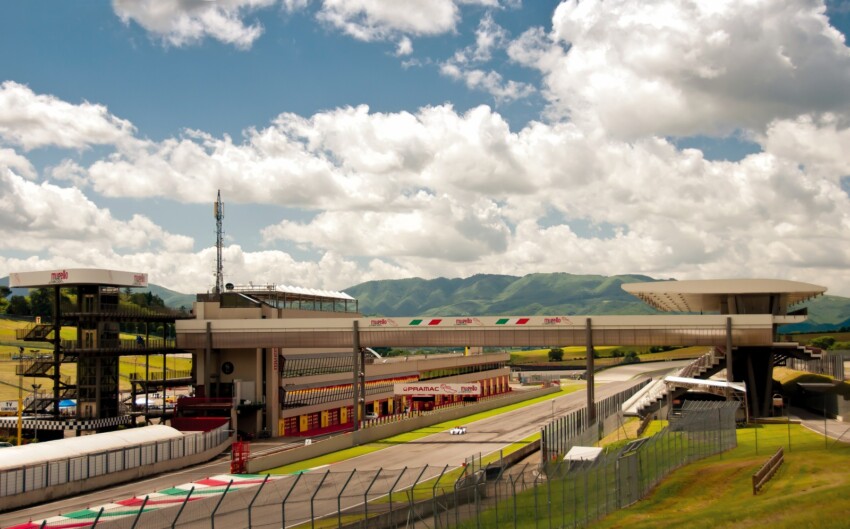
The famous Mugello racing circuit
For enthusiasts of two and four-wheeled racing, Mugello is synonymous with the international circuit. Every year the MotoGP Italian Grand Prix takes place here, along with other internationally significant races such as the Ferrari 1000 Tuscan Grand Prix in Formula 1, the Hankook 12h Mugello and the Mugello Classic.
The circuit can also be accessed for free practice sessions in a car or on a motorbike, with timed sessions and lap timing service available.
Scarperia merged with San Piero a Sieve in 2014 to form the municipality of Scarperia e San Piero. Its historic centre is charming and worth a visit; don’t miss the Chapel of the Madonna di Piazza, where Florence’s vicars came to swear allegiance in the 15th century. Today it houses some fine artworks, including a panel depicting the Madonna and Child by Taddeo Gaddi and a marble tabernacle by Mino da Fiesole.
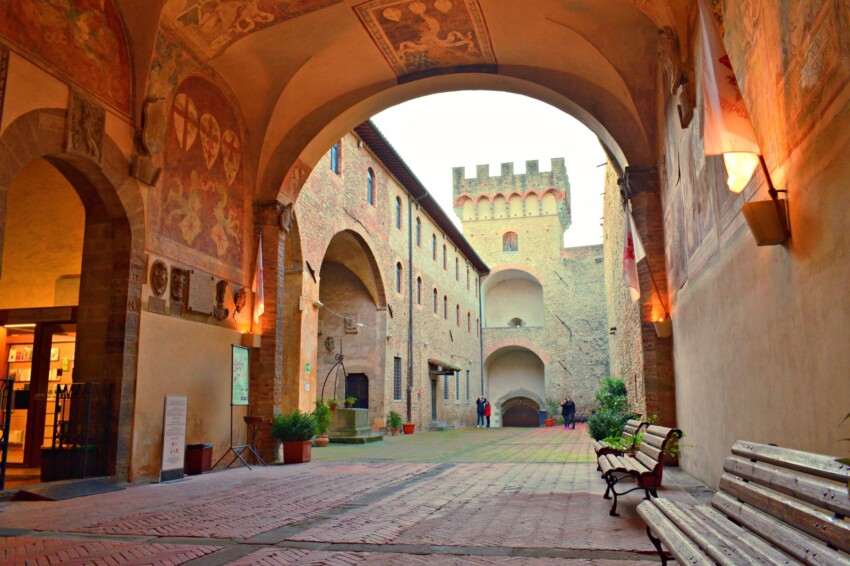
The Palazzo Pretorio, also known as the Palazzo dei Vicari, is equally impressive. Dating from the 14th century, it’s open for visits inside and out, featuring splendid frescoes and a clock tower designed by Filippo Brunelleschi. For a cultural interlude, visit the adjacent museum of edged tools, showcasing countless knives – a product for which Scarperia is renowned.
San Piero a Sieve is the other half of the Scarperia e San Piero municipality. The main attraction is the magnificent Medici Villa del Trebbio, a UNESCO World Heritage site since 2013.
The villa resembles a medieval castle so much that it’s popularly known as the Trebbio Castle. Situated on a hillock offering splendid views of the Mugello countryside, its original location was chosen as a strategic observation point. The Italian garden surrounding it is equally beautiful.
The Bosco ai Frati Convent is also worth visiting, founded in the 6th century and rebuilt in its present form by Cosimo I de’ Medici, known as the Elder, who added the bell tower, cloister and loggia according to a design by Michelozzo.
Don’t miss the Church of San Pietro, the town’s patron saint, overlooking a small square where you’ll find Girolamo Ticciati’s statue of San Pietro. The church was restored in 1776, while the bell tower dates from 1906. Inside is a beautiful six-sided glazed terracotta baptismal font, each face depicting scenes from the life of Saint John the Baptist.
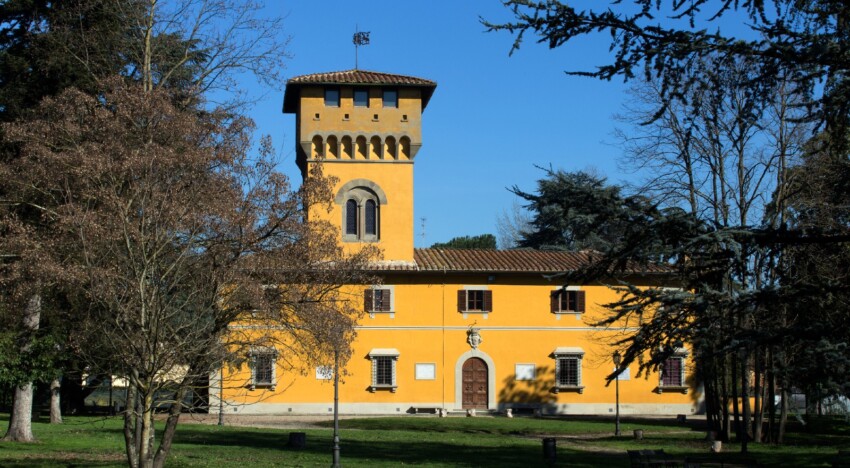
With 18,000 inhabitants, Borgo San Lorenzo is the most populous municipality in Mugello. Its notable features include 14th-century walls, the Church of San Lorenzo and the Villa Pecori Giraldi, which houses the Chini Manufacturing Museum. Attractions are plentiful, and as a proper town, it offers all necessary services.
In the surrounding area, visit the former San Pietro a Luco Convent, where the rectory contains paintings by Donato Mascagni and Lorenzo Lippi; the San Bartolomeo Monastery and the Sanctuary of the Madonna dei Tre Fiumi. Dog lovers shouldn’t miss the Monument to Fido the Dog, who lived in Luco del Mugello and for 14 years waited each evening at the bus stop for his master, who died in an air raid during the Second World War.
The presence of a railway station is also a plus, with trains departing from Florence Santa Maria Novella.
Though small, Vicchio is renowned amongst art connoisseurs as the birthplace of two world-famous artists: Giotto in 1267 and Blessed Angelico in 1395. Throughout its history, Vicchio has attracted other artists, including Benvenuto Cellini, who lived here for nearly 12 years, and Giosuè Carducci, a frequent guest of a local noble family who chaired the committee to build Giotto’s statue in the town centre.
After exploring the historic centre, visit the Blessed Angelico Museum of Sacred Art and Popular Religiosity, opened in 2000. If you’re here between June and July, don’t miss the Poggio Colla Etruscan excavations, conducted by American universities. Be sure to photograph the Montelleri cypress, or head to Vicchio Lake for a relaxing day, complete with a small island.
Also worth visiting is the Giotto House Museum, located on the Vespignano hill. Restored in 2008 and run by the Association of the Lands of Giotto and Angelico, it’s open on Sundays and certain holidays.
Marradi sits on the border between Emilia Romagna and Tuscany, in what’s known as Tuscany Romagna. Visit the historic centre with its 14th-century town hall and the Church of San Lorenzo, rebuilt in 1785 in neoclassical style.
Marradi is famous for its chestnuts and marrons, which have earned the PDO mark. The surrounding hills are covered with chestnut groves, and the product’s importance to the local economy led to the creation of the Maroon Route of Mugello Marradi. During the renowned chestnut festival in October, Marradi is accessible via a vintage steam train departing from Florence.
Marradi is also ideal for hikers and nature enthusiasts, with over 120 km of trails for walking or mountain biking, leading to three panoramic viewpoints and five mountain huts.
Palazzuolo sul Senio is a small village in the Upper Mugello, or Tuscany Romagna, that joined the most beautiful villages in Italy club in 2018. Located right on the border between the provinces of Florence and Forlì, it’s home to just 1,000 people.
Don’t miss religious architecture including the Sanctuary of Santa Maria della Neve di Quadalto, dating from 1459, the Abbey of Santa Maria a Susinana and the Church of Santo Stefano. The 17th-century Villa di Gruffieto is also interesting, nestled in woodland between Palazzuolo and Marradi. It once hosted notable figures including poet Dino Campana and humanist Gaspare Finali.
Palazzuolo sul Senio boasts two worthwhile museums: the Upper Mugello Archaeological Museum, featuring numerous prehistoric artefacts, and the Museum of Mountain People, showcasing traditional tools used by local farmers and craftspeople.
Covering 271 square kilometres, Firenzuola is the largest municipality in Florence province. Despite its size, it’s home to just 4,000 residents, though numbers increase during the warmer months thanks to tourism, particularly attracted by the surrounding beauty.
Climb to the summit of Sasso di San Zanobi, a rock formation near Caburaccia, and visit two similar formations nearby: Sasso della Mantesca and Sasso delle Macine. Head up to Passo della Raticosa, almost 1,000 metres above sea level, which was held by the Gothic Line during the Second World War.
Speaking of war, along the road to Passo della Futa stands the German Military Cemetery at Futa, located at approximately 950 metres altitude on a mountain summit, containing over 30,000 graves of German soldiers killed in action.
Map
In the following map you can see the location of the main places of interest mentioned in this article.
Where to stay in Mugello
Mugello is vast, and choosing where to stay can be trickier than expected. Choose Barberino del Mugello if you want easy motorway access and all services, including the outlet mall, at your fingertips. Otherwise, head to the heart of the valley and opt for Borgo San Lorenzo, Scarperia or San Piero a Sieve. For authentic, off-the-beaten-track locations surrounded by lush nature, head north to Marradi, Firenzuola or Palazzuolo sul Senio.
Remember that Mugello also has many farmhouses, castles and country villas for a stay combining tranquillity with luxury. Choose according to your budget, but bear in mind you’ll need a car each time you venture out.
We offer best rates If you find it cheaper we refund the price difference.
Free cancellation Most properties allow cancellation without penalty.
We're available 24 hours a day For any problem call Booking.com.
Mugello covers the entire northern part of Florence province, so there’s no single access route. You can reach it via the A1 motorway at the Barberino, Firenzuola and Roncobilaccio exits, or by taking the SS65 road via Passo della Futa or the SS67 road (Tuscany-Romagna road). Various provincial roads such as the 302, 503 and 551 also pass through for reaching more isolated locations.
From central Florence, take the SS65 road to San Piero a Sieve – a 26-kilometre journey taking 35 minutes. Actual duration depends on your final destination. From other Tuscan provinces, take the A1 motorway and exit at Barberino. Travel times and distances are as follows:
Pisa to Barberino exit: 1 hour 30 minutes, 115km
Siena to Barberino exit: 1 hour 20 minutes, 110km
Lucca to Barberino exit: 1 hour 30 minutes, 115km
Arezzo to Barberino exit: 1 hour 30 minutes, 120km
Livorno to Barberino exit: 1 hour 30 minutes, 120km
Grosseto to Barberino exit: 2 hours 10 minutes, 180km
Distance ultimately depends on your Mugello destination.
For public transport, San Piero a Sieve, Borgo San Lorenzo and Vicchio all have railway stations on the Florence-Pontassieve regional line: trains are frequent, and the journey from Florence Santa Maria Novella takes 40 to 55 minutes.
The western Mugello, around Barberino, isn’t served by rail, so buses from Florence are the only public transport option. Marradi and Palazzuolo sul Senio are served by the Faentina Railway, which connects Florence to Faenza.
Where is located Mugello
Mugello lies entirely within Florence province, forming its northern section on the border with Emilia-Romagna.
How to save on transport and entrance fees
City Card allow you to save on public transport and / or on the entrances to the main tourist attractions.
 Hotel
Hotel  Budget accommodations
  Apartments
  Family Hotel
  Luxury Hotel
  Resorts