b&b BORGO CAPITANO COLLECTION Albergo diffuso, Village Experience
San Quirico dʼOrcia - VIA POLIZIANO 23/B
Book now
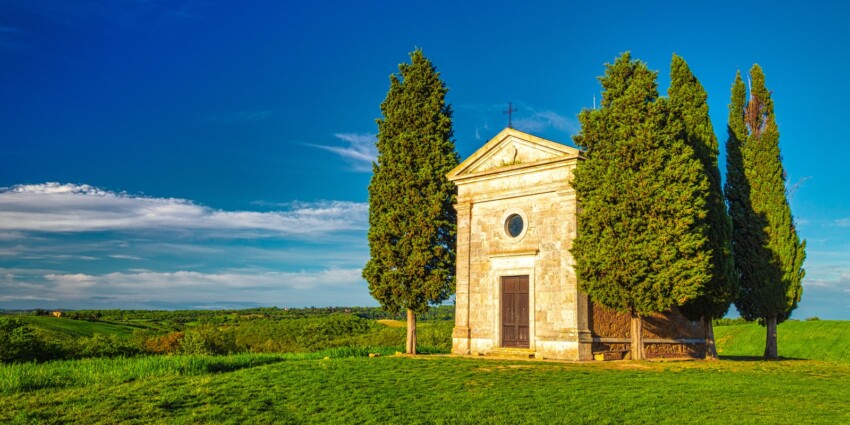
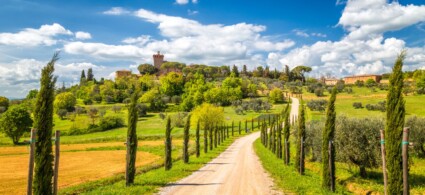
In the heart of the Tuscan countryside, in the province of Siena, lies the settlement of San Quirico d’Orcia. A small town with just 2,500 inhabitants, yet considered one of the region’s true gems. This is largely due to the undeniable charm of its historic centre, but also because it makes an excellent base for exploring the Val d’Orcia, a picturesque and renowned area of Tuscany characterised by rolling hills, vineyards and centuries-old farmhouses converted into charming agriturismos. The valley is protected by UNESCO as part of the World Heritage List.
San Quirico d’Orcia is the very epitome of Tuscany, and as you drive in, you’ll feel as though you’ve stepped straight out of a postcard or poster—into one of the landscapes most cherished by the countless foreign tourists who have been flocking to the hills of the Val d’Orcia, particularly during the summer months, for several years now.
Whether you choose to stay right in the historic centre or prefer an agriturismo or traditional farmhouse out in the open countryside, you’ll enjoy a wonderful holiday surrounded by quintessential Tuscan landscapes, the good life and, of course, excellent food—simple dishes paired with plenty of fine wine.
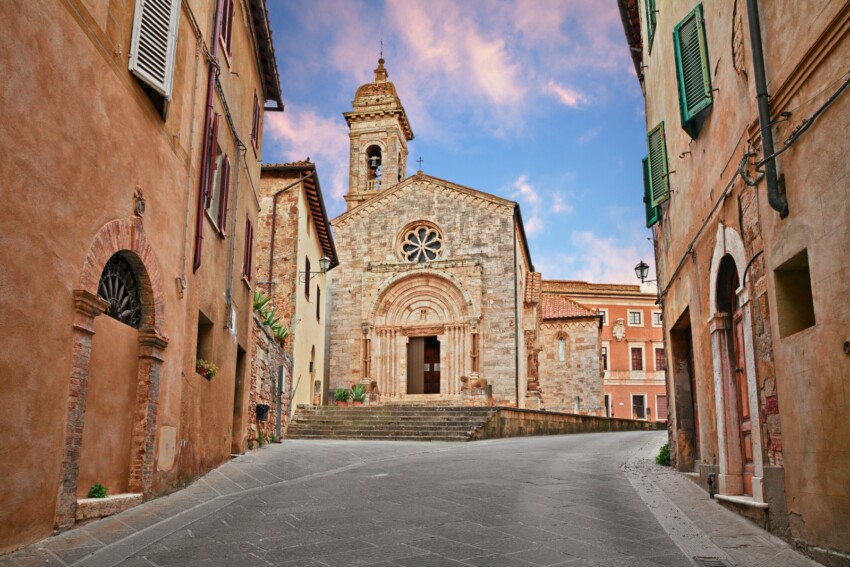
San Quirico d’Orcia has a small and compact historic centre, though some of its main attractions lie a few kilometres outside town. Here’s a guide to the top things to see in San Quirico d’Orcia to ensure you don’t miss anything during your stay.
Begin your San Quirico d’Orcia break by exploring the charming historic village. It’s a classic Tuscan country town, completely pedestrianised, with stone houses and narrow alleyways, except for the main thoroughfares—in this case Via Dante Alighieri and Via Poliziano, which run through the heart of town.
Rather than trying to tick off monuments, churches and museums, why not simply get lost by wandering down side streets without a fixed destination? That’s how you’ll discover San Quirico’s most charming and picturesque corners—window boxes overflowing with flowers and views that absolutely shouldn’t be missed. Of course, do take a stroll along Via Dante Alighieri, which cuts through the entire village; here you’ll find most of the shops, restaurants and accommodation.
While exploring San Quirico d’Orcia’s ancient centre, visit the Pieve dei Santi Quirico e Giulitta, informally known as the Collegiata di San Quirico.
This imposing Catholic church features Romanesque architecture on the exterior and Baroque elements within; construction began in the 12th century, though the structure has been extensively reworked over the centuries. Today you can admire the interior with its Latin cross layout and single nave, which houses some truly impressive paintings and artworks, as well as the exterior with its three magnificent portals.
About 6 kilometres from San Quirico d’Orcia’s centre, heading north-east along the Via Cassia (road SR2), you’ll reach the famous cypresses of San Quirico. They’re simply a row of cypress trees standing on a small hilltop in the I Triboli locality, yet they’re a symbol of both the Val d’Orcia and, by extension, all of Tuscany.
The San Quirico cypresses are frequently featured on souvenirs and postcards, and have become one of the most photographed landmarks for tourists visiting this part of the region.
The hillside where the cypresses stand divides the Val d’Orcia from the Ombrone valley.
In the opposite direction from the San Quirico cypresses, taking the SP146 road towards Chianciano, you’ll come to a clearly signposted turning that leads onto a gravel road. After just a few minutes, this reaches the Cappella di Vitaleta and continues on towards Pienza. It’s a small chapel set in open countryside, surrounded by stunning landscape with rolling hills stretching as far as the eye can see—a truly relaxing and lovely place to visit.
The Cappella della Madonna di Vitaleta, a small private Renaissance chapel, underwent complete restoration between March and July 2021. Work was completed on 18 July 2021 with the altar blessed by the Archbishop of Siena.
Back in San Quirico d’Orcia’s centre: to the east of the historic town you’ll find the splendid Horti Leonini gardens, open daily from 8am to 7:30pm with free entry. This is a classic 16th-century Italian garden, named after Diomede Leoni, its original owner.
Now owned by the municipality of San Quirico, the Horti Leonini are broadly divided into two sections: a lower section, bordered by walls and holm oaks with numerous triangular flower beds, and an upper section that’s more natural in character. From the top of the staircase, you’ll have a wonderful overview of the geometric patterns in the lower section, created by beautifully maintained and precisely trimmed low hedges.
During summer, the Horti Leonini park also hosts interesting art installations.
The town of San Quirico d’Orcia, both in the historic village and in the newer area immediately to the south, has several hotels, apartments, holiday homes and bed and breakfasts. Those looking to make the most of the Val d’Orcia and enjoy a holiday in the heart of the Tuscan countryside, in complete peace and tranquillity, would be well advised to venture a few kilometres further afield: the entire municipality is dotted with agriturismos of all categories and price ranges.
San Quirico d’Orcia is just under two hours’ drive from FlorenceFlorence-Siena motorway link road and then continuing south along the SR2. From Rome it’s about 2 hours and 15 minutes away: take the A1 motorway, exit at Chiusi-Chianciano Terme, and proceed along the SP146 which leads practically to the town.
The area isn’t well served by public transport: the nearest railway stations are Siena (almost 1 hour’s drive north) and Chiusi, which is about 40 minutes’ drive east. Those wanting to reach San Quirico d’Orcia by train should first get to one of these two stations, then continue by regional bus.
What's the weather at San Quirico d’Orcia? Below are the temperatures and the weather forecast at San Quirico d’Orcia for the next few days.
San Quirico d'Orcia is located in the province of Siena, in southern Tuscany. It forms part of the Val d'Orcia, and borders the municipalities of Montalcino, Pienza and Castiglione d'Orcia.
 Hotel
Hotel  Budget accommodations
  Apartments
  Family Hotel
  Luxury Hotel
  Resorts