Casa Di Campagna In Toscana
Sovicille - Strada Dell'aeroporto 1
Book now
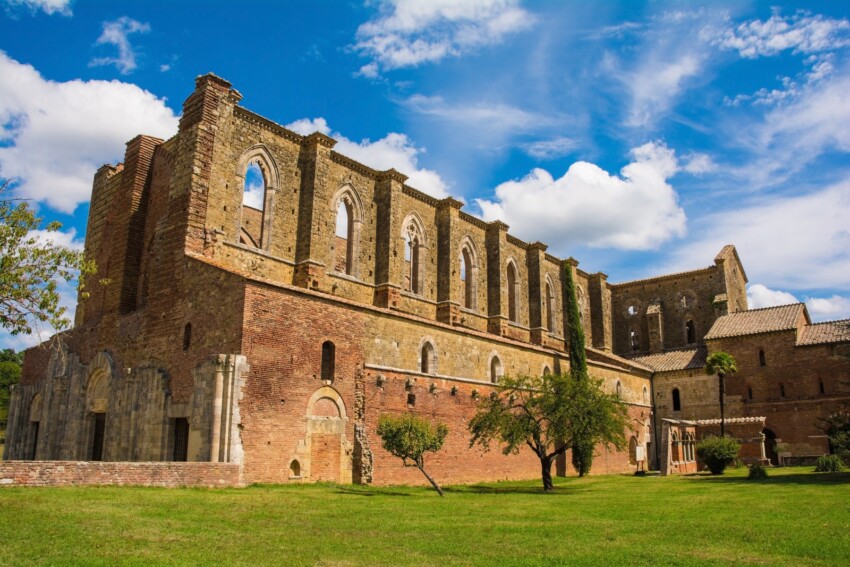
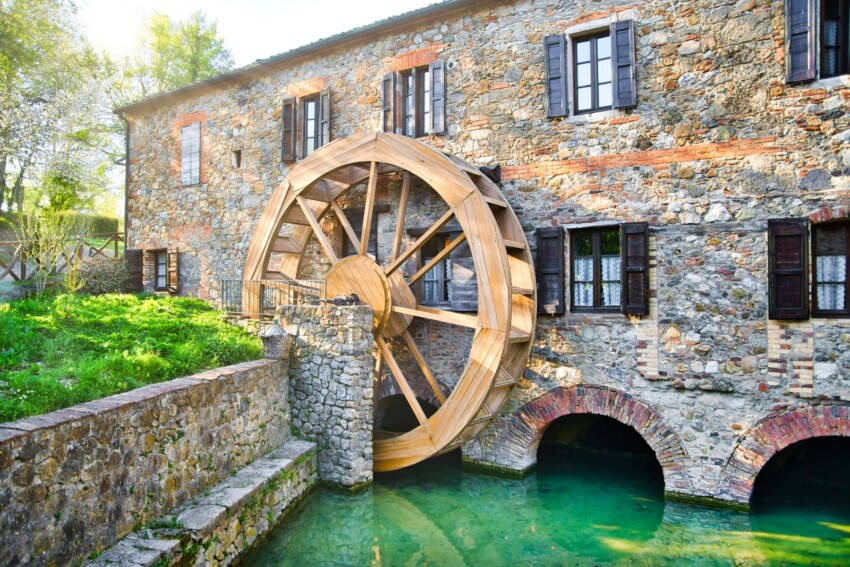
In the realm of Tuscany, fragrant with wine and painted with an enchanting landscape, graced by piazzas and towers, villas and castles, lie the Lands of Siena. Each of these lands is a powerful icon, a microcosm of people, stories and atmospheres that together forge a distinctive identity. The Val di Merse is one such icon, leaving a visible mark against the backdrop of the Palio city.
What awaits us is a journey free from any preconceptions. The Val di Merse is a path drawn by Mother Nature, one that doesn’t trumpet its renown through the mythology of a famous name.
In a world of communication where everything must carry a label and where travellers chase after legendary—and sometimes illusory—destinations, this corner of Siena prefers to introduce itself without fanfare. Instead, it offers a firm handshake and the gaze of someone who immediately inspires trust. It’s rather like expecting a formal introduction from someone keen to tell you how beautiful they are within!
The essence of a place, like a person, is discovered quietly and discreetly. It’s a matter of feeling; sometimes it happens in an instant, other times it takes longer.
The Val di Merse has a reserved character, and travellers fall in love with it precisely because it can be both shadowy and sun-dappled at once. Its intimate purity and the complete solitude in which it exists are deeply intriguing, extending an exclusive invitation to those who travel driven by a subtle curiosity.
No one will leave disappointed, because the Val di Merse is beautiful within. And that’s not all; its outward appearance too shines with its own light: soft and delicate in its woodland, dazzling in the cathedral that silently cries out to the heavens.
The Cistercian abbey of San Galgano is the strongest symbol of the Val di Merse. Historically and architecturally, it ranks among the most important religious buildings in the Siena area and represents the most authoritative expression in Italy of the Cistercian Gothic style.
The Etruscan Museum is located in the medieval village of Murlo and is distinguished by important artefacts discovered in the Poggio Civitate area. This discovery proved pivotal in advancing research and studies on Etruscan civilisation, as the excavations revealed not a village or necropolis but a princely residence from the 7th century BC and a craft workshop.
The buildings underwent two construction phases, Orientalising and Archaic, dating between the 7th and 6th centuries BC. Architectural elements such as roof tiles and acroteria attest that the Orientalising building (older than the Archaic one) featured a complete roof-covering system. The discovery of the craft workshop indicates that ceramic roof tiles, tableware and precious objects were produced here. Around 600 BC, both structures were destroyed by fire and rebuilt in 580 BC: the residence was completely reconstructed with a quadrangular form, featuring a large courtyard with porticoes inside.
Notable finds include a collection of ceramics, some from Greece: fragments of plates, amphorae, jugs, Ionian and Laconian cups; refined bucchero pottery; and ivory sculptures. Among the architectural decorations stand out acroteria with human and animal figures. Excavations of the Archaic complex also yielded metalwork, such as small personal bronze items used to embellish clothing or furnishings, as well as iron implements.
The display is completed with grave goods from tombs at Poggio Aguzzo (650–600 BC), including particularly refined ceramics and highly prized bucchero wares.
To travel on horseback through the Val di Merse is to experience something precious, to abandon our usual rhythms and enter the dilated time and space of the past. You journey through the territories of dreams.
It means riding across hills where the celebrated falconers of the great Emperor Frederick II of Swabia once scanned the skies in search of herons and mallards—birds that still inhabit these skies alongside other wildlife such as kites and buzzards.
On horseback here, you encounter abandoned castles tucked away in forgotten bends of time, bearing evocative names like “Castiglion che Dio Sol Sa”; towers clinging tenaciously to crags and escarpments; hermitages guarded within the silent vault of the forest right to the final turn, domain of nocturnal creatures and legends where, during our brief passage, we are absolute rulers; and the medieval villages scattered through the valleys—Brenna, Torri, Lestine—where the sound of hooves echoes on the cobbled streets, now narrow and solitary, now broad, past the pink-washed walls of Lorraine farmhouses like Montestigliano. A simple horse ride along the Farma and Merse rivers or through the woods of Montagnola is enough to escape the rhythms of our daily life and rediscover the tempo of humanity.
To see all the facilities and book accommodation in Val di Merse use the form below, entering the dates of your stay.
 Hotel
Hotel  Budget accommodations
  Apartments
  Family Hotel
  Luxury Hotel
  Resorts