AgriHotel Villa Ambra
Sant'Albino - Strada Statale 146 Sud 8
Book now
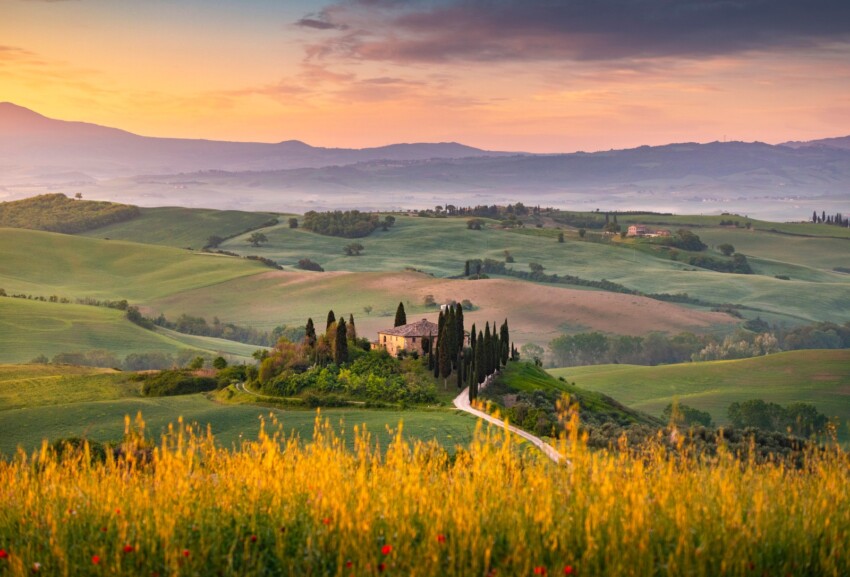
The magnificent Val d’Orcia, situated in the province of Siena, epitomises the classic Tuscan landscape, with its rolling hills, sprawling vineyards, lines of cypress trees and isolated farmhouses. The Tuscan postcard image you see everywhere in souvenir shops in Florence is less than two hours’ drive from the city, in an area of singular beauty that attracts ever-increasing numbers of visitors from across Italy and beyond.
Val d’Orcia is the place to go to unwind, to savour magnificent panoramas and to eat well: stop in one of the numerous villages that pepper the area, almost all picturesque medieval Tuscan hamlets such as Pienza, Montalcino, Castiglione d’Orcia or San Quirico d’Orcia, and pause to taste the local delicacies—from pici pasta to cinta senese cured meats, from the famous Pienza pecorino cheese to the DOC wines produced in the area.
Planning a Val d’Orcia itinerary might be unnecessary: our suggestion is to visit all the main villages and make the most of the roads connecting them, stopping as frequently as possible at viewpoints to capture stunning photographs. Val d’Orcia is best explored by car, considerably less so by public transport: it’s the perfect destination for a road trip, so we strongly recommend hiring a car to get the very most from this magnificent corner of Tuscany.
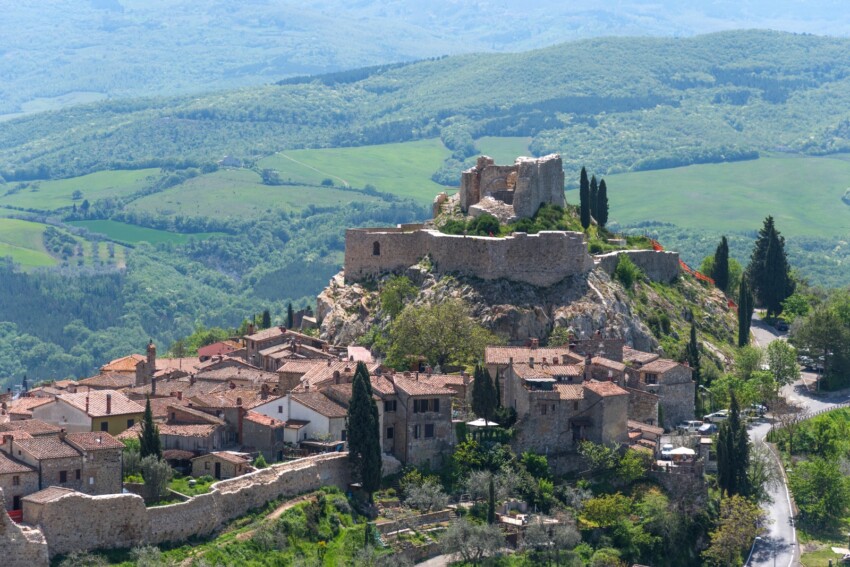
The village of Castiglione d’Orcia is a natural terrace overlooking the entire valley; its territory stretches from Val d’Orcia to the springs of Monte Amiata. From the ancient towers that dominate Castiglione d’Orcia, the view spans from the Apennines to Monte Amiata, from the Maremma to the sea.
The municipality encompasses important hamlets rich in history and natural beauty such as Campiglia, Vivo d’Orcia, and the significant spa resort of Bagni San Filippo. History and culture have left important legacies, including paintings by Lorenzetti, Simone Martini, and Lorenzo di Pietro known as “il Vecchietta”, who was born here in 1412.
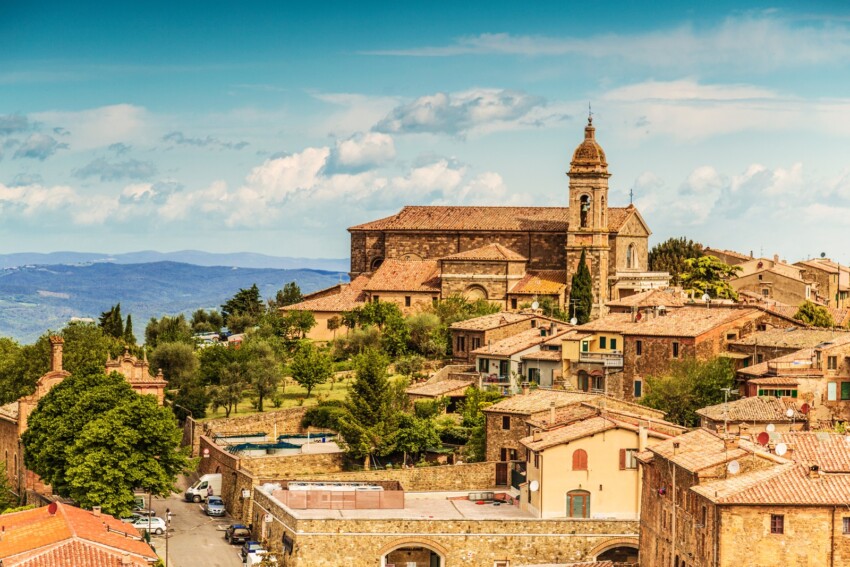
On the last hills descending towards the Maremma stands the town of Montalcino, of ancient Etruscan origin with numerous remains still visible. Surrounded by Mediterranean scrubland and vineyards, it offers its famous local products, including DOC wines, of which Brunello is the most renowned. In keeping with its tradition of quality, we must also mention honey production, which plays an important role in the national market.
The town boasts charming vignettes of narrow streets, staircases and churches, whilst from the ancient Fortress the eye sweeps across the hills towards Siena or towards the sea. Legend has it that Charlemagne himself laid the foundation for the construction of Sant’Antimo, which with its synthesis of elegance and simplicity is certainly one of the most beautiful Romanesque abbeys.
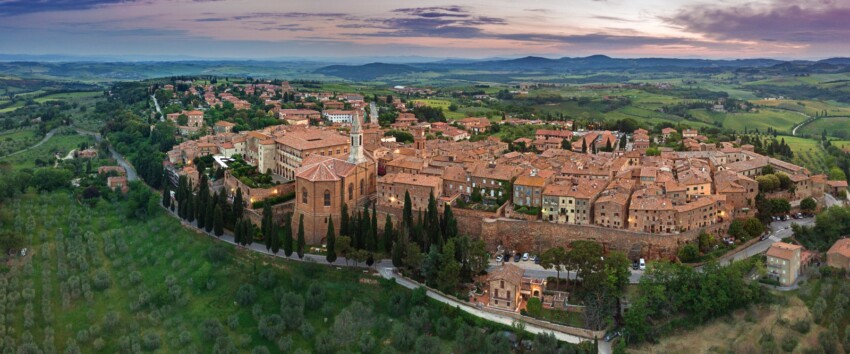
A must-visit destination for food and wine enthusiasts seeking the gastronomic treasures of Tuscany is Pienza, a small town in Val d’Orcia famous for its signature cheese, Pienza pecorino.
It lies some twenty kilometres from Montalcino, the village celebrated for its Brunello wine: an ideal location for combining two gourmet destinations in a single day.
Whilst tastings of local products are the favourite activity for visitors to Pienza, it’s worth spending some time exploring the town’s cultural attractions. Its cultural heritage is extraordinarily rich: thanks to Pope Pius II, a native of Pienza, who wanted to transform his humble birthplace into an elegant and harmonious city reflecting fifteenth-century taste.
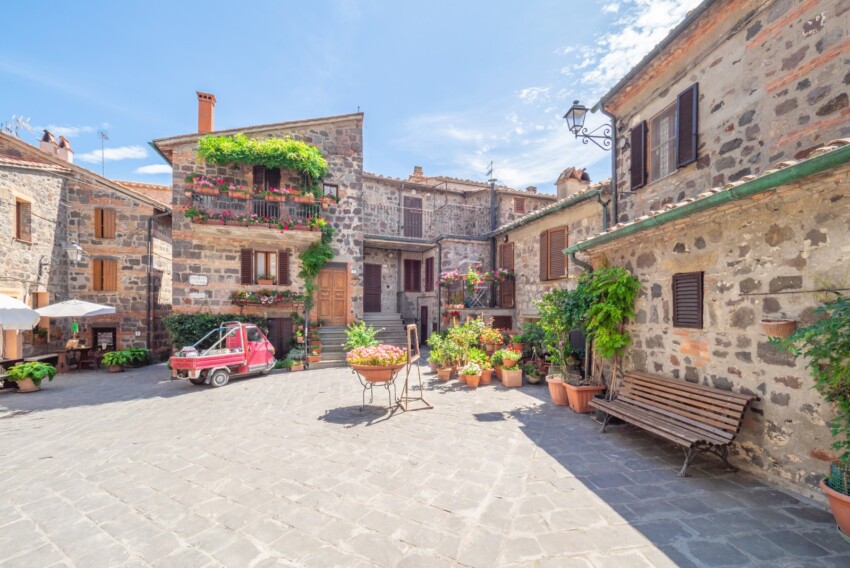
Built on an ancient volcanic crater, Radicofani has always held a strategic position between the Papal States and the Grand Duchy of Tuscany. A feudal castle of Carolingian era, it served as a safe refuge for Ghino di Tacco, who long harassed the pilgrim caravans travelling on the Via Francigena below.
The recently restored Fortress dominates the town, which offers spectacular views over the clay hills and gullies. The ancient town, huddled against the Fortress, is found to be rich with works including masterpieces by Andrea Giovanni della Robbia, the Palazzo Pretorio, Romanesque churches and the sixteenth-century Medici Villa.
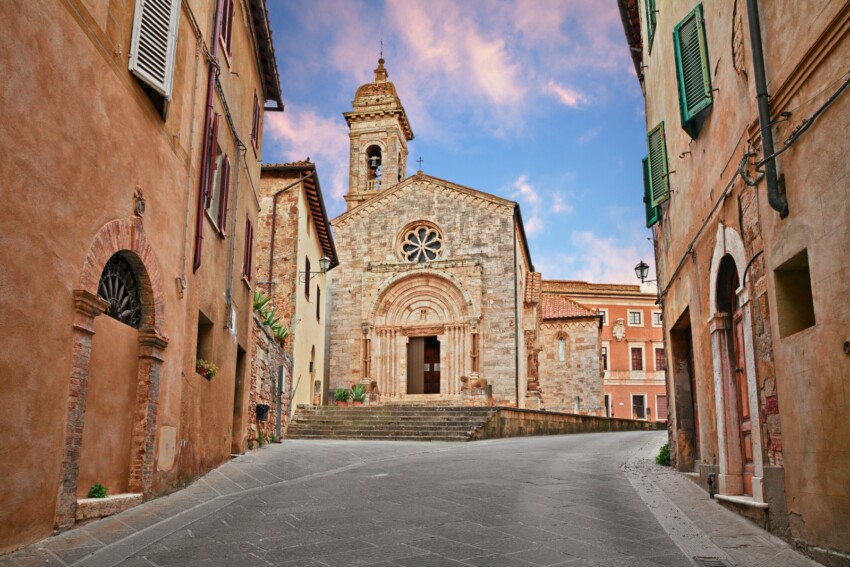
San Quirico d’Orcia is a village able to rival San Gimignano for the title of Tuscany’s most beautiful hamlet. It’s certainly one of the most famous and visited, and it’s unquestionably a destination to include in a classic Tuscan itinerary.
It lies in the Val d’Orcia, a broad rural area not far from the border with Umbria, straddling the provinces of Siena and Grosseto. The landscape is exactly the postcard image of Tuscany: the gentle profile of the hills is inlaid with orderly lines of cypress trees, sinuous white country roads, medieval villages, broad stretches of green meadows, expanses of golden grain fields and sunflowers.
Strolling through the centre of San Quirico you can admire churches, towers, palaces, wells and other small and great medieval treasures.
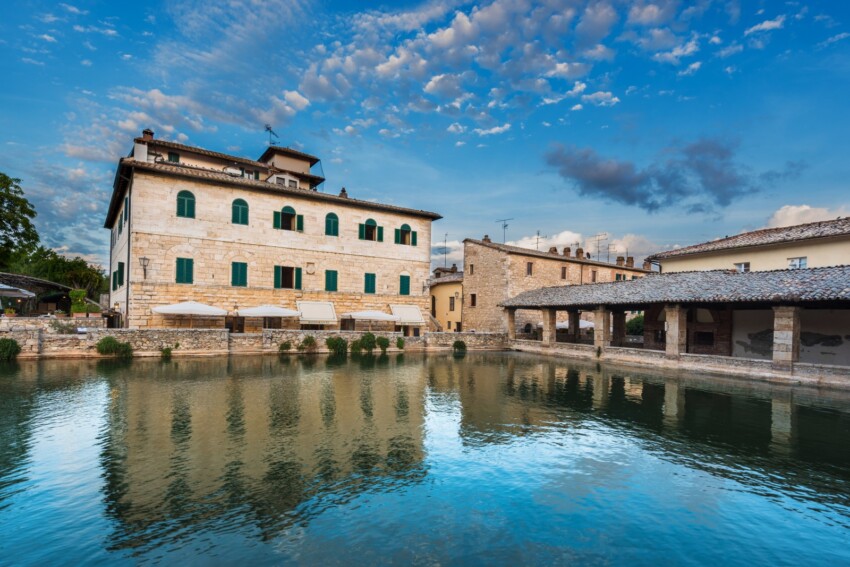
The name of the ancient village of Bagno Vignoni derives from the Vignoni castle which still dominates the hill above the village. Around a large rectangular basin, from which thermal waters spring forth, are arranged the houses, the Church of San Giovanni Battista, and the portico of Santa Caterina. From the basin, the waters reach the ancient thermal baths and from here descended to feed a series of mills positioned on the edge sloping towards the River Orcia.
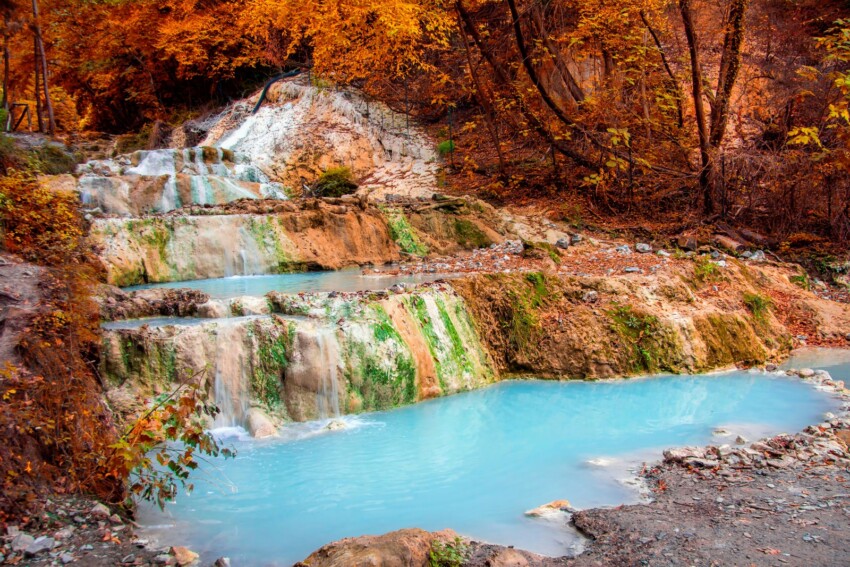
A thermal spa resort situated at 524 metres altitude on the slopes of Monte Amiata, the sulphurous thermal waters rich in calcium carbonate at Bagni di San Filippo create the famous “White Whale” as they cascade down the valley, an enormous mass of white limestone that truly resembles a whale; the waters flow in a stream that winds through the woodland, with waterfalls and limestone pools creating a truly unique landscape.
The discovery of two Roman necropolises testifies that the place was already frequented in the 1st and 2nd centuries AD; the thermal baths were later restructured by the Medici, so much so that Machiavelli in his “Mandragola” recommended to “…take baths at San Filippo…”.
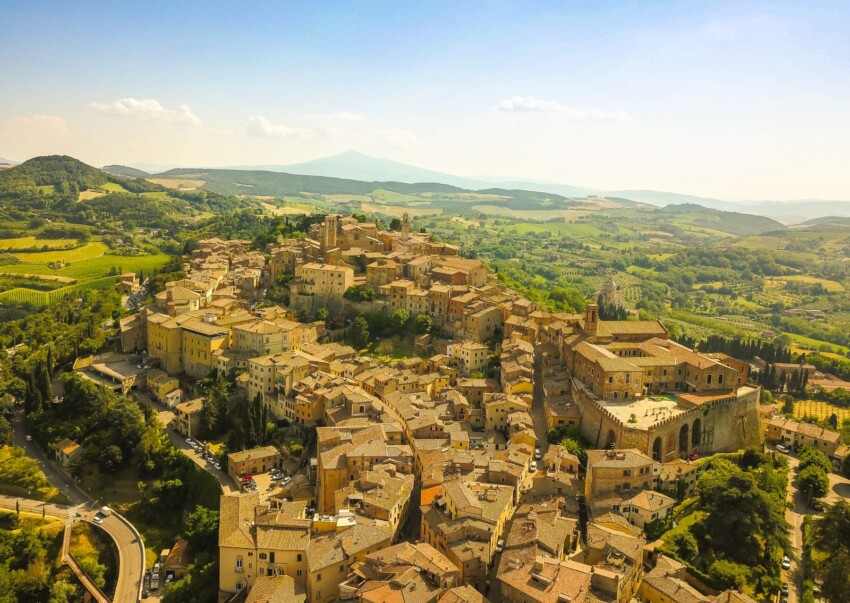
Finally, here is another enchanting Tuscan village, at the borders of Val d’Orcia. It is Montepulciano, whose reputation is linked to a local product—and in this case too we’re talking about wine. It’s a characteristic medieval hamlet perched atop a hill from which you can admire splendid views over Val d’Orcia and Val di Chiana. Due to its position, Montepulciano is simultaneously a magnificent vantage point and an excellent base for exploring by day trips the most famous locations in southern Tuscany.
The heart of the village is Piazza Grande, the perfect starting point for exploring Montepulciano’s narrow streets on foot in search of romantic vignettes, wine shops or historic palaces.
In the following map you can see the location of the main places of interest mentioned in this article.
A selection of excellent properties set in the countryside of Val d’Orcia.
 Hotel
Hotel  Budget accommodations
  Apartments
  Family Hotel
  Luxury Hotel
  Resorts